
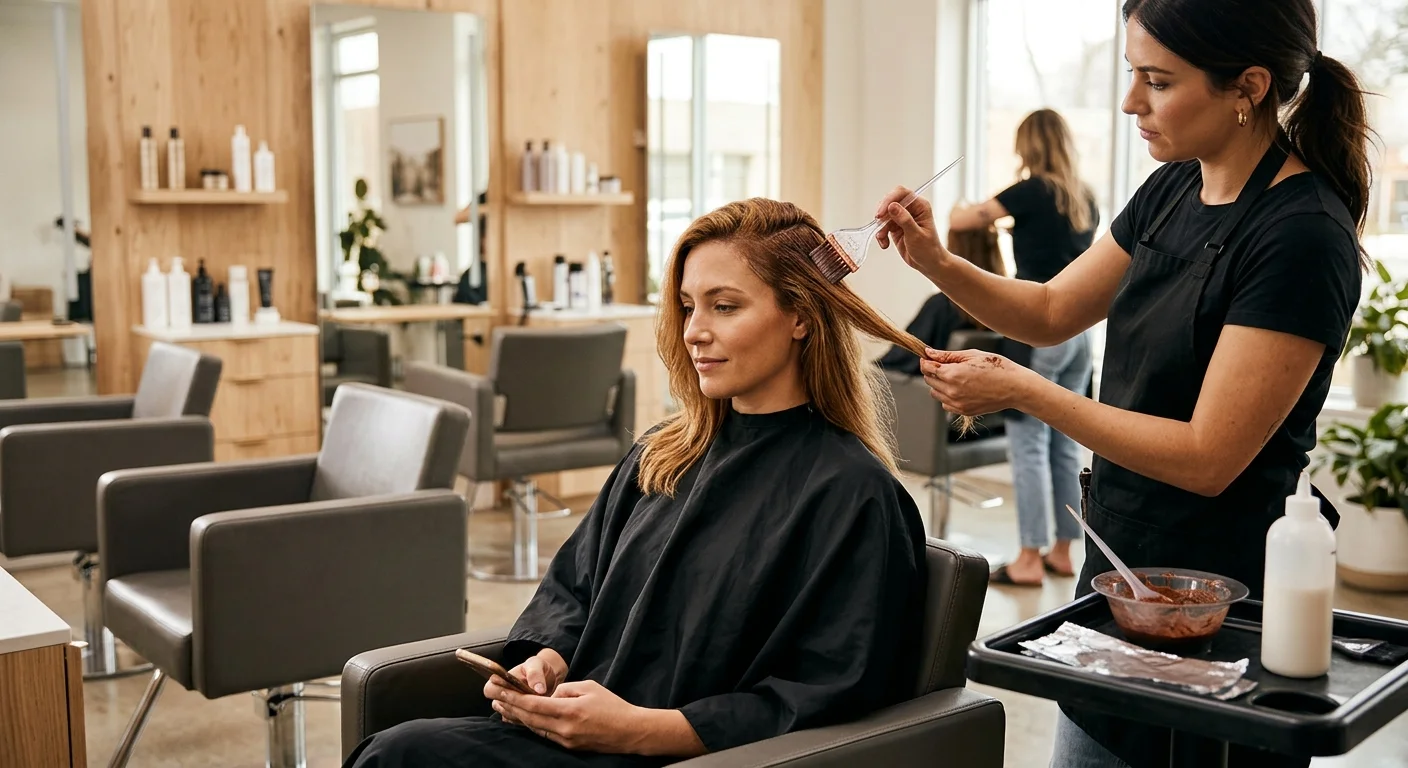
You’re standing in the drugstore aisle. There’s a model on the box with perfect, glossy chestnut hair. It’s £8. Your salon appointment would cost closer to £80. The math seems obvious — except it isn’t. The real question isn’t just price. It’s what’s happening inside your hair shaft every time you apply color, and whether the cheaper option is actually costing you more in the long run.
This guide breaks down the honest, science-backed differences between professional hair color vs box dye — so you can make a decision that suits your hair, not just your wallet.
Professional Hair Color vs Box Dye: The Chemistry That Actually Matters
The core difference between professional hair color vs box dye comes down to two things: formula precision and developer strength. Understanding both tells you exactly why the results — and the damage — are so different.
Permanent hair color works by using an alkaline agent (usually ammonia) to open the hair cuticle, allowing small pigment molecules to enter the cortex. Hydrogen peroxide then triggers an oxidation reaction that develops the color permanently inside the hair shaft. Both box dyes and professional color follow this same basic process — but the similarity ends there.
Box dye uses a standardised, high-strength developer (typically 20 or 30 volume) regardless of your hair’s actual condition, natural level, or porosity. The formula is built to work on every hair type, which means it’s optimised for no hair type. To guarantee coverage across every possible hair colour, box dyes often include a high concentration of p-phenylenediamine (PPD) — the chemical responsible for most serious allergic reactions to hair dye — plus metallic salts that build up with repeated use and make future colour treatments unpredictable or damaging.
Professional hair color is a precision formula. Your colorist selects a developer strength (ranging from 10 to 40 volume) matched to exactly how much lift your hair needs. The pigment ratio, processing time, and base tone are all customised to your hair’s current state. According to a 2022 clinical evaluation published in the National Library of Medicine (PMC), ammonia-free and PPD-free professional formulas showed 87% improvement in hair shine and 88% improvement in hair combability after just two dyeing procedures.
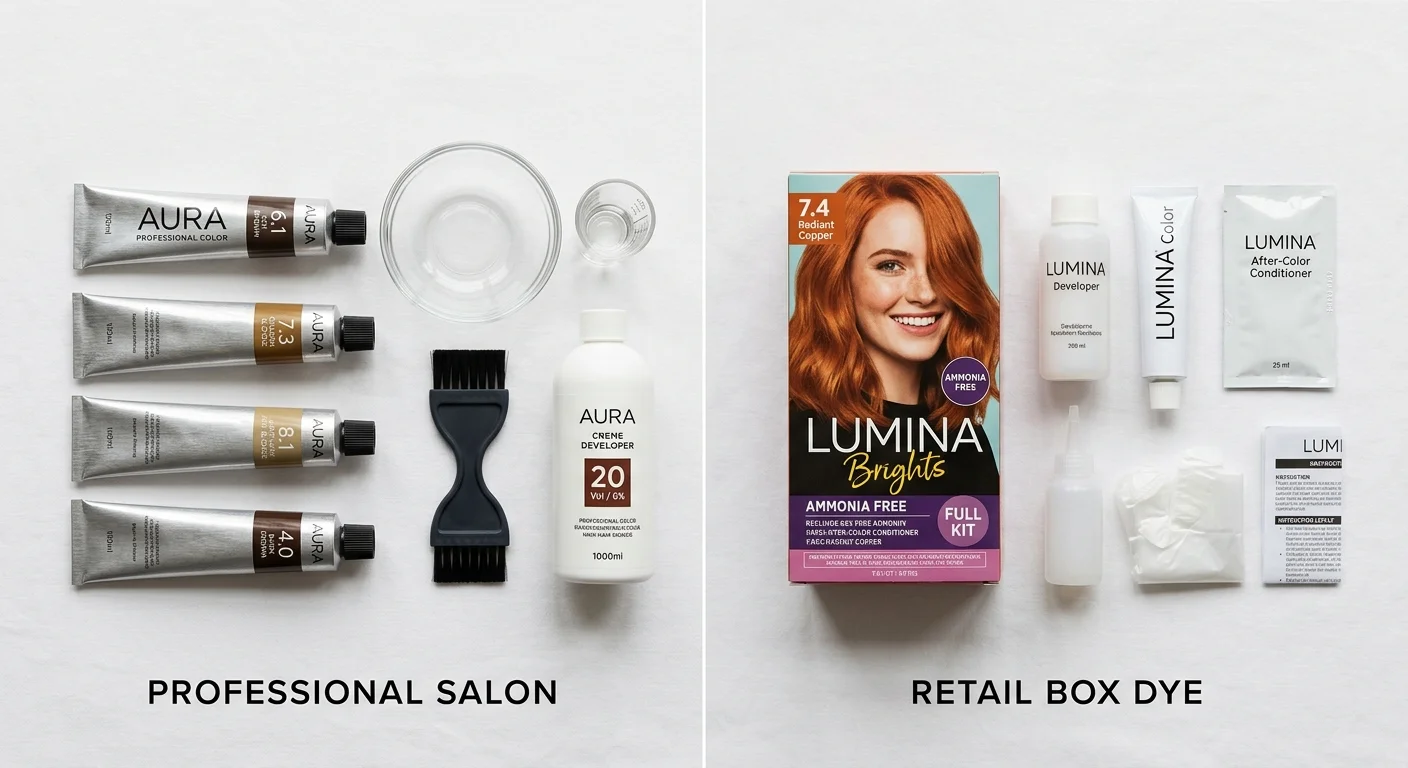
Professional Hair Color vs Box Dye: Side-by-Side Comparison
Here’s how the two stack up across every factor that matters for your hair’s health and your color results.
| Factor | Professional Hair Color | Box Dye |
|---|---|---|
| Formula | Custom-mixed for your hair type and goal | One-size-fits-all pre-mixed formula |
| Developer Strength | 10–40 vol, chosen to match your hair’s needs | Fixed (usually 20–30 vol regardless) |
| Ammonia Level | Controlled; many brands offer ammonia-free options | Higher levels to force open all cuticle types |
| PPD Content | Reduced or eliminated in modern professional lines | Often high to guarantee coverage on darker hair |
| Metallic Salts | Not present in professional formulas | Common — causes buildup & unpredictable results |
| Color Longevity | 6–8 weeks with gradual, even fading | 3–4 weeks; fades fast and can turn brassy |
| Depth & Dimension | Multi-tonal, natural-looking result | Flat, single-toned finish |
| Grey Coverage | Excellent — formula can be adjusted for resistant greys | Variable; resistant greys often not fully covered |
| Hair Condition After | Often includes conditioning agents; gentler on fibre | Can leave hair dry, brittle, and porous |
| Cost Per Application | £50–£150 at a salon | £5–£15 at home |
| Long-Term Cost | Lower — less corrective work needed | Higher — corrective color is expensive |
Why Does Box Dye Damage Hair More Than Salon Color?
Box dye causes more damage because it uses a blunt, high-strength approach on hair that may not need it. If your hair is fine, blonde, or already processed, a 30-volume developer in a box dye is significantly more aggressive than your strands need — and that excess chemical action is what leads to dryness, breakage, and compromised elasticity.
The bigger long-term issue is metallic salt buildup. Many box dyes contain metallic salts to stabilise the color formula. These salts accumulate in the hair shaft with every application. The problem? If you later try to lighten your hair or go to a salon for highlights or bleach, those metallic salts can react violently with the lightener — causing smoking, heat, severe breakage, or hair that turns an unexpected colour.
As the Cleveland Clinic notes, both ammonia and hydrogen peroxide can cause scalp irritation and hair damage — but the concentration and formulation in box dyes is the critical factor that determines severity. Professional colorists can also assess your hair’s condition in real time and adjust processing accordingly — something a box at home cannot do.
Why Does Salon Color Last Longer Than Box Dye?
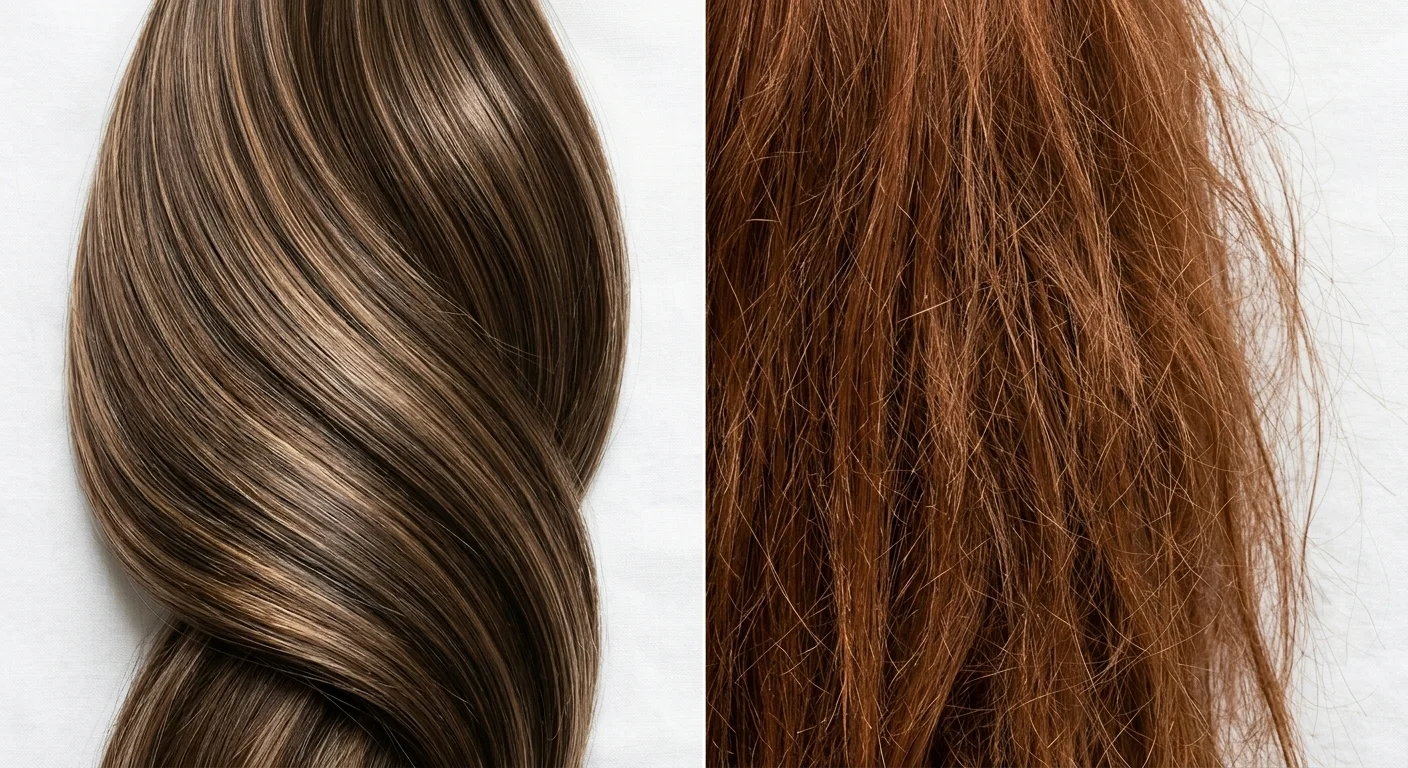
Salon color lasts longer because professional pigments are finely milled and bond within the cortex at a controlled depth. The developer strength is chosen to create just enough lift for the pigment to settle without blasting the cuticle open wider than necessary. A smooth, intact cuticle is what keeps color locked in — and it’s also what makes hair look glossy rather than dull.
Box dye pigments, by contrast, are often larger molecules deposited at inconsistent depths because the high-volume developer forces the cuticle open aggressively. Those shallower pigments wash out faster — especially with shampooing — and the process of the cuticle being forced open repeatedly with each application gradually degrades its structure.
Typically, salon color holds vibrant tone for 6–8 weeks and then fades gracefully. Box dye often shows noticeable fading within 3–4 weeks and can turn brassy or uneven as it fades, especially on hair that has gone through multiple home-color applications. If you do use color-treated hair shampoo and want to extend your colour’s life, check our guide on when and how to use a clarifying shampoo — because over-clarifying is one of the fastest ways to strip your color, salon or box.
Is Salon Color Worth the Cost? A Realistic Look
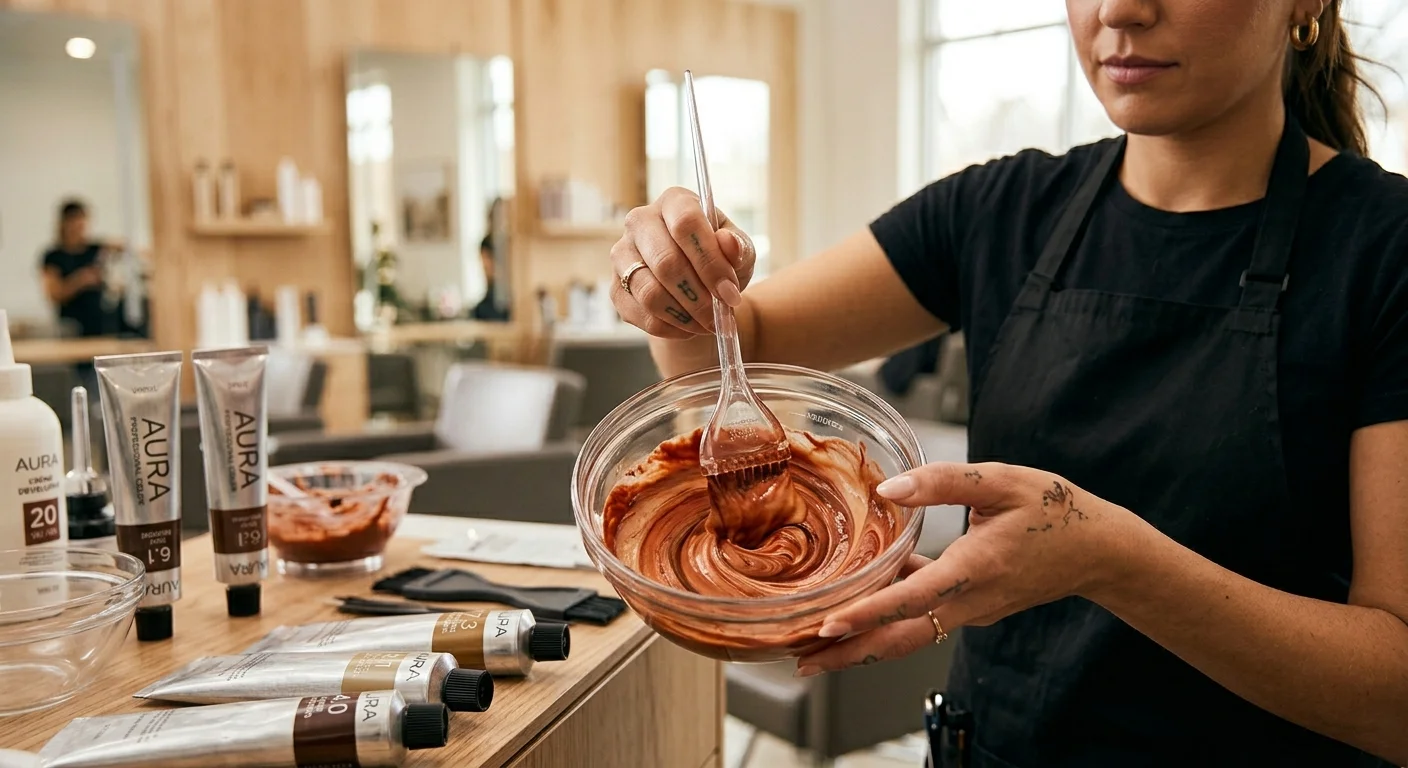
Salon color is worth the cost when you want a significant change — going lighter, covering greys, or adding highlights and dimension — and when your hair is already compromised from heat, previous color, or chemical treatments. In these cases, a professional’s ability to assess your hair in real time and customise the formula is genuinely irreplaceable.
Box dye can be a reasonable choice for simple, single-process dark-to-dark color refreshes on healthy hair with no chemical history — as long as you do a patch test every time and manage your expectations about longevity. It’s most suitable for darkening, not lightening.
The hidden financial trap of box dye is corrective color. When box dye goes wrong — uneven application, unexpected tones, or metallic buildup — salon correction is expensive and time-consuming, often requiring multiple appointments. What started as a £10 saving can turn into a £300 corrective process. Understanding your hair’s basic hair care needs before you color is the first step in avoiding that situation.
As a 2026 report by ANSES (France’s Agency for Food, Environmental and Occupational Health Safety) highlighted, several chemical substances in common hair dyes — including certain amines and fragrance compounds — are flagged for continued monitoring due to their sensitisation potential. This is increasingly prompting the professional color industry to move toward ammonia-free and low-PPD formulations, which most salon-quality brands now offer.
Can You Use Professional Hair Color at Home?
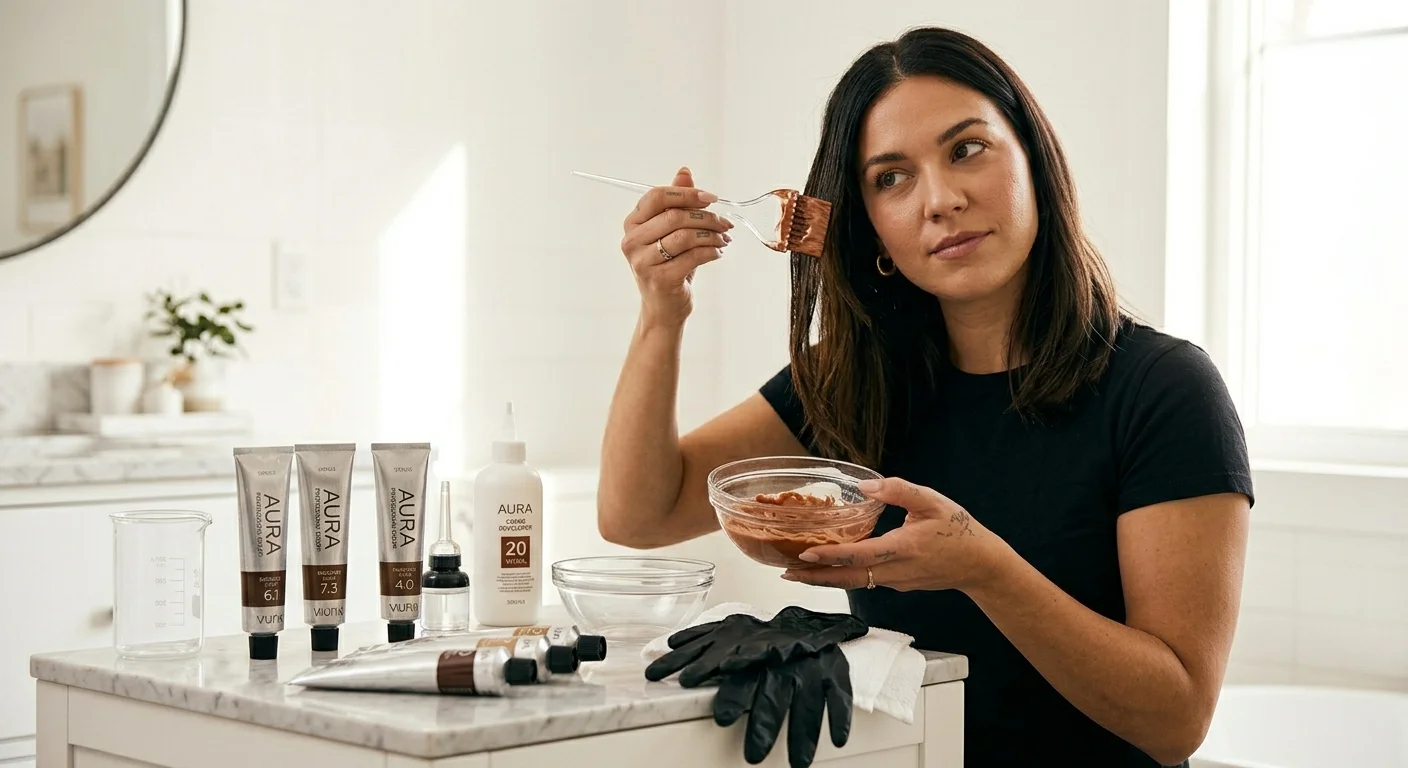
Yes — and it’s an option more women are exploring. Professional hair color brands like Wella Koleston, Schwarzkopf IGORA, and Redken are technically available to the public, and using them at home gives you access to better pigment quality and more precise developer options than a standard box dye.
The catch is knowledge. You’ll need to understand hair levels (the 1–10 lightness scale), choose the right developer volume for your goal, and understand how tone and base interact. Applying a professional lightener without knowing your hair’s history can still cause serious damage. If you’re comfortable with the learning curve — and you’re working with your natural level or going darker — professional home coloring is a legitimate middle ground that offers better results than box dye for a fraction of salon prices.
Whatever color method you choose, your post-color care routine matters just as much as the color itself. Low-porosity hair in particular struggles to retain color molecules — if that sounds like yours, our guide to the best deep conditioners for low-porosity hair covers the treatments that actually help.
When You Should Always Choose a Professional Colorist
There are specific situations where skipping the salon is genuinely risky, not just aesthetically. Always book with a professional colorist when you want to go lighter by more than two shades, when covering more than 30% grey (resistant greys require formula adjustment that box dyes cannot provide), when your hair has been bleached, relaxed, or permed, or when you’re switching between very different color families — for example, from warm brunette to cool ash.
These are the scenarios where box dye is most likely to produce an unexpected result — from banding and patchiness to color that pulls orange or green — and where a professional’s knowledge of underlying pigment levels and tonal correction makes the difference between a disaster and a transformation.
Frequently Asked Questions: Professional Hair Color vs Box Dye
Is professional hair color actually better than box dye?
Yes — professional hair color is better for most women because it’s custom-formulated for your specific hair type, porosity, and color goal. It uses controlled developer strengths, higher-quality pigments, and lower levels of damaging chemicals like PPD and metallic salts. The result lasts longer, fades more naturally, and puts significantly less stress on your hair’s structure compared to a one-size-fits-all box dye.
Does box dye damage hair more than salon color?
Box dye typically causes more damage over time because it uses a high-strength, fixed developer regardless of your hair’s actual needs. The excess chemical action opens the cuticle more aggressively than necessary, and metallic salts in box dyes build up with repeated use — making hair progressively harder to color and more prone to breakage. Professional color, especially modern ammonia-free formulas, is designed to minimise this damage.
Why does salon color last longer than box dye?
Salon color lasts longer because finely milled professional pigments bond at a controlled depth within the hair cortex, and the precisely matched developer strength ensures the cuticle closes properly after treatment. Box dye pigments are deposited more inconsistently and fade faster — usually within 3–4 weeks — because the hair’s cuticle has been more aggressively opened and may not seal as effectively afterward.
Can you use professional hair color at home?
Yes. Professional color brands like Wella, Redken, and Schwarzkopf IGORA are available to the public and give you access to better pigment quality and developer options than box dye. The key requirement is understanding hair levels, developer volumes, and tonal theory. If you’re simply refreshing a dark shade and not lifting, professional home color is a practical and cost-effective option.
What chemicals in box dye should I be most concerned about?
The two chemicals to watch are PPD (p-phenylenediamine) and metallic salts. PPD is present in around 80% of permanent dyes and is the primary cause of allergic contact dermatitis — reactions can range from scalp irritation to severe swelling and blistering. Metallic salts cause cumulative buildup that makes future lightening treatments dangerous. Always patch test 48 hours before any new box dye application, even if you’ve used that brand before.
Is salon hair color worth the extra cost?
Salon color is worth the cost for significant changes — lightening, highlights, grey coverage, or working with chemically processed hair. For simple same-level color refreshes on healthy hair, box dye can be a reasonable temporary option. The real cost calculation should include the risk of corrective color: a single corrective salon appointment to undo a box dye problem often costs more than several months of regular salon visits would have.
