
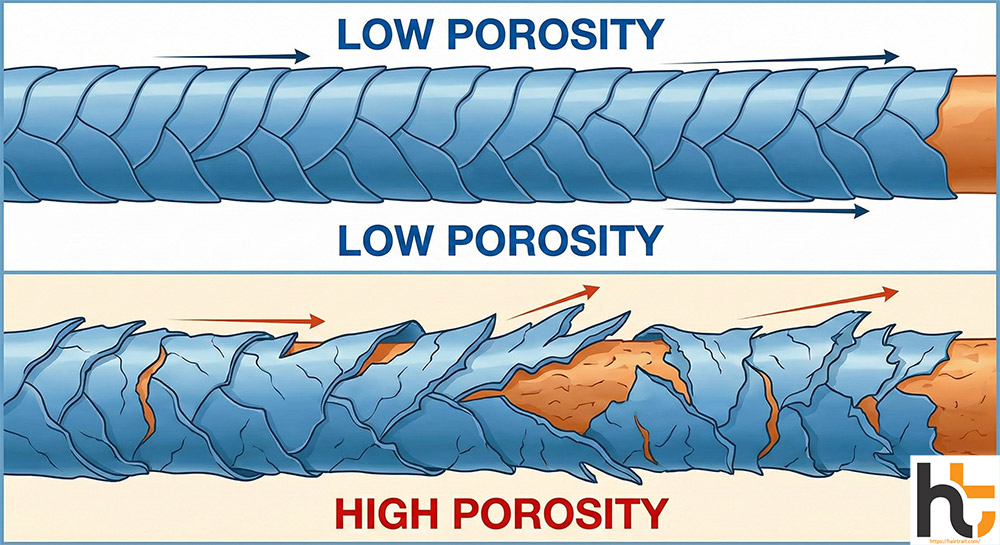
Learning how to test hair porosity is the cornerstone of building an effective hair care routine. If you have spent any time on hair care forums, TikTok, or YouTube, you know that porosity—your hair’s ability to absorb and retain moisture—is the difference between hydrated, bouncy curls and limp, greasy, or brittle strands.
When people struggle with products that “just sit on top” of their hair or hair that dries instantly, they often search for how to test hair porosity and are immediately told: “DO the water glass test!”
There is just one massive problem: the water glass test is notoriously unreliable.
As hair care experts and trichologists increasingly point out, this popular home test often leads people to misdiagnose their hair type, leading to months of using the wrong products and damaging their hair health.
This article will explain the science of why the “float test” is a myth, and provide you with two far more accurate, experience-backed methods for determining your true porosity in the comfort of your own home.
The “Float Test” Myth
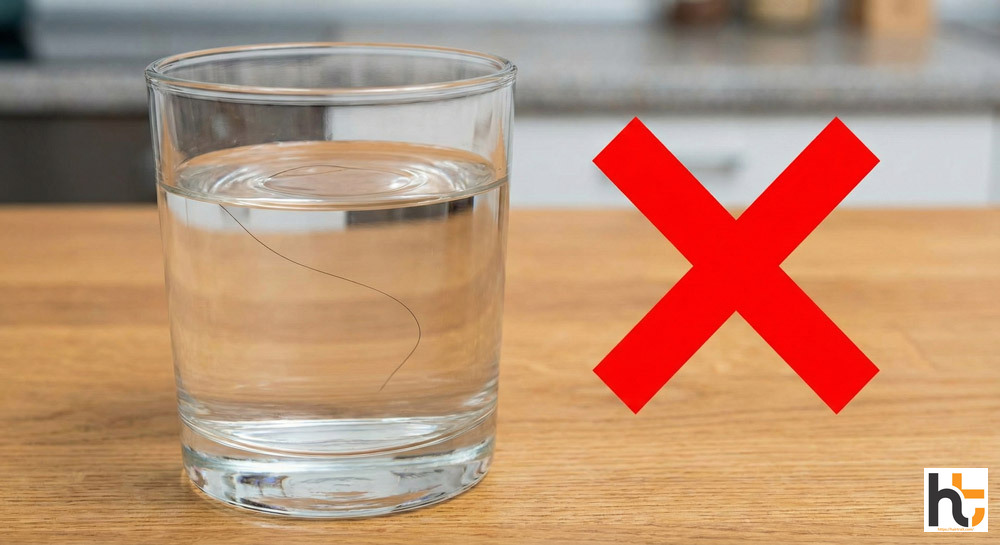
The water glass test is appealing because it is simple. You take a strand of clean hair, drop it into a glass of room-temperature water, and wait two to four minutes.
- If it floats, you have low porosity hair.
- If it sinks slowly, you have medium/normal porosity hair.
- If it sinks immediately, you have high porosity hair.
It sounds logical, but science disagrees.
Why It Fails
The fundamental flaw with the water glass test is that it doesn’t actually measure porosity; it mostly measures the surface tension of the water and the density of the hair strand relative to that tension.
Relying on this test is an outdated method that often contradicts a modern scientific understanding of hair structure. Because surface tension and oil density play such a large role in floating, the test fails to account for the complex way the cuticle actually operates.
Even “clean” hair often has residual conditioning agents or natural oils on the cuticle. Oil is hydrophobic (water-repelling) and lighter than water. Therefore, a healthy strand of hair coated in natural oils will almost always float initially, regardless of its internal porous structure.
Many people who are trying to figure out how to test hair porosity get a “low porosity” result from this test because their hair is fine or oily. They then use heavy, occlusive products meant for low porosity hair, leading to severe buildup and weighed-down strands.
The Spray Bottle Test
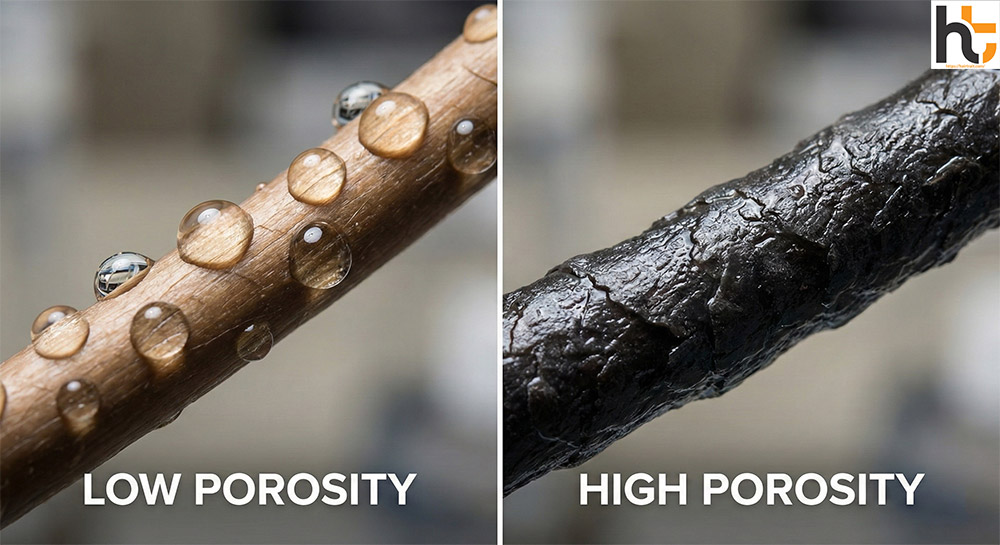
A far more practical and observable method for how to test hair porosity is the Spray Bottle Test (sometimes called the “Mist Test”).
This test observes how water behaves when it first contacts your hair cuticle in a realistic scenario, rather than submerging a detached strand.
How to Do It:
- Start with Clean, Product-Free Hair: This is crucial. Do this test after washing your hair with a clarifying shampoo and air-drying it without applying any leave-ins, oils, or stylers. Products create a barrier that will skew results.
- Section Your Hair: Take a small section of dry hair away from the rest of your head.
- Spray and Observe: Using a spray bottle filled with water, spritz the section lightly. Look closely at what the water droplets do immediately upon landing.
Interpreting Your Results:
- Low Porosity Signs: The water beads up visibly on the surface of the hair shaft. It sits there for many seconds or even minutes before eventually soaking in. If the water sits on top for a long time, you likely have low porosity hair, which requires specific methods to actually moisturize.
- Medium Porosity Signs: The water sits for a brief moment before easily absorbing into the hair strand. Your hair gets wet relatively easily without much effort.
- High Porosity Signs: The hair instantly absorbs the water like a sponge. As soon as you spray it, the hair looks dark and wet, and it dries very quickly afterward. This indicates raised or damaged cuticles that let moisture in (and out) easily.
The Slide Test
The Slide Test is a tactile method. It relies on feeling the texture of the hair shaft to determine the state of the cuticle layers. While slightly subjective, when combined with the spray test, it offers high experiential accuracy.
Note: This test requires a delicate touch to avoid damaging the hair.
How to Do It:
- Select a Strand: Take a single, dry strand of hair (it doesn’t need to be freshly washed, but shouldn’t be sticky with product).
- Hold Taut: Hold the end of the hair strand between your fingers with one hand to keep it taut.
- The Slide: With the thumb and index finger of your other hand, pinch the strand near the root and gently slide your fingers down toward the end.
- The Reverse Slide (Crucial Step): Now, slide your fingers up the shaft, from the tip back toward the root. Concentrate on what you feel during this upward motion.
Interpreting Your Results:
- Low Porosity Feel: The hair feels exceptionally smooth, almost like glass or a piece of fine straw. Sliding up the shaft feels effortless with zero resistance. This is because the cuticles are laying flat and tight against the cortex.
- Medium Porosity Feel: You feel a slight texture. It’s generally smooth, but you might catch a tiny snag or feel a slight “bumpy” sensation here and there as you slide up.
- High Porosity Feel: The hair feels rough, bumpy, dry, or brittle. This roughness indicates raised cuticles, which is often the main reason why your hair is so frizzy and loses moisture quickly. Sliding up the shaft feels resistant, almost like sliding your fingers the wrong way against velvet.
Summary
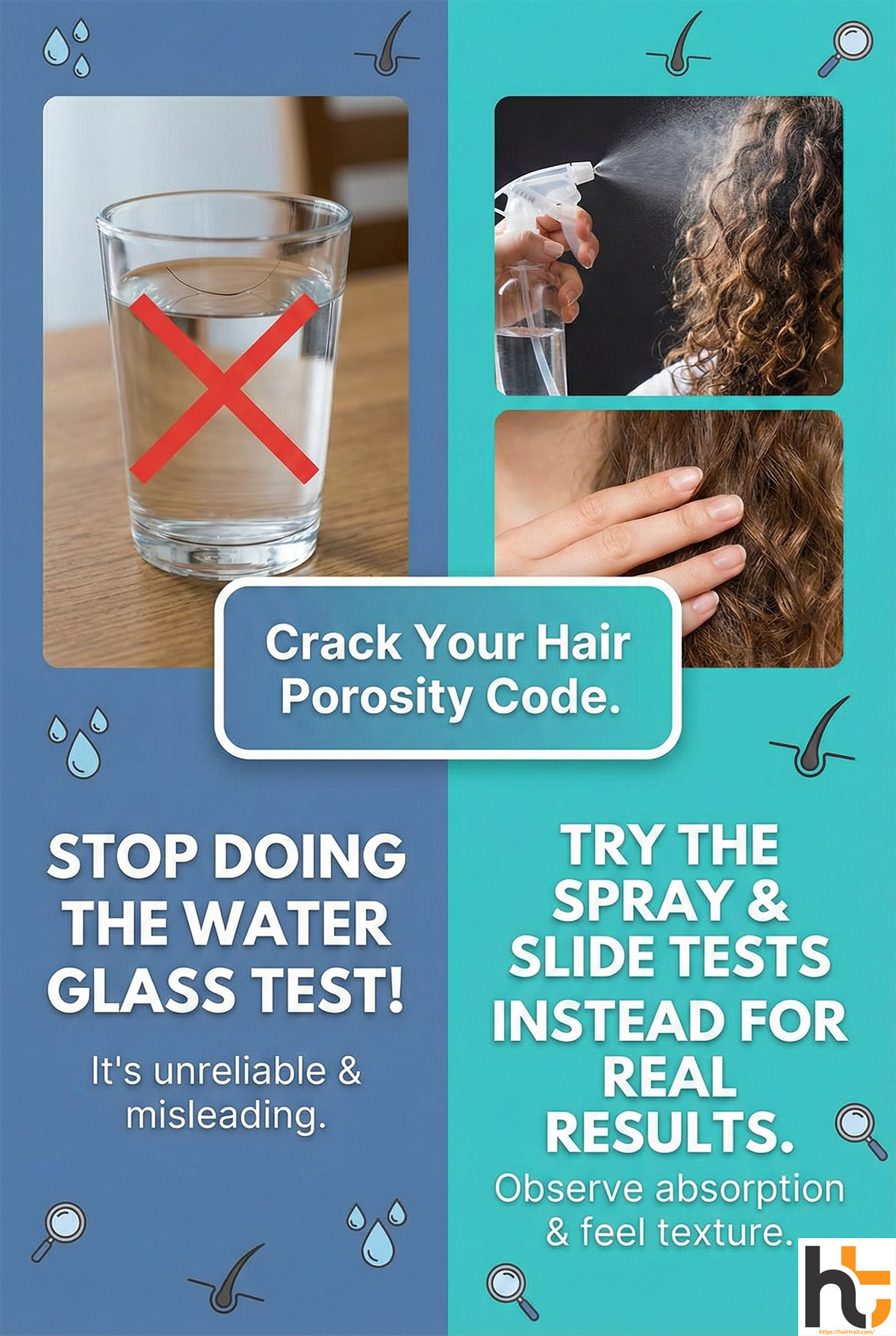
While straight hair care tips often focus on oil reduction, understanding porosity is universal for all textures. The water glass test is the least accurate home method. By utilizing the Spray Bottle Test for visual confirmation and the Slide Test for tactile confirmation, you will finally understand how to test hair porosity correctly, allowing you to choose products that actually work.
