
You have flakes. The shampoo aisle offers you fifteen products. Half say dandruff, half say seborrheic dermatitis, and nobody explains the difference.
Here is the short version. They are the same condition at different strengths. But the distinction still matters, because one clears with a supermarket shampoo and the other usually does not.
This guide covers the seborrheic dermatitis vs dandruff question in full. What causes both. How to tell which one you have. Which active ingredients work. And when to stop self-treating and see a doctor.
Seborrheic Dermatitis vs Dandruff: What Is the Difference?
In seborrheic dermatitis vs dandruff, the split is redness. Dandruff flakes on skin that looks normal. The other one flakes on skin that is red and sore.
Skin doctors treat dandruff as the mildest form of the same disease. Same yeast. Same oil. Same weak skin barrier. What differs is how hard your immune system hits back.
With dandruff, the scalp sheds small white or grey flakes. It may itch a little. The skin below looks fine.
With seborrheic dermatitis, the skin itself is sore. You get red or pink patches. The scales are bigger, often yellow, and greasy rather than dry. The itch is stronger. And it rarely stays on the scalp.
That last point is the most useful test of all. Dandruff stays on your head. The inflamed form likes oily zones. It shows up in the eyebrows, the creases beside the nose, behind the ears, and sometimes on the chest.
Why Both Happen: The Malassezia Connection
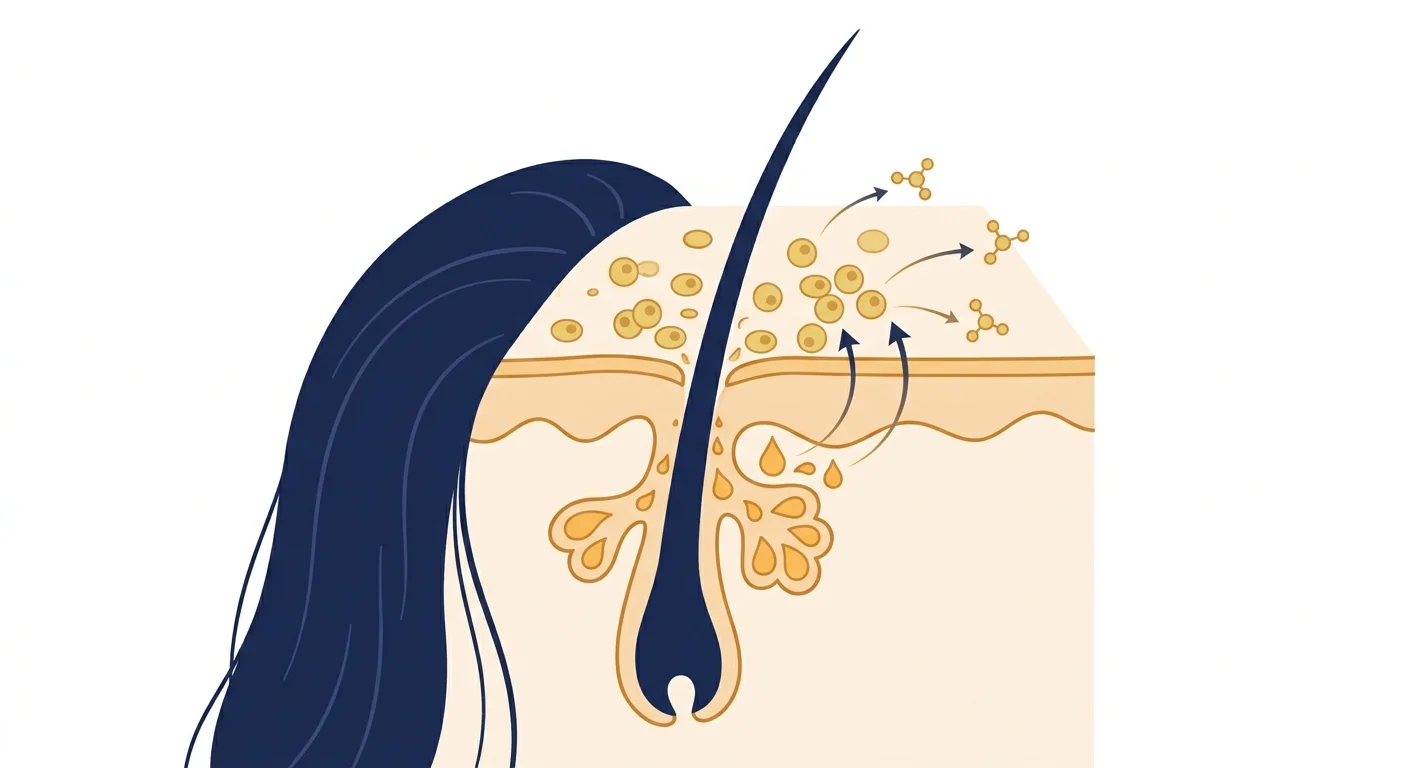
Both start with a yeast called Malassezia. It lives on nearly every adult scalp. That part is normal.
The trouble starts with sebum, your scalp’s natural oil. Malassezia feeds on it. To do that, it releases enzymes called lipases. These split the oil into free fatty acids. One of them, oleic acid, stings the skin.
Most people never notice. Some people react. If your skin reacts to those fatty acids, skin cells turn over faster, the barrier weakens, and you flake. How hard your immune system reacts is what sets your place on the seborrheic dermatitis vs dandruff scale.
Three things make it worse:
- Oil supply. More sebum means more food for the yeast. This is why flaking often starts in the teens. It is also why an oily scalp with dry ends so often comes with flakes.
- Stress and illness. Both set it off. So does cold, dry weather. Winter is peak season for both.
- A weak immune system. The inflamed form is far more common, and worse, in people with Parkinson’s disease, HIV, or after a stroke.
One thing that does not cause it: poor hygiene. Washing less does not make you flake. It does let oil and scale pile up, which makes it look worse. A steady wash routine helps, and our hair care routine for men covers a simple one.
Seborrheic Dermatitis vs Dandruff: Symptoms Compared
The fastest way to tell them apart is to look at colour, texture and location. This table covers all three.
| Feature | Dandruff | Seborrheic Dermatitis |
|---|---|---|
| Flake colour | White or grey | Yellow or off-white |
| Flake texture | Dry, loose, powdery | Greasy, sticky, larger scales |
| Skin underneath | Normal colour | Red, pink or inflamed |
| Itch | Mild | Moderate to severe |
| Where it appears | Scalp only | Scalp, eyebrows, nose creases, ears, chest |
| Crusting | None | Common, especially at the hairline |
| Hair loss | None | Possible temporary shedding from scratching and inflammation |
| Responds to | Medicated shampoo | Antifungal shampoo, often plus prescription treatment |
| Comes back? | Yes, if you stop treating | Yes, almost always — needs maintenance |
Is It Something Else Entirely?
Three other problems get mixed up with both. Each needs a different fix. Rule these out before you buy anything.
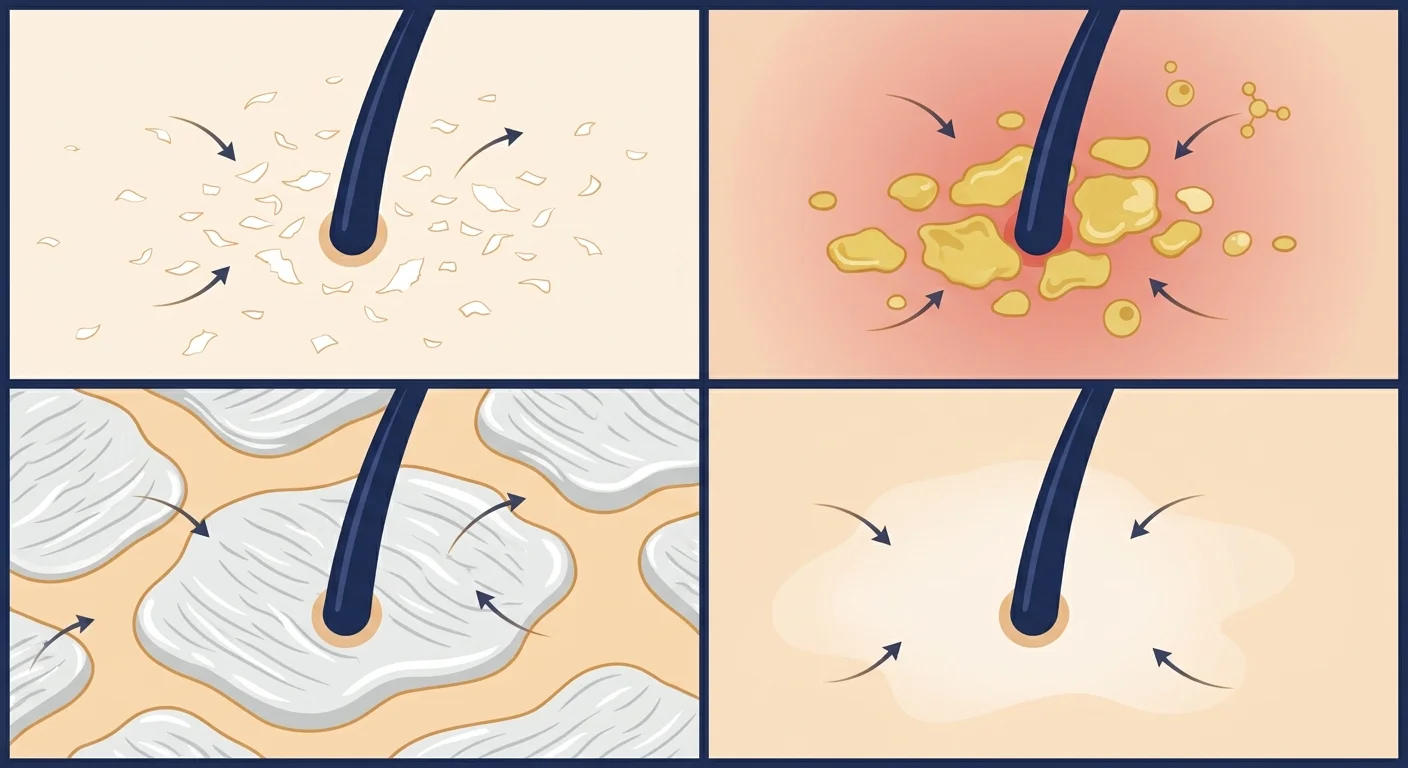
Dry scalp. Flakes are small, white and dry. The skin feels tight, above all in winter. The tell is that dry scalp comes with dry skin elsewhere. It gets better with moisture, not with antifungal shampoo. Harsh shampoo and hot water often cause it in the first place.
Scalp psoriasis. Scales are thick, silvery and sharply edged. They often stop in a clean line at the hairline. It tends to come with nail changes, or patches on the elbows and knees. Psoriasis needs a doctor.
Product build-up. Flakes are large, uneven, and slide off in sheets. There is no redness and no itch. This is residue, not skin. It clears with a proper wash. We cover it in our guides to scalp buildup, clarifying shampoo and scalp exfoliation.
Treating Seborrheic Dermatitis vs Dandruff: What Actually Works
Both forms respond to antifungal shampoo. What differs is the strength you need and what follows. Start with the active ingredient, not the brand on the front.
| Active Ingredient | How It Works | Best For | Notes |
|---|---|---|---|
| Ketoconazole 1–2% | Antifungal — kills Malassezia directly | Both, and first choice for seborrheic dermatitis | Strongest evidence base. Lowest relapse rate of the common actives. |
| Zinc pyrithione | Antifungal and antibacterial | Mild to moderate dandruff | Widely used, but banned in EU cosmetics since March 2022, so availability varies by country. |
| Selenium sulfide | Slows skin cell turnover, mild antifungal | Moderate dandruff | Higher relapse rates than ketoconazole. Can discolour treated or light hair. |
| Coal tar | Slows skin cell turnover | Stubborn flaking, psoriasis overlap | Strong smell. Can stain light hair and increase sun sensitivity. |
| Salicylic acid | Dissolves and lifts scale | Thick, crusted scale | Removes scale but does not treat the yeast. Best paired with an antifungal. |
| Ciclopirox | Broad antifungal | Cases where ketoconazole stops working | Often prescription. Useful for rotation. |
| Topical steroid | Reduces inflammation fast | Inflamed seborrheic dermatitis flares | Prescription. Short courses only — not a long-term solution. |
| Tea tree oil | Mild natural antifungal | Very mild flaking | Some supporting evidence, much weaker than ketoconazole. Can irritate. |
Ketoconazole is the one to start with if you are unsure. In one clinical review, flare-ups came back in 31% of people using ketoconazole 2% shampoo. The rate was 48% with a dummy shampoo and 76% with selenium sulfide. That gap is why most doctors reach for it first.
Method matters as much as the product. Most people rinse it straight out. Work the shampoo into the scalp. Then leave it there for three to five minutes before you rinse. The antifungal needs contact time to reach the yeast. Two or three washes a week is enough for most people.
A gentle everyday shampoo on the days in between is fine. Harsh sulfate-heavy formulas can strip and sting a scalp that is already sore. The pH of the wash plays a part too, as we explain in our piece on shampoo pH.
How Long Treatment Takes — and Why It Comes Back
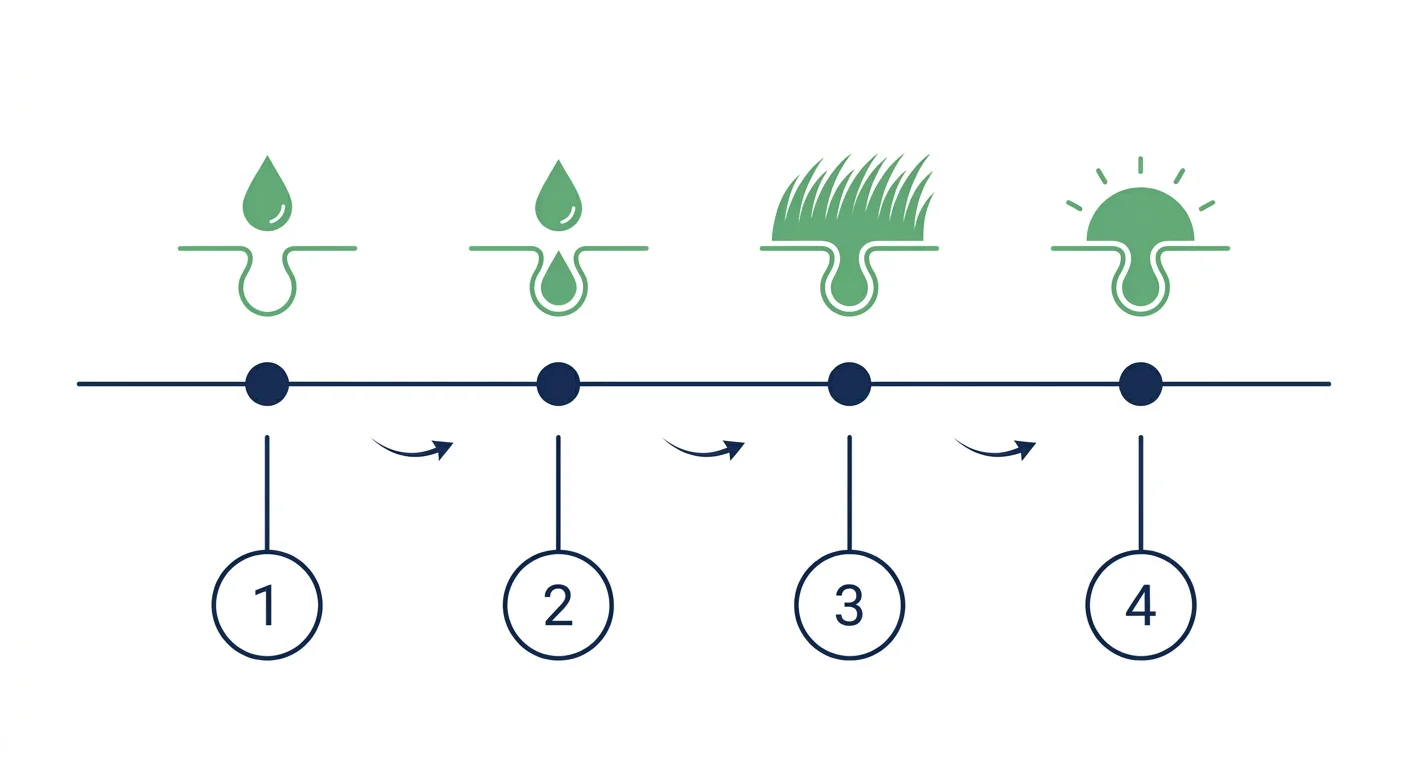
Expect it to get better in two to four weeks. Expect it back if you stop. Neither form can be cured, and that is the part most people are never told.
Here is the usual pattern. Flaking and itch ease within one to two weeks of proper use. Redness takes longer, often three to four weeks. Once things are calm, most people drop to one medicated wash a week.
A flare-up is not a sign the treatment failed. Malassezia lives on your scalp for good. Antifungal shampoo cuts its numbers. It does not clear it out. Stop using the active and the yeast climbs back within weeks.
This is why a steady routine beats panic cycles. Keep the medicated shampoo in rotation even when your scalp looks fine. One wash a week is usually enough to hold it, and the rest of your routine can follow our hair care basics guide.
When to See a Doctor
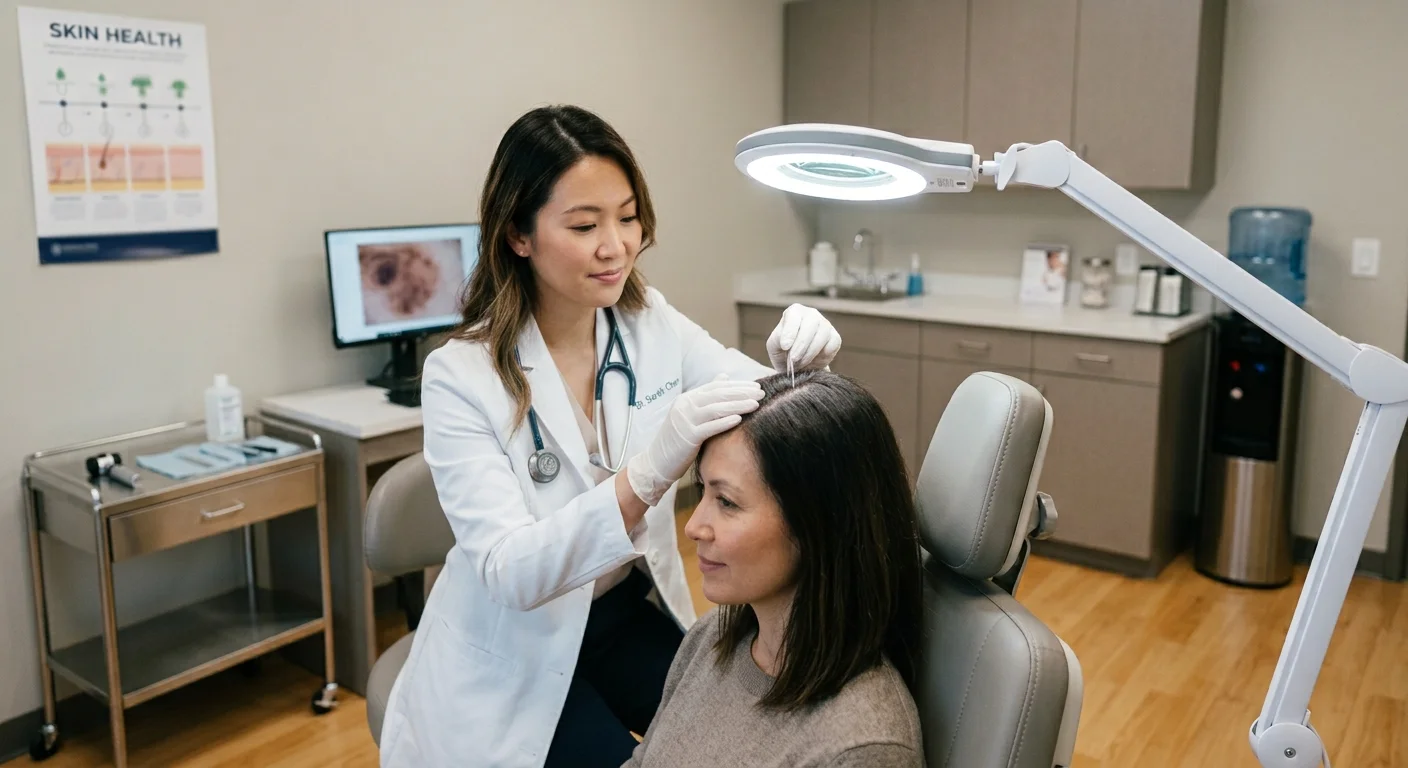
See a doctor if medicated shampoo has not helped after four weeks of correct use. In seborrheic dermatitis vs dandruff, that is the clearest sign you are treating the wrong thing — or that you need more than a shampoo.
Book an appointment sooner if any of these apply:
- The scalp is weeping, crusting heavily, or looks infected
- Patches have spread to your face, chest or body
- The itch is disturbing your sleep
- You are losing hair in the affected areas
- Flaking appeared suddenly alongside another health change
The American Academy of Dermatology says stubborn cases usually respond to prescription antifungals or short steroid courses. A clinical review in American Family Physician sets out the same order: antifungal first, then something to calm the skin if it is red.
The lab science backs this up. Work in Scientific Reports mapped how zinc pyrithione attacks Malassezia. And a randomised trial published in PMC used ketoconazole as the yardstick for newer drugs — a good sign of where it sits.
Seborrheic Dermatitis vs Dandruff FAQ
Is seborrheic dermatitis just severe dandruff?
Mostly, yes. In the seborrheic dermatitis vs dandruff comparison, doctors treat dandruff as the mildest form of the same disease. Both involve the same yeast, the same scalp oil, and the same barrier problem. What differs is redness. Dandruff flakes on normal-looking skin. The inflamed form reddens the skin, makes greasy yellow scale, and spreads to other oily spots on the face and body.
Can seborrheic dermatitis cause hair loss?
Indirectly, and usually temporarily. The condition does not destroy follicles the way scarring conditions do. But heavy inflammation and constant scratching irritate the follicle opening, which can push hairs into the shedding phase early. Once the scalp is treated and calm, that shedding normally reverses. Ongoing loss after the scalp clears points to a separate cause.
How do I know if it is dandruff or dry scalp?
Look at the flakes and the skin. Dandruff flakes are larger, sometimes oily, and the scalp is often itchy but not tight. Dry scalp produces small, fine, dry flakes with skin that feels tight — and you usually have dry skin elsewhere too. Dry scalp improves with gentler washing and moisture. Dandruff needs an antifungal.
How often should I use medicated shampoo?
Two to three times a week while you are clearing a flare, then once a week to maintain. Leave it on the scalp for three to five minutes before rinsing — contact time is what lets the antifungal work. Rinsing it straight out is the most common reason people conclude a shampoo has failed.
Does seborrheic dermatitis ever go away for good?
No, but it can be controlled indefinitely. Malassezia lives on the scalp permanently, so the tendency does not disappear. What changes is how well you manage it. Most people find a maintenance routine — a medicated wash once a week, plus a gentle shampoo in between — keeps them clear for long stretches, with flares in winter or during stressful periods.
Is it contagious?
Not at all. The yeast involved already lives on almost every adult’s skin, so there is nothing to catch or pass on. You cannot spread it through pillows, hats, hairbrushes or close contact. It is a reaction your own skin has to something already present, which is why it runs in families and flares with stress rather than exposure.
