

You started Ozempic to lose weight. It’s working — the scale is going down, your clothes fit better, and you’re feeling good about your progress.
Then you notice it. More hair in the shower drain. More strands on your pillow. Your ponytail feels thinner. When you run your fingers through your hair, clumps come out.
You’re not imagining it. And you’re definitely not alone.
Hair loss is one of the lesser-discussed side effects of Ozempic and similar GLP-1 medications like Wegovy, Mounjaro, and Zepbound. It’s not listed prominently on the label, doctors don’t always warn you about it, and yet thousands of people are experiencing it.
If you’re watching your hair fall out and feeling panicked, take a breath. This article will explain exactly why it’s happening, whether it’s permanent, and what you can actually do about it.
Table of Contents
Why Ozempic Causes Hair Loss
Let’s get one thing straight: Ozempic itself isn’t directly toxic to your hair follicles. The medication doesn’t attack your hair.
What’s happening is something called telogen effluvium — and it’s triggered by the rapid weight loss that Ozempic causes, not the drug itself.
Here’s how it works:
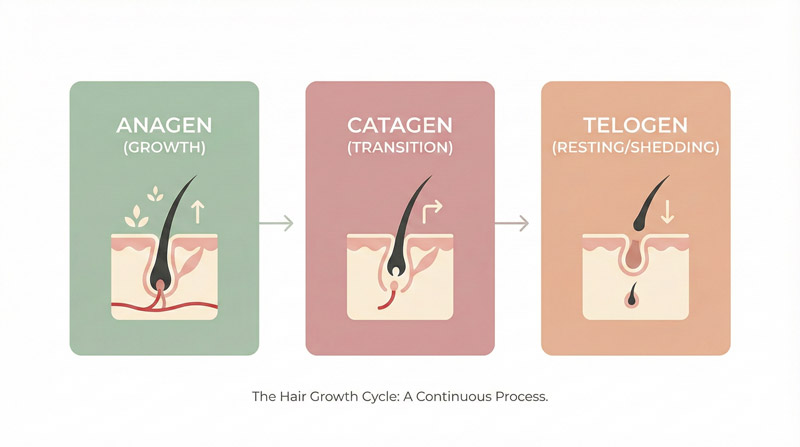
Your hair grows in cycles. At any given time, about 90% of your hair is in the growth phase (anagen), and about 10% is in the resting phase (telogen). After the resting phase, hair sheds naturally to make room for new growth.
When your body experiences a significant shock or stress — like rapid weight loss, surgery, illness, or major calorie restriction — it can push a larger percentage of hair follicles into the resting phase all at once.
A few months later, all that hair sheds at the same time.
The result? What feels like sudden, alarming hair loss.
With Ozempic and similar medications, people often lose weight quickly. Losing 15, 20, or even 30+ pounds in a few months is common. That’s exciting for your waistline, but your body reads it as a stress event.
Add in the reduced appetite (and often reduced nutrition) that comes with these medications, and you’ve got a perfect storm for telogen effluvium.
How Common Is This?
More common than you might think.
Clinical trials for semaglutide (Ozempic and Wegovy) reported hair loss in about 3% of participants. But many dermatologists believe the real number is higher — patients just don’t always report it, or they don’t connect it to the medication until months later.
Online communities tell a different story. Scroll through any Ozempic or Wegovy forum, and you’ll find thousands of posts from people experiencing the same thing.
The pattern is almost always the same:
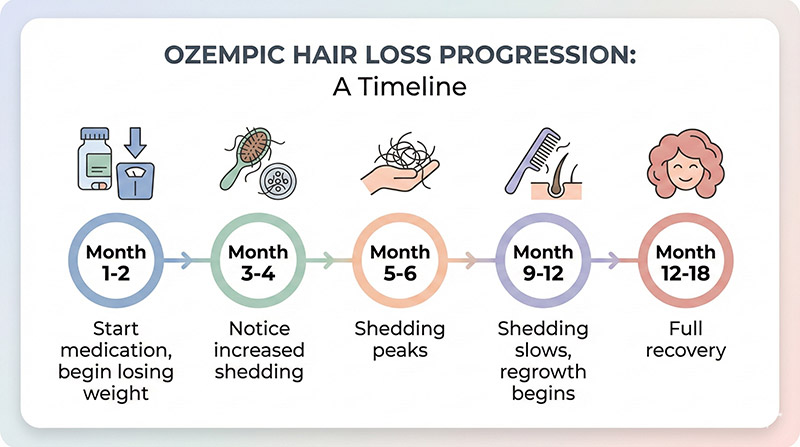
- Start medication
- Lose weight quickly over 2-4 months
- Around month 3-4, notice increased shedding
- Shedding peaks around month 5-6
- Panic ensues
If this timeline sounds familiar, you’re experiencing a textbook case of telogen effluvium.
Is It Permanent?
Here’s the good news: telogen effluvium is almost always temporary.
Your hair follicles aren’t damaged. They’re not dead. They’ve just been pushed into a resting phase prematurely. Once the shock passes — meaning once your weight stabilizes and your nutrition improves — those follicles will cycle back into growth mode.
Most people see shedding slow down within 6-9 months and notice regrowth starting around the same time. Full recovery typically takes 12-18 months.
That said, there are a few things that can make it worse or longer-lasting:
- Continued rapid weight loss — If you’re still losing quickly, the trigger hasn’t stopped
- Poor nutrition — Not eating enough protein, iron, or other hair-essential nutrients
- Other stressors — Illness, surgery, major life stress on top of the weight loss
- Underlying conditions — Thyroid issues, hormonal imbalances, or genetic hair loss that was already brewing
If your hair loss continues beyond a year or seems to be getting worse instead of better, it’s worth seeing a dermatologist to rule out other causes.
What About Mounjaro, Wegovy, and Zepbound?
Same story, different brand names.
All GLP-1 medications work similarly — they reduce appetite, slow digestion, and lead to significant weight loss. Any of them can trigger telogen effluvium if the weight loss is rapid enough.
- Wegovy is the same active ingredient as Ozempic (semaglutide), just FDA-approved specifically for weight loss
- Mounjaro (tirzepatide) works on two hormone receptors instead of one, often causing even faster weight loss
- Zepbound is Mounjaro’s weight-loss-specific version
Anecdotally, some people report more hair loss with Mounjaro/Zepbound than with Ozempic/Wegovy — possibly because the weight loss tends to be more rapid. But individual experiences vary widely.
The bottom line: if you’re on any GLP-1 medication and losing weight quickly, hair shedding is a possibility.
What You Can Do About It
You have two choices: stop the medication or manage the side effect. For most people, stopping isn’t appealing — the weight loss benefits are significant.
So let’s talk about what actually helps.
1. Slow Down the Weight Loss (If Possible)
This is the most effective strategy, but also the hardest to control.
If you’re losing more than 1-2 pounds per week consistently, your body is more likely to interpret this as a crisis. Talk to your doctor about whether a lower dose might help you lose weight more gradually while still seeing results.
Some people find that staying on a lower dose longer before titrating up helps minimize side effects, including hair loss.
2. Prioritize Protein

When you’re eating less overall (which is the whole point of these medications), it’s easy to fall short on protein. And protein is essential for hair.
Hair is made of keratin, a protein. If your body isn’t getting enough protein, it will prioritize vital organs over hair production.
Aim for at least 60-80 grams of protein daily, even if you’re not very hungry. This might mean:
- Protein shakes or smoothies
- Greek yogurt
- Eggs
- Lean meats, fish, or tofu
- Cottage cheese
- Protein bars (in moderation)
If you’re struggling to eat enough, a protein supplement can help bridge the gap.
3. Check for Nutritional Deficiencies
Rapid weight loss can deplete several nutrients that are critical for hair:
- Iron — One of the most common deficiencies linked to hair loss
- Vitamin D — Many people are already low; weight loss can make it worse
- Zinc — Important for hair growth and repair
- Biotin — The “hair vitamin” (though deficiency is rare)
- B12 — Especially if you’re eating less meat
Ask your doctor to run bloodwork. If you’re deficient in anything, targeted supplementation can help.
A good general multivitamin designed for hair health can also provide insurance, but it won’t work miracles if you’re not eating enough overall.
4. Be Gentle With Your Hair

While you’re shedding, the last thing you want is to cause additional breakage. Baby your hair:
- Avoid tight hairstyles — No tight ponytails, braids, or buns that pull at the roots
- Skip the heat — Let your hair air dry when possible; minimize flat iron and curling iron use
- Use a gentle brush — A wet brush or wide-tooth comb causes less breakage
- Don’t wash daily — Washing too frequently can make shedding more noticeable (and stressful)
- Sleep on silk — A silk or satin pillowcase reduces friction
These won’t stop the shedding, but they’ll prevent you from losing hair to breakage on top of the telogen effluvium.
5. Consider a Scalp Treatment

Some people find that scalp stimulation helps encourage regrowth once the shedding phase is over:
- Rosemary oil — Research suggests it can be as effective as minoxidil for some people
- Scalp massage — Increases blood flow to follicles
- Minoxidil (Rogaine) — The nuclear option; can help speed regrowth but comes with its own commitment
These treatments work best in the regrowth phase, not during active shedding. Starting them too early won’t stop the shed, but they can help maximize regrowth afterward.
6. Manage Expectations (And Stress)
Here’s the frustrating truth: you can’t completely prevent telogen effluvium if your body decides rapid weight loss is stressful enough to trigger it.
What you can do is:
- Understand that it’s temporary
- Focus on nutrition to give your body the best chance
- Avoid making it worse with additional stress or harsh hair practices
- Trust that regrowth is coming
Stressing about hair loss can actually prolong it — stress itself is a telogen effluvium trigger. I know that’s annoying to hear when you’re watching your hair fall out, but it’s worth keeping in mind.
When to See a Doctor
Most telogen effluvium resolves on its own. But see a dermatologist if:
- Hair loss continues beyond 9-12 months without improvement
- You’re noticing bald patches (not just overall thinning)
- Your scalp is itchy, painful, or red
- You have other symptoms like fatigue, weight changes, or irregular periods
- You have a family history of pattern baldness and suspect genetics might be involved
A dermatologist can do a scalp exam, run additional bloodwork, and rule out other conditions like alopecia areata or androgenetic alopecia (genetic hair loss) that might need different treatment.
Will Your Hair Go Back to Normal?

For most people, yes.
Telogen effluvium doesn’t damage hair follicles permanently. Once the trigger is gone and your body adjusts, those follicles will start producing hair again.
You may notice:
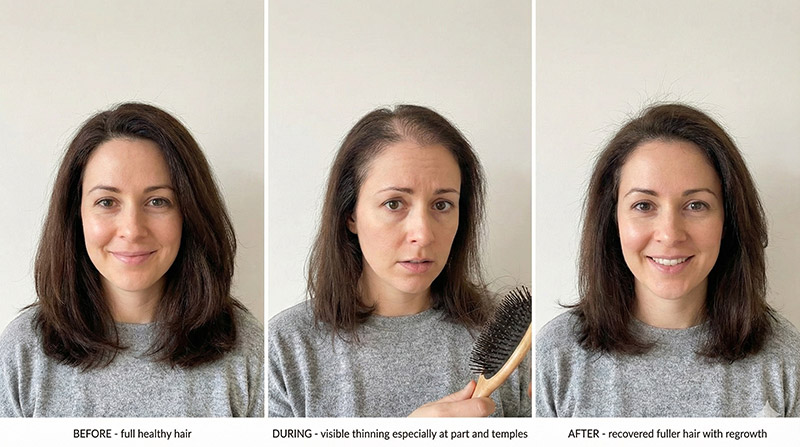
- Baby hairs sprouting around your hairline and temples
- A “halo” of short new growth around your head
- Gradual thickening over 6-12 months
Your hair may not come back exactly the same — some people notice slight changes in texture or thickness, especially if they lost a significant amount of weight. But for most, it returns to normal within 1-2 years.
The Bottom Line
Hair loss on Ozempic (or Wegovy, Mounjaro, Zepbound) is a real thing. It’s caused by the rapid weight loss these medications produce, not the drugs themselves.
It’s almost always temporary. It’s almost always telogen effluvium. And it will almost always get better.
In the meantime: eat enough protein, check your nutrients, be gentle with your hair, and try not to panic. Easier said than done, I know. But your hair will come back.
The weight loss journey is already hard enough without this extra curveball. But now you know what’s happening, why it’s happening, and that there’s light at the end of the tunnel.
Dealing with other types of hair loss? Check out our guide to why your hair might be falling out — from stress to hormones to nutritional deficiencies.
