
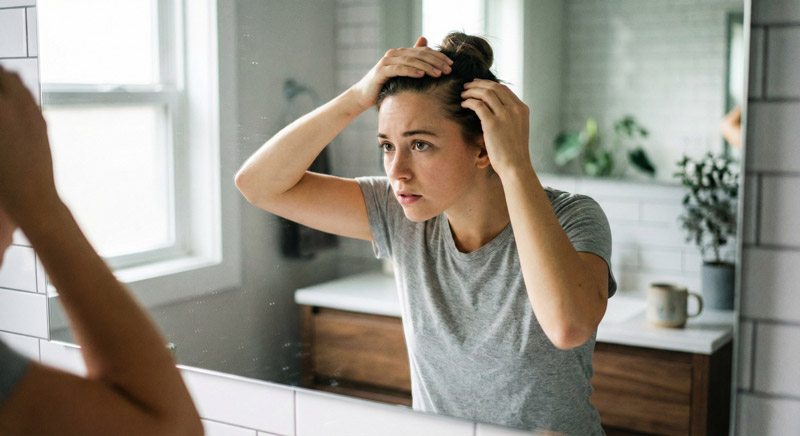
You’re 25. You’re not supposed to be worrying about hair loss yet.
But there it is — more hair in your brush, a wider part, a ponytail that feels half as thick as it used to. Maybe you can see your scalp in photos now, or your hairline looks different than it did a few years ago.
Hair thinning at 25 feels wrong. It feels unfair. And it’s terrifying because you don’t know if it’s going to stop.
Here’s what no one tells you: hair loss in your 20s is far more common than you think. You’re not alone, you’re not imagining it, and in most cases, there’s a lot you can do about it.
This guide will explain exactly why your hair might be thinning at 25, help you figure out what’s causing it, and give you a realistic action plan to address it.
Is Hair Thinning at 25 Normal?
Let’s address this first: yes, it can be normal — but that doesn’t mean you should ignore it.
According to the American Academy of Dermatology, it’s normal to lose 50-100 hairs per day. This is part of your hair’s natural growth cycle.
But if you’re noticing:
- Significantly more shedding than usual
- Visible thinning at your part, temples, or crown
- Your ponytail or bun feeling smaller
- Being able to see more scalp than before
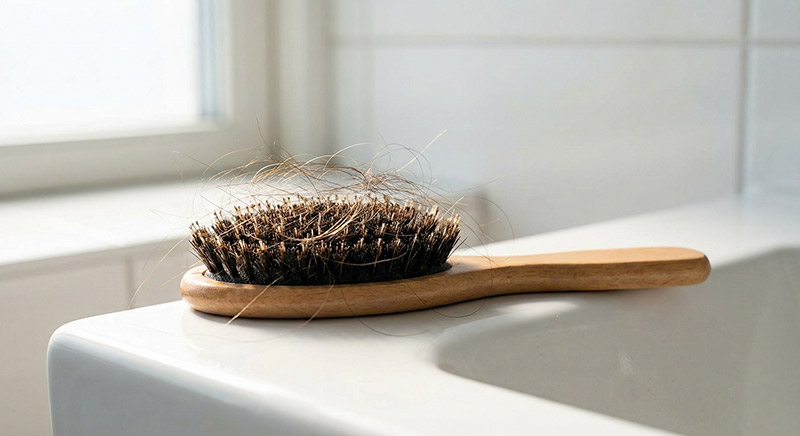
…then something beyond normal shedding is happening.
Hair thinning at 25 isn’t “normal” in the sense that everyone experiences it — but it’s common enough that dermatologists see young patients for hair loss every single day. A 2020 study in the International Journal of Women’s Dermatology found that hair loss increasingly affects people in their 20s and 30s, with stress and lifestyle factors playing a significant role.
The key is figuring out why it’s happening so you can address it properly.
Common Causes of Hair Thinning in Your 20s
Hair loss at 25 rarely has a single cause. Usually, it’s a combination of factors. Here are the most common culprits:
1. Genetics (Androgenetic Alopecia)
This is the most common cause of hair thinning at any age — and yes, it can start in your early 20s.
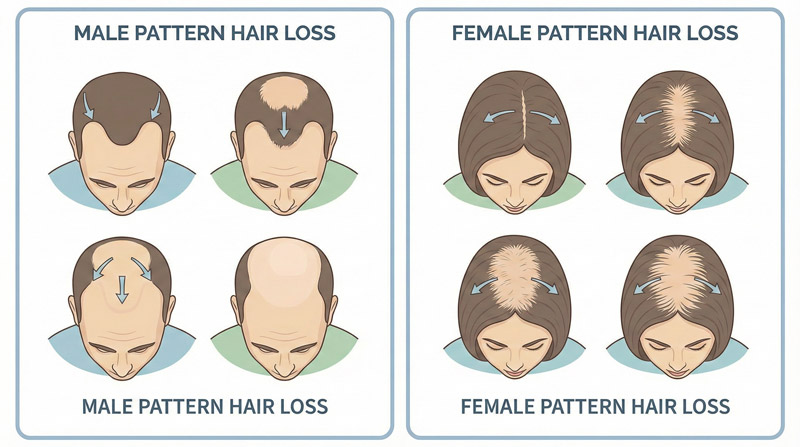
Androgenetic alopecia, also called male pattern baldness or female pattern hair loss, is hereditary. If your parents or grandparents experienced thinning, you’re more likely to as well.
In men: Typically starts with a receding hairline and thinning at the crown. According to the American Hair Loss Association, approximately 25% of men who experience male pattern baldness begin seeing hair loss before age 21.
In women: Usually presents as overall thinning across the top of the head, with the part line widening. The hairline typically stays intact.
Genetic hair loss is progressive, meaning it will continue without treatment. The earlier you catch it, the more hair you can preserve.
2. Stress (Telogen Effluvium)

Stress is one of the biggest triggers for hair thinning at 25 — and let’s be honest, your 20s can be incredibly stressful.
Career pressure, relationship stress, financial worries, major life transitions… your body responds to all of it. When you experience significant physical or emotional stress, it can push hair follicles into the resting (telogen) phase prematurely.
A few months later, that hair falls out all at once. This is called telogen effluvium, and it’s the second most common cause of hair loss.
The pattern is usually:
- Stressful event occurs
- 2-4 months later, excessive shedding begins
- Shedding continues for 3-6 months
- Hair gradually regrows once the stress resolves
The good news: telogen effluvium is temporary. The bad news: if you’re constantly stressed, it can become chronic.
3. Nutritional Deficiencies
Your hair needs specific nutrients to grow. If you’re not getting enough, your body will prioritize vital organs over hair production.
Common deficiencies linked to hair thinning at 25:

Iron deficiency — Extremely common, especially in women. According to research published in the Journal of Korean Medical Science, low iron (even without anemia) is associated with hair loss in premenopausal women.
Vitamin D deficiency — Studies show that people with hair loss often have lower vitamin D levels. A 2019 study found a significant correlation between vitamin D deficiency and both telogen effluvium and androgenetic alopecia.
Protein deficiency — Hair is made of keratin, a protein. Restrictive diets or not eating enough protein can cause hair thinning.
Zinc and biotin — Both play roles in hair growth, though true deficiency is less common.
If you’ve been dieting, eating restrictively, or just not prioritizing nutrition, this could be contributing to your hair thinning at 25.
4. Hormonal Changes
Your 20s are a time of hormonal shifts, and hormones directly affect hair growth.
For women:
- Starting or stopping birth control
- Polycystic ovary syndrome (PCOS)
- Thyroid disorders (hypothyroidism or hyperthyroidism)
- Post-pregnancy (postpartum hair loss)
For men:
- Increased DHT sensitivity (dihydrotestosterone, which shrinks hair follicles)
- Thyroid disorders
Hormonal hair loss often has a pattern — women may notice thinning on top but not at the temples, while men see the classic receding hairline or crown thinning.
If you suspect hormones, blood tests can identify imbalances that might be contributing.
5. Overstyling and Hair Damage
Sometimes hair thinning at 25 isn’t actually hair loss — it’s breakage.
Years of:
- Tight ponytails, buns, or braids (traction alopecia)
- Heat styling without protection
- Chemical treatments (bleaching, relaxers, perms)
- Rough brushing or detangling
…can weaken hair to the point where it breaks off, making it look and feel thinner.
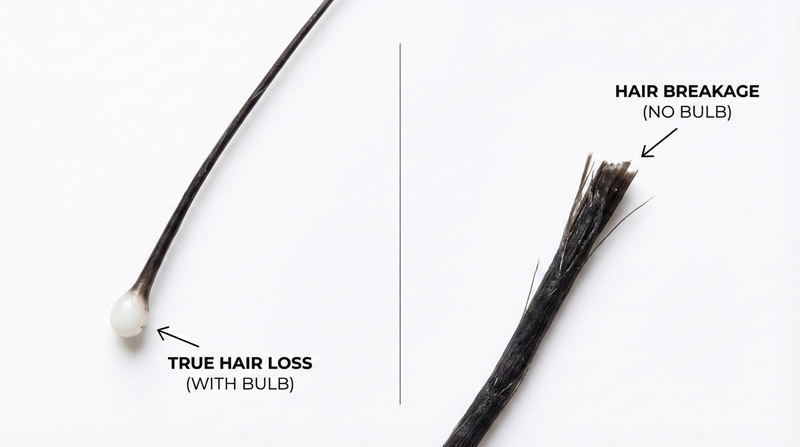
The difference between breakage and true hair loss: breakage creates short, broken pieces at various lengths. True hair loss means hairs are falling from the root.
Look at the hairs you’re losing. If they have a white bulb at the end, they fell from the root. If they’re broken pieces with no bulb, it’s breakage.
6. Medical Conditions and Medications
Several medical conditions can cause hair thinning in your 20s:
- Thyroid disorders — Both overactive and underactive thyroid affect hair
- Autoimmune conditions — Alopecia areata causes patchy hair loss; lupus can cause scarring hair loss
- Scalp conditions — Seborrheic dermatitis, psoriasis, or fungal infections
- Anemia — Beyond just iron deficiency
Certain medications can also trigger hair loss:
- Accutane (isotretinoin)
- Some antidepressants
- Blood pressure medications
- Birth control pills (starting or stopping)
- Weight loss medications (Ozempic, Wegovy — see our full guide)
If your hair thinning started after beginning a new medication, talk to your doctor about whether it could be related.
How to Tell What’s Causing Your Hair Thinning
Before you can fix the problem, you need to identify it. Here’s how:
Step 1: Document the Pattern
Take photos of your hair under consistent lighting — the top of your head, your hairline, your part. Do this monthly. Patterns often become clearer over time.
Ask yourself:
- Where is the thinning happening? (All over? Hairline? Crown? Part?)
- When did it start?
- Did anything significant happen 2-4 months before you noticed it?
- Is it shedding (hairs falling out) or breakage (hairs snapping off)?
Step 2: Get Blood Work
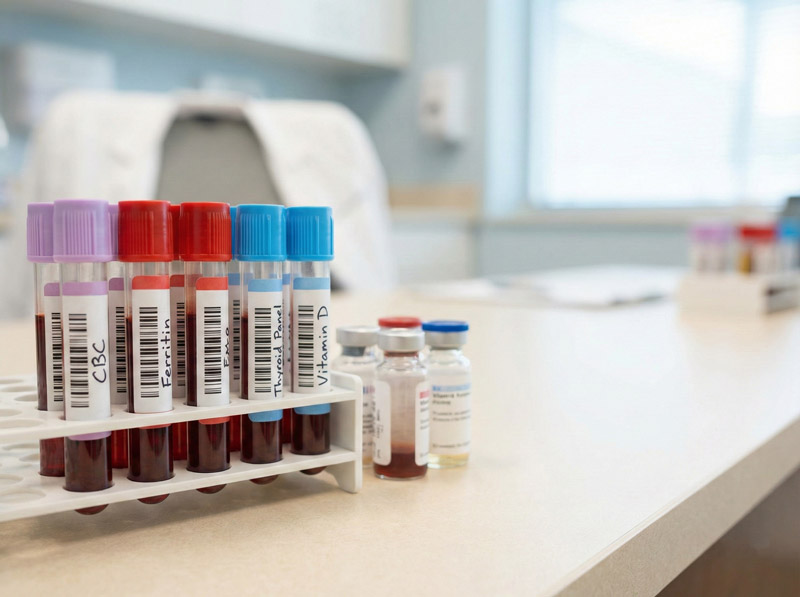
Ask your doctor to test:
- Complete blood count (CBC) — Checks for anemia
- Iron and ferritin — Ferritin should ideally be above 70 ng/mL for optimal hair health
- Vitamin D — Optimal is 40-60 ng/mL
- Thyroid panel (TSH, T3, T4) — Rules out thyroid disorders
- Hormones — Testosterone, DHEA-S, and if applicable, a full female hormone panel
Many cases of hair thinning at 25 have a treatable underlying cause that shows up in bloodwork.
Step 3: See a Dermatologist

If you can’t identify the cause yourself, see a dermatologist — ideally one who specializes in hair loss (a trichologist).
They can:
- Examine your scalp for signs of conditions like seborrheic dermatitis or alopecia areata
- Do a pull test to assess how much shedding is occurring
- Perform a scalp biopsy if needed to diagnose the type of hair loss
- Recommend appropriate treatments
Don’t wait. With hair loss, earlier intervention means better results.
What to Do About Hair Thinning at 25
Once you know (or suspect) the cause, here’s your action plan:
For Genetic Hair Loss (Androgenetic Alopecia)
Genetic hair loss is progressive but treatable. The goal is to stop further loss and potentially regrow some hair.
Minoxidil (Rogaine)
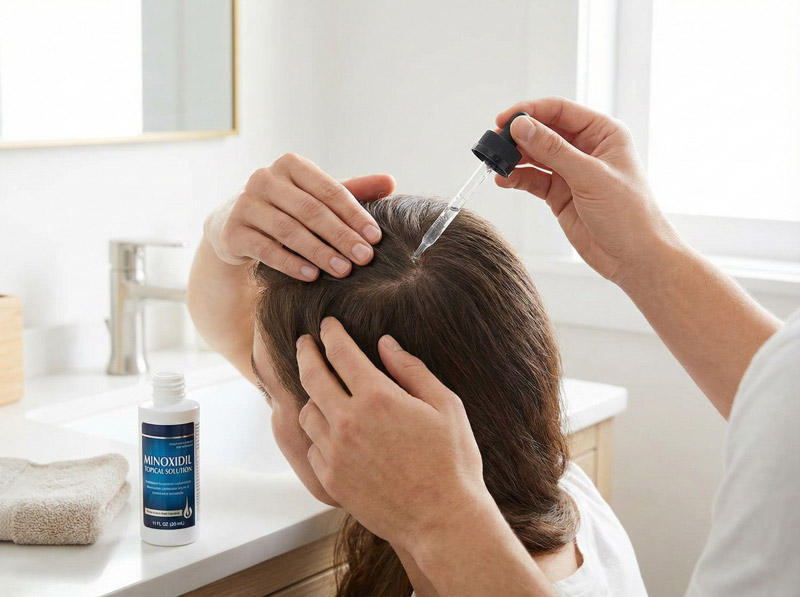
The gold standard for hair regrowth. Minoxidil is FDA-approved and available over the counter in 2% and 5% formulations.
How it works: Minoxidil extends the growth phase of hair follicles and increases blood flow to the scalp.
Results: According to clinical studies, about 40% of users see moderate regrowth after 3-6 months of consistent use.
Commitment: You must use it indefinitely. Stopping causes any regained hair to fall out.
Finasteride (Propecia) — For Men
A prescription oral medication that blocks DHT, the hormone responsible for shrinking hair follicles in male pattern baldness.
Results: Studies show finasteride can stop hair loss in about 86% of men and regrow hair in about 65%.
Note: Only approved for men. Women of childbearing age should not use it due to risks to a developing fetus. Side effects can include sexual dysfunction in a small percentage of users.
Spironolactone — For Women
An anti-androgen medication sometimes prescribed off-label for female pattern hair loss. It blocks the effects of androgens on hair follicles.
Requires a prescription and monitoring by a doctor.
Low-Level Laser Therapy (LLLT)
Devices like laser caps and combs use red light therapy to stimulate hair follicles. FDA-cleared devices have shown modest improvements in hair density.
Not a miracle solution, but can be used alongside other treatments.
For Stress-Related Hair Loss (Telogen Effluvium)
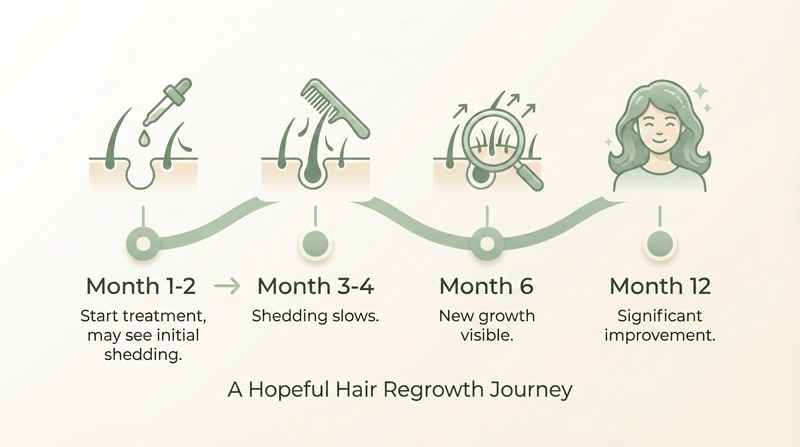
Good news: telogen effluvium usually resolves on its own once the trigger is gone.
Your job is to:
- Identify and address the stressor — Easier said than done, but critical
- Support your body’s recovery — Good nutrition, adequate sleep, stress management
- Be patient — Regrowth takes 6-12 months
If your stress is chronic, your hair won’t fully recover until you address it. Consider therapy, meditation, exercise, or whatever stress management works for you.
For Nutritional Deficiencies
If bloodwork reveals deficiencies:
Iron: Supplement under doctor’s guidance. Take with vitamin C to enhance absorption. Avoid taking with calcium or coffee.
Vitamin D: Most people need 2,000-5,000 IU daily to maintain optimal levels. Get tested to determine your dose.
Protein: Aim for at least 0.8-1 gram per pound of body weight if you’re active. Prioritize complete proteins.
General support: A hair-specific supplement like Nutrafol or Viviscal can help fill nutritional gaps, though they work best alongside a healthy diet, not as a replacement.
For Hormonal Hair Loss
Thyroid issues: Treatment with thyroid medication often reverses associated hair loss.
PCOS: Managing PCOS with medication, lifestyle changes, and sometimes spironolactone can help.
Birth control-related: Talk to your doctor about switching formulations. Some pills are better for hair than others.
For Damage and Breakage
This is the most fixable type of hair thinning at 25.
- Stop the damaging practices — Looser styles, less heat, fewer chemicals
- Trim damaged ends — You can’t repair truly damaged hair
- Baby your hair — Silk pillowcases, gentle detangling, minimal manipulation
- Use bond-repair products — Olaplex, K18, or similar treatments can strengthen hair
- Be patient — Growing out healthy hair takes time (about 6 inches per year)
Products and Treatments That Actually Help

Let’s cut through the marketing noise. Here’s what’s proven to work:
Proven Effective
| Treatment | Best For | Evidence Level |
|---|---|---|
| Minoxidil 5% | Genetic hair loss (men & women) | Strong — FDA approved |
| Finasteride | Male pattern baldness | Strong — FDA approved |
| Spironolactone | Female pattern hair loss | Moderate — Rx required |
| Low-level laser therapy | Genetic hair loss | Moderate — FDA cleared |
| Iron supplementation | Iron deficiency hair loss | Strong — when deficient |
| Treating thyroid disorder | Thyroid-related hair loss | Strong |
Promising but Less Proven
| Treatment | Notes |
|---|---|
| Rosemary oil | One study showed similar results to minoxidil; more research needed |
| Microneedling | May enhance minoxidil absorption; some positive studies |
| PRP (Platelet-Rich Plasma) | Mixed results; expensive; more research needed |
| Hair supplements (Nutrafol, Viviscal) | May help with nutritional support; not miracle cures |
Probably Won’t Help
- Biotin supplements (unless you’re actually deficient, which is rare)
- Most drugstore “thickening” shampoos (they coat hair temporarily, don’t affect growth)
- Caffeine shampoos (minimal evidence for regrowth)
- Essential oil blends (except rosemary, which has some evidence)
When to Worry — and When Not To
You Can Probably Relax If:
- You went through a stressful period 2-4 months ago and shedding recently started
- You’ve been dieting or changed your eating habits significantly
- You recently started or stopped birth control
- Your hair looks thinner but no one else has noticed
- The shedding is diffuse (all over) rather than in patches
These scenarios often point to temporary, reversible causes.
See a Doctor If:
- You’re losing hair in patches or clumps
- Your scalp is red, itchy, or painful
- You have other symptoms (fatigue, weight changes, irregular periods)
- Hair loss is rapid and severe
- You have a family history of early hair loss and want to intervene early
- It’s been more than a year with no improvement
Early intervention is everything with genetic hair loss. The sooner you start treatment, the more hair you can keep.
The Emotional Side of Hair Thinning at 25
Let’s acknowledge something: hair loss at a young age is emotionally hard.
Your hair is part of your identity. Watching it thin can trigger anxiety, depression, and a blow to your self-esteem — especially when you feel like you’re “too young” for this.
A 2019 study in the Journal of Cosmetic Dermatology found that hair loss significantly impacts quality of life, with effects on social interactions, self-confidence, and mental health.
It’s okay to feel upset about this. It’s okay to grieve the hair you had. And it’s okay to seek help — both for your hair and for the emotional impact.
What’s not helpful is spiraling into anxiety, which only makes stress-related hair loss worse.
Focus on what you can control: getting proper diagnosis, following treatment protocols, taking care of your overall health. And give yourself grace.

The Bottom Line
Hair thinning at 25 is scary, but it’s not hopeless.
In many cases, there’s an identifiable cause — stress, nutritional deficiencies, hormones, or yes, genetics — and often something you can do about it.
Your action plan:
- Document what’s happening — Photos, timeline, pattern
- Get blood work — Rule out deficiencies and thyroid issues
- See a dermatologist — Get a proper diagnosis
- Start appropriate treatment — Based on the cause
- Be patient — Hair grows slowly; give treatments 6-12 months
You’re not alone. Millions of people in their 20s deal with hair thinning. The difference is whether you catch it early and take action, or wait and wish you had.
Your hair isn’t a lost cause. Take the first step today.
