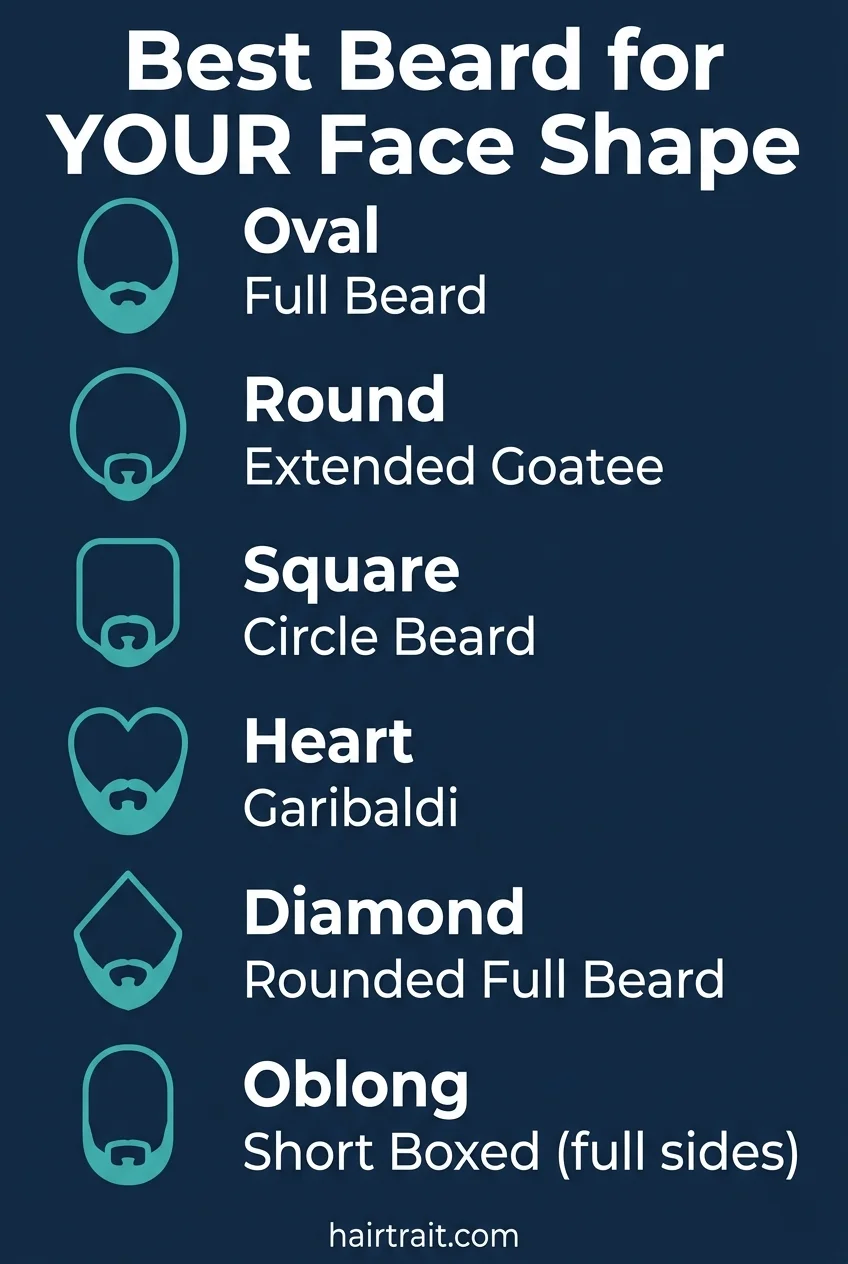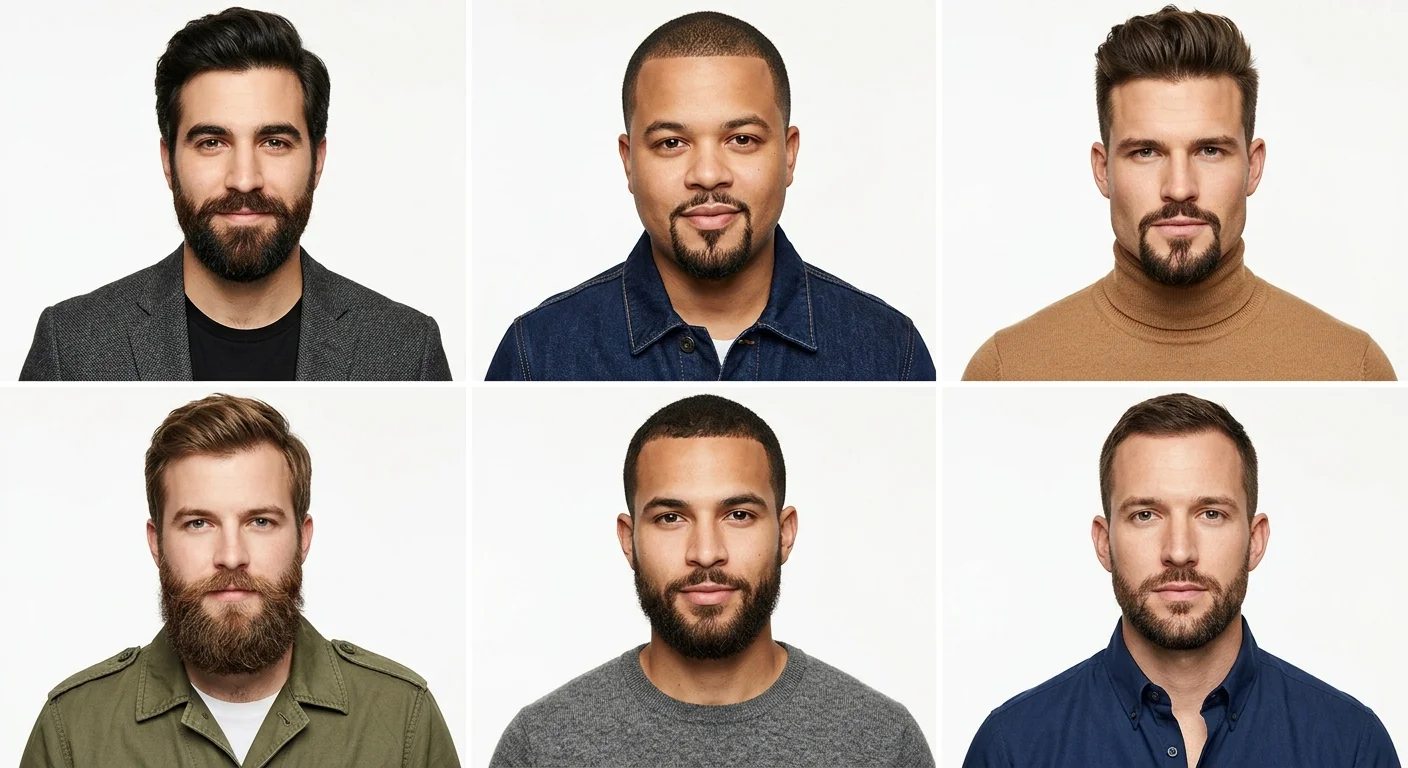
Best Beard Styles for Face Shapes: The Complete 2026 Guide
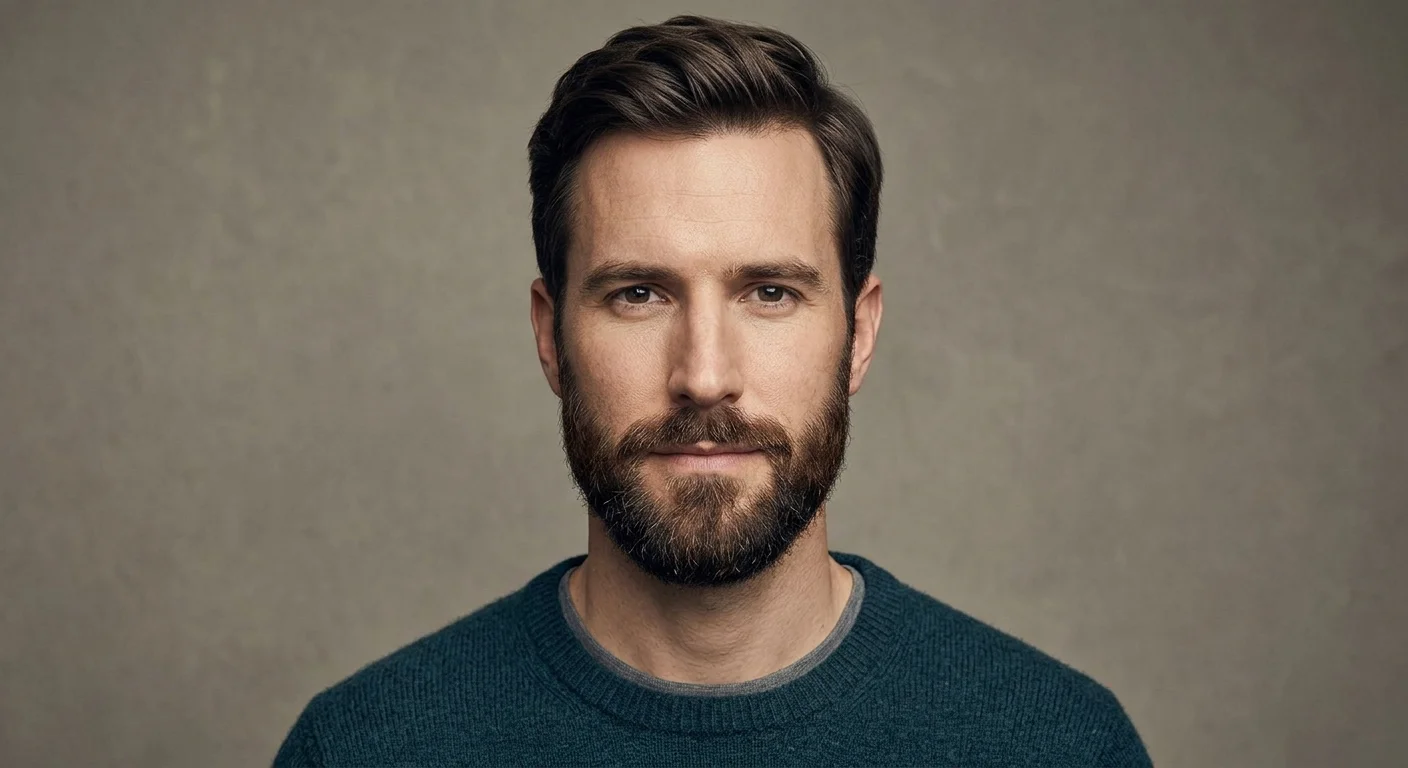
The wrong beard makes a great face look unbalanced. The right beard does the opposite. It highlights your best features, hides less prominent ones, and creates the look of more balanced proportions. But choosing the best beard styles for face shapes is not about memorising rules — it is about understanding one simple principle that applies to every face shape.
The goal of every beard style choice is to move your face closer to the proportions of an oval — the most visually balanced face shape. Every recommendation in this guide works toward that single aim. Longer chin, shorter sides for round faces. Softer edges, rounded styles for square faces. More volume at the jaw for heart and diamond faces.
This guide covers how to identify your face shape, the three best beard styles for each of the six main face shapes, what to avoid, and how to place your neckline for maximum jaw definition. If you are still growing your beard out, our guide on how to grow a fuller beard covers the foundation work.
How to Find Your Face Shape
Identifying your face shape takes about 30 seconds. Stand in front of a mirror with your beard and hair pulled away from your face and look at the overall outline. The key is comparing four measurements: your forehead width, cheekbone width, jawline width, and face length. You do not need a tape measure — a visual assessment is close enough for beard style selection.
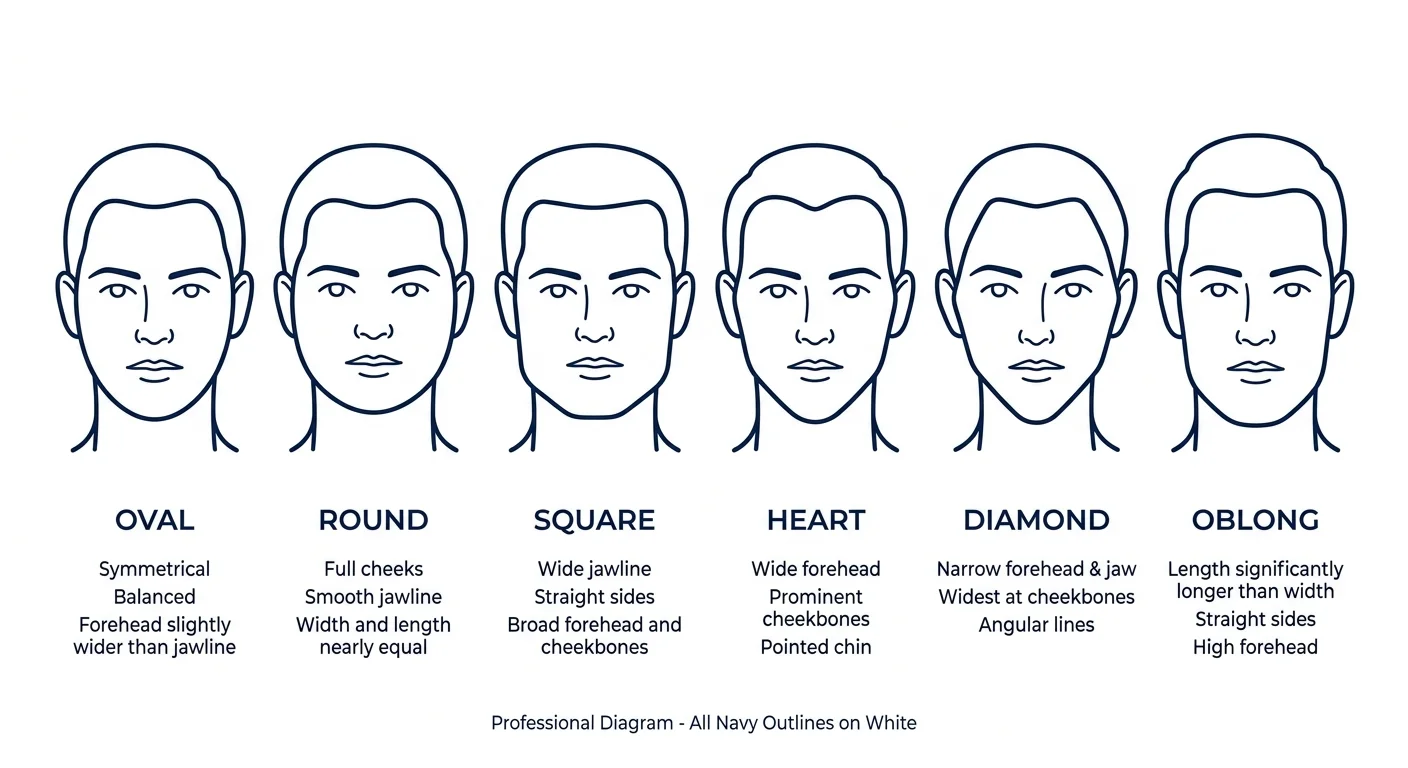
Here is the quick guide to each of the six main face shapes:
Oval: Slightly longer than wide. Forehead marginally broader than jawline. Jaw angles are soft, not sharp. The most balanced and versatile face shape.
Round: Width and length roughly equal. Cheekbones are the widest point. Jawline is soft and curved with no sharp angles.
Square: Width and length roughly equal, but with a strong, angular jawline and broad forehead. The face looks structured and defined.
Heart: Forehead noticeably wider than the jawline, with a pointed or narrow chin. Sometimes called an inverted triangle.
Diamond: Cheekbones are the widest point, with both forehead and jawline being narrower. Chin may be slightly pointed.
Oblong/Rectangular: Noticeably longer than wide. Forehead, cheekbones, and jawline are similar in width. The face appears tall and straight.
Best Beard Styles for Face Shapes: By Shape
Oval Face Shape — The Most Versatile
Oval faces have naturally balanced proportions, which means almost any beard style works. Your challenge is not finding a beard that suits you — it is choosing which look you actually want and keeping it well-maintained. According to Beardbrand, oval-faced men can wear anything from a short trimmed beard to a full, long beard without disrupting their natural balance.
Best styles:
Full Beard: Any length works on an oval face. Keep it well-groomed with a defined neckline and you will look sharp at any beard length from short to long.
Short Boxed Beard: Clean, defined edges on a neatly trimmed beard (typically 5–10mm). Easy for daily wear and works in any setting.
Anchor Beard: Combines a pointed chin beard with a connected moustache, following the jawline. It adds character without disrupting oval proportions.
Avoid: An unkempt, formless beard. Oval faces look best with a neat, shaped beard. Unmanaged growth wastes the advantage this face shape gives you.
Neckline: Standard two-finger placement above the Adam’s apple. No adjustment needed.
Round Face Shape — Add Length and Definition
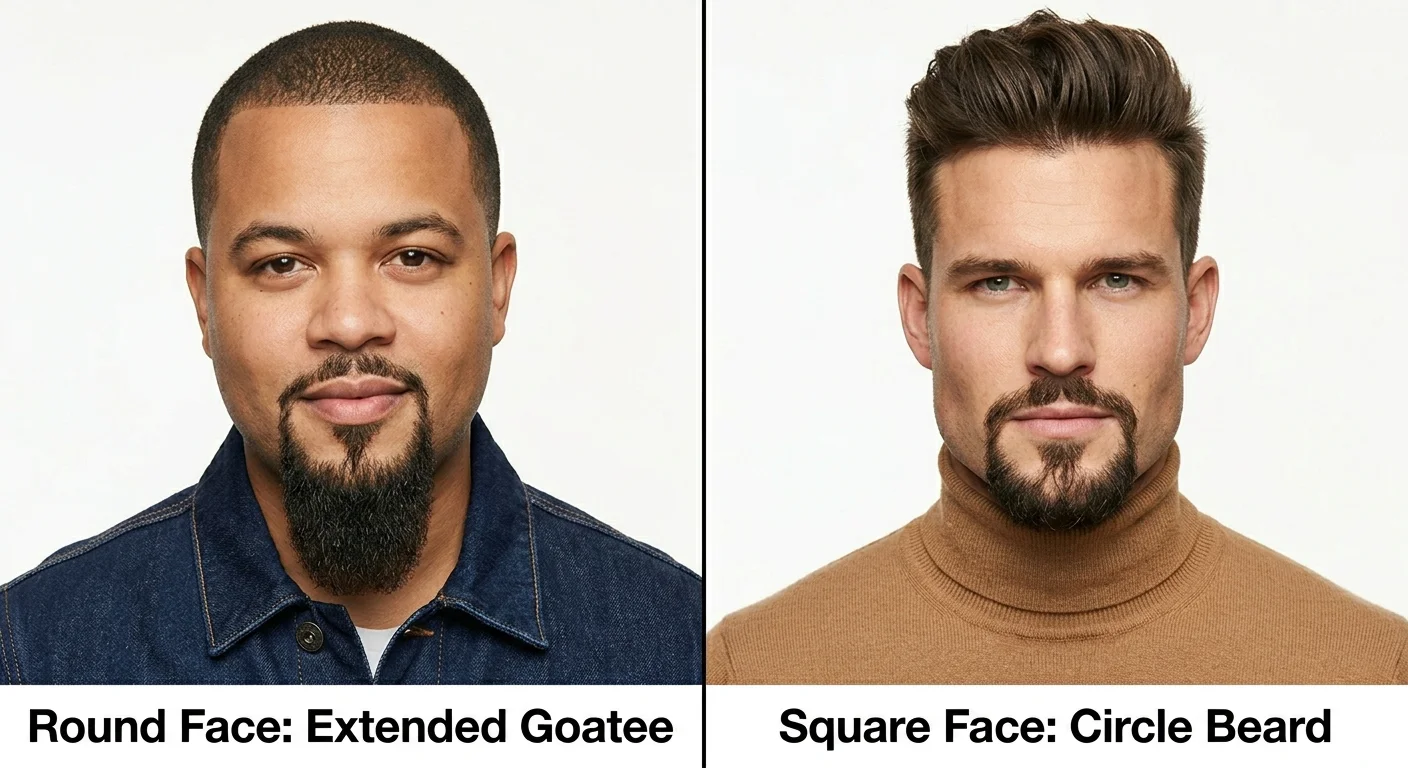
Round faces need a beard that adds vertical length and angular definition to counterbalance the natural softness and width. The key principle for round faces when choosing the best beard styles for face shapes: keep more length on the chin, less volume on the sides. This creates the illusion of a longer, more angular face.
Best styles:
Extended Goatee: The classic round face solution. More length on the chin and less on the sides adds a clear vertical line that makes the face look longer. Keep the sides short and the chin point prominent.
Van Dyke: A pointed goatee plus a disconnected moustache. The downward-pointing chin beard and the visual separation from the moustache both work to elongate the face and add angular definition.
Full Beard (shaped long at chin): A full beard can work on round faces when it is shaped to be noticeably longer at the chin and kept shorter and tighter on the sides. Avoid letting the sides grow full — this adds width you do not need.
Avoid: Round Beards Mutton Chops — any style that adds horizontal width to the sides mirrors the rounded face shape and makes it appear even wider.
Neckline: Slightly lower than standard — the extra length helps stretch the lower face.
Square Face Shape — Soften the Angles
Square faces have strong, angular jaws that are already well-defined. The goal is not to add more angularity — it is to soften the sharp edges while maintaining the masculine structure. Rounded beard styles work best, and boxy, geometric shapes should be avoided.
Best styles:
Circle Beard: The combination of a rounded goatee and a connected moustache creates soft curves that complement and soften the angular jawline. Highly effective for square faces.
Short Boxed Beard (rounded edges): A short, neat beard with rounded rather than sharp edges. Avoid a perfectly square, hard-lined shape — it doubles the angularity of a square jaw.
Balbo: A floating chin beard plus moustache, disconnected from the sideburns. Draws attention to the centre of the face rather than the wide jawline.
Avoid: Heavy Full Sides Boxy Necklines — adding width or a sharp rectangular neckline makes the jaw look even wider.
Neckline: At or just above two fingers — this keeps it from drawing attention to jaw width.
Heart Face Shape — Build Up the Chin and Jaw
Heart-shaped faces have a wide forehead and a narrow chin. The beard needs to add volume to the lower face — the chin and jaw — to balance the forehead. A fuller beard is almost always the right call here.
Best styles:
Full Beard: Adds volume across the lower face and widens the jaw to offset a broader forehead. Keep the cheeks trimmed shorter and the chin area fuller for maximum effect.
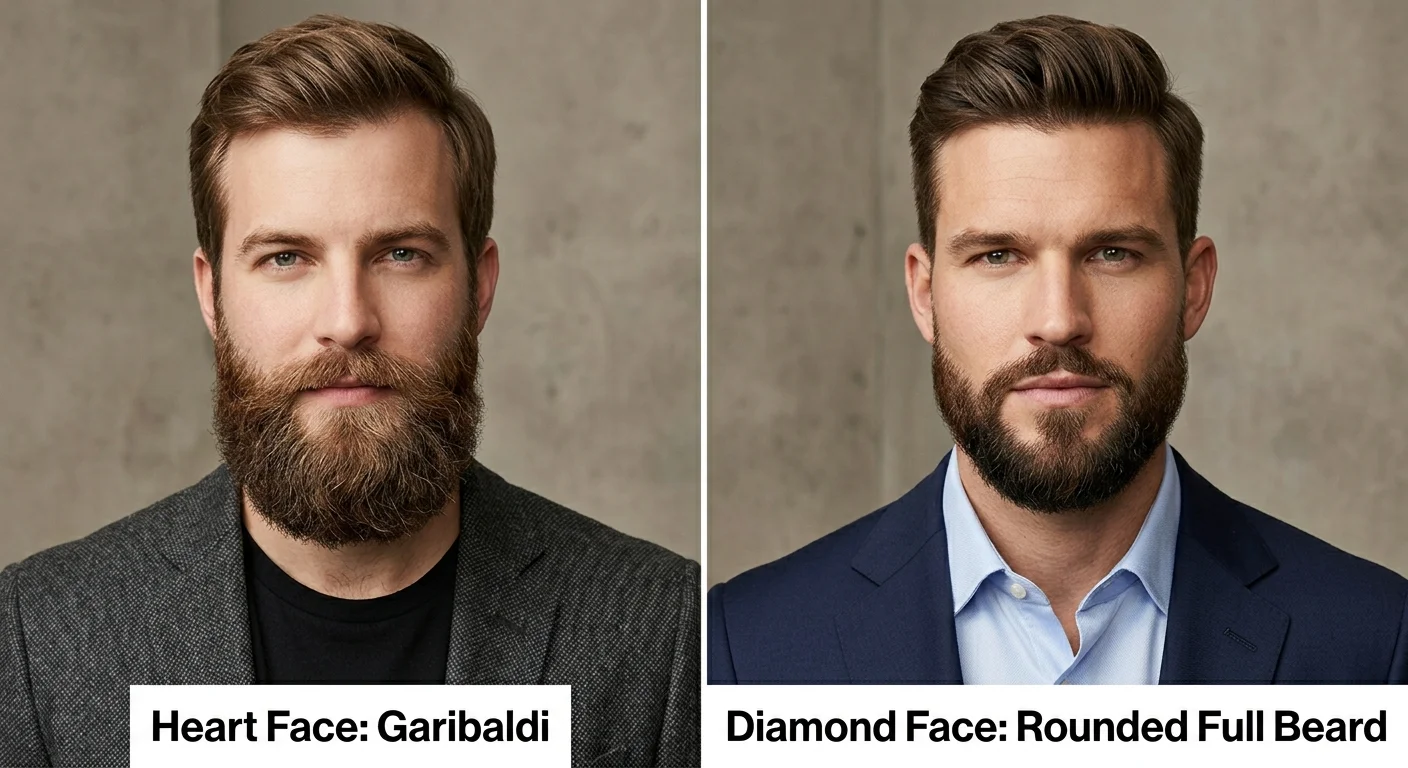
Garibaldi: A full, slightly rounded beard with a wide base. The rounded bottom adds noticeable width to the chin area — precisely what heart-shaped faces need. According to Braun, the Garibaldi is one of the top beard styles for heart-shaped faces because the wide, rounded base directly addresses the narrowing chin.
Short Boxed Beard: A cleaner option for men who prefer minimal maintenance. The square edges at the jaw add visual width to an otherwise narrow chin area.
Avoid: Soul Patch Pointed Goatee — any style that draws a downward point at the chin emphasises the narrowness and makes the heart shape more pronounced.
Neckline: Standard two-finger placement. Allow the chin area to grow slightly fuller than the sides.
Diamond Face Shape — Balance the Cheekbones
Diamond faces have the cheekbones as the widest point, with narrower forehead and jaw. The beard strategy is to add volume at the chin and jaw to balance those prominent cheekbones — while keeping coverage minimal on the cheeks to avoid emphasising the widest area further.
Best styles:
Rounded Full Beard: The wide base of a rounded full beard adds width to the narrow jaw — offsetting the visual dominance of the cheekbones and creating better balance.
Garibaldi: Like the heart shape, the Garibaldi’s wide rounded base is ideal for diamond faces — it specifically builds volume exactly where a diamond face needs it, at the jaw and chin.
Full Stubble (5mm): A natural, even stubble that subtly enhances the jawline without overwhelming the face. A safe, low-maintenance option that works well with the diamond shape’s angular features.
Avoid: Long Sideburns High Cheek Volume — anything that adds fullness at the cheekbones will draw further attention to the widest, most prominent part of a diamond face.
Neckline: Standard two-finger placement. Keep the cheeks neatly trimmed to emphasise the jaw rather than the cheekbones.
Oblong / Rectangular Face Shape — Add Width, Reduce Length
Oblong faces are notably longer than they are wide. The goal is to add visual width to the face while avoiding anything that adds more vertical length. This makes oblong faces one of the few face shapes where keeping a beard shorter and wider actually works in your favour.
Best styles:
Short Boxed Beard with Full Sides: Unlike the round face approach, oblong faces benefit from allowing the sides to grow fuller. This adds width to the narrower cheek area and breaks up the vertical length of the face.
Mutton Chops: Wide sideburns that reach the cheeks but do not meet at the chin. They add clear width — ideal for oblong faces that need horizontal balance.
Full Beard (kept at medium length): A full beard maintained at two to three inches adds both width at the sides and some length — but keep it controlled. An extremely long beard on an oblong face will exaggerate the length issue.
Avoid: Long Goatees Pointed Chin Styles — adding a downward point at the chin or a long, narrow chin beard dramatically increases the apparent length of an already long face.
Neckline: Slightly higher than standard placement — a raised neckline visually shortens the face length from below.
Quick Reference: Best Beard Styles for Face Shapes
| Face Shape | Goal | Best Styles | Avoid |
|---|---|---|---|
| Oval | Maintain balance | Anything — full beard, stubble, anchor, boxed | Unkempt / unstyled |
| Round | Add length and angles | Extended goatee, Van Dyke, anchor | Wide sides, round shapes |
| Square | Soften angles | Circle beard, Balbo, goatee, rounded boxed | Boxy shapes, heavy sides |
| Heart | Widen the chin/jaw | Full beard, Garibaldi, short boxed | Soul patch, pointed goatee |
| Diamond | Balance cheekbones | Rounded full beard, Garibaldi, full stubble | Long sideburns, high cheek volume |
| Oblong | Add width, reduce length | Short boxed (full sides), mutton chops, stubble | Long goatees, pointed chin styles |
The Neckline: The Most Overlooked Part of Any Beard Style
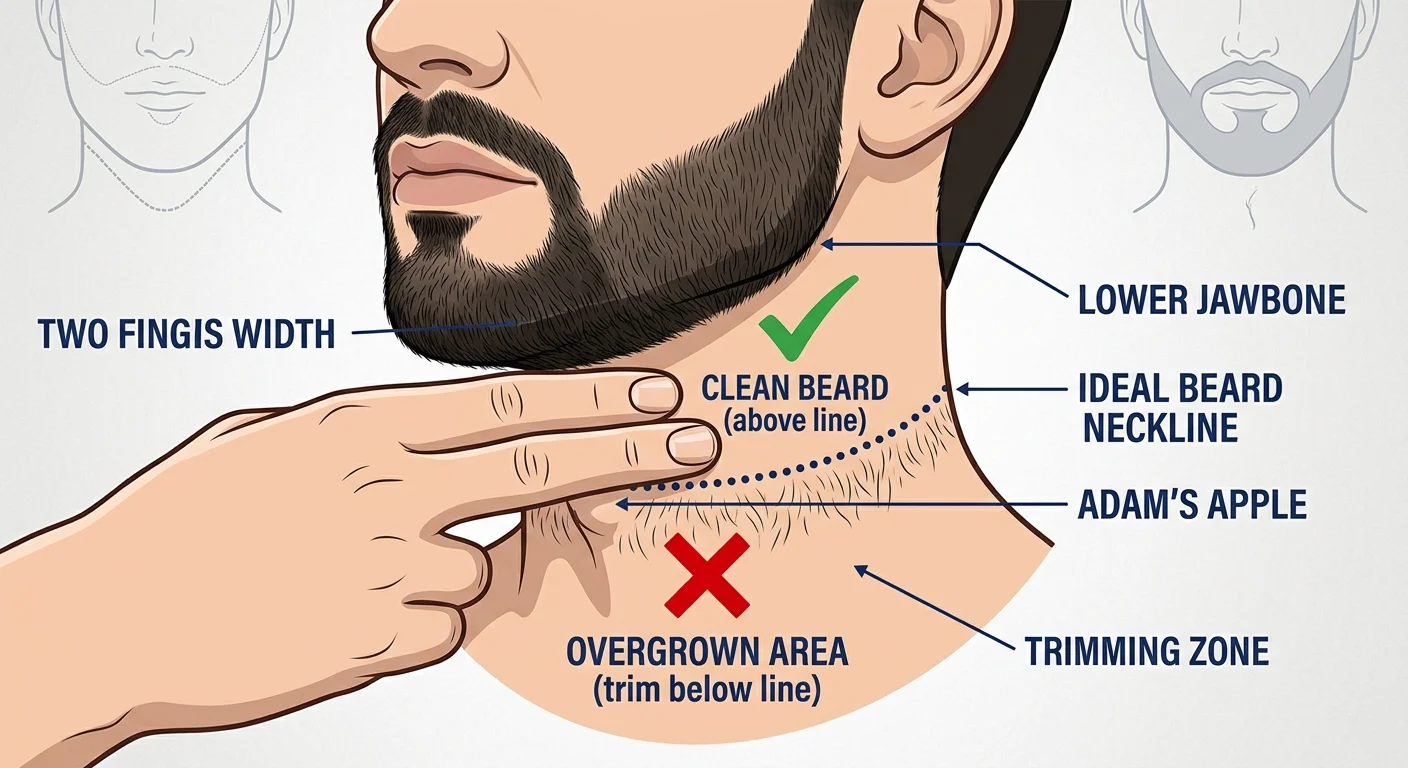
Choosing the right beard style is only half of the equation. The neckline placement decides whether the beard actually frames your face. Face Shape Detector’s barber guide notes the neckline is the most overlooked part of beard styling. Get it wrong and it ruins an otherwise good beard.
The baseline rule: place two fingers above your Adam’s apple. Clean everything below this line. This placement sits low enough to look natural and high enough to define the jaw clearly. Adjustments from there are minor — oblong faces trim slightly higher, round faces keep it slightly lower.
A neckline placed too high makes the jaw look smaller and the neck appear thicker. Too low creates a heavy, undefined look with no clear transition between jaw and neck. Get the neckline right and your beard will look intentional regardless of which style you choose.
What is the best beard style for a round face?
For round faces, the best beard styles are ones that add vertical length and angular definition. An extended goatee — longer at the chin with minimal side coverage — is the most effective choice. A Van Dyke beard (pointed chin beard plus disconnected moustache) works similarly. Avoid wide, full-sided beards that add horizontal width and mirror the rounded face shape.
What beard style suits a square face?
Square faces have strong, angular jaws that already look defined. The beard should soften those angles, not sharpen them. Circle beards, Balbo styles, and goatees work well. Their rounded shapes soften the jaw without doubling its angularity. Avoid boxy, square-edged necklines. They double the angular look of the jaw.
Can any beard style suit an oval face?
Yes. Oval faces have balanced proportions and suit almost any beard style. From full beards to short stubble, anchor beards to Van Dykes, oval faces are the most versatile canvas for beard styling. Just keep whatever you choose neat and shaped.
What beard should a man with a heart-shaped face grow?
Heart-shaped faces have a wide forehead and narrow chin. The beard needs to add volume to the lower face. A full beard or a Garibaldi are the best choices — both build jaw and chin width where this face shape needs it most. Avoid styles with a pointed chin like goatees, which emphasise the narrowness.
What beard works for a patchy beard with any face shape?
Choose styles that work with your natural growth pattern rather than against it. Goatees, anchor beards, and Van Dyke styles work well for patchy coverage because they do not require dense cheek-to-chin coverage. Even stubble at 3–5mm is another option. It makes sparse growth look deliberate, not half-done. For help with fuller coverage, read our guide on how to grow a fuller beard naturally.
Should I match my beard style with my haircut?
Yes — the best pairs work on the same idea. If your haircut adds height (for a round face), a beard that adds chin length reinforces that work. If your haircut softens angles (for a square face), a rounded beard style complements it rather than working against it. For matching haircut and beard recommendations, check our guide on hairstyles for receding hairline men which also covers how to pair beard and hair choices by face shape.
The Bottom Line
✅ Best Beard Styles for Face Shapes — Summary
The right beard does not just look good in isolation — it works with your face shape to create better overall proportions. The single rule that applies to every face shape: use your beard to move your face’s visual proportions closer to oval. Add length where you need it, add width where you need it, and soften or emphasise angles depending on what your face shape calls for.
Start with the face shape closest to yours, try one of the recommended styles, and give it four to six weeks before judging. The right beard for your face is the one that makes you look in the mirror and think it looks right — not the one a trend article said was popular this year.
Once you have your style sorted, read our guides on beard oil vs beard balm to build the care routine that keeps it healthy, and how to trim your beard at home to maintain the shape between barber visits.