Hard Water Hair Damage: Signs, Causes, and How to Fix It
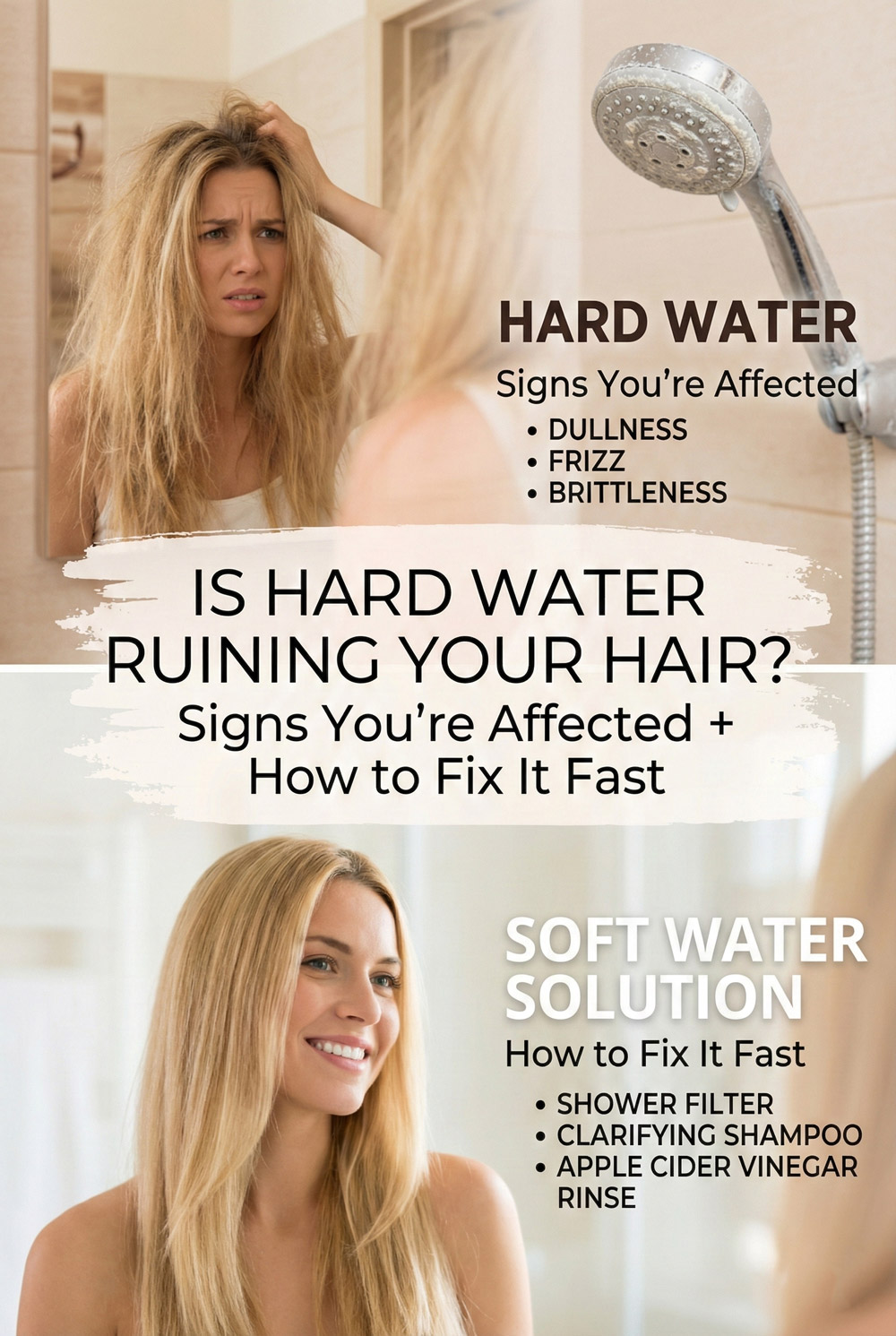
If your hair feels like straw no matter what products you use, hard water might be the culprit.
You’ve tried expensive shampoos. You’ve deep conditioned religiously. You’ve cut back on heat styling. But your hair still feels dry, looks dull, and won’t cooperate.
Before you blame your genetics or spend another fortune on products, consider this: hard water hair damage affects millions of people, and most don’t even realize it’s happening.
The water coming out of your shower could be sabotaging every good thing you do for your hair.
In this guide, you’ll learn exactly what hard water does to your hair, how to tell if you’re affected, and — most importantly — how to fix it.
What Is Hard Water?
Hard water is water that contains high concentrations of dissolved minerals, primarily calcium and magnesium. These minerals are picked up as water travels through limestone, chalk, and other mineral-rich rock formations before reaching your tap.
According to the U.S. Geological Survey (USGS), approximately 85% of American homes have hard water to some degree. That’s the vast majority of households.
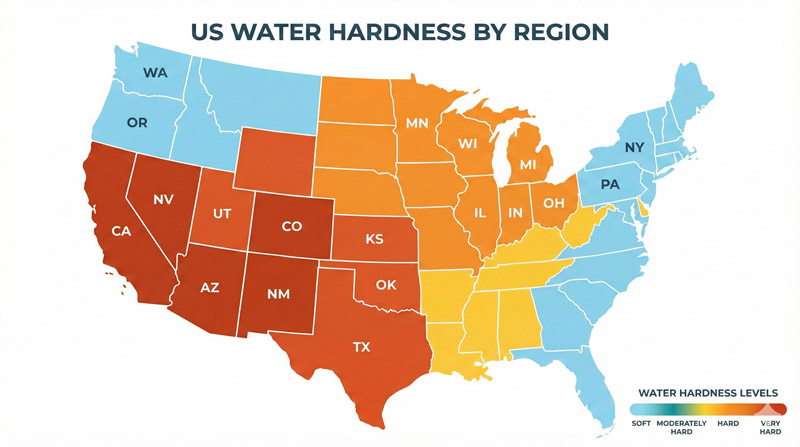
Water hardness is measured in parts per million (PPM) or grains per gallon (GPG):
- Soft water: 0-60 PPM (0-3.5 GPG)
- Moderately hard: 61-120 PPM (3.5-7 GPG)
- Hard water: 121-180 PPM (7-10.5 GPG)
- Very hard water: 180+ PPM (10.5+ GPG)
If you live in areas like Arizona, Texas, Indiana, Wisconsin, or most of the Midwest, you likely have hard water. Coastal regions and the Pacific Northwest tend to have softer water.
You can check your local water hardness through your city’s water quality report or by using an inexpensive home testing kit.
How Hard Water Damages Your Hair
Hard water hair damage happens through a process called mineral buildup. Here’s the science:
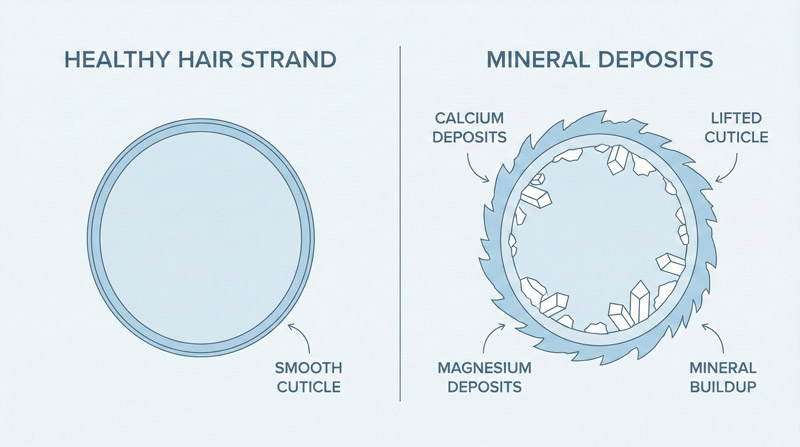
When you wash your hair with hard water, calcium and magnesium ions don’t rinse away completely. Instead, they bond to your hair shaft, creating a film of mineral deposits.
Over time, this buildup:
1. Creates a barrier that blocks moisture
The mineral film prevents conditioners and treatments from penetrating the hair shaft. No matter how much you moisturize, the hydration can’t get through. This is why hard water makes hair feel perpetually dry.
2. Lifts the hair cuticle
Healthy hair has a smooth, flat cuticle layer that reflects light and feels silky. Mineral deposits rough up this cuticle, causing it to lift and stay open. The result is frizz, tangles, and a dull appearance.
3. Weighs hair down
The mineral coating adds weight to each strand. Fine hair looks flat and limp. Curly hair loses definition and bounce.
4. Affects color-treated hair
If you color your hair, hard water is your enemy. According to research published in the International Journal of Trichology, mineral deposits can cause color to fade faster, turn brassy, and become uneven.
5. Can contribute to hair loss
While hard water doesn’t directly cause hair loss, the buildup can clog hair follicles and weaken strands at the root. A 2016 study found that hair treated with hard water showed decreased tensile strength compared to hair washed with distilled water.
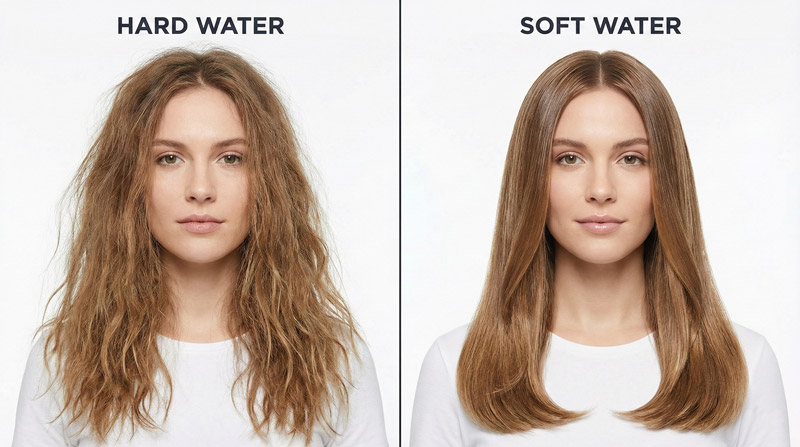
Signs of Hard Water Hair Damage
How do you know if hard water is ruining your hair? Look for these telltale signs:
Your Hair Feels Different
- Waxy or filmy texture — Hair feels coated, almost sticky when dry
- Straw-like dryness — Brittle and rough no matter how much you condition
- Difficult to lather — Shampoo doesn’t foam up properly
- Hard to rinse — Hair feels like it still has product in it after rinsing
Your Hair Looks Different
- Dullness — No shine, even after using shine-enhancing products
- Flatness — Limp, lifeless hair that won’t hold volume
- Frizz — Uncontrollable flyaways and roughness
- Color changes — Blonde hair turning brassy or greenish; color-treated hair fading quickly
Your Scalp Is Affected
- Dryness and flaking — Mineral buildup can irritate the scalp
- Itchiness — Residue on the scalp causes discomfort
- Difficulty getting clean — Scalp feels oily or dirty even after washing
Other Clues in Your Home
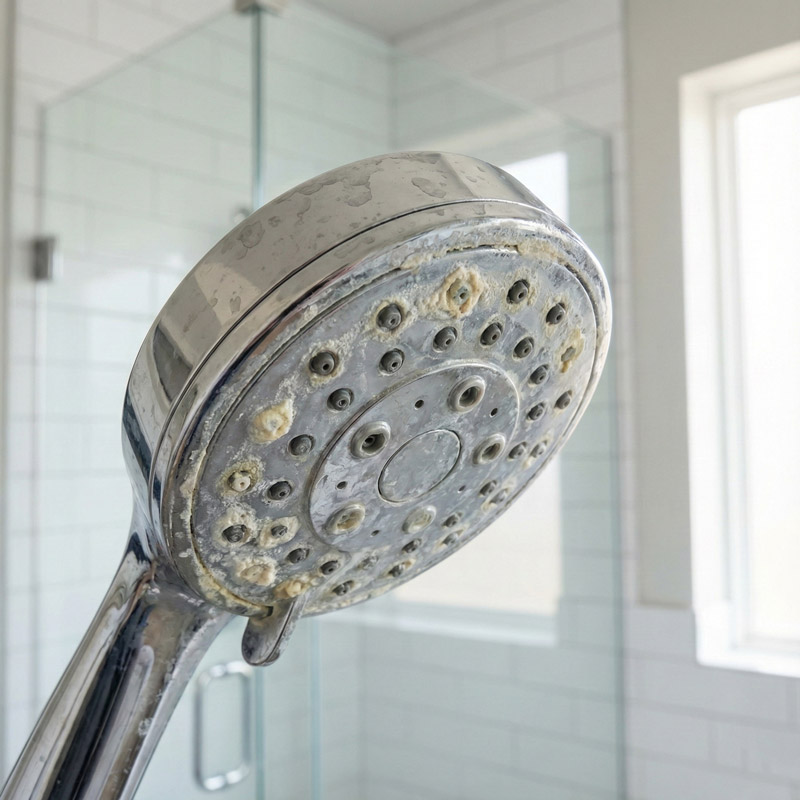
Hard water affects more than just your hair. If you notice:
- White, chalky residue on faucets and showerheads
- Soap scum that’s hard to remove
- Spots on dishes and glassware
- Dry, itchy skin after showering
- Clothes that feel stiff after washing
…you almost certainly have hard water hair damage too.
How to Fix Hard Water Hair Damage
The good news: hard water hair damage is reversible. You can remove the buildup and protect your hair going forward.
Here’s your action plan:
Step 1: Remove Existing Buildup with a Chelating Shampoo
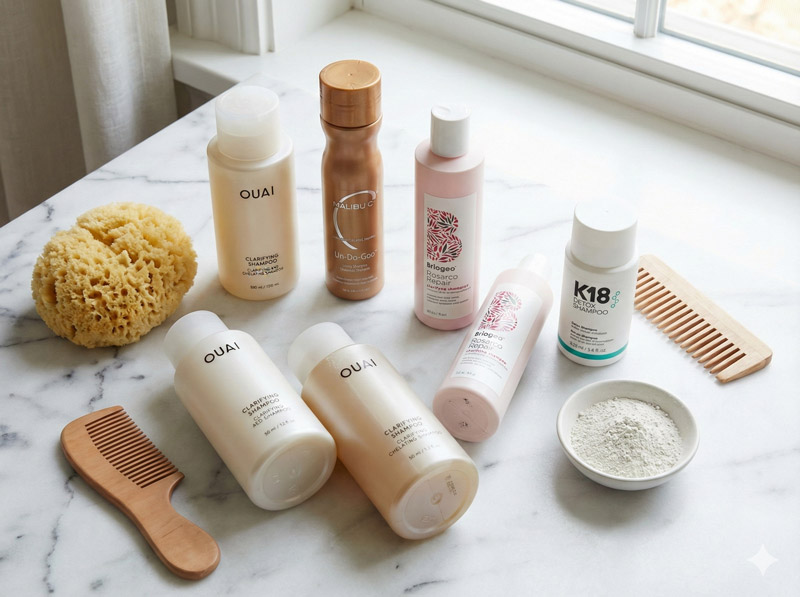
Regular clarifying shampoos won’t cut it. You need a chelating shampoo — a formula specifically designed to bind to and remove mineral deposits.
Chelating shampoos contain ingredients like EDTA (ethylenediaminetetraacetic acid) or phytic acid that grab onto metal ions and wash them away.
Recommended chelating shampoos:
- Malibu C Hard Water Wellness Shampoo
- Ion Hard Water Shampoo
- Kenra Clarifying Shampoo
- Joico K-PAK Clarifying Shampoo
How to use: Start with one chelating wash per week for the first 2-3 weeks to remove buildup. Then reduce to once every 2-4 weeks for maintenance.
Important: Chelating shampoos are strong. Always follow with a deep conditioner, and don’t overuse them or you’ll strip your hair of natural oils too.
Step 2: Try an Apple Cider Vinegar Rinse
For a natural approach to removing hard water buildup, apple cider vinegar (ACV) works surprisingly well.
The acidity of ACV (around pH 2-3) helps dissolve mineral deposits and restore your hair’s natural pH balance, which sits around 4.5-5.5 according to research in the International Journal of Trichology.
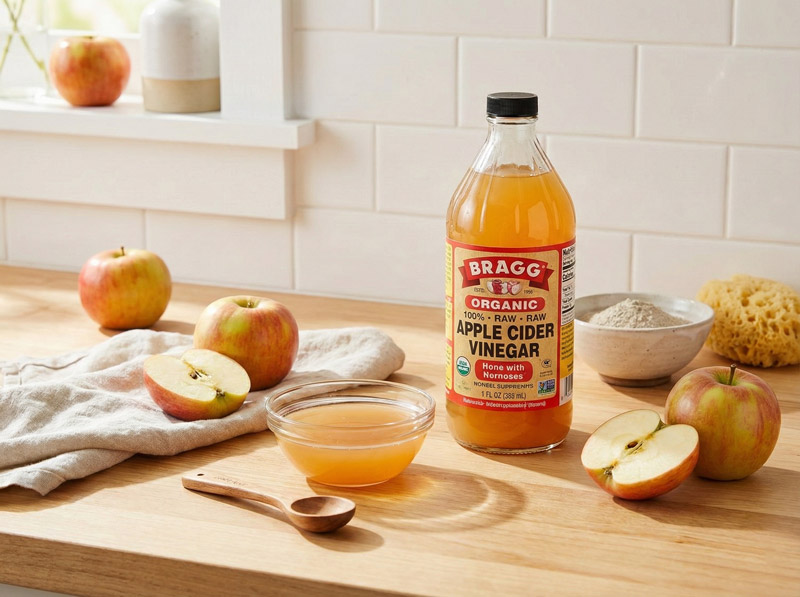
DIY ACV rinse recipe:
- Mix 2-4 tablespoons of raw apple cider vinegar with 16 ounces of water
- After shampooing, pour over hair and massage into scalp
- Let sit for 2-3 minutes
- Rinse thoroughly with cool water
Use once a week. Your hair may smell like vinegar while wet, but the smell disappears once dry.
Step 3: Install a Shower Filter
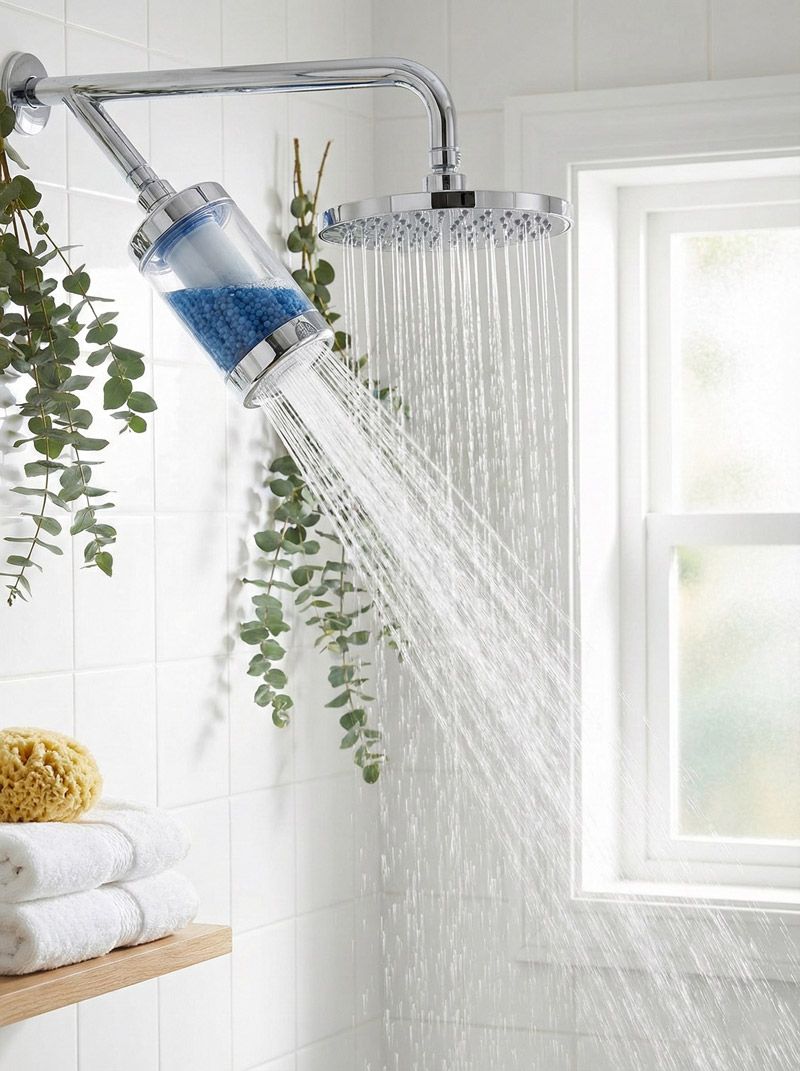
This is the most effective long-term solution for hard water hair damage.
A quality shower filter removes or reduces the minerals in your water before they reach your hair. It’s a one-time investment that protects every wash going forward.
Types of shower filters:
| Type | How It Works | Best For |
|---|---|---|
| KDF filters | Uses copper-zinc to neutralize minerals | Most hard water situations |
| Vitamin C filters | Ascorbic acid neutralizes chlorine and some minerals | Chlorine + moderate hardness |
| Carbon filters | Absorbs contaminants | Chlorine, not great for minerals |
| Multi-stage filters | Combines multiple filtration methods | Very hard water |
Top-rated shower filters for hard water:
- AquaBliss HD Heavy Duty — Specifically designed for hard water
- Jolie Filtered Showerhead — Popular for hair and skin benefits
- Aquasana AQ-4100 — Multi-stage filtration
- Culligan WSH-C125 — Budget-friendly option
Most filters need replacement every 6-8 months, depending on your water hardness and usage.
According to dermatologist Dr. Samer Jaber, speaking to Healthline: “Shower filters can make a noticeable difference for people with hard water, particularly for hair texture and scalp health.”
Step 4: Use a Water Softener (Whole-House Solution)
If you want to eliminate hard water throughout your entire home, a whole-house water softener is the ultimate fix.
Water softeners use ion exchange to replace calcium and magnesium ions with sodium or potassium ions, effectively turning hard water soft.
Pros:
- Fixes hard water for entire house (hair, skin, appliances, dishes)
- No need for shower filters
- Extends life of water heater and pipes
Cons:
- Expensive upfront ($500-$3,000+ installed)
- Requires ongoing salt purchases
- Takes up space
- Adds sodium to water (not ideal for some diets)
For most people, a shower filter provides 80% of the benefit at 10% of the cost. But if you have very hard water and want a permanent solution, a softener is worth considering.
Step 5: Adjust Your Hair Care Routine
While you’re fixing the water issue, adjust your routine to minimize ongoing damage:
Switch to sulfate-free shampoo
Sulfates are harsh detergents that can worsen dryness caused by hard water. Look for gentle, sulfate-free formulas that won’t strip your hair further.
Deep condition weekly
Use a hydrating hair mask once a week to counteract the drying effects of hard water. Look for ingredients like:
- Shea butter
- Argan oil
- Glycerin
- Hyaluronic acid
Rinse with filtered or bottled water (temporary fix)
If you can’t install a filter immediately, try doing a final rinse with filtered water from a pitcher (like Brita) or gallon jugs of distilled water. It’s not practical long-term, but it helps while you find a permanent solution.
Lower your water temperature
Hot water opens the hair cuticle, allowing more minerals to penetrate and deposit. Wash with lukewarm water and finish with a cool rinse to seal the cuticle.
How Long Until You See Results?
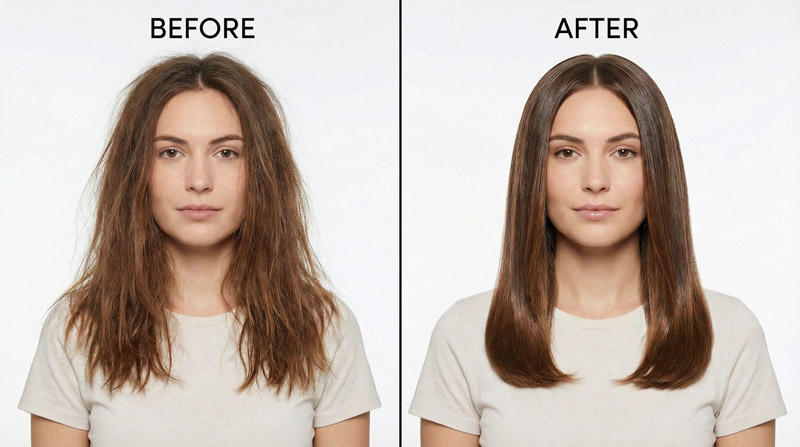
Once you start addressing hard water hair damage, improvement happens in stages:
Week 1-2: After your first chelating treatment, you should notice hair feels lighter and less waxy. Shampoo will lather better.
Week 3-4: With consistent filtered water use, hair begins to feel softer. Frizz starts to reduce.
Month 2-3: Significant improvement in shine, manageability, and overall texture. Color-treated hair holds color better.
Month 3-6: Full recovery for most people. Hair returns to its natural healthy state.
Be patient. You’re not just treating the symptoms — you’re removing months or years of accumulated mineral buildup.
Hard Water Hair Damage: Prevention Tips
Once you’ve fixed the damage, keep it from coming back:
- Use your shower filter consistently — Don’t remove it for guests and forget to put it back
- Replace filter cartridges on schedule — A worn-out filter doesn’t protect you
- Chelate monthly — One clarifying wash per month prevents buildup from accumulating
- Rinse thoroughly — Spend extra time rinsing to ensure minerals don’t sit on hair
- Protect when traveling — Pack a filtered showerhead attachment or do ACV rinses when staying somewhere with hard water
Frequently Asked Questions
Can hard water cause permanent hair damage?
No. Hard water hair damage is reversible. The mineral buildup sits on the hair shaft and can be removed with proper treatment. However, if left untreated for years, the ongoing stress can contribute to breakage and thinning.
How do I know if I have hard water?
Check your local water utility’s annual report, use a home testing kit (available at hardware stores for under $15), or look for signs like white residue on faucets and difficulty lathering soap.
Will a Brita filter help with hard water hair?
Brita and similar pitcher filters are designed for drinking water, not shower water. They reduce chlorine taste but don’t significantly affect water hardness. You need a shower-specific filter for your hair.
Is hard water bad for curly hair?
Hard water is particularly damaging for curly hair. The mineral buildup weighs down curls, disrupts curl pattern, causes frizz, and makes hair harder to detangle. Curly-haired individuals often see dramatic improvement with filtered water.
Can hard water turn blonde hair green?
Yes, but it’s usually copper (often from pipes), not calcium or magnesium, that causes the green tint. Chlorine in pool water is another common culprit. A chelating shampoo can help remove the discoloration.
The Bottom Line

Hard water hair damage is frustrating because you’re doing everything “right” but still not seeing results. The problem isn’t your routine — it’s your water.
If you recognize the signs — dry, dull, waxy, unmanageable hair despite your best efforts — hard water is likely the cause.
The fix is straightforward:
- Remove existing buildup with a chelating shampoo
- Install a shower filter to prevent new buildup
- Adjust your routine with gentler products and deep conditioning
Within a few weeks, you’ll start to see the soft, shiny, healthy hair you’ve been working so hard for.
It’s not you. It’s your water. And now you know how to fix it.