
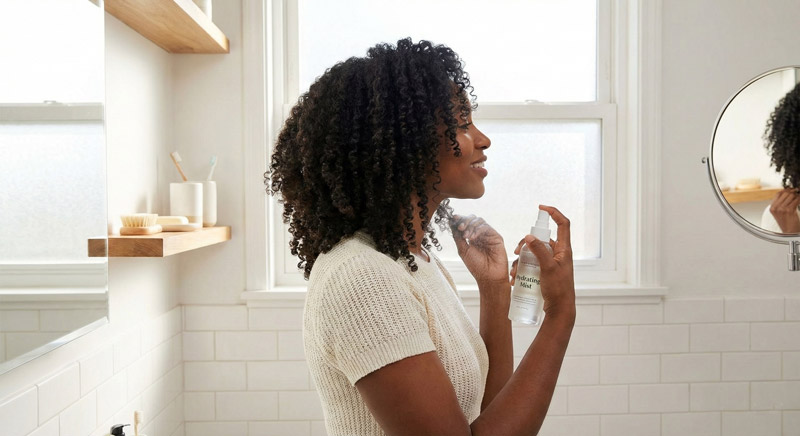
You deep condition religiously. You’ve tried every moisturizing product on the shelf. You layer on leave-ins, creams, and oils like your life depends on it.
And yet your hair still feels dry. Products just sit on top. Nothing seems to sink in.
If this sounds familiar, you probably have low porosity hair — and everything you’ve been taught about moisturizing hair is working against you.
Low porosity hair plays by different rules. The techniques that work for most people will leave your hair greasy, weighed down, and still somehow dry underneath all that product buildup.
But once you understand what’s actually happening with your hair, everything changes. The right approach can transform your dry, stubborn strands into soft, hydrated, healthy hair.
Here’s everything you need to know.
What Is Low Porosity Hair?
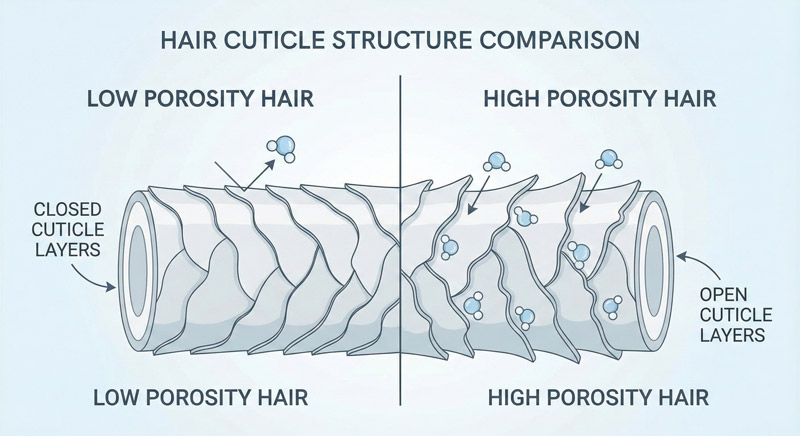
Porosity refers to your hair’s ability to absorb and retain moisture. It’s determined by the structure of your hair’s cuticle — the outermost protective layer made up of overlapping scales, kind of like shingles on a roof.
Low porosity hair has a tightly bound cuticle layer. Those “shingles” lie flat and close together, creating a barrier that’s difficult for moisture to penetrate.
Think of it like a waterproof jacket. Water beads up and rolls off instead of soaking in. That’s exactly what happens when you try to moisturize low porosity hair — products sit on the surface instead of absorbing.
According to cosmetic chemist Tonya McKay, writing for NaturallyCurly, hair porosity is largely genetic but can also be influenced by chemical treatments and heat damage. Low porosity is often the hair’s natural, undamaged state.
The Three Porosity Types
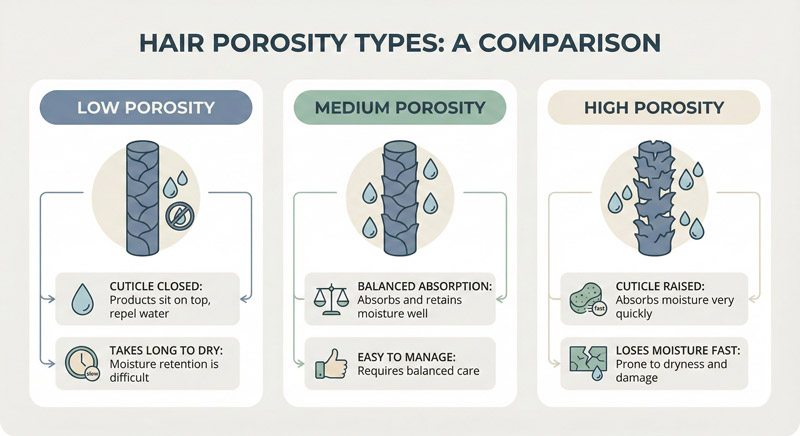
| Porosity Level | Cuticle Structure | Moisture Behavior |
|---|---|---|
| Low porosity | Tightly closed, flat cuticles | Resistant to moisture; products sit on top |
| Medium/Normal porosity | Slightly raised cuticles | Absorbs and retains moisture well |
| High porosity | Raised, open, or damaged cuticles | Absorbs quickly but loses moisture fast |
Understanding where you fall on this spectrum is crucial because the wrong routine for your porosity will never give you good results, no matter how expensive your products are.
Signs You Have Low Porosity Hair
Not sure if low porosity is your issue? Here are the telltale signs:
Products Sit on Your Hair
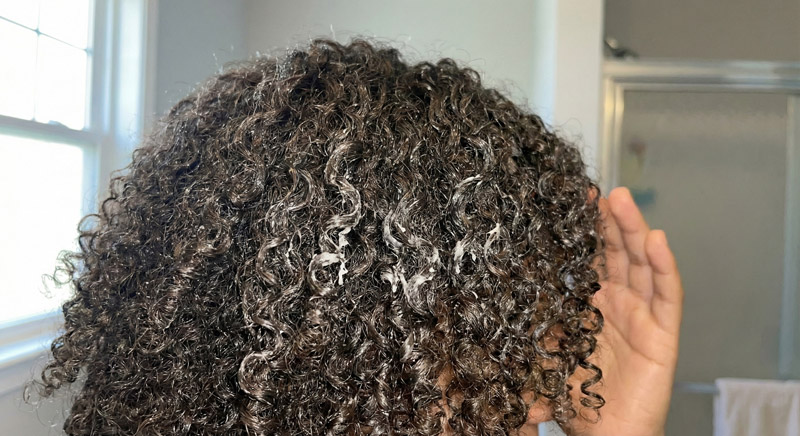
This is the biggest indicator. When you apply conditioner, leave-in, or styling products, they don’t seem to absorb. Your hair feels coated rather than moisturized. You might notice:
- White residue or product flakes in your hair
- Hair that looks greasy but still feels dry
- Products taking forever to dry or never fully absorbing
- Buildup happening quickly even with regular washing
Your Hair Takes Forever to Get Wet
In the shower, does your hair resist water at first? Do you have to really work to get it saturated? Low porosity hair repels water initially because of that tight cuticle barrier.
Similarly, it takes a long time to fully dry — hours, or even overnight for some people.
Hair Feels Dry Despite Heavy Products
This is the frustrating paradox of low porosity hair. You’re using rich, heavy moisturizers because your hair feels dry, but they’re not helping. In fact, they might be making things worse by creating buildup without actually hydrating the strand.
Protein Treatments Make Things Worse
Low porosity hair is often protein-sensitive. Because the cuticle is already tight and strong, adding more protein can create stiffness, brittleness, and straw-like texture — the opposite of what you want.
If you’ve ever done a protein treatment and your hair felt worse afterward, low porosity could be why.
The Float Test
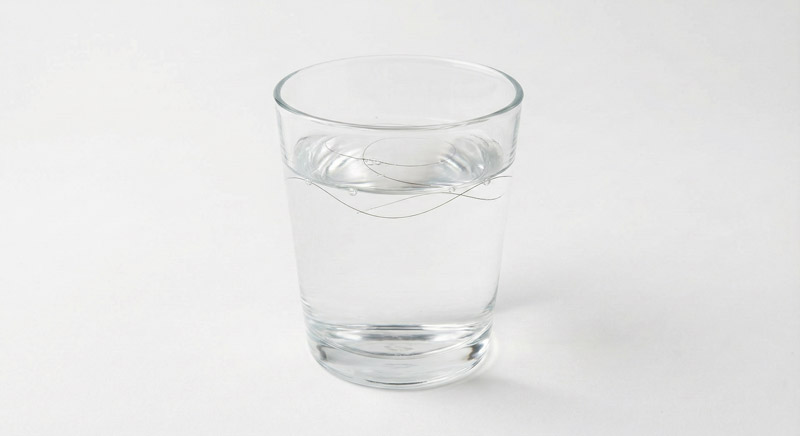
A simple at-home test: Take a few clean, shed hairs (no product on them) and drop them in a glass of room-temperature water. Wait 2-4 minutes.
- Floats on top: Low porosity
- Sinks slowly to the middle: Medium porosity
- Sinks quickly to the bottom: High porosity
This test isn’t 100% scientific, but it gives you a general idea. According to research on hair fiber properties, the cuticle structure significantly affects how hair interacts with water.
Why Regular Moisturizing Methods Fail
Here’s what’s actually happening when you try to moisturize low porosity hair the “normal” way:
Heavy Products Can’t Penetrate
Most deep conditioners and moisturizing products contain large molecules — butters, heavy oils, and silicones — designed to coat and seal the hair shaft.
For high porosity hair with a raised cuticle, this works great. The product gets in, and the coating helps seal it there.
For low porosity hair, those large molecules just sit on top of an already-closed cuticle. You get buildup and greasiness without any actual moisture reaching the inside of the hair strand.
Oils Don’t Equal Moisture
Here’s a common misconception: oil is not moisture.
Water is moisture. Oil is a sealant.
The LOC (Liquid-Oil-Cream) or LCO method that works for many hair types assumes moisture can get in first, then oil seals it. But if your cuticle won’t open to let water in, layering oil on top just creates a greasy mess.
As cosmetic chemist Perry Romanowski explains, oils are hydrophobic — they repel water. Putting oil on low porosity hair before it’s properly hydrated can actually prevent moisture from ever getting in.
Product Buildup Creates a Vicious Cycle
When products don’t absorb, they accumulate. This buildup further blocks moisture from entering the hair shaft. Your hair feels even drier, so you add more product, creating more buildup.
Eventually, you’re dealing with:
- Heavy, limp, weighed-down hair
- Dull appearance from product coating
- Flaking and residue
- Persistent dryness underneath it all
The solution isn’t more product — it’s the right approach entirely.
How to Actually Moisturize Low Porosity Hair
Ready to change your routine? Here’s what works:
Step 1: Use Heat to Open the Cuticle

This is the game-changer for low porosity hair.
Heat causes the cuticle to lift and open slightly, allowing moisture to penetrate. Without heat, even the best products won’t get in.
How to apply heat:
- Warm water: Always start your wash routine with warm (not hot) water to help open the cuticle
- Steam: Use a handheld steamer, or sit in a steamy bathroom while deep conditioning
- Hooded dryer or heat cap: Apply your deep conditioner, then sit under a hooded dryer or use a microwavable heat cap for 15-30 minutes
- Warm towel: Wet a towel with hot water, wring it out, and wrap it around your head over your conditioning cap
According to trichologist Dr. Kari Williams, speaking to Allure, “Heat helps lift the cuticle, allowing conditioners and treatments to penetrate more effectively.”
Deep conditioning without heat on low porosity hair is basically pointless. Make heat a non-negotiable part of your routine.
Step 2: Choose Lightweight, Water-Based Products
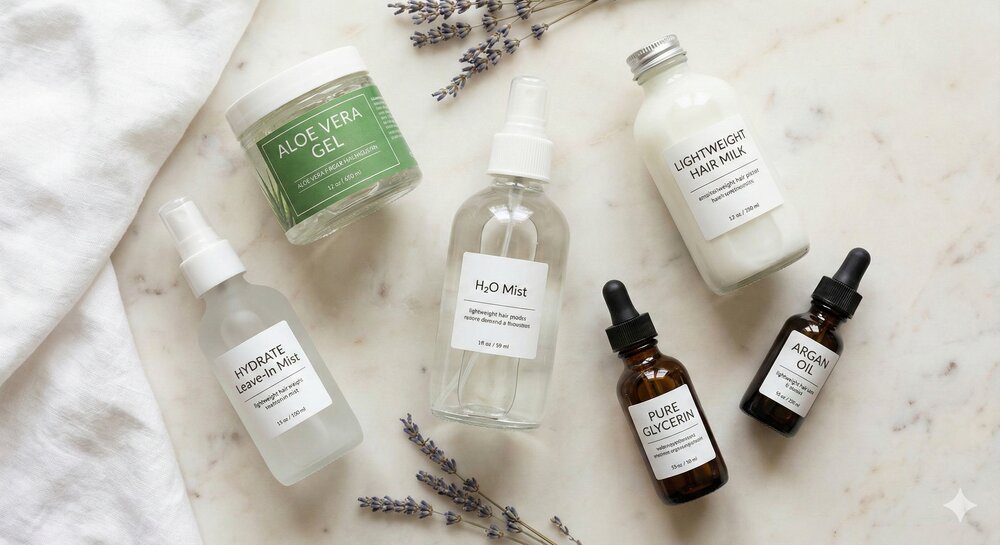
Ditch the heavy butters and thick creams. Low porosity hair needs lightweight products with water as the first ingredient and humectants that attract moisture.
Ingredients to look for:
- Glycerin — A humectant that draws moisture into the hair
- Honey — Natural humectant with moisturizing properties
- Aloe vera — Lightweight moisture that penetrates easily
- Panthenol (Provitamin B5) — Small molecule that can penetrate the hair shaft
- Agave nectar — Humectant similar to honey
Ingredients to use sparingly or avoid:
- Heavy butters (shea butter, mango butter) — Can sit on top and cause buildup
- Thick oils (castor oil, olive oil) — Too heavy for low porosity
- Silicones (dimethicone, cyclomethicone) — Create a coating that blocks moisture
- Protein (keratin, hydrolyzed wheat protein) — Use occasionally, not regularly
This doesn’t mean you can never use oils or butters. But they should be used sparingly, in lightweight forms, and ideally with heat.
Step 3: Clarify Regularly
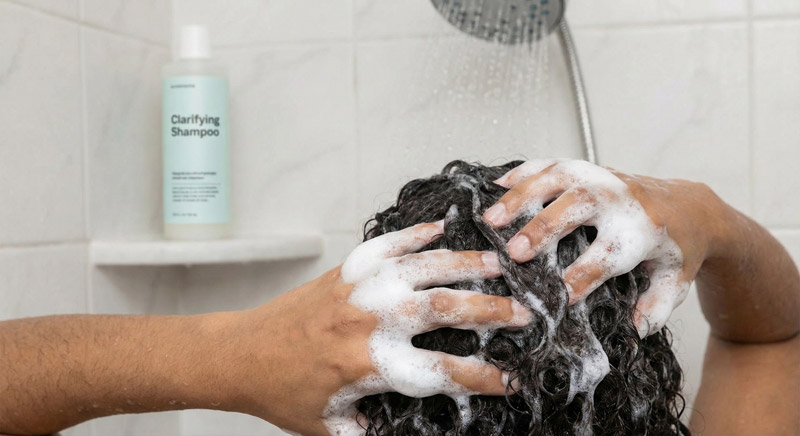
Because low porosity hair is prone to buildup, clarifying is essential — not optional.
Use a clarifying shampoo every 2-4 weeks (or more often if you use a lot of products) to remove accumulated residue. This creates a clean slate so moisture can actually reach your hair.
Signs you need to clarify:
- Hair feels coated or waxy
- Products aren’t working as well as they used to
- Hair looks dull and lifeless
- Curls or waves are limp and undefined
Don’t skip this step. Trying to moisturize hair that’s covered in buildup is like trying to water a plant through plastic wrap.
Step 4: Dilute Your Products
If you have products you love but they’re too heavy, try diluting them with water.
Mix your conditioner or leave-in with water in a spray bottle (try a 1:1 ratio to start). The thinner consistency penetrates better, and you’re adding water — actual moisture — at the same time.
This simple trick can make products that didn’t work suddenly work beautifully.
Step 5: Apply Products to Damp, Warm Hair
Timing matters.
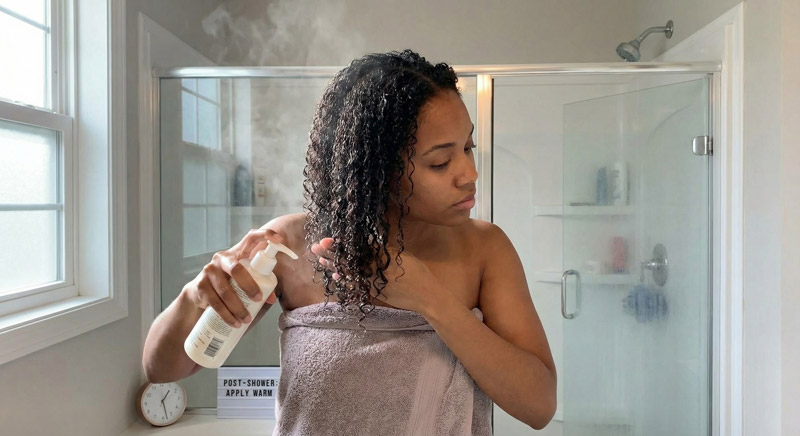
Apply your leave-in and styling products while your hair is still damp and warm from the shower. This is when the cuticle is most open and receptive.
If you wait until your hair is dry and cool, that cuticle has already closed back up. You’re back to products sitting on top.
For best results:
- Wash and condition with warm water
- Gently squeeze out excess water (don’t rough up the cuticle with a towel)
- Immediately apply lightweight leave-in to warm, damp hair
- Style as usual
Step 6: Try the “Greenhouse Effect”
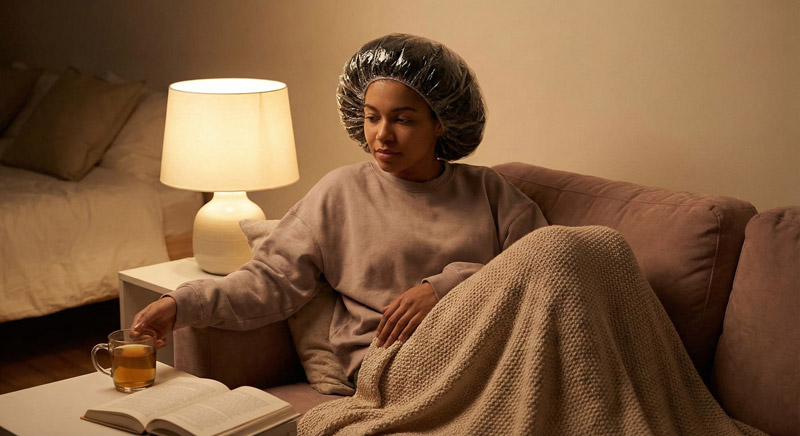
This is a popular technique in the natural hair community for deeply moisturizing low porosity hair overnight.
How to do it:
- Apply a light leave-in or water-based moisturizer to damp hair
- Add a small amount of lightweight oil (like argan or grapeseed)
- Cover your hair with a plastic cap
- Sleep in it overnight
- In the morning, remove the cap and style as usual
The plastic cap traps your body heat, creating a warm, humid environment that helps the cuticle open and absorb moisture over several hours. It’s like a deep conditioning treatment while you sleep.
Best Products for Low Porosity Hair
Look for products specifically formulated for low porosity hair, or products with the right characteristics:
Shampoos
What to look for: Gentle, clarifying, sulfate-free options that clean without coating
Recommended:
- Kinky-Curly Come Clean Shampoo (gentle clarifying)
- Mielle Organics Rosemary Mint Strengthening Shampoo
- Giovanni 50:50 Balanced Hydrating Clarifying Shampoo
- As I Am Curl Clarity Shampoo
Conditioners
What to look for: Lightweight, water-based, humectant-rich formulas without heavy butters or silicones
Recommended:
- Shea Moisture Low Porosity Protein-Free Leave-In Conditioner
- Giovanni Smooth as Silk Deeper Moisture Conditioner
- Kinky-Curly Knot Today Leave-In
- Mielle Organics Babassu Oil Conditioning Sulfate-Free Shampoo
Leave-Ins
What to look for: Liquid or spray formulas that absorb quickly; water should be the first ingredient
Recommended:
- Oyin Handmade Hair Dew
- Camille Rose Naturals Curl Love Moisture Milk
- Kinky-Curly Knot Today
- The Mane Choice Tropical Moringa Daily Restorative Spray
Oils (Use Sparingly)
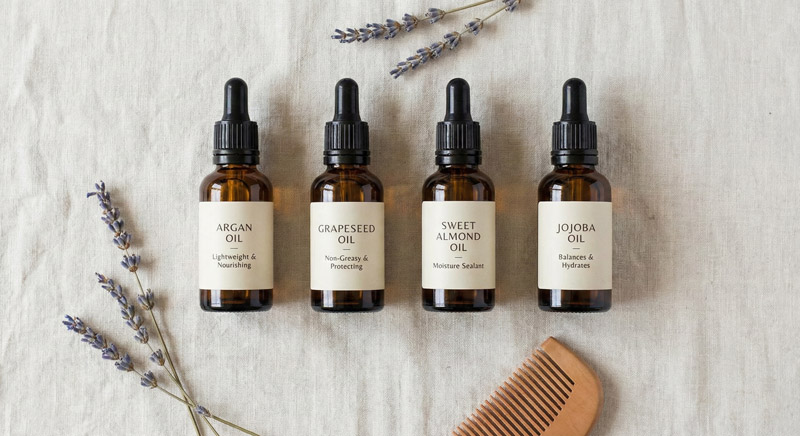
What to look for: Lightweight oils that can penetrate the hair shaft
Best oils for low porosity hair:
- Argan oil — Lightweight, absorbs well
- Grapeseed oil — Very light, won’t weigh hair down
- Sweet almond oil — Light to medium weight
- Jojoba oil — Technically a wax ester; mimics natural sebum
Oils to avoid or use sparingly:
- Coconut oil (can cause buildup for some)
- Castor oil (very heavy)
- Olive oil (tends to sit on top)
Deep Conditioners
What to look for: Moisturizing formulas without protein; always use with heat
Recommended:
- Shea Moisture Manuka Honey & Mafura Oil Intensive Hydration Masque
- Mielle Organics Babassu & Mint Deep Conditioner
- TGIN Honey Miracle Hair Mask
- Camille Rose Algae Renew Deep Conditioner
Sample Low Porosity Hair Routine
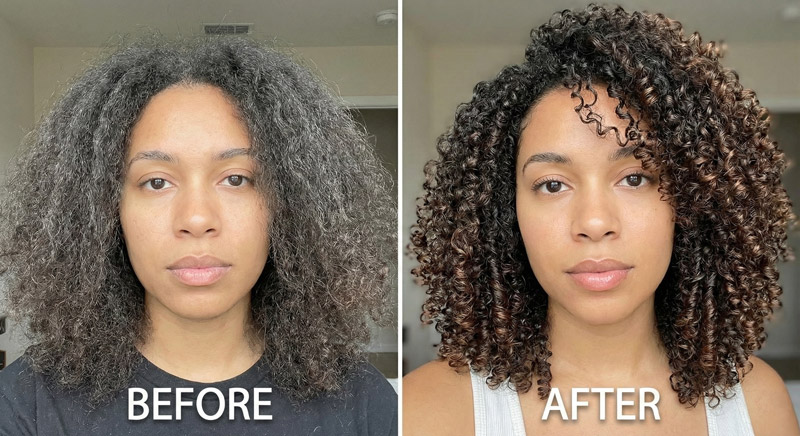
Here’s a complete weekly routine for low porosity hair:
Wash Day (Weekly)
- Pre-poo (optional): Apply a light oil (argan or grapeseed) to dry hair 30 minutes before washing. This helps prevent hygral fatigue (damage from excessive water absorption).
- Clarify (every 2-4 weeks): Use clarifying shampoo to remove buildup
- Shampoo: Use gentle, sulfate-free shampoo on scalp. Let suds run down lengths.
- Deep condition with heat: Apply lightweight deep conditioner generously. Cover with plastic cap. Sit under hooded dryer or heat cap for 20-30 minutes. Rinse with cool water to close cuticle.
- Apply leave-in immediately: On warm, damp hair, apply liquid leave-in or diluted conditioner
- Seal lightly (optional): A tiny amount of lightweight oil, focusing on ends
- Style as usual
Between Washes
- Refresh with water: Spritz with water or a water-based refresher spray
- Avoid product layering: Low porosity hair doesn’t need daily product application
- Greenhouse overnight: Once a week if extra moisture is needed
Monthly
- Clarifying wash: Essential for preventing buildup
- Protein treatment (optional): Only if hair feels mushy or overly elastic. Use a light protein treatment, not heavy reconstructors.
Common Mistakes to Avoid
Mistake 1: Using Heavy Products Because Hair “Feels Dry”
Your hair feels dry because moisture isn’t getting in, not because you need richer products. Heavy products make it worse. Go lighter, not heavier.
Mistake 2: Skipping Heat During Deep Conditioning
Without heat, deep conditioner just sits on low porosity hair. This is non-negotiable. Invest in a heat cap or at minimum use a warm towel.
Mistake 3: Over-Using Protein
Low porosity hair already has a strong cuticle structure. Too much protein causes brittleness and breakage. If you use protein, do so sparingly — monthly at most — and balance with moisture.
Mistake 4: Applying Products to Dry Hair
When your hair is dry, the cuticle is closed. Products won’t penetrate. Always apply to damp, warm hair for best absorption.
Mistake 5: Never Clarifying
Buildup is the enemy of low porosity hair. If you’re not clarifying regularly, you’re fighting a losing battle against product accumulation.
Mistake 6: Giving Up Too Soon
It takes time for low porosity hair to show results from a new routine. Stick with it for at least 4-6 weeks before deciding if something works.
Low Porosity Hair and Curly/Natural Hair
If you have naturally curly, coily, or kinky hair AND low porosity, you face a unique challenge: textured hair often needs more moisture, but low porosity makes moisture hard to get in.
The solution is the same principles, applied consistently:
- Heat is your best friend — Never deep condition without it
- Water-based products first — Always layer with water as the base
- Light oils only — Heavy butters will destroy your curl definition
- Clarify religiously — Textured hair with buildup won’t curl properly
- Don’t over-manipulate — Low porosity textured hair can be fragile
According to research published in the Journal of Cosmetic Science, hair of African descent often has a more lifted cuticle, but this isn’t universal. Many people with tightly curled hair actually have low porosity — and the assumption that all Black hair is high porosity has led to damaging advice.
Test YOUR porosity. Don’t assume based on curl pattern.
Frequently Asked Questions
Can porosity change over time?
Your natural porosity is genetic and doesn’t change. However, chemical treatments (bleach, relaxers, color) and heat damage can raise the cuticle and create high porosity characteristics in previously low porosity hair. This is damage, not a porosity change.
Is low porosity hair healthier?
Not necessarily better or worse — just different. Low porosity hair tends to be strong and resistant to damage because of the tight cuticle. But it can also be prone to buildup and difficult to moisturize if you don’t use the right techniques.
Why does coconut oil make my low porosity hair feel worse?
Coconut oil is one of the few oils that can penetrate the hair shaft (study). But for some low porosity hair, it causes protein-like effects or buildup. If coconut oil doesn’t work for you, switch to argan or grapeseed oil.
Do I need special shampoo for low porosity hair?
Not necessarily “special,” but you do need to clarify regularly and avoid shampoos with heavy oils or silicones. Gentle clarifying shampoos work well for low porosity hair.
How do I know if I have buildup?
Signs include: hair that feels coated or waxy, dull appearance, products not working like they used to, limp curls, and visible residue or flaking. If it’s been more than a month since you clarified, you probably have some buildup.
The Bottom Line
Low porosity hair isn’t difficult — it just requires a different approach than what most hair advice teaches.
The core principles to remember:
- Use heat to open the cuticle — Essential for any deep treatment
- Choose lightweight, water-based products — Heavy products cause buildup
- Clarify regularly — Remove buildup so moisture can get in
- Apply products to damp, warm hair — When the cuticle is most open
- Less is more — You need less product than you think
Once you adjust your routine to work WITH your low porosity hair instead of against it, you’ll finally see the soft, moisturized, healthy hair you’ve been working so hard for.
It’s not that your hair is broken. It’s that you were using the wrong key.
Not sure about your porosity? Check out our guide on high porosity hair to compare, or learn about building a complete hair care routine based on your specific needs.
