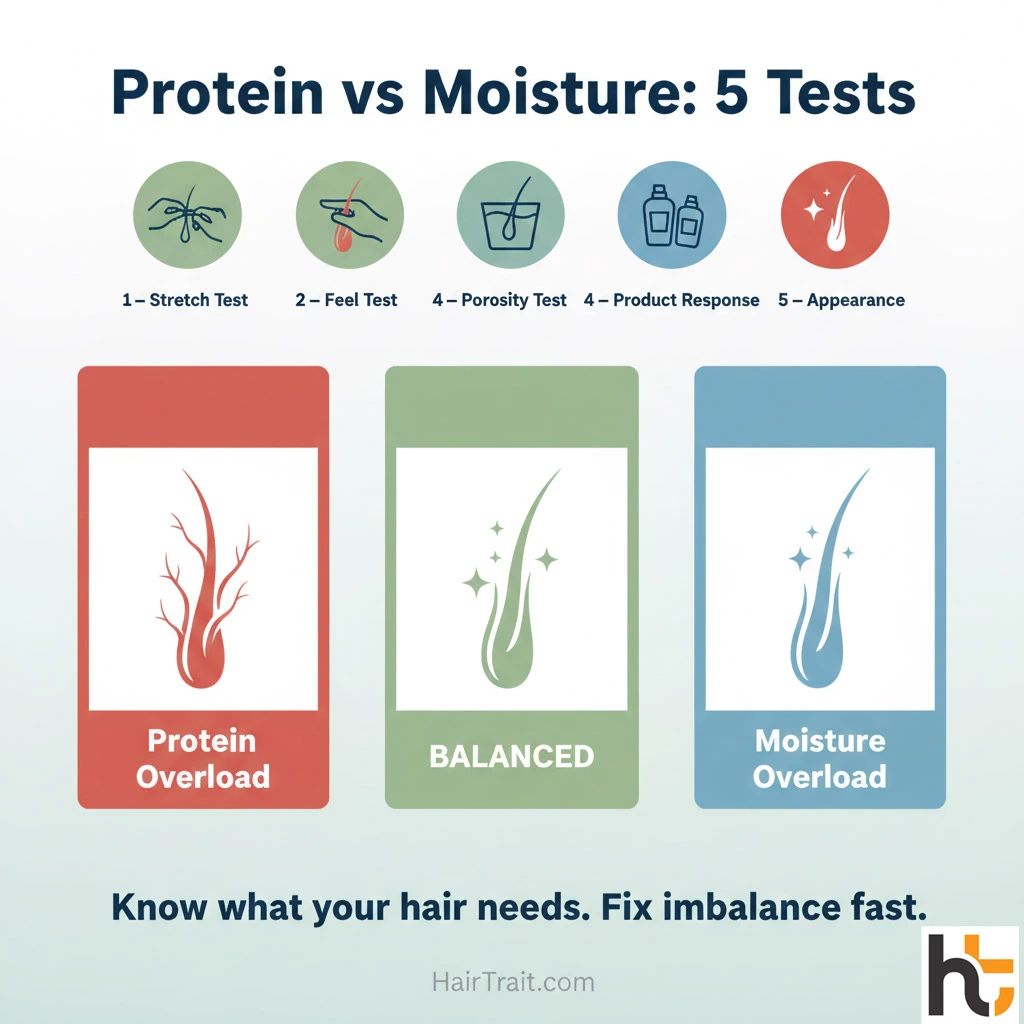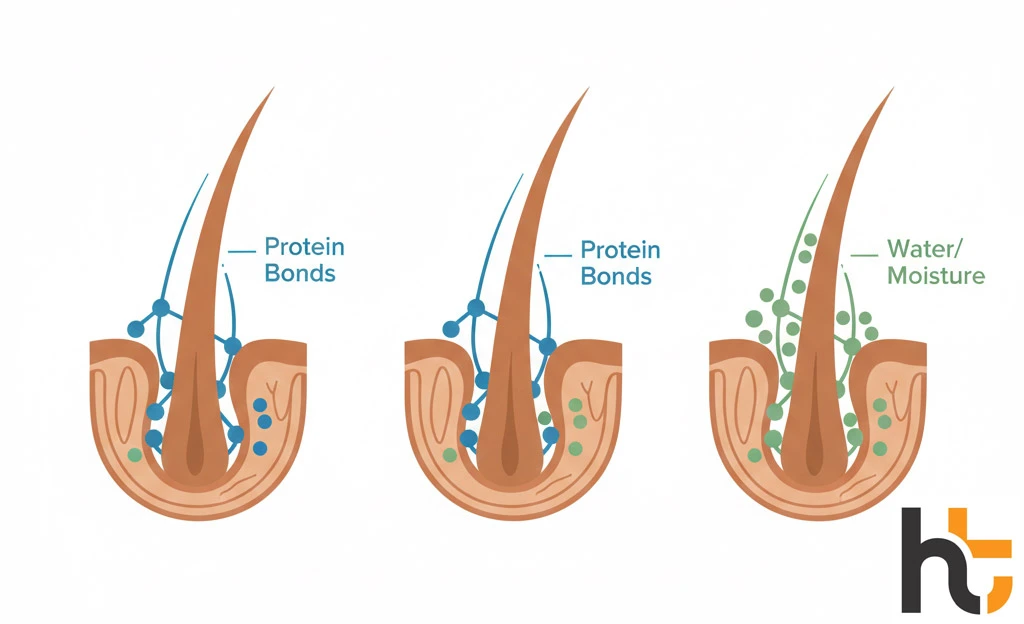
Your hair needs both protein and moisture to be healthy. But most people are unknowingly overloaded with one and starved of the other. This creates the paradox: your hair feels dry, so you add more conditioner. But if you actually need protein, more moisture makes things worse.
Understanding protein vs moisture balance is the difference between hair that responds to treatment and hair that stays damaged no matter what you try. This guide gives you 5 specific tests to identify what your hair needs right now, plus the exact steps to fix imbalance.
Before testing, know your baseline hair type using our complete hair type guide. Protein and moisture needs vary significantly by curl pattern and porosity.
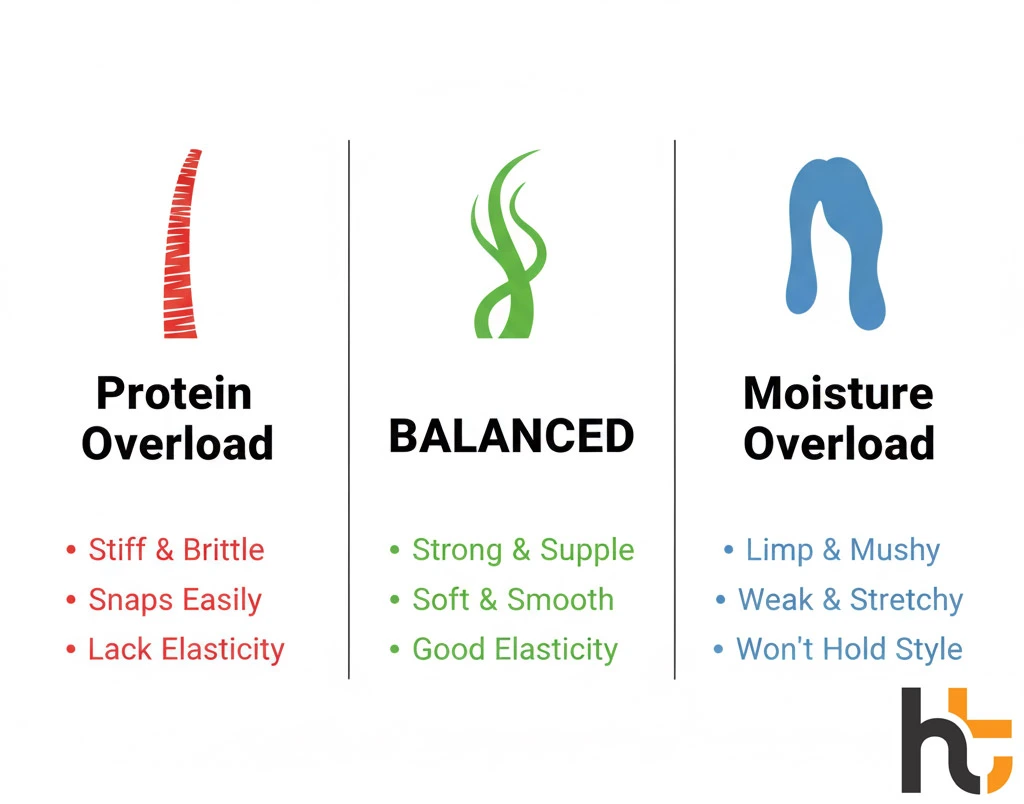
Quick Answer: To determine protein vs moisture balance, check for these signs: Protein overload = stiff, brittle, breaks easily. Moisture overload = limp, mushy, stretches too much. Balanced = strong with stretch, holds curl, bounces back. Use the 5 tests in this guide to identify your specific need.
What Protein vs Moisture Balance Actually Means
Hair is made of a protein called keratin. The protein structure gives hair strength and shape. But protein alone makes hair brittle. Hair also needs water (moisture) to maintain elasticity and flexibility.
Research shows hair in optimal condition has a specific moisture content of 10-13% by weight [Journal of Cosmetic Science]. Below this, hair becomes dry and prone to breakage. Above this with insufficient protein support, hair becomes weak and structureless.
The protein vs moisture balance is the ratio between these two. Too much protein creates rigidity. Too much moisture without protein creates mushiness. Balance creates hair that’s both strong and flexible.
This balance shifts based on:
- Hair porosity (high porosity hair loses moisture faster, needs more protein to fill gaps)
- Chemical processing (color, relaxers, perms damage protein bonds)
- Heat styling (degrades protein structure over time)
- Water quality (hard water deposits mimic protein overload)
- Product choices (many conditioners are protein-heavy)
Test #1: The Stretch Test (Most Reliable)
This is the gold standard for assessing protein vs moisture balance. It directly measures elasticity, which is the physical manifestation of protein-moisture ratio.
How to Do It
- Take a single clean, wet strand of hair (fresh out of the shower works best)
- Hold both ends between your fingers
- Gently stretch the strand
- Observe what happens
What It Means
| Result | What It Means | What You Need |
|---|---|---|
| Strand snaps immediately with no stretch | Protein overload — hair is brittle | Deep moisture treatment, protein-free conditioner |
| Strand stretches 40-50% then returns to normal | BALANCED — this is ideal | Maintain current routine |
| Strand stretches excessively (60%+) and doesn’t return | Moisture overload — hair lacks structure | Protein treatment |
Studies confirm that healthy hair can stretch 30-50% of its length when wet before breaking [International Journal of Trichology]. Less indicates protein dominance. More indicates moisture dominance.
Test #2: The Feel Test
How your hair feels in your hands reveals protein vs moisture balance immediately. This is subjective but accurate once you know what to feel for.
What to Do
Run your fingers through clean, dry hair. Pay attention to texture.
What It Means
- Stiff, rough, straw-like, crunchy: Protein overload. The outer layer is coated with too much protein or mineral buildup mimicking protein.
- Soft but weak, limp, mushy when wet, no body: Moisture overload. Hair has water but no structure to hold it.
- Soft with body, smooth but with texture, holds its shape: Balanced.
If hard water is a factor in your routine, the “stiff” feeling might be mineral buildup rather than protein. See our hard water hair care routine to rule this out first.
Test #3: The Porosity Float Test (Indirect But Useful)
Porosity determines how easily your hair absorbs and holds moisture and protein. This test helps you understand baseline needs for the protein vs moisture balance.
How to Do It
- Take a few clean, product-free strands
- Drop them in a glass of room-temperature water
- Wait 4-5 minutes
- Observe where the hair sits
What It Means
- Hair floats: Low porosity. Sealed outer layer. Prone to protein overload because protein can’t penetrate — it just coats. Needs moisture-focused routine.
- Hair sinks slowly mid-glass: Medium porosity. Balanced. Can handle both protein and moisture well.
- Hair sinks immediately: High porosity. Damaged outer layer. Absorbs everything quickly, loses it just as fast. Needs regular protein to fill gaps.
For complete porosity guidance and product selection, see our best deep conditioners for low porosity hair guide.
Test #4: The Product Response Test
How your hair responds to protein and moisture products is a direct indicator of what you need. This test evaluates protein vs moisture balance through actual application.
How to Do It
Week 1: Use protein-free, moisture-heavy products only. Deep condition with a humectant-rich formula. No protein anywhere.
Week 2: Add one light protein treatment. Use a protein conditioner or mask once mid-week.
Observe: Which week did your hair perform better?
What It Means
- Hair improved during protein-free week: You were protein overloaded. Stick to moisture-focused routine with protein only once a month.
- Hair improved when protein was added: You need protein regularly. Include light protein weekly or bi-weekly.
- No difference either way: You’re balanced. Alternate protein and moisture treatments to maintain equilibrium.
Test #5: The Appearance Test
Visual cues reveal the protein vs moisture balance status immediately if you know what to look for.
Signs of Protein Overload
- Dull, matte finish (no shine even when clean)
- Tangles excessively
- Breaks easily when combing
- Curls lose pattern and go stringy
- Hair feels like straw
Signs of Moisture Overload
- Limp, flat, no volume
- Won’t hold a curl or style
- Feels gummy or sticky when wet
- Takes forever to dry
- Increased shedding
Signs of Balance
- Natural shine without products
- Holds curl pattern well
- Detangles easily with conditioner
- Minimal breakage
- Hair has body and bounce
For complete product recommendations to address each condition, see our best hair products guide.
How to Fix Protein Overload
If your tests show protein overload, follow this recovery routine:
Immediate Reset
- Clarify with chelating shampoo to remove protein buildup
- Deep condition with protein-free, humectant-rich formula (glycerin, aloe, honey)
- Use heat (steamer or hooded dryer) for 20-30 minutes
- Cool water rinse
Ongoing Routine
- Use protein-free conditioner for 4-6 weeks
- Check ingredient lists — avoid hydrolyzed proteins in top 5 ingredients
- Focus on moisture-based leave-ins
- After recovery, reintroduce light protein once monthly
How to Fix Moisture Overload
If tests show moisture overload, you need to rebuild structure:
Immediate Treatment
- Protein treatment with hydrolyzed protein (wheat, silk, or keratin)
- Leave on for time recommended on product (usually 15-30 minutes)
- Rinse and follow with light conditioner (not deep conditioning this time)
Ongoing Routine
- Incorporate light protein weekly or bi-weekly
- Reduce deep conditioning frequency
- Use lighter leave-in products
- Add protein-rich ingredients (rice water, gelatin treatments)
Research shows regular light protein treatments significantly improve tensile strength in damaged hair [NCBI].
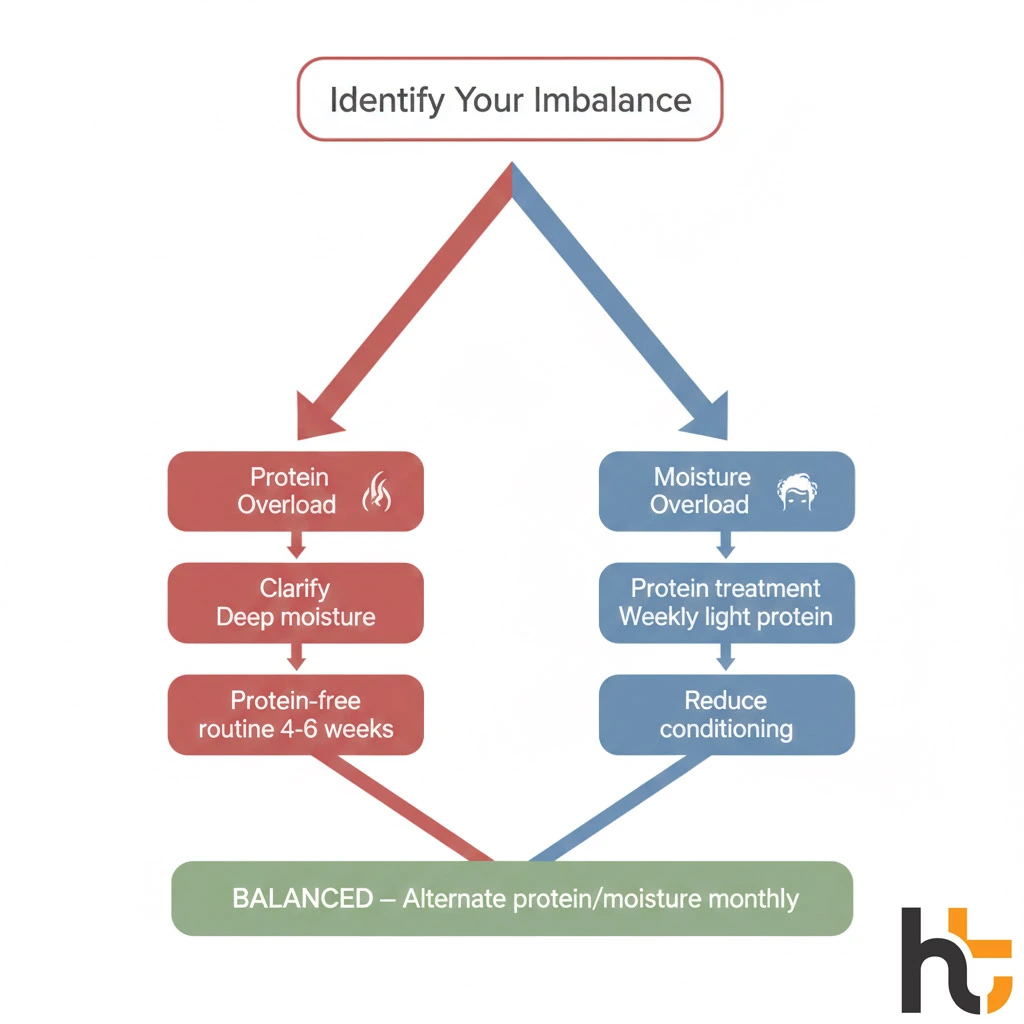
Maintaining Protein vs Moisture Balance Long-Term
Once balanced, the goal is staying balanced. This requires alternation, not consistency.
The Alternating Schedule
| Hair Type | Protein Treatment | Moisture Treatment |
|---|---|---|
| Low porosity | Once monthly (light protein) | Weekly (protein-free deep condition) |
| Medium porosity | Bi-weekly (light protein) | Weekly (balanced moisture) |
| High porosity | Weekly (light-medium protein) | Weekly (alternate with protein) |
Re-test every 4-6 weeks using the stretch test. Your needs shift with seasons, styling changes, and environmental factors.
For complete wash day structure incorporating both protein and moisture, see our hair care basics guide.
Common Mistakes That Destroy Balance
Mistake #1: Treating All Dryness as Moisture Need
Dry, brittle hair often needs protein, not moisture. Adding more conditioner to protein-starved hair makes it worse.
Mistake #2: Using Too Much Protein Too Often
Weekly heavy protein treatments create overload quickly. Light protein is safer for regular use.
Mistake #3: Ignoring Porosity
Low porosity hair gets protein overload easily because protein can’t penetrate. High porosity loses protein quickly and needs it more often.
Mistake #4: Not Adjusting for Damage
Chemical processing, heat damage, and mechanical stress all increase protein needs. Virgin hair and damaged hair have completely different balance points.
Final Thoughts
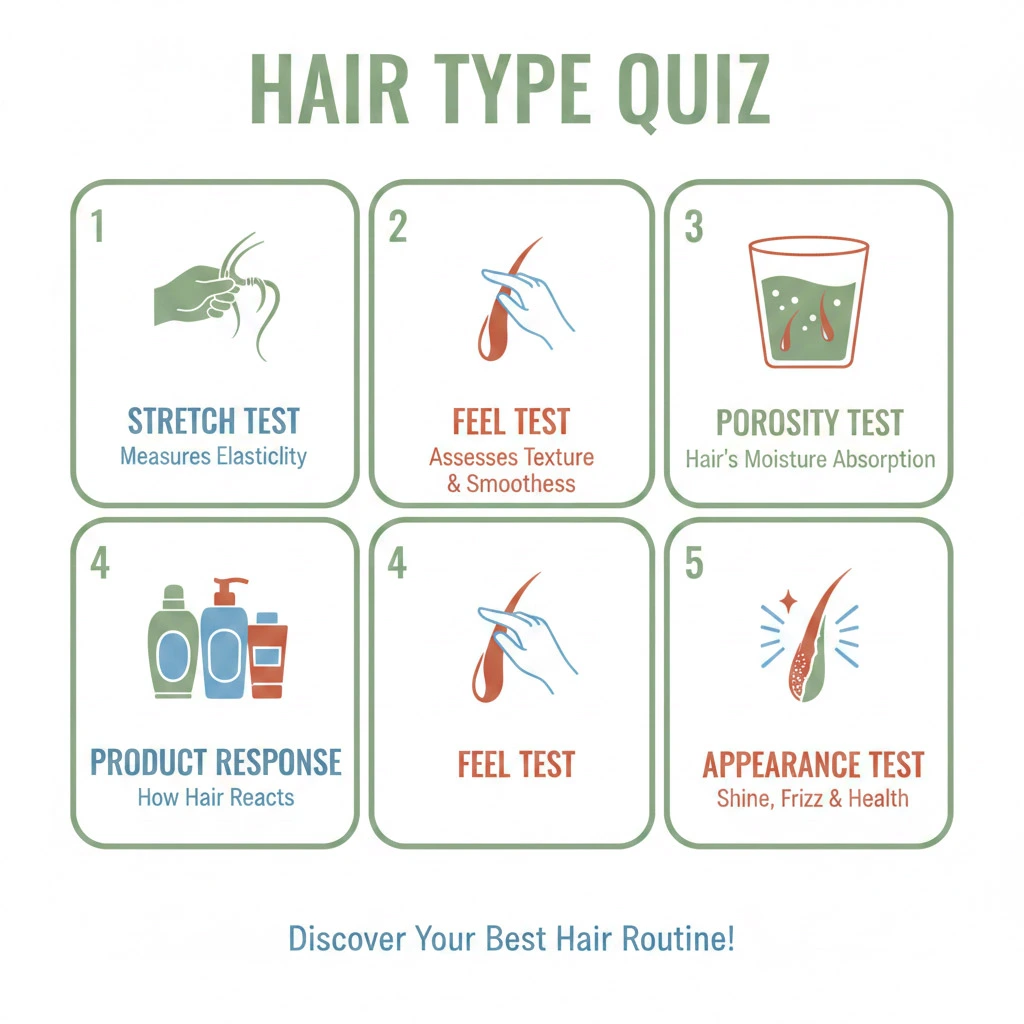
Mastering protein vs moisture balance is not about following one routine forever. It’s about learning to read your hair’s signals and adjust accordingly. The five tests in this guide — stretch, feel, porosity, product response, and appearance — give you the tools to identify what you need right now.
Start with the stretch test. It’s the most objective. If you’re unsure, bias toward moisture first (protein-free deep conditioning). It’s easier to add protein later than to remove protein overload. Re-test monthly and adjust as needed.
Your hair will tell you what it needs if you know how to listen.