If your hair feels dry and straw-like no matter what conditioner you use, hard water is probably the culprit. A proper hard water hair care routine doesn’t just mask the problem. It removes the mineral buildup that’s blocking your products from working and restores your hair’s ability to actually hold moisture.
This guide gives you the exact 5-step system that works. Not generic advice. A specific, tested routine built around the chemistry of how hard water damages hair and how to reverse it.
If you’re considering a shower filter, read our guide on shower filters hard water hair first. Filters help with prevention. This routine handles removal and recovery.
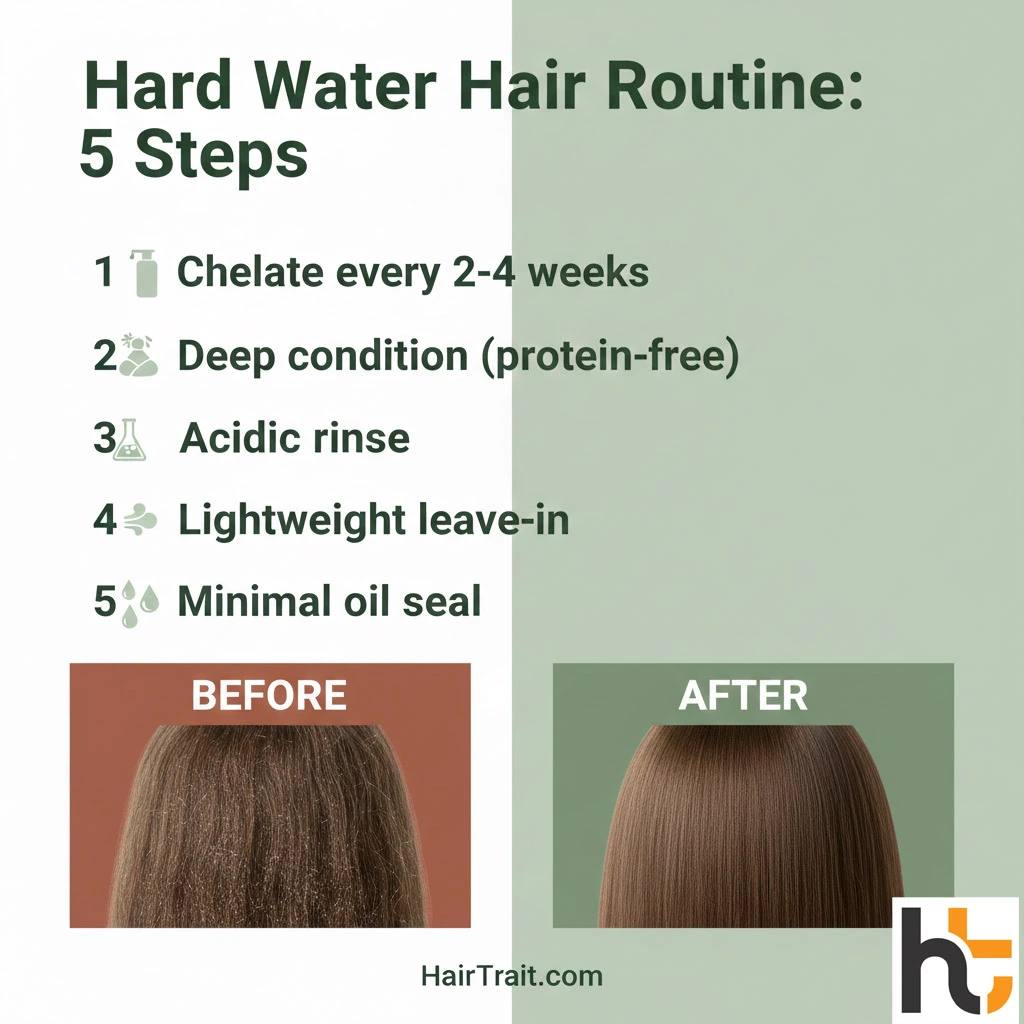
Quick Answer: A hard water hair care routine requires 5 steps: (1) Chelating shampoo every 2-4 weeks, (2) Protein-free deep conditioning, (3) Acidic rinse to close outer layers, (4) Lightweight leave-in, (5) Minimal sealing oil. This removes buildup and restores moisture retention.
Table of Contents
Why Your Current Routine Isn’t Working (The Hard Water Problem)
Hard water contains dissolved calcium and magnesium. When you wash your hair, these minerals bind to the negatively charged surface of each strand. Over time they form an invisible coating.
Research shows this mineral layer creates a hydrophobic (water-repelling) barrier on the hair surface [NCBI]. Your conditioner can’t penetrate it. Moisture can’t get in. Your hair becomes progressively drier even though you’re conditioning it regularly.
The cycle looks like this:
- Hard water deposits minerals on hair
- Mineral layer blocks moisture absorption
- Hair feels dry, so you use more conditioner
- Conditioner also builds up on top of minerals
- Hair feels heavy, dull, and even drier
A hard water hair care routine breaks this cycle by removing the mineral layer first, then restoring moisture to clean hair that can actually absorb it.
The 5-Step Hard Water Hair Care Routine That Actually Works
This routine is designed to be used consistently. It’s not a one-time reset. Hard water is constant. Your response needs to be consistent too.
Step 1: Chelating Shampoo Every 2-4 Weeks
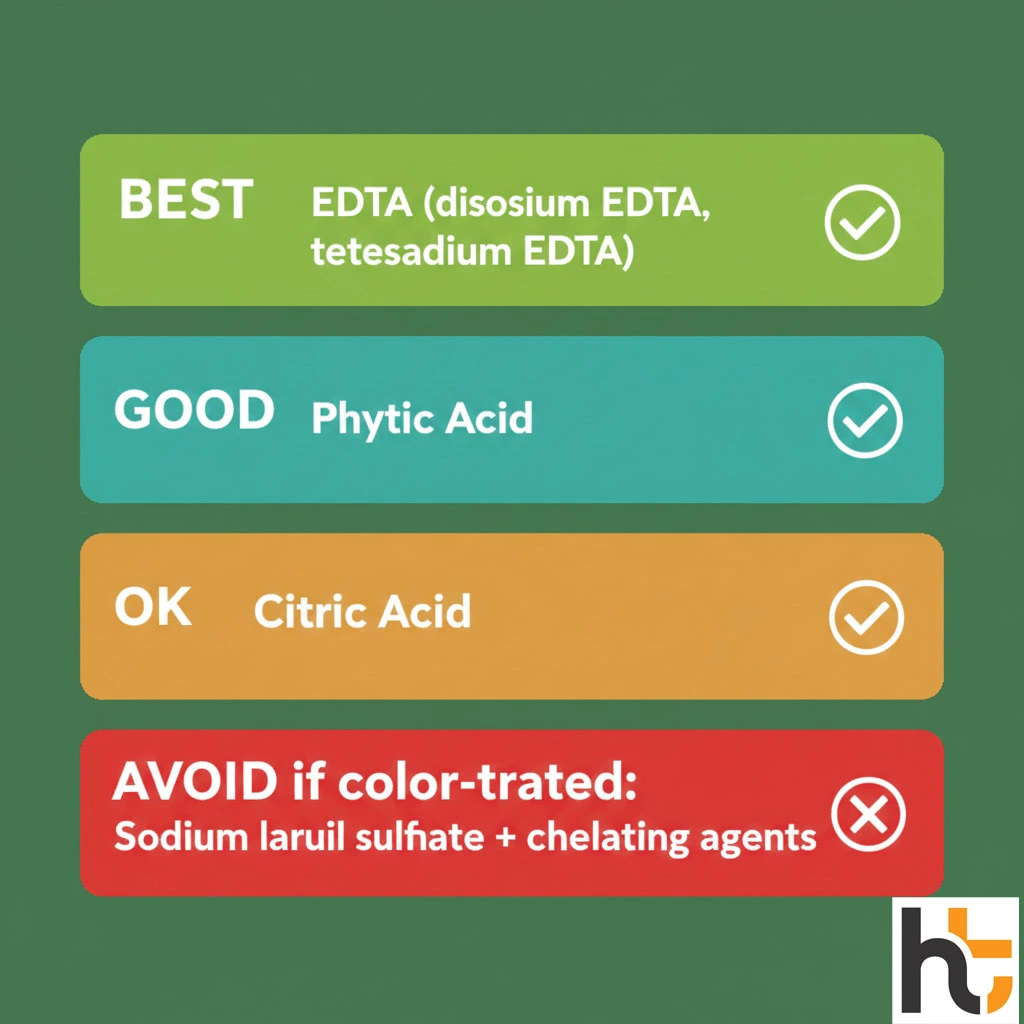
Chelating shampoos contain EDTA (ethylenediaminetetraacetic acid) or phytic acid. These ingredients chemically bind to calcium and magnesium deposits and lift them off the hair. Studies confirm chelating agents effectively remove metal ions from hair fibers [International Journal of Trichology].
How to use it:
- Apply to wet hair and scalp
- Massage thoroughly for 2-3 minutes (longer contact time = better mineral removal)
- Let it sit for 5 minutes before rinsing
- Use every 2 weeks if you have very hard water (180+ ppm), every 3-4 weeks for moderate hardness (100-180 ppm)
What to look for: EDTA, phytic acid, or citric acid in the first 5 ingredients. Avoid chelating shampoos with sulfates if you have color-treated hair — they’ll strip color along with minerals.
Budget option: A clarifying shampoo with citric acid works but is less effective than EDTA-based formulas.
Step 2: Deep Condition with Protein-Free Formulas
After removing mineral buildup, your hair is in prime condition to absorb moisture. But here’s the critical part for a hard water hair care routine: avoid protein.
Hard water already makes hair feel stiff and protein-like because of the mineral coating. Adding actual protein on top of residual minerals creates protein overload. Your hair feels brittle and breaks easily.
What to use instead:
- Moisture-focused deep conditioners with humectants (glycerin, aloe vera, panthenol, honey)
- Formulas specifically labeled “protein-free” or “for low porosity hair”
- Apply with heat (steamer, hooded dryer, or warm towel for 15-30 minutes)
For specific product recommendations, see our guide to the best deep conditioners for low porosity hair. Low porosity formulas work well for hard water damage because both conditions involve sealed outer layers that resist moisture.
Step 3: Acidic Rinse to Seal the Outer Layer
After deep conditioning, an acidic rinse closes the outer layer scales and locks in the moisture you just added. This step is particularly important in a hard water hair care routine because hard water is typically alkaline (pH 7.5-8.5). Alkaline pH keeps outer layers open and vulnerable.
Apple cider vinegar rinse:
- Mix 1-2 tablespoons of apple cider vinegar in 1 cup of cool water
- Pour over hair after rinsing out deep conditioner
- Let sit for 1-2 minutes
- Rinse with cool water
- Use once a week maximum (too frequent use can be drying)
Alternative: An acidifying leave-in spray with pH 4-5. Less harsh than vinegar, easier to use consistently.
Step 4: Lightweight Leave-In Conditioner
Hard water-damaged hair needs moisture, but it also needs to avoid additional buildup. Heavy leave-ins create the same coating problem as minerals.
What works:
- Water-based spray leave-ins
- Formulas with humectants but no heavy butters or silicones
- Applied to soaking-wet hair immediately after the acidic rinse
What to avoid:
- Thick cream leave-ins
- Products with shea butter, coconut oil, or castor oil in the top 5 ingredients
- Silicone-heavy formulas (dimethicone, cyclomethicone) — these build up faster in hard water
Step 5: Seal with Minimal Lightweight Oil
The final step in your hard water hair care routine is sealing. But less is more here. Hard water hair already has a coating problem. You need just enough oil to lock in moisture without adding weight.
Best oils for hard water hair:
- Argan oil — lightweight, absorbs well, doesn’t build up
- Jojoba oil — mimics natural scalp oil, rinses clean
- Grapeseed oil — extremely light, good for fine hair
How much: 2-4 drops for shoulder-length hair. Rub between palms and smooth over damp (not wet) hair, focusing on ends.
For complete product recommendations by hair type, see our best hair products guide.
Your Weekly Hard Water Hair Care Routine Schedule
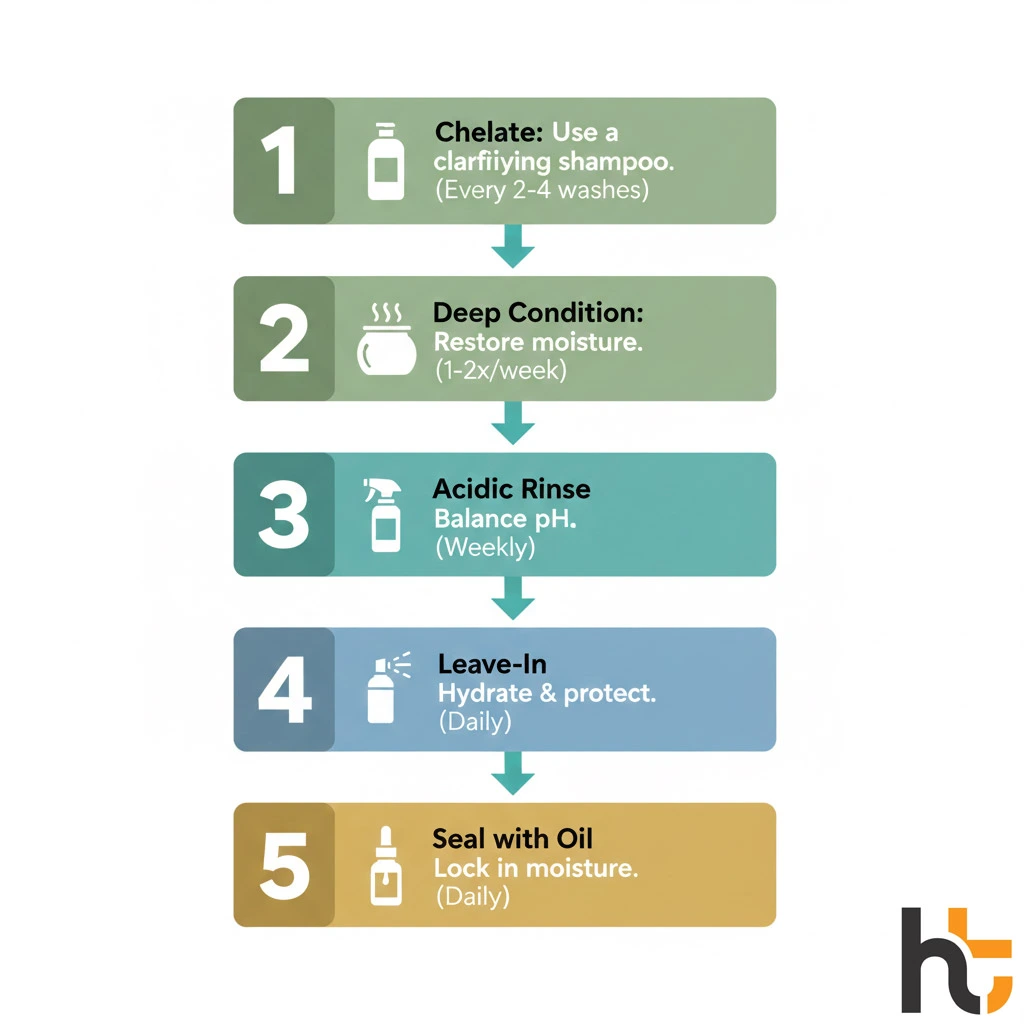
Consistency is what makes this work. Here’s how to structure your week:
| Frequency | Action | Purpose |
|---|---|---|
| Every 2-4 weeks | Chelating shampoo | Remove accumulated mineral deposits |
| Weekly (wash day) | Deep condition with heat | Restore moisture to clean hair |
| Weekly (after conditioning) | Acidic rinse | Close outer layer, seal in moisture |
| Every wash | Lightweight leave-in | Base layer of moisture without buildup |
| Every wash | Minimal oil seal | Lock in moisture, prevent evaporation |
Between wash days, refresh with water or a diluted leave-in spray. Avoid adding products daily — this accelerates buildup in hard water.
What to Expect and When
A proper hard water hair care routine produces gradual but consistent improvement. Here’s the realistic timeline:
Week 1-2: Hair feels lighter and cleaner after the first chelating treatment. You might notice it takes less conditioner to get slip. This is the mineral layer coming off.
Week 3-4: Moisture retention improves. Hair stays soft longer between washes. Tangles reduce. This is when the deep conditioning starts working because the outer layer is clean.
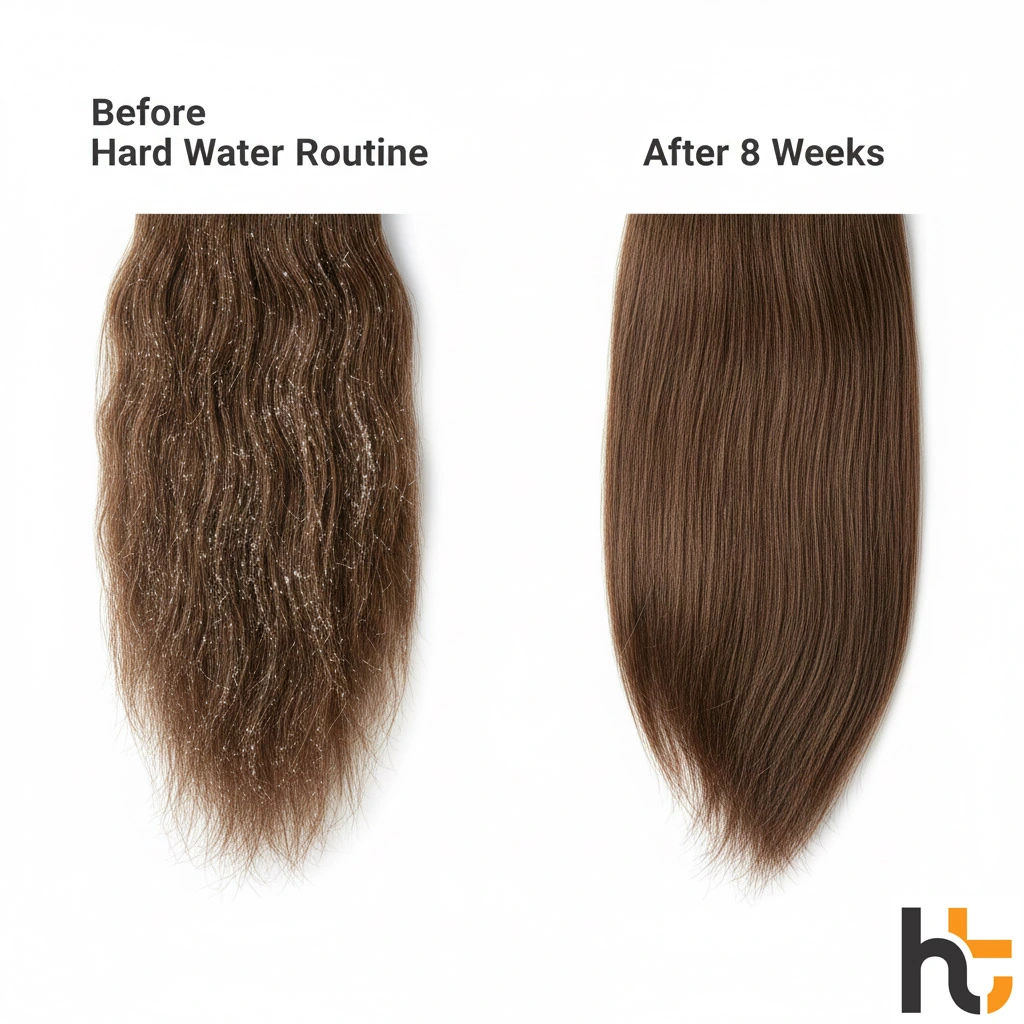
Week 6-8: Overall texture improves. Hair looks shinier. Color (if treated) looks more vibrant because it’s not covered in mineral film. Breakage during detangling decreases noticeably.
What won’t improve: Existing structural damage from heat, chemical processing, or mechanical stress. Hard water routines restore moisture balance. They don’t repair broken bonds. For that, you need protein treatments and bond repair products.
Hard Water Hair Care Routine Mistakes to Avoid
Mistake #1: Chelating Too Often
Chelating shampoo is powerful. Using it weekly strips your hair of everything — including beneficial oils. Every 2-4 weeks is ideal for most people. More frequent use causes dryness.
Mistake #2: Using Protein Treatments Too Soon
Wait until you’ve been on the hard water routine for 4-6 weeks before adding protein. Your hair needs moisture first. Protein on mineral-damaged hair creates stiffness and breakage.
Mistake #3: Skipping the Acidic Rinse
Hard water is alkaline. Without an acidic rinse to counteract it, the outer layer stays open. Open outer layers let moisture escape and minerals deposit more easily. The rinse is not optional.
Mistake #4: Using Heavy Products
The instinct when hair feels dry is to pile on thick creams and butters. In hard water, this makes things worse. Stick to lightweight formulas. Your hair will feel better with less product, not more.
For tools that support this routine — including steamers and the right combs — see our best hair tools guide.
Supplements to a Hard Water Hair Care Routine
These aren’t required, but they significantly improve results for most people:
Shower Filter
A shower filter doesn’t remove hardness minerals, but it does remove chlorine. Chlorine damages the outer layer and makes hair more vulnerable to mineral deposits. Removing chlorine makes your hard water hair care routine more effective.
See our full breakdown: shower filters hard water hair.
Distilled or Filtered Water for Final Rinse
If your water is extremely hard (250+ ppm), a final rinse with distilled water removes any residual minerals after conditioning. One gallon lasts 3-4 rinses. Cost: about $1 per week.
Monthly Protein Treatment (After 6-8 Weeks)
Once your moisture balance is restored, a light protein treatment once a month helps maintain strength. Use hydrolyzed protein (wheat, silk, or keratin) not collagen. Keep it light.
When Professional Help Is Needed
Most hard water damage responds to a consistent home routine. But some situations require professional intervention:
- Severe matting or felting from extreme mineral buildup — a stylist can assess if the hair can be saved
- Persistent breakage despite 8+ weeks on the routine — may indicate underlying damage beyond hard water
- Scalp issues — flaking, irritation, hair loss — that don’t improve with clarifying
Research shows that chronic scalp inflammation can result from hard water mineral deposits on the scalp surface [Journal of Cosmetic Dermatology]. If scalp symptoms persist, see a dermatologist or trichologist.
Final Thoughts
A hard water hair care routine isn’t complicated. It’s five specific steps done consistently. Chelate every 2-4 weeks. Deep condition with protein-free formulas. Use an acidic rinse. Apply lightweight leave-in. Seal with minimal oil.
The key is understanding that hard water damage is a coating problem, not a moisture problem. You can’t add moisture on top of minerals. You have to remove the minerals first. Then moisture can get in and stay in.
Pair this routine with the foundation from our hair care basics guide and type-specific advice from our complete hair type guide. Within 6-8 weeks, your hair will behave like it did before hard water became a problem.