Coconut oil for hair is the most recommended natural remedy in online hair communities — and also the most divisive. Some people swear it transformed their dry, damaged hair. Others say it made their hair feel like a greasy helmet that wouldn’t wash out. Both experiences are valid, and the science explains exactly why.
Unlike most hair oils that simply coat the surface, coconut oil for hair actually has research behind it. A landmark 2003 study showed it penetrates the hair cortex in ways other popular oils cannot. But penetration isn’t always a benefit — for some hair types, it creates more problems than it solves. This article explains the real science, shows you how to use it correctly, and helps you determine whether coconut oil belongs in your routine.
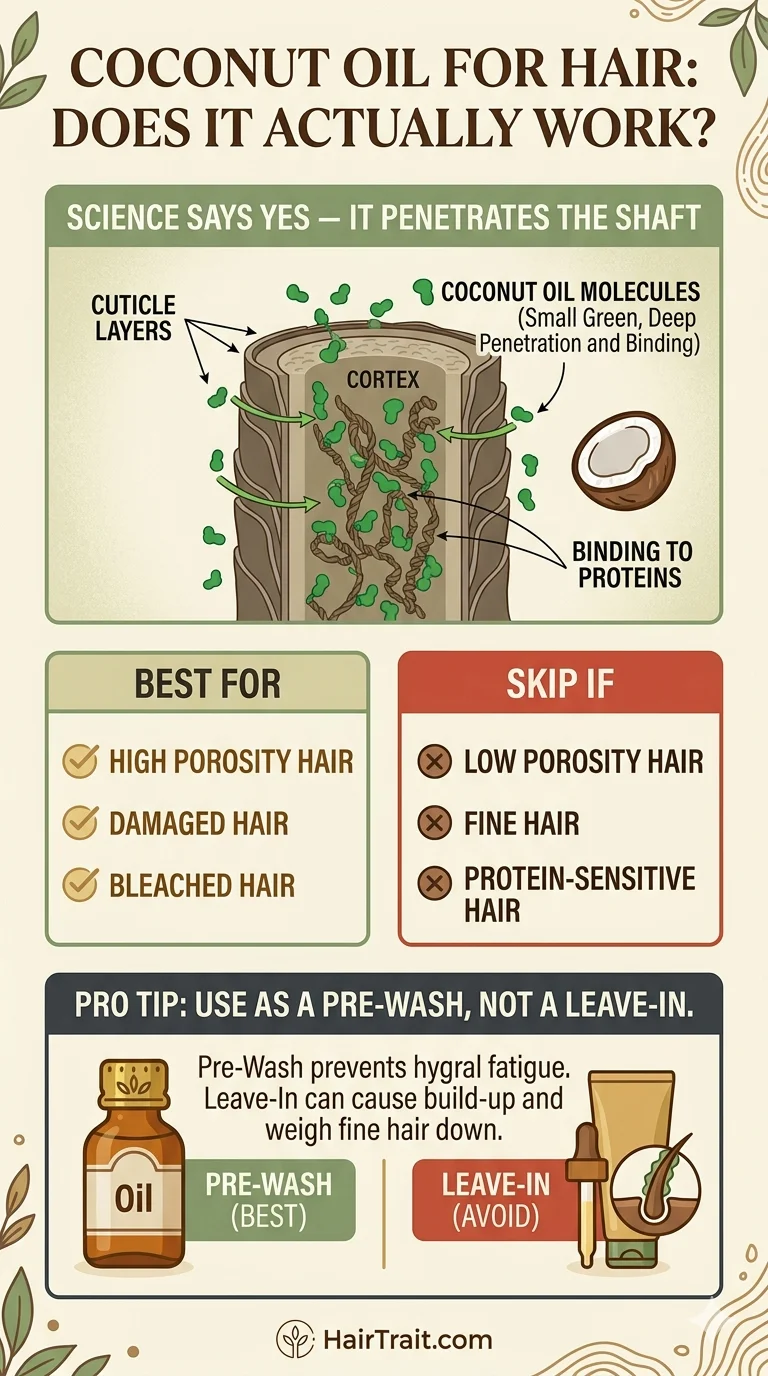
Quick Answer: Coconut oil is one of the only oils scientifically proven to penetrate the hair shaft, thanks to its high lauric acid content and small molecular structure. It reduces protein loss by up to 39% when used as a pre-wash treatment. However, coconut oil doesn’t work for everyone — it can make low-porosity hair feel stiff and coated, and it can worsen dryness in protein-sensitive hair. It’s best used as a pre-shampoo treatment on medium-to-high porosity hair, not as a daily leave-in.
Table of Contents
What Makes Coconut Oil Different From Other Hair Oils
The reason coconut oil behaves differently from argan oil, jojoba oil, or olive oil comes down to one thing: lauric acid. Coconut oil is approximately 49% lauric acid — a medium-chain fatty acid with a molecular weight small enough to pass through the cuticle and enter the hair cortex.
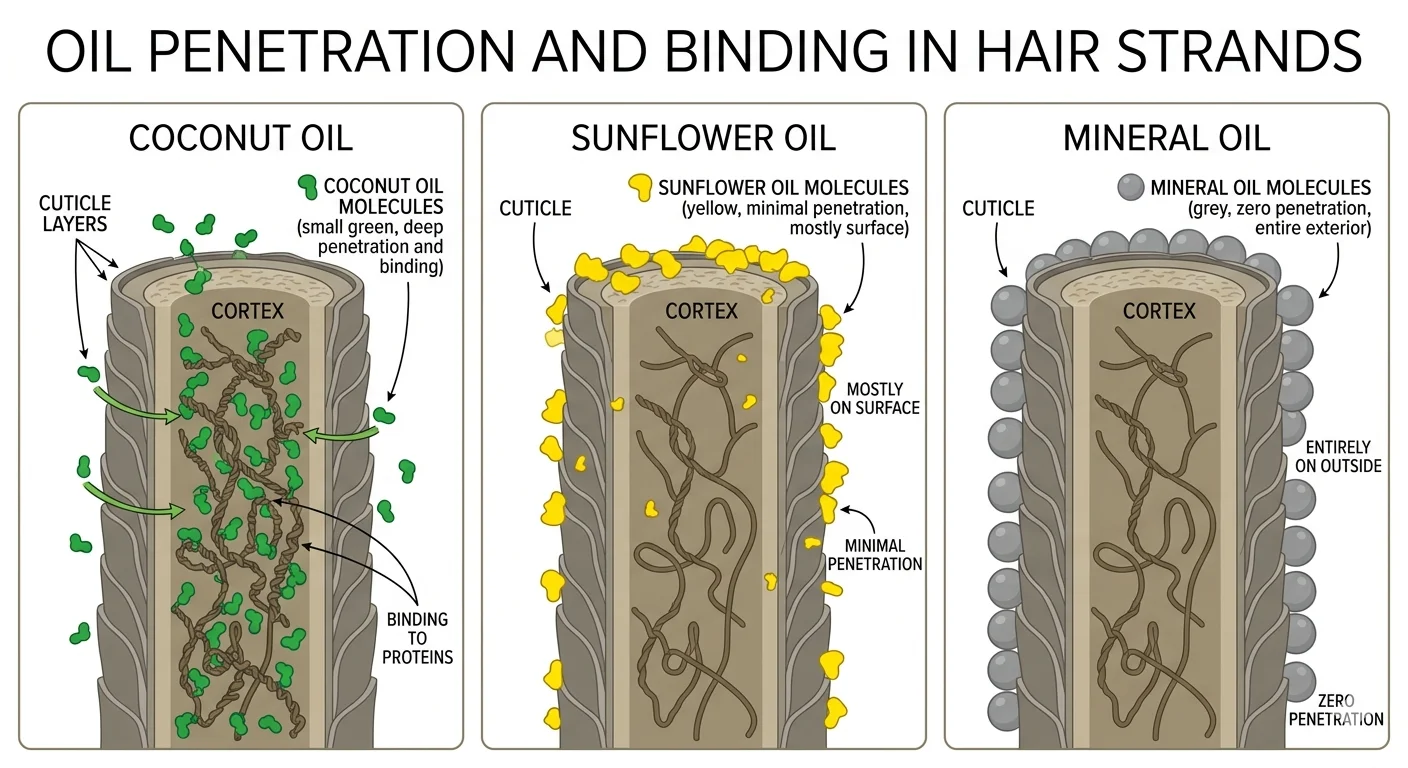
A widely cited study published in the Journal of Cosmetic Science (2003) tested three common oils — coconut oil, mineral oil, and sunflower oil — on hair. The findings were clear:
- Coconut oil penetrated the hair shaft when applied as both a pre-wash and post-wash treatment. It significantly reduced protein loss during washing — by up to 39% compared to untreated hair.
- Sunflower oil showed minimal penetration and sat mostly on the surface.
- Mineral oil did not penetrate at all and only coated the outside of the strand.
This penetrating ability is what sets coconut oil apart. When lauric acid enters the cortex, it binds to hair proteins and reduces the swelling that occurs when hair absorbs water during washing. This swelling-and-contracting cycle is a major cause of cuticle fatigue and breakage — and coconut oil measurably reduces it. For a broader understanding of how oils and products interact with your hair structure, see our hair care basics guide.
The Real Benefits of Coconut Oil for Hair
Based on the available research, coconut oil delivers these specific, measurable benefits:
- Reduces protein loss during washing. This is coconut oil’s strongest proven benefit. Pre-wash application creates a protective barrier inside the cortex that limits how much protein escapes when hair swells with water.
- Reduces hygral fatigue. Hygral fatigue is the damage caused by hair repeatedly swelling when wet and contracting when dry. Coconut oil inside the shaft reduces the degree of swelling, protecting the cuticle from mechanical stress over time.
- Smooths the cuticle. Like other oils, coconut oil coats the outer surface, reducing friction, static, and tangling. This makes detangling safer and decreases breakage from brushing.
- Adds limited moisture. Despite being called an oil, coconut oil’s penetrating ability means it can deliver some hydration to the inner cortex. However, it’s not a substitute for a proper conditioner — it works alongside moisture, not instead of it.
Who Benefits Most From Coconut Oil
| Hair Type | Benefit Level | Why |
|---|---|---|
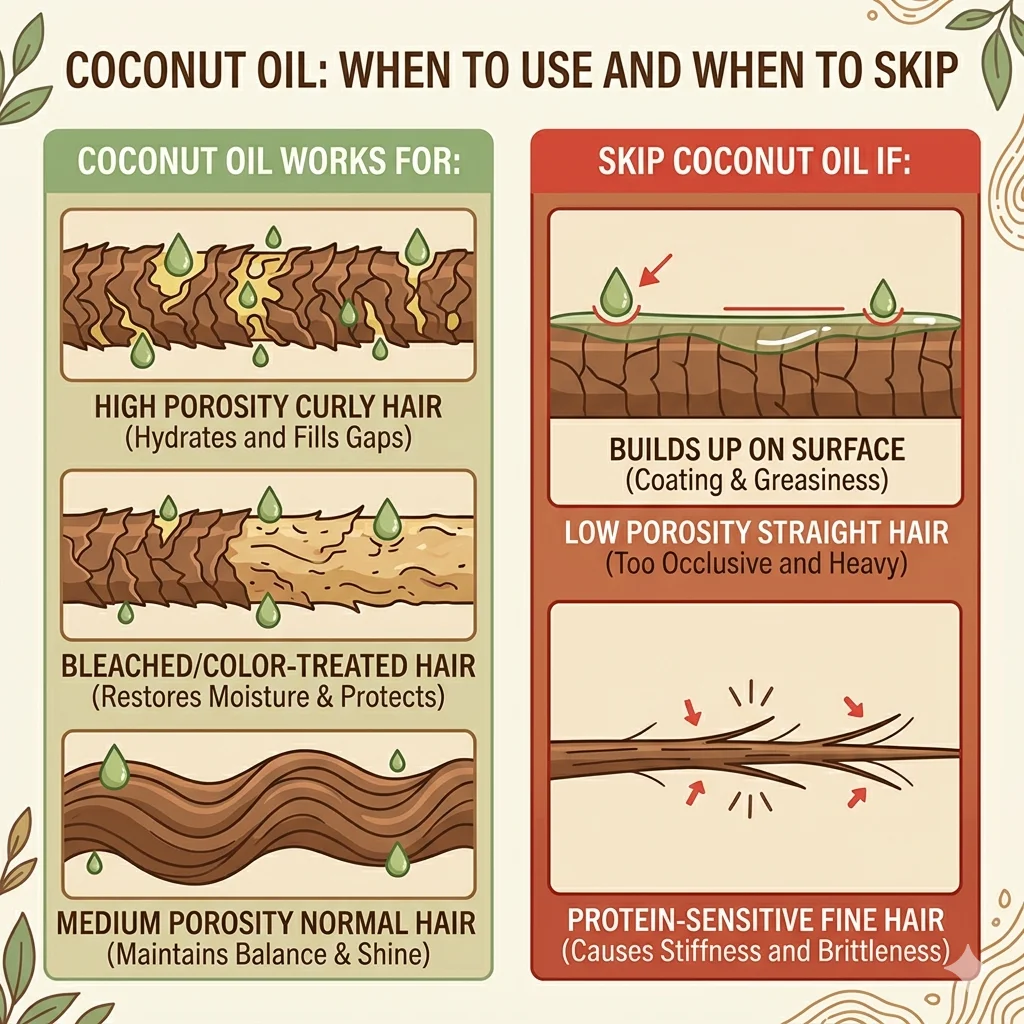
| Medium-to-high porosity hair | High | Open cuticle allows oil to penetrate effectively; protein loss prevention is most needed here |
| Chemically treated / bleached hair | High | Damaged cortex loses protein rapidly during washing; coconut oil reduces this significantly |
| Normal, undamaged hair | Moderate | Preventive benefit — reduces ongoing protein loss before damage accumulates |
| Fine hair | Low-to-moderate | Use sparingly — small amounts on mid-lengths and ends only; roots get weighed down fast |
| Low porosity hair | Low (often negative) | Tightly sealed cuticle resists penetration; oil sits on surface, creating coating and stiffness |
If you’re unsure about your porosity, our complete hair type guide can help you identify it before experimenting with coconut oil.
How to Use Coconut Oil Correctly
Best method: pre-wash treatment
The research shows the strongest benefits when coconut oil is applied before shampooing. Here’s how:
- Take a small amount of virgin (unrefined) coconut oil — about a teaspoon for medium-length hair. Warm it between your palms until liquid.
- Apply to dry hair focusing on mid-lengths and ends. Avoid the roots unless your scalp is extremely dry — oil at the roots causes greasiness and can clog follicles.
- Leave it on for at least 30 minutes. For maximum penetration, leave it overnight with a silk bonnet or towel on your pillow.
- Shampoo normally — you may need to shampoo twice to fully remove the oil. A sulfate shampoo or clarifying wash is most effective for removal.
- Condition as usual after shampooing.
How often?
Once per week for damaged or high-porosity hair. Once every 2 weeks for normal hair. Skip it entirely if your hair consistently feels stiff, coated, or worse after using it — that’s a sign your hair doesn’t respond well to coconut oil’s protein-binding action.
Why Coconut Oil Doesn’t Work for Everyone
The same properties that make coconut oil beneficial for some hair types make it problematic for others:
- Low porosity hair: The tightly sealed cuticle prevents coconut oil from penetrating. Instead of entering the cortex, it sits on the surface, creating a heavy, waxy coating that doesn’t wash out easily. The hair feels greasy, stiff, and weighed down.
- Protein-sensitive hair: Coconut oil binds to hair proteins — which is normally a benefit. But some hair types (particularly fine, low-porosity, or already protein-loaded hair) react to this by becoming rigid and brittle. This mimics protein overload. If you’ve read our protein treatment guide and know your hair is protein-sensitive, approach coconut oil cautiously.
- Hair that needs moisture, not protein protection: If your hair is limp and mushy (signs of moisture overload), coconut oil’s protein-binding action may help. But if your hair is dry and stiff (signs of protein overload), coconut oil makes it worse by adding more protein reinforcement to an already rigid structure.
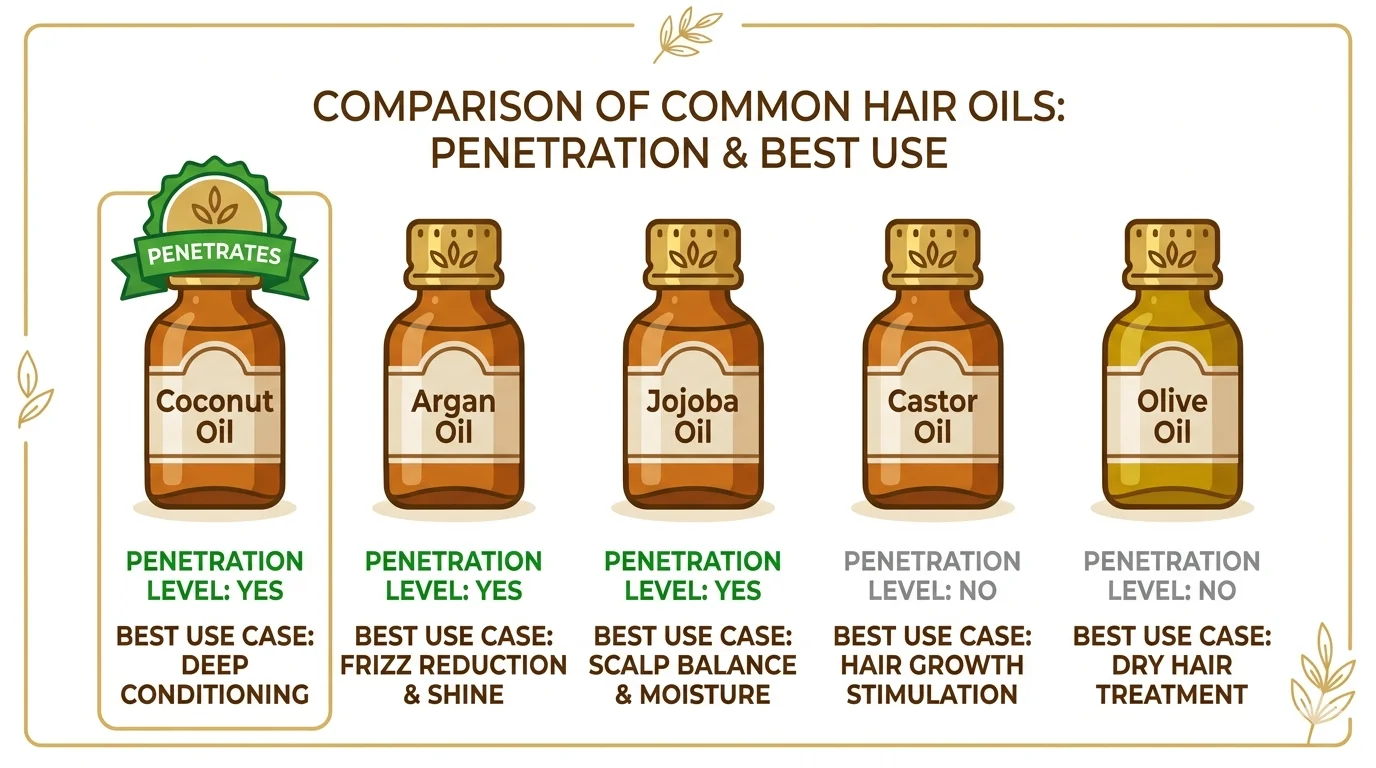
Coconut Oil vs. Other Popular Hair Oils
| Oil | Penetrates Hair? | Best Use | Best For |
|---|---|---|---|
| Coconut oil | Yes — enters the cortex | Pre-wash protein loss prevention | Medium-high porosity, damaged hair |
| Argan oil | Minimal | Surface sealing, frizz control, heat protection | All hair types, especially fine-to-medium |
| Jojoba oil | Minimal | Scalp moisture, light surface conditioning | Oily scalps (mimics sebum), sensitive skin |
| Castor oil | No — very heavy | Scalp application for thickness perception | Edges, thin spots (anecdotal, not proven for growth) |
| Olive oil | Very minimal | Heavy surface coating, deep conditioning pre-wash | Very dry, coarse, thick hair |
Common Mistakes With Coconut Oil for Hair
- Using too much. A teaspoon is enough for medium-length hair. More doesn’t mean better — excess oil creates buildup that requires multiple harsh washes to remove, negating the protective benefit.
- Applying to roots and scalp regularly. Unless you have a diagnosed dry scalp condition, oiling the roots leads to greasy, flat hair and can clog follicles. Focus application on mid-lengths and ends where damage concentrates.
- Using refined instead of virgin coconut oil. Refined coconut oil has been processed at high heat, which degrades some of the lauric acid and removes beneficial compounds. Virgin (cold-pressed, unrefined) coconut oil retains the full lauric acid content that drives penetration.
- Using it as a leave-in on low porosity hair. If your hair doesn’t absorb coconut oil within a few hours, it won’t absorb it at all. Leaving it in creates buildup. Use it as a pre-wash that you shampoo out instead.
- Expecting it to fix severe damage. Coconut oil prevents protein loss — it doesn’t rebuild lost protein or repair broken bonds. For structural repair, you need dedicated bond builders or protein treatments, then use coconut oil to maintain results. Browse our tools and product recommendations for repair-focused options.
What to Expect When Using Coconut Oil
| Timeframe | What You’ll Notice |
|---|---|
| First use | Hair feels smoother and detangles more easily after washing. Shine may improve visibly. If it feels stiff or waxy instead, your hair likely doesn’t respond well to coconut oil. |
| Week 2–3 | Reduced breakage during brushing and styling. Hair retains softness longer between washes. |
| Month 1–2 | Cumulative protein-loss prevention becomes noticeable — hair feels stronger, ends look healthier, and split ends develop more slowly. |
| Month 3+ | Ongoing maintenance benefit. Combined with proper conditioning, coconut oil helps maintain hair health between cuts and chemical services. |
If your hair responds well, coconut oil becomes a permanent, low-cost staple in your pre-wash routine. If it doesn’t, that’s equally valuable information — try argan or jojoba instead and focus your protection strategy on other methods. Adjust seasonally using our seasonal hair care guide.
Final Thoughts: Coconut Oil Is Great — For the Right Hair
Coconut oil for hair is one of the few natural remedies with genuine scientific backing. Its ability to penetrate the hair shaft and reduce protein loss during washing is unique among common oils and has been validated in peer-reviewed research. As a weekly pre-wash treatment on medium-to-high porosity or damaged hair, it’s hard to beat for the price.
But coconut oil for hair is not universal. If your hair is low porosity, fine, or already protein-loaded, it will likely make things worse — not better. The key is to try it once, observe how your hair responds over 48 hours, and let that response guide your decision. Don’t force a product that doesn’t suit your hair type just because the internet loves it.