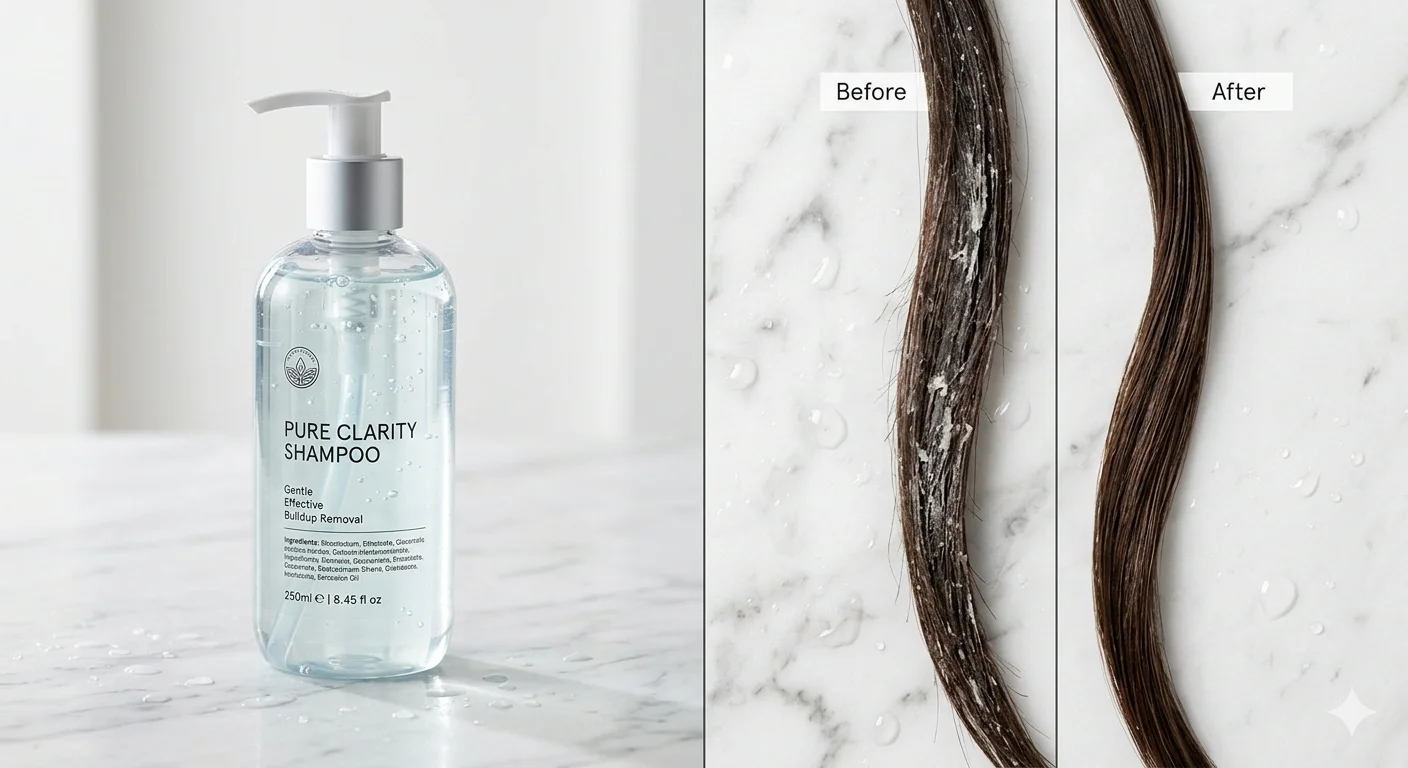
Your hair feels heavy, dull, and greasy even right after washing. Your favorite products stopped working. Your scalp itches. These are the signs you need clarifying shampoo — a deep-cleansing treatment that removes the buildup regular shampoo can’t touch.
But use it wrong, and clarifying shampoo strips your hair dry, causes color to fade, and creates more problems than it solves. This guide explains when you actually need it, how often to use it by hair type, and the 6 mistakes that turn a helpful reset into damaging over-cleansing.
Before adding clarifying to your routine, make sure your baseline care is solid using our hair care basics guide. Clarifying removes problems. It doesn’t replace proper daily care.
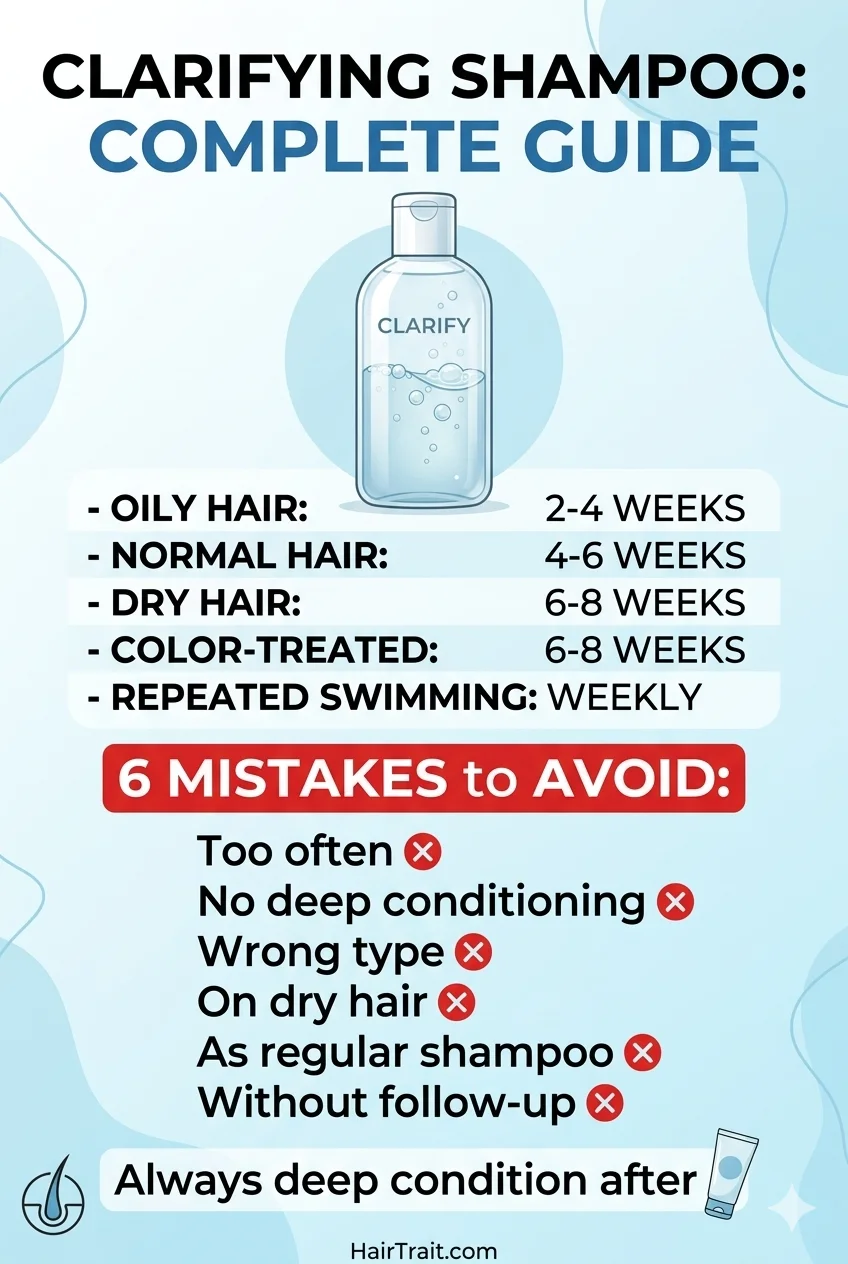
Quick Answer: Clarifying shampoo removes product buildup, hard water minerals, chlorine, and excess oil that regular shampoo can’t. Use every 2-4 weeks for most hair types. Signs you need it: dull hair, products don’t work, greasy feel after washing, limp texture. Always deep condition after clarifying to prevent dryness.
Table of Contents
What Clarifying Shampoo Actually Does
Clarifying shampoo is a deep-cleansing formula designed to remove buildup from hair and scalp. Unlike regular shampoo which cleanses surface dirt and oils, clarifying shampoo uses stronger surfactants to strip away:
- Product buildup: Silicones, oils, butters, styling products that accumulate over time
- Hard water minerals: Calcium and magnesium deposits that coat hair
- Chlorine: From swimming pools
- Excess sebum: Scalp oil that regular shampoo doesn’t fully remove
- Environmental pollutants: Smoke, smog, urban grime
Research shows that product and mineral buildup creates a hydrophobic layer on hair that blocks moisture penetration [International Journal of Cosmetic Science]. Clarifying removes this layer and restores hair’s ability to absorb treatments.
Signs You Need Clarifying Shampoo
Not everyone needs clarifying shampoo regularly. Watch for these signs:
Definite Signs You Need It
- Hair looks dull and lacks shine even when clean
- Products that used to work suddenly don’t
- Hair feels coated or waxy to the touch
- Takes forever to dry
- Greasy or limp even right after washing
- Scalp itches constantly despite regular washing
- Color looks muddy or faded (buildup affects color perception)
- Recently swam in chlorinated or salt water
You Probably Don’t Need It If
- Hair is already dry and you use minimal products
- You have color-treated hair that’s fragile (use less frequently)
- Your water is soft and you use lightweight products
- Hair feels clean and products work well

How Often to Use Clarifying Shampoo (By Hair Type)
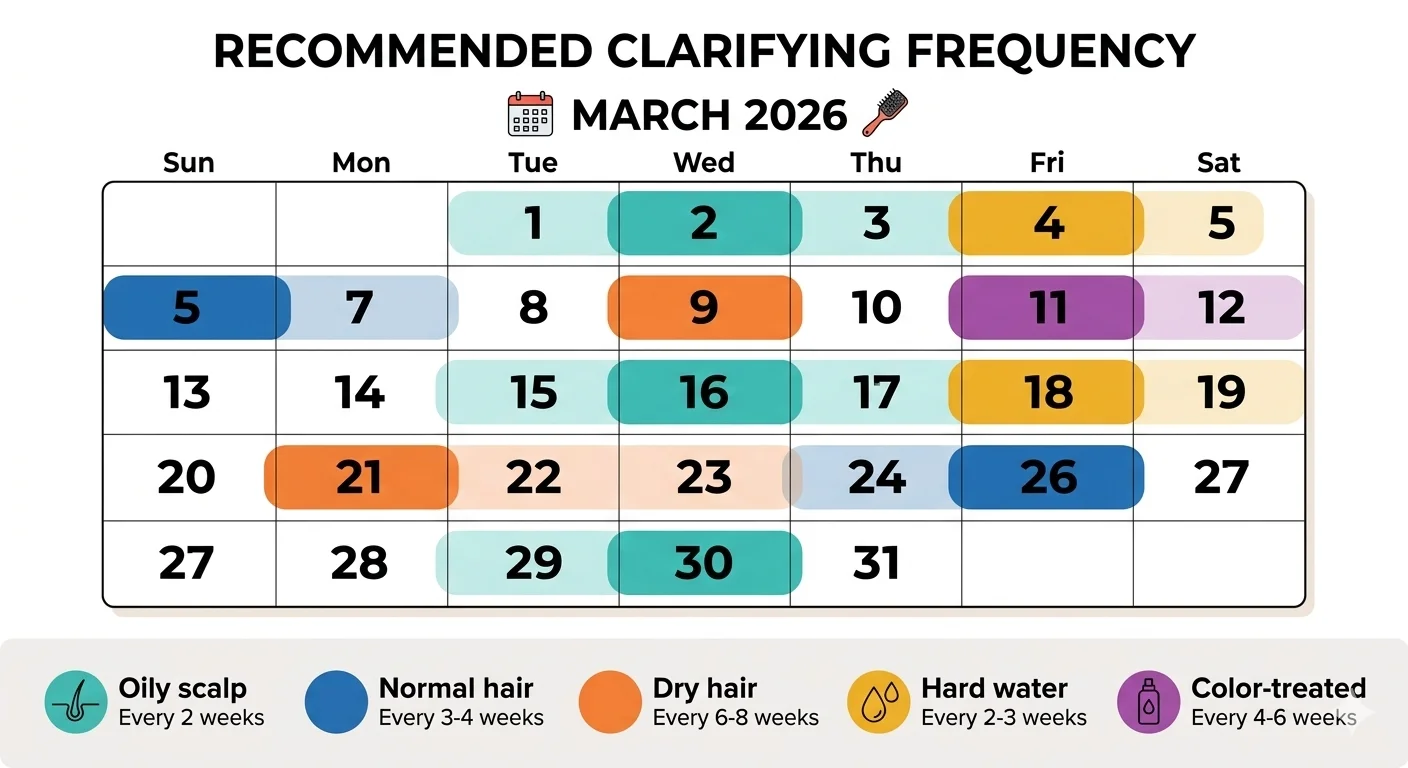
Frequency depends on water hardness, product use, and hair porosity. Here’s the guide:
| Hair Type/Situation | Frequency | Notes |
|---|---|---|
| Oily scalp + heavy product user | Every 2 weeks | More frequent prevents chronic buildup |
| Normal scalp + moderate products | Every 3-4 weeks | Standard maintenance schedule |
| Dry scalp + minimal products | Every 6-8 weeks | Less frequent to avoid over-stripping |
| Color-treated hair | Every 4-6 weeks | Use color-safe clarifying only |
| Hard water area | Every 2-3 weeks | Minerals accumulate faster |
| Low porosity hair | Every 2-3 weeks | Buildup happens faster on sealed cuticles |
| After swimming | Immediately | Chlorine/salt must be removed ASAP |
For specific guidance on hard water, see our hard water hair care routine. For low porosity considerations, see our low porosity hair products guide.
The 6 Mistakes That Damage Hair
Mistake #1: Using It Too Often
This is the #1 clarifying shampoo mistake. Some people use it weekly or even every wash thinking “more clean = better.” This strips hair of natural protective oils, causes dryness, and increases breakage.
Studies show over-cleansing disrupts the scalp’s natural pH and microbiome [NCBI]. Your scalp overproduces oil to compensate, creating a vicious cycle.
The fix: Stick to the frequency table above. More than every 2 weeks is too much for most people.
Mistake #2: Not Deep Conditioning After
Clarifying shampoo removes everything — including the good stuff. If you don’t immediately follow with deep conditioning, hair becomes dry and prone to breakage.
The fix: ALWAYS deep condition for 15-30 minutes with heat after clarifying. This is non-negotiable. Consider it part of the clarifying process, not optional.
Mistake #3: Using on Dry or Damaged Hair
Clarifying shampoo is harsh. Using it on already-dry or damaged hair accelerates damage.
The fix: If your hair is severely damaged, do a protein treatment and deep moisture routine for 2-3 weeks before introducing clarifying. See our heat damage repair guide for rebuilding damaged hair first.
Mistake #4: Applying to Dry Hair
Some people apply clarifying shampoo to dry hair thinking it works better. This creates uneven stripping and can damage hair.
The fix: Always wet hair thoroughly first. Dilute the shampoo with water in your hands before applying. Massage gently — you don’t need aggressive scrubbing.
Mistake #5: Choosing the Wrong Type
Not all clarifying shampoos are equal. Some contain sulfates so harsh they strip color in one wash. Others aren’t strong enough to remove hard water buildup.
What to look for:
- For hard water: Chelating shampoo with EDTA or phytic acid (stronger than standard clarifying)
- For color-treated hair: Sulfate-free clarifying shampoo
- For general buildup: Standard clarifying with mild surfactants
Mistake #6: Using It as Regular Shampoo
Clarifying shampoo is a treatment, not a daily shampoo. Using it for every wash causes chronic dryness and scalp irritation.
The fix: Keep regular gentle shampoo for daily/weekly washing. Clarifying is for periodic reset only.

How to Use Clarifying Shampoo Correctly
Follow this exact process for best results:
Step-by-Step Method
- Wet hair thoroughly with warm (not hot) water for 1-2 minutes
- Dilute shampoo in hands with a bit of water before applying
- Apply to scalp first — focus where buildup accumulates (crown, hairline, nape)
- Massage gently with fingertips (not nails) for 2-3 minutes
- Work through lengths — the lather running down hair is usually enough for the lengths
- Let sit 2-3 minutes — allows ingredients to work
- Rinse thoroughly with cool water — make sure all shampoo is removed
- Deep condition immediately — 20-30 minutes with heat
- Rinse conditioner with cool water
- Apply leave-in — hair is extra receptive after clarifying
What to Expect
Hair will feel “squeaky clean” — almost too clean. This is normal. The deep conditioning step will add back necessary moisture. After drying, hair should feel lighter, shinier, and more responsive to styling.
Clarifying vs Chelating: What’s the Difference?
People often confuse these terms. Here’s the distinction:
Clarifying Shampoo:
- Removes product buildup, oils, general dirt
- Uses surfactants (detergents) to clean
- Works on surface and light buildup
- Good for regular maintenance
Chelating Shampoo:
- Specifically targets hard water minerals (calcium, magnesium)
- Contains chelating agents (EDTA, phytic acid, citric acid)
- Chemically binds to minerals and removes them
- Necessary for hard water areas
- More powerful than standard clarifying
If you have hard water, you need chelating shampoo. Standard clarifying won’t remove mineral deposits effectively. Studies confirm chelating agents are the only effective treatment for hard water buildup [Journal of Cosmetic Dermatology].
DIY Clarifying Shampoo Alternatives
If you don’t have clarifying shampoo on hand, these DIY options work in a pinch:
Option #1: Baking Soda Paste (Use With Caution)
Recipe: 1 tablespoon baking soda + 1 cup water. Mix to paste.
How to use: Apply to wet scalp, massage, rinse immediately, follow with acidic rinse (vinegar) to restore pH.
Warning: Baking soda is highly alkaline (pH 9). Use maximum once every 2 months. Can be damaging with frequent use.
Option #2: Apple Cider Vinegar Rinse
Recipe: 2 tablespoons ACV + 1 cup water
How to use: After regular shampooing, pour mixture over hair, let sit 3-5 minutes, rinse.
What it does: Mild clarifying. Removes some buildup, smooths cuticles, restores pH. Gentler than baking soda but less effective on heavy buildup.
Option #3: Bentonite Clay Mask
Recipe: 2 tablespoons bentonite clay + enough water to make paste
How to use: Apply to scalp, let sit 15 minutes, rinse thoroughly.
What it does: Absorbs excess oil and product buildup. Natural option. Works well for oily scalps.
Best choice: For most people, a dedicated clarifying or chelating shampoo is more effective and safer than DIY options. See our best hair products guide for recommendations.
What to Expect After Clarifying
Immediately after: Hair feels squeaky clean, lightweight, slightly dry. This is temporary and expected.
After deep conditioning: Hair feels soft, bouncy, manageable. Products absorb better. Styling is easier.
Over next 2-4 weeks: Hair maintains improved responsiveness to products. Styles hold better. Less greasy buildup between washes.
When to clarify again: When you notice the signs returning — dullness, product ineffectiveness, coated feeling.
Special Considerations
Color-Treated Hair
Use sulfate-free clarifying only. Clarify 1 week before coloring (not right before — scalp oils protect during coloring process). Wait 2 weeks after coloring before clarifying.
Chemically Relaxed or Permed Hair
Clarify before chemical treatment to remove buildup that can interfere with processing. Don’t clarify for 2 weeks after treatment.
Very Dry or High Porosity Hair
Use clarifying sparingly (every 6-8 weeks). Always use heat with deep conditioning after. Consider protein treatment in addition to moisture.
Scalp Conditions
If you have seborrheic dermatitis, psoriasis, or eczema, consult a dermatologist before using clarifying shampoo. It may irritate sensitive scalps.
Final Thoughts
Clarifying shampoo is a powerful reset tool when used correctly. It removes the buildup that makes products ineffective and hair unmanageable. But it’s not gentle daily care — it’s periodic deep cleaning.
Use it when you see the signs. Follow the frequency guide for your hair type. Always deep condition after. Avoid the 6 mistakes. Do these things, and clarifying becomes a valuable part of your routine rather than a source of damage.
Think of it like exfoliating your face. Essential periodically. Damaging if overdone. The key is appropriate timing and proper follow-up care.