Most people build a hair routine and treat it as permanent. They find products that work and stick to them for years. Regardless of the season.
This is one of the most common reasons a routine that worked perfectly in spring starts failing in winter.
Seasonal hair care is the practice of adjusting your products, frequency, and techniques in response to the environmental changes — temperature, humidity, UV exposure, and indoor heating — that directly affect your hair’s moisture levels, scalp behavior, and structural health.
Your hair does not behave the same way in July humidity as it does in January central heating. A seasonal hair care routine acknowledges that and adapts. This guide covers exactly what changes each season demands — and why — across all hair types.
Before reading on, make sure your baseline routine is already in place. Our hair care basics guide covers the foundation you need before making seasonal adjustments.
Table of Contents
Summer Seasonal Hair Care: UV, Humidity, and Sweat
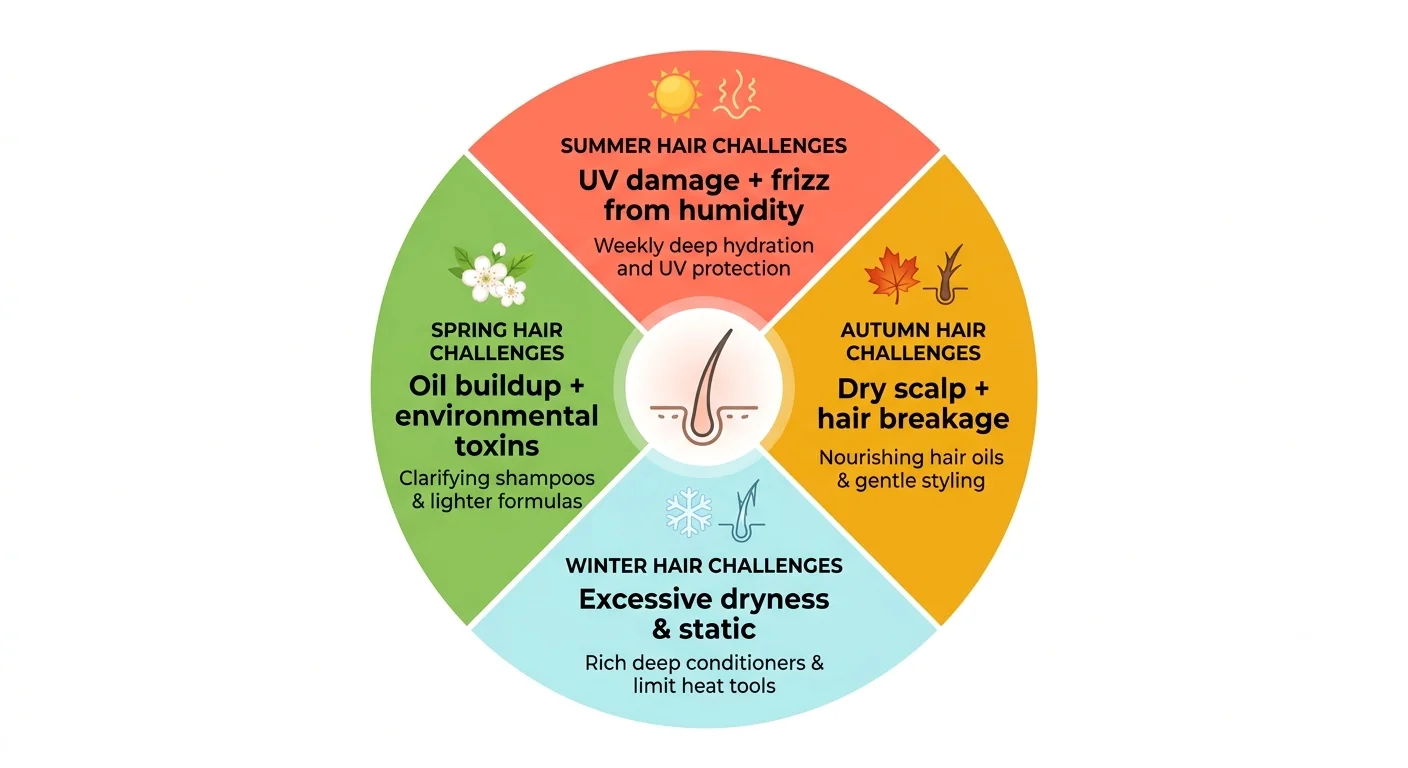
Summer is the most environmentally aggressive season for hair. UV radiation, high humidity, salt water, chlorine, and sweat all accumulate across the scalp and strand simultaneously.
The Main Challenges
- UV damage: The sun degrades protein structure and bleaches color. Both natural and chemically colored hair fade. Increased porosity is a common result.
- Humidity frizz: High humidity causes the hair shaft to swell unevenly. This creates frizz. More pronounced in high porosity hair where raised cuticle layers absorb air moisture freely.
- Salt and chlorine buildup: Both are drying and damaging. Salt draws moisture out of the strand. Chlorine strips the scalp’s natural oils and can cause significant cuticle damage with repeated exposure.
- Scalp sweat: Increased perspiration raises scalp pH, can clog follicles, and may require more frequent cleansing.
Summer Adjustments
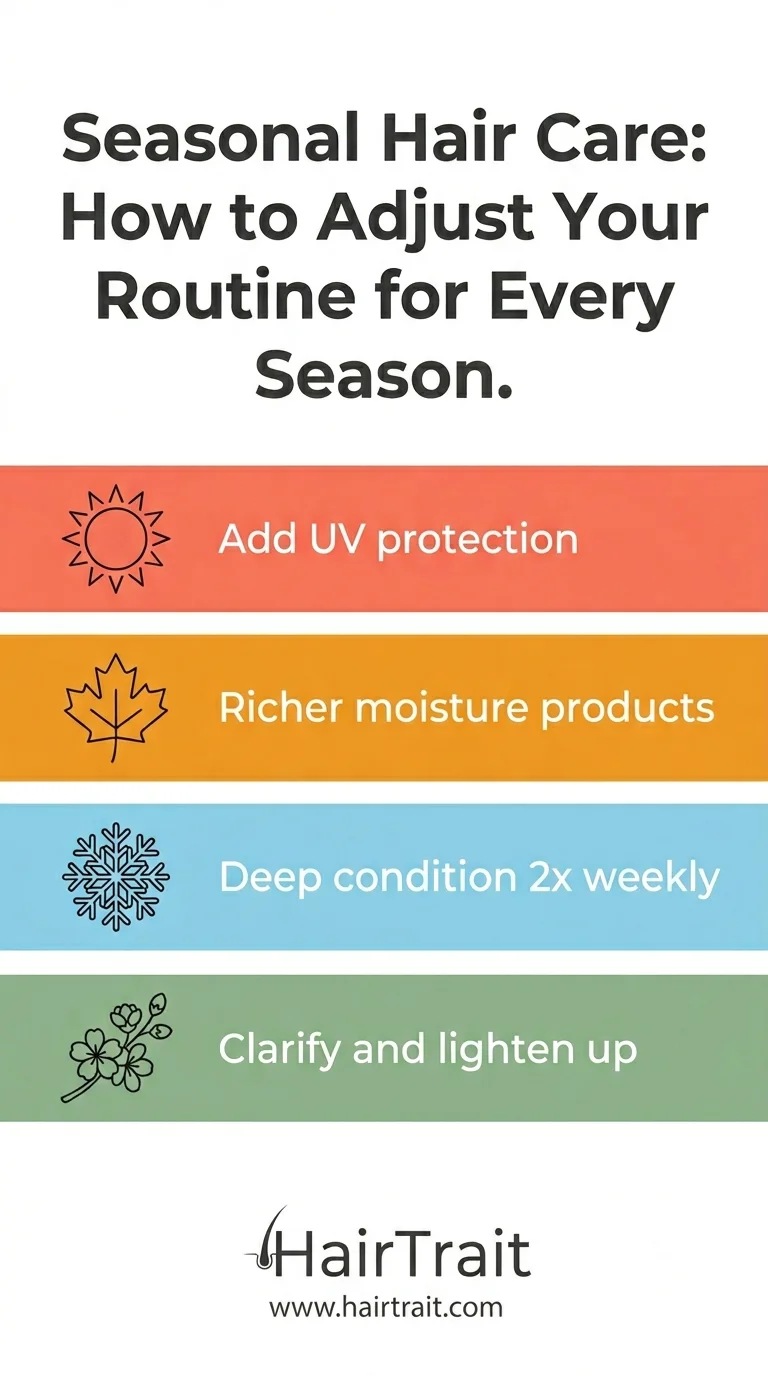
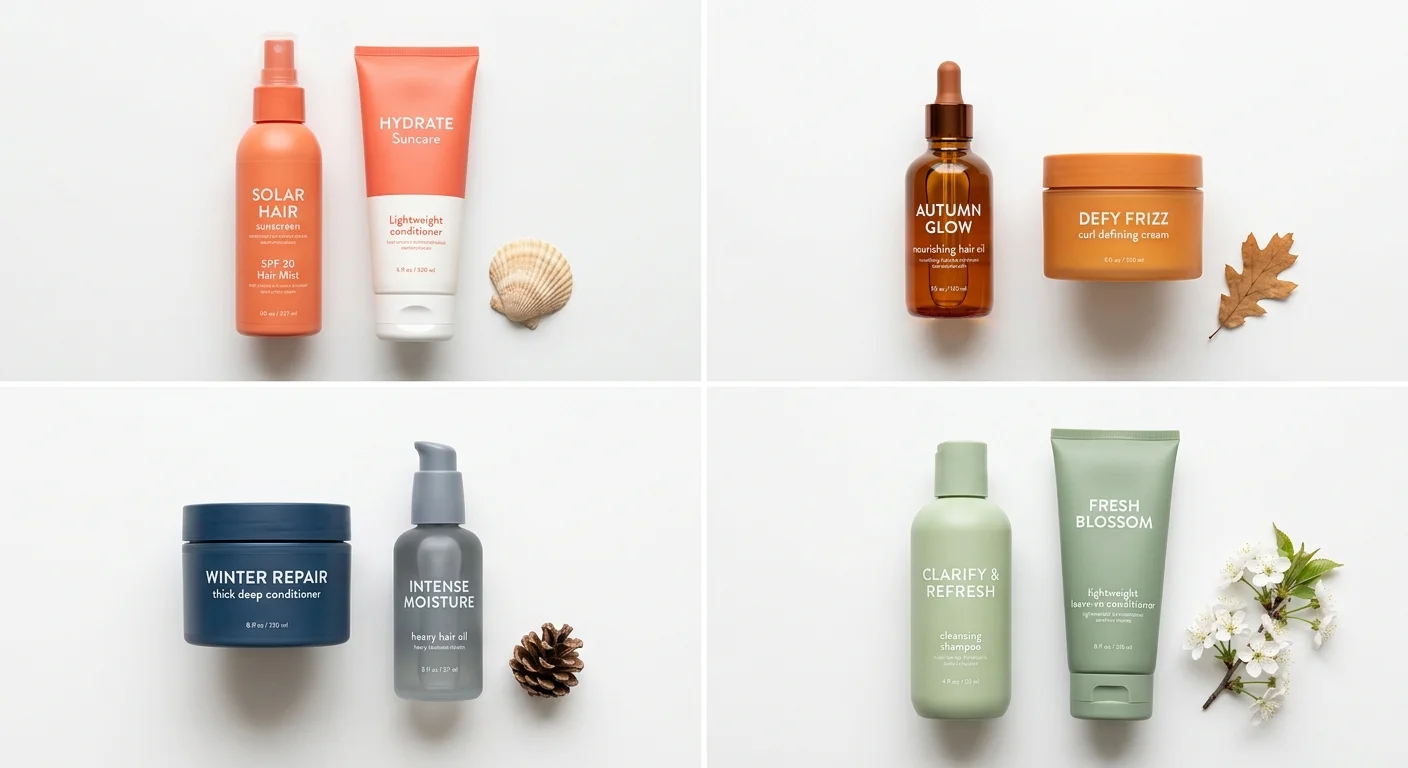
- Add UV protection: Use a leave-in or styling product with UV filters, or a hair SPF spray on days with prolonged sun exposure. This is the most neglected step in summer seasonal hair care for most people.
- Switch to anti-humidity products: Anti-frizz serums and humidity-blocking gels seal the cuticle and reduce atmospheric moisture absorption. Particularly important for Type 2–4 hair in humid climates.
- Clarify more frequently: Rinse hair after swimming in salt or chlorinated water. Clarify with a chelating shampoo every 2–3 weeks during peak summer to remove mineral and product buildup.
- Deep condition weekly: Summer heat and UV exposure deplete moisture faster. Increase deep conditioning frequency to compensate. See our best deep conditioners guide for recommendations.
Autumn Seasonal Hair Care: Transition and Shedding
Autumn is a transitional season. Humidity drops. Temperatures fall. Many people notice an increase in hair shedding. This seasonal shedding is well-documented and normal.
Studies show that hair follicles enter the telogen (resting) phase in higher numbers during late summer [NCBI]. This leads to increased shedding in autumn as those hairs release. Typically lasts 4–6 weeks.
The Main Challenges
- Increased shedding: Normal and temporary. Typically lasts 4–6 weeks. Shedding more than 100–150 hairs per day consistently beyond this window warrants attention.
- Dropping humidity: As air dries out, hair loses moisture more quickly. Products that worked in summer may feel insufficient.
- Scalp transition: The scalp adjusts to lower temperatures and reduced sweat. Some people experience temporary oiliness or dryness during this adjustment.
Autumn Adjustments
- Increase product richness: Transition from lightweight summer leave-ins to slightly heavier cream leave-ins. Add a sealing step if you were skipping it in summer.
- Reduce wash frequency: If your summer routine involved more frequent washing due to sweat, scale back as temperatures drop.
- Scalp massage: Increased scalp massage during peak shedding supports circulation and can reduce the duration of the seasonal shed.
- Do not panic about shedding: Autumn shedding is almost always temporary. Reassess if it continues past 8 weeks or is accompanied by scalp changes.
Winter Seasonal Hair Care: Dryness and Static
Winter is the highest-risk season for moisture loss. The combination of cold outdoor air and dry indoor heating creates a constant moisture deficit that affects every hair type.
Cold outdoor air holds very little moisture. Dry indoor heating creates the lowest ambient humidity of the year.
The Main Challenges
- Extreme dryness: Low humidity indoors and outdoors strips moisture from the hair shaft continuously. This is the season where high porosity hair suffers the most.
- Static: Dry air + friction from hats, scarves, and wool creates static buildup. Fine hair is especially vulnerable.
- Scalp dryness and flaking: The scalp dries out faster in winter. This can mimic or worsen dandruff symptoms. If flaking increases in winter but resolves in spring, it is likely environmental dryness — not a chronic scalp condition.
- Breakage from friction: Wool hats, scarves, and coat collars create mechanical friction that causes breakage, especially at the nape and around the ears.
Winter Adjustments
- Increase deep conditioning: Move to twice weekly if needed for Type 3–4 or high porosity hair. Your hair is losing moisture faster than at any other time of year.
- Switch to heavier sealants: Transition from lightweight oils to slightly heavier butters or cream-based sealants. The goal is to lock in moisture that the dry air is pulling out.
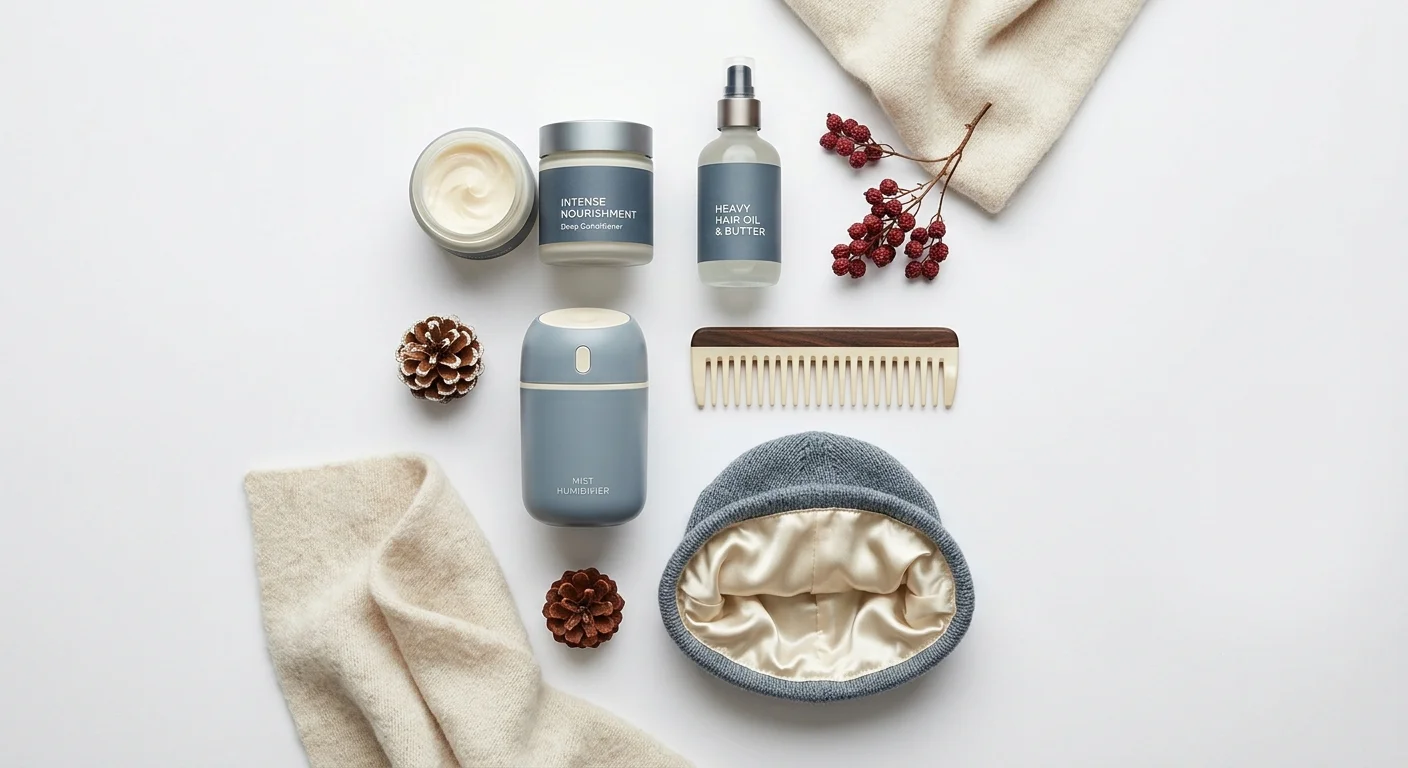
- Use a humidifier: A bedroom humidifier running overnight significantly reduces how fast hair loses moisture. This is one of the most impactful seasonal hair care adjustments you can make in winter.
- Protective styles: Braids, twists, and updos reduce daily friction from hats and scarves. Satin-lined hats or a satin scarf underneath wool hats also prevent friction breakage.
Spring Seasonal Hair Care: Reset and Clarify
Spring is the most forgiving season. It is also the ideal time to reset after a heavy winter routine.
Spring Adjustments
- Clarify first: A clarifying shampoo at the start of spring removes winter buildup — heavy product residue, mineral deposits, and anything that accumulated during the colder months. This single step makes a noticeable difference.
- Lighten your products: Transition back from heavy winter formulas to lighter leave-ins and oils. Your hair does not need the same level of sealing in spring humidity as it did in winter central heating.
- Reassess your porosity: Hair porosity can shift after a season of extremes. Spring is a good time to retest. Check our hair type guide for details on porosity testing.
- Trim if needed: Winter breakage and dryness often leave split ends. A small trim in early spring removes damaged ends before summer UV exposure causes further issues.
How Hair Type Affects Seasonal Adjustments
Your hair type determines how aggressively you need to adjust each season.
| Hair Type | Most Vulnerable Season | Why |
|---|---|---|
| Type 1 (Straight, fine) | Winter | Static, flatness, and oil overproduction from dry scalp |
| Type 2 (Wavy) | Summer | Humidity frizz disrupts wave pattern |
| Type 3 (Curly) | Winter | Extreme moisture loss flattens curls and increases breakage |
| Type 4 (Coily) | Winter | Already moisture-hungry — winter dryness is critical risk |
| High porosity | All seasons | Absorbs and loses moisture faster than other types — needs constant adjustment |
| Color-treated | Summer | UV accelerates color fade and increases porosity |
Use this as a starting point. Your personal environment matters too — someone in a humid coastal city will have different summer challenges than someone in a dry inland area.
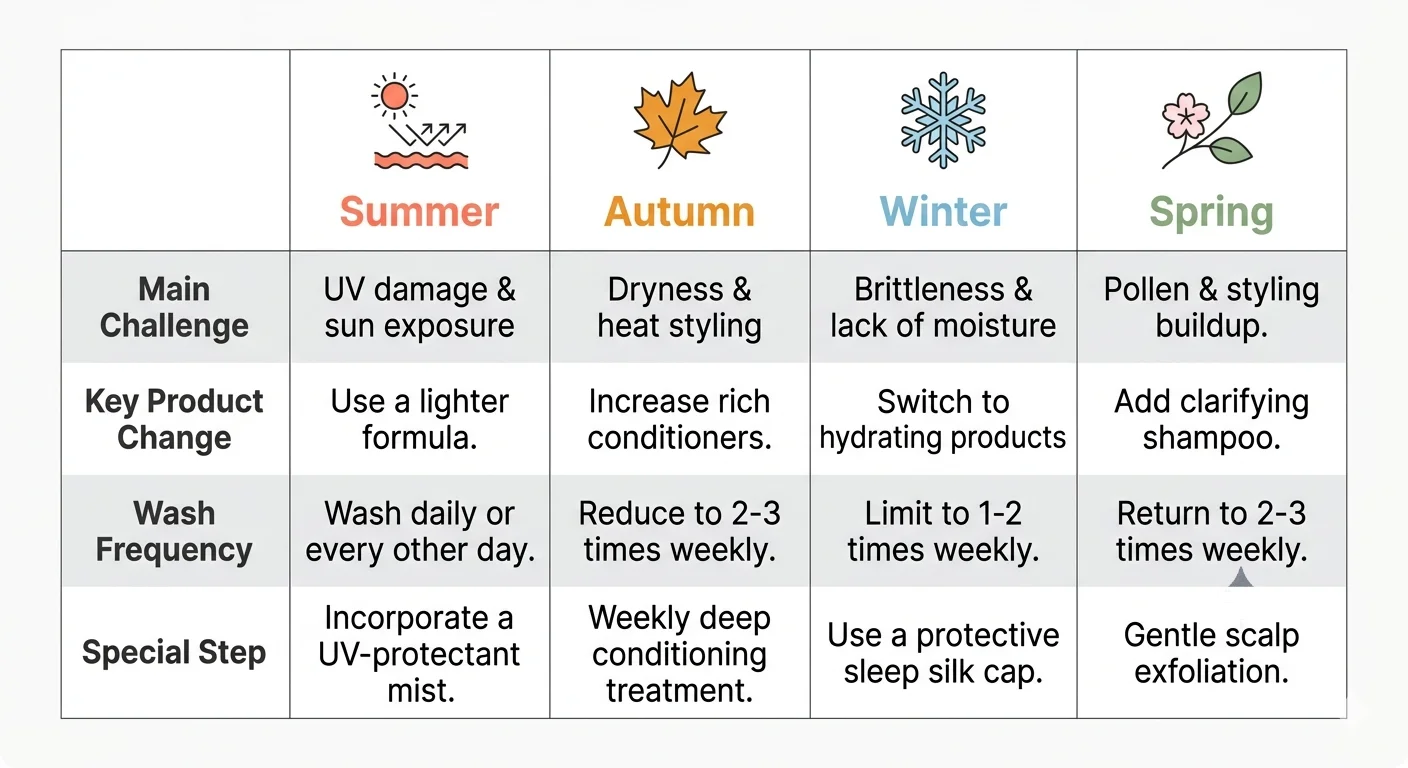
Your Seasonal Hair Care Quick Reference
| Season | Top Priority | Key Adjustment |
|---|---|---|
| Summer | UV protection + anti-humidity | Add UV spray, anti-frizz serum, clarify every 2–3 weeks |
| Autumn | Richer moisture + manage shedding | Heavier leave-in, reduce wash frequency |
| Winter | Maximum moisture retention | Twice-weekly deep condition, humidifier, protective styles |
| Spring | Clarify and lighten | Clarifying reset, lighter products, retest porosity |
FAQ: Seasonal Hair Care
How often should I change my hair routine for the seasons?
Four times a year — once per season. The transitions happen gradually, so adjust your products as you notice changes in how your hair feels and behaves. The biggest shifts are typically summer-to-autumn and autumn-to-winter.
Is seasonal hair shedding normal?
Yes. Increased shedding in autumn is well-documented and affects most people. It typically lasts 4–6 weeks. If shedding continues beyond 8 weeks or is accompanied by scalp changes, consult a dermatologist [AAD].
Do I need different products for each season?
Not entirely different products — more like adjustments within the same categories. A lighter leave-in for summer, a heavier one for winter. A clarifying shampoo added in spring. You are adjusting weight and frequency, not rebuilding your entire routine four times a year.
What is the most important seasonal hair care step?
UV protection in summer and deep conditioning in winter. These two steps address the most damaging environmental factors your hair faces throughout the year.
Does seasonal hair care apply to men too?
Absolutely. Scalp dryness in winter, UV damage in summer, and seasonal shedding affect all hair regardless of length or gender. Men with shorter hair may need fewer product adjustments but should still protect against UV and increase moisture in winter.
Can seasonal changes cause dandruff?
Seasonal changes can trigger flaking that looks like dandruff but is actually environmental dryness. True dandruff (caused by Malassezia yeast) persists year-round. If your flaking only appears in winter and clears up in spring, it is likely dry scalp — not dandruff. A gentle moisturising shampoo and scalp oil usually resolves it.

Final Thoughts
Seasonal hair care is not complicated. It is paying attention to what your environment is doing to your hair and adjusting accordingly. UV protection in summer. Richer moisture in autumn. Maximum moisture retention in winter. Clarifying reset in spring.
Build your seasonal adjustments on top of a solid year-round foundation. Start with our hair care basics guide. Know your hair type. Choose the right products and tools. Then let the seasons guide your fine-tuning.
Your hair changes with the weather. Your routine should too.