Split ends (trichoptilosis) occur when the protective outer layer of your hair wears away at the ends, causing the inner cortex to split apart. Once the hair shaft splits, it cannot be repaired — no product can permanently fuse the split back together.
But not all split ends are the same. There are 7 distinct types, each indicating a different damage pattern. Understanding which type you have reveals what’s damaging your hair and how to prevent future splits.
This guide identifies all 7 types, explains what causes each, and gives you the only solution that actually works: strategic cutting combined with prevention.
Quick Answer: Split ends cannot be repaired. The only real fix is cutting them off. Products claiming to “repair” splits temporarily glue the shaft together but the split remains. Prevention is everything: minimize heat, gentle detangling, regular trims every 8-12 weeks, protein-moisture balance, protective styling.
Table of Contents
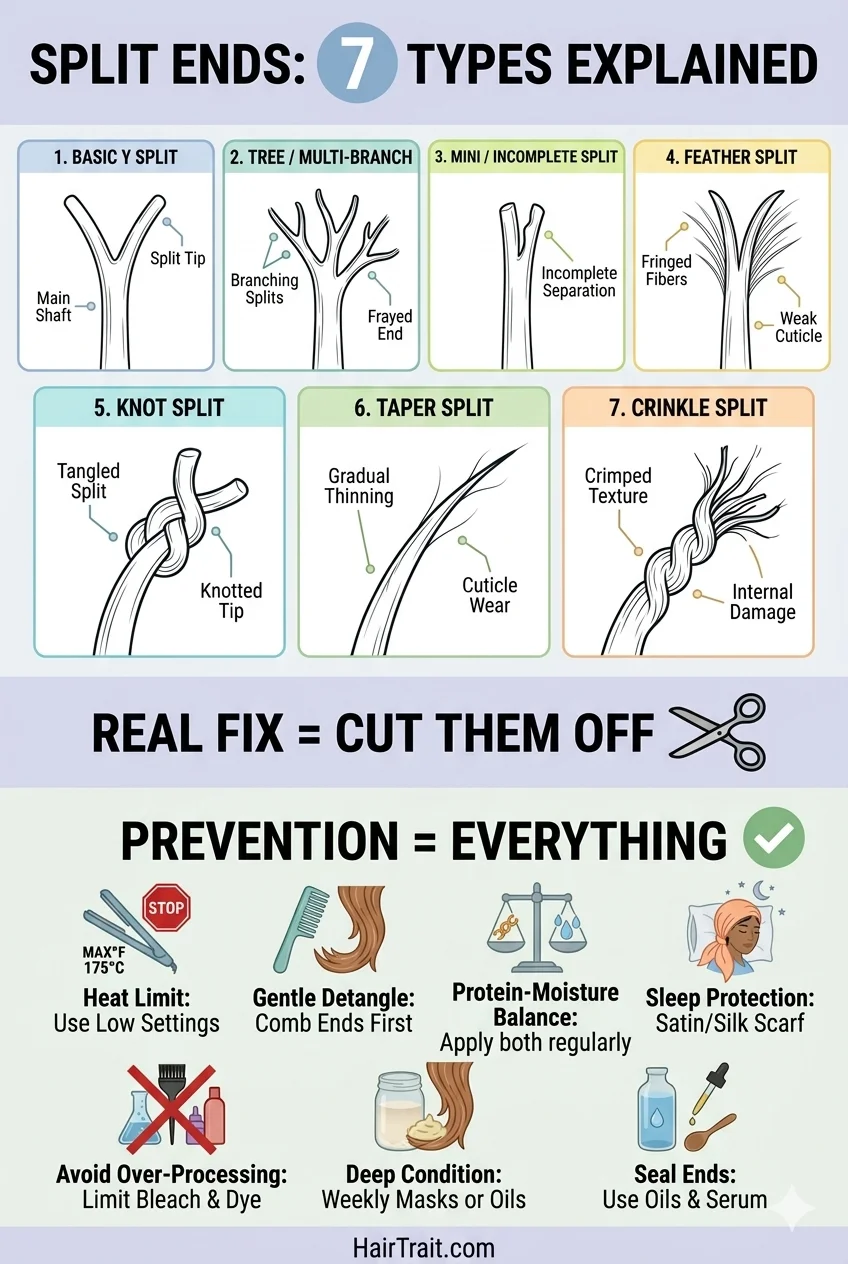
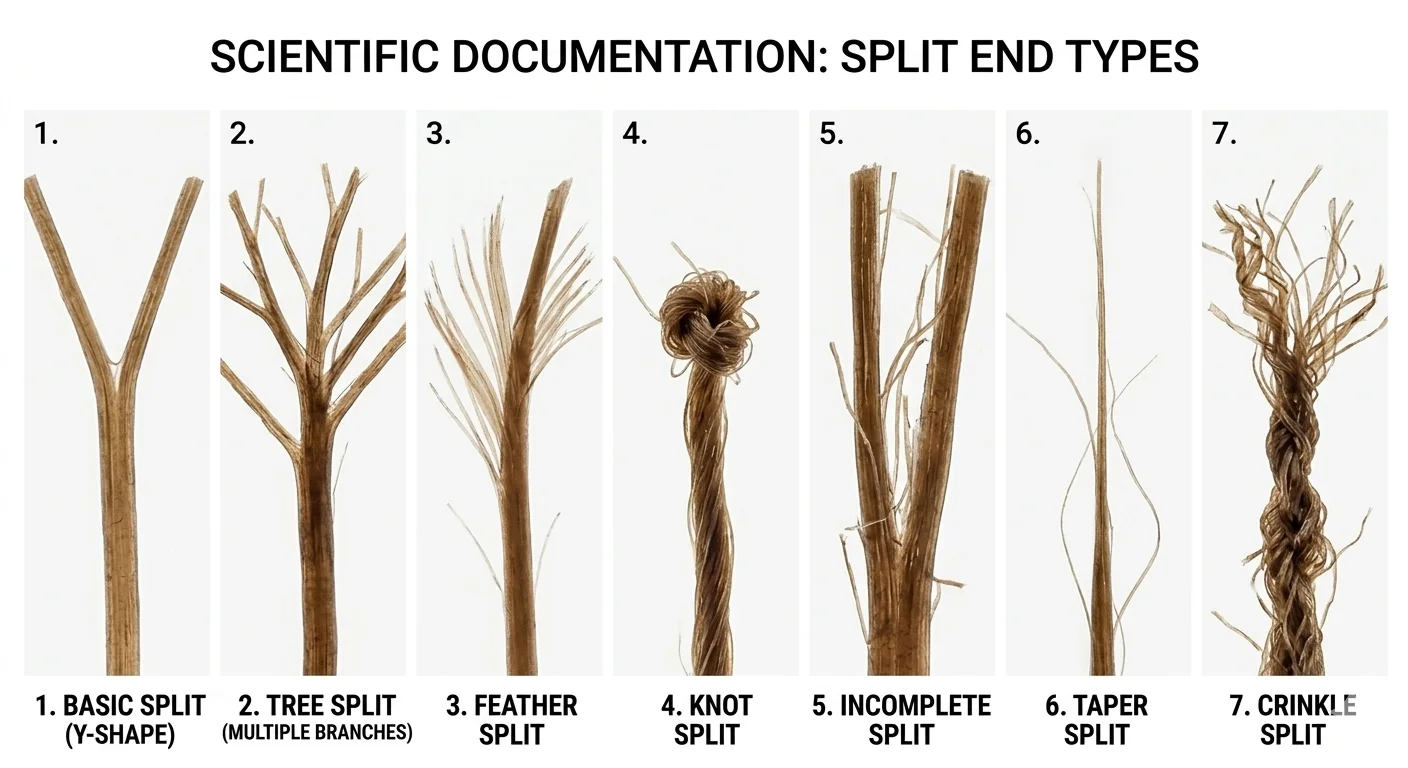
The 7 Types of Split Ends
Type #1: Basic Split (Y-Split)
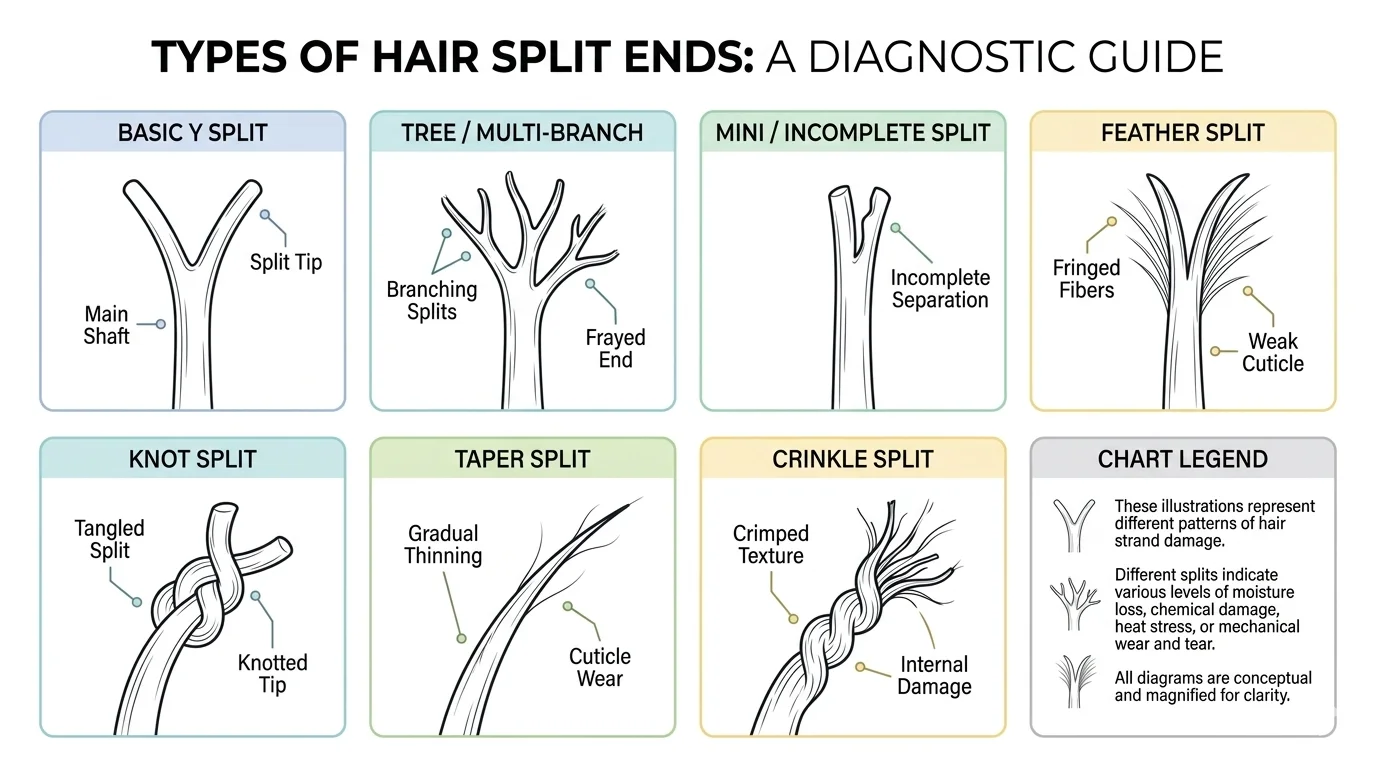
What it looks like: The hair shaft splits into two clean strands, forming a Y shape. Most common type.
What causes it: Normal wear and tear from age. The oldest parts of your hair (the ends) have been exposed to styling, washing, and environmental stress for months or years. Eventually the cuticle wears away and the cortex splits.
Severity: Mild. Indicates standard damage accumulation over time.
Type #2: Tree Split (Multi-Branch)
What it looks like: Multiple splits branch off from one strand, resembling a tree with many branches.
What causes it: Severe damage, usually from chemical processing (bleach, relaxers) combined with heat styling. The hair is so compromised it splits in multiple directions.
Severity: Severe. If you see these, your hair is very damaged and needs intensive repair protocol.
Type #3: Mini Split (Incomplete Split)
What it looks like: Small split that hasn’t fully separated. The cortex shows a fracture line but strands are still partially attached.
What causes it: Early-stage damage. This is a split in progress. If caught now and trimmed, you prevent it from traveling up the shaft into a full split.
Severity: Mild-moderate. Warning sign to adjust your routine.
Type #4: Feather Split (Severe)
What it looks like: Multiple small splits along the hair shaft (not just at the end), making the strand look feathered or frayed.
What causes it: Extreme damage from combining multiple damaging practices: bleaching + heat + mechanical stress. Often seen in severely over-processed hair.
Severity: Very severe. Hair may need significant cutting to remove all damaged sections.
Type #5: Knot Split
What it looks like: Hair forms a tiny knot at the end, with splitting occurring at the knot point.
What causes it: Most common in curly/coily hair (Type 3-4). Hair wraps around itself creating knots. When you pull on these knots during detangling, the strand splits at the stress point.
Severity: Moderate. Indicates need for gentler detangling technique.
Type #6: Tapered Split
What it looks like: Hair becomes progressively thinner toward the end, with the very tip splitting or breaking off completely.
What causes it: Chronic dryness combined with mechanical damage. Hair is so weak at the ends that it gradually thins and frays rather than making clean breaks.
Severity: Moderate. Shows moisture deficiency.
Type #7: Crinkle Split
What it looks like: Hair shows waves, kinks, or crinkles along the shaft with weakness/splitting at these points.
What causes it: Heat damage, particularly from flat irons and curling irons used at too-high temperatures. The heat creates weak points that later split.
Severity: Moderate-severe. Indicates significant heat damage.
For heat damage recovery, see our heat damage repair guide.
Why Split Ends Cannot Be “Repaired”
Many products claim to repair split ends. They don’t. Here’s why:
Hair is made of keratin protein. Once the protein bonds break (creating the split), they cannot spontaneously re-form. Research confirms there is no known substance that can permanently re-bond split hair fibers [NCBI].
What “Repair” Products Actually Do
- Temporarily bind strands: Silicones, polymers, and proteins coat the split and hold it together cosmetically
- Smooth appearance: Make splits less visible until next wash
- Prevent immediate worsening: Coating protects split from traveling higher up the shaft right away
These are temporary measures. The split still exists. Next time you wash, it’s back.
The Only Real Fix: Strategic Trimming
You must cut off split ends. There’s no alternative. But how you trim matters.
How Much to Cut
| Split Type | Cut Amount | Why |
|---|---|---|
| Basic splits at ends only | 0.5-1cm above highest split | Remove damaged section with small buffer |
| Tree splits | 2-3cm above splits | Severe damage likely extends higher than visible |
| Feather splits | Cut to where feathering ends + 2cm | May require significant length removal |
| Multiple types throughout | 5-10cm to reach healthy hair | Start fresh with undamaged hair |
Trimming Frequency
- Healthy hair: Every 12 weeks (3 months)
- Growing out damage: Every 8 weeks
- Heavily damaged: Every 6 weeks until healthy
- Maintaining short style: Every 4-6 weeks
Critical note: If you’re trying to grow hair, you still need trims. Growing without trimming just means split ends travel up the shaft, eventually requiring a larger cut to remove all damage.
For growth expectations with regular trims, see our hair growth timeline guide.
Search and Destroy Method
Between salon trims, you can do “search and destroy” at home:
- In good lighting, examine small sections of hair
- Look for visible splits
- Use sharp hair scissors (never regular scissors)
- Cut 0.5cm above each split you find
- This prevents splits from worsening between professional trims
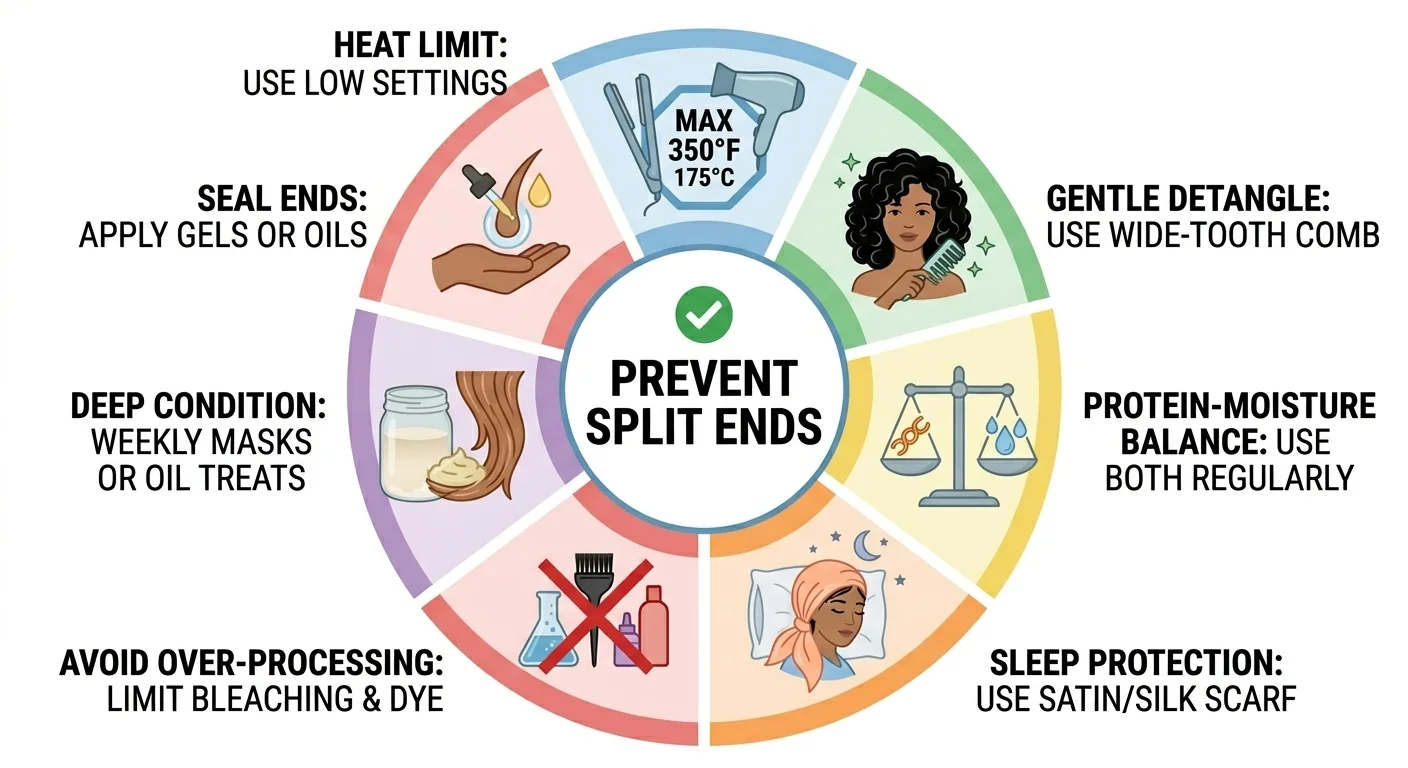
Prevention: Stop Splits Before They Start
Since you can’t repair splits, prevention is everything. Studies show split ends form when hair undergoes repeated stress cycles that degrade the cuticle [IJCS].
Strategy #1: Minimize Heat Exposure
- Use heat styling maximum 2-3 times per week
- Always use heat protectant
- Keep tools at 180°C (350°F) or below
- Never flat iron soaking wet hair (creates steam damage)
- Air dry when possible
Strategy #2: Gentle Detangling
- Only detangle wet, conditioned hair (not dry)
- Use wide-tooth comb or fingers
- Start at ends, work upward
- Never force through tangles
- Be especially gentle with old ends (6+ months of growth)
See our detangling guide for complete technique.
Strategy #3: Protein-Moisture Balance
- Weak, stretchy hair needs protein to strengthen
- Dry, brittle hair needs moisture
- Balanced hair needs both in rotation
- Imbalance leads to splits
For balancing your routine, see our protein vs moisture balance guide.
Strategy #4: Protect Ends During Sleep
- Satin or silk pillowcase (reduces friction)
- Loose braid or bun to contain ends
- Satin bonnet for very fragile hair
- Never sleep on wet hair (causes matting and breakage)
Strategy #5: Avoid Over-Processing
- Space chemical treatments 8+ weeks apart
- Never bleach already-bleached hair without professional help
- Choose one: heat OR chemicals, not both regularly
- Give hair recovery time between damage events
Strategy #6: Deep Condition Regularly
- Weekly deep conditioning for damaged hair
- Bi-weekly for healthy hair maintenance
- Focus treatment on oldest parts (ends)
- Use heat with deep conditioner for better penetration
Strategy #7: Seal Your Ends
- After applying leave-in, seal ends with oil
- This creates protective barrier
- Use lightweight oils (argan, jojoba) for fine hair
- Heavier oils (castor, coconut) for thick/coarse hair
When Splits Indicate Bigger Problems
Excessive split ends appearing rapidly (new splits every few weeks despite trims) may indicate:
- Nutritional deficiency: Protein, iron, biotin deficiency weakens hair structure
- Thyroid issues: Both hypo and hyperthyroidism affect hair strength
- Hormonal imbalance: PCOS, menopause, other hormone issues
- Eating disorders: Malnutrition severely affects hair quality
- Chronic illness: Some conditions affect hair growth and strength
If your hair develops splits extremely quickly despite good care, see a doctor for blood work.
For understanding if you have breakage vs normal shedding, see our hair breakage vs hair loss guide.
Products That Help Prevent Splits
Heat Protectants
- Silicone-based for maximum heat barrier
- Apply to damp hair before any heat styling
- Reapply if hair dries before styling
Protein Treatments
- Strengthen weak hair prone to splitting
- Use bi-weekly for damaged hair
- Monthly for healthy hair maintenance
Oils and Serums
- Seal moisture into ends
- Create protective coating
- Apply to damp hair, focus on ends
Leave-In Conditioners
- Provide ongoing protection between washes
- Choose lightweight for fine hair
- Richer formulas for thick/damaged hair
For complete product recommendations, see our best hair products guide.
Myths About Split Ends
Myth: Products Can Permanently Repair Splits
Reality: Nothing permanently repairs split protein bonds. Products temporarily bind but don’t heal.
Myth: Trimming Makes Hair Grow Faster
Reality: Hair grows from the scalp. Trimming ends doesn’t affect root growth rate. But it prevents breakage, improving length retention.
Myth: Split Ends Only Affect Long Hair
Reality: Any hair length can develop splits. Even 6 months of growth accumulates enough wear to cause splits.
Myth: Brushing 100 Strokes Daily Prevents Splits
Reality: Excessive brushing causes splits from mechanical damage. Brush only as needed for styling.
Final Thoughts
Split ends are permanent damage that requires cutting. No product truly repairs them. The 7 types of splits each indicate different damage patterns, helping you identify what’s harming your hair.
Focus on prevention: limit heat, detangle gently, balance protein and moisture, protect during sleep, avoid over-processing, deep condition regularly, and seal your ends. Trim every 8-12 weeks to remove splits before they worsen.
Accept that ends are the oldest, most fragile part of your hair. They need extra protection. Give it to them, and you’ll minimize splitting while maximizing length retention.