Biotin for hair growth is one of the best-selling supplement claims on the market. Walk down any pharmacy aisle and you’ll see bottles promising thicker, faster-growing hair — often containing 5,000–10,000 mcg of biotin, which is 1,600–3,300% of the daily recommended intake. Social media has amplified the hype, with influencers crediting biotin gummies for their hair transformations.
But does biotin for hair growth actually work for most people? The short answer is: probably not, unless you have a deficiency. Here’s what the science really shows, who should consider supplementing, and what to try instead if biotin isn’t the answer.
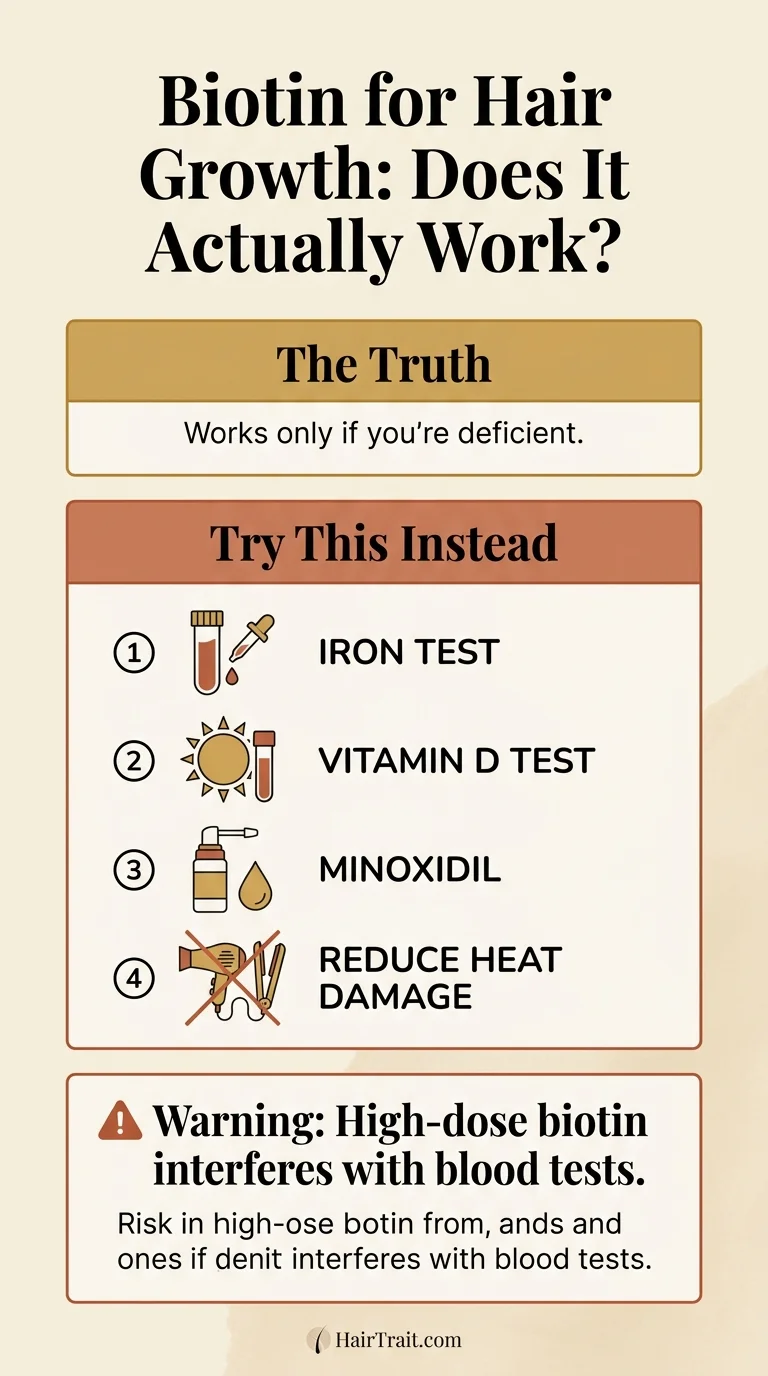
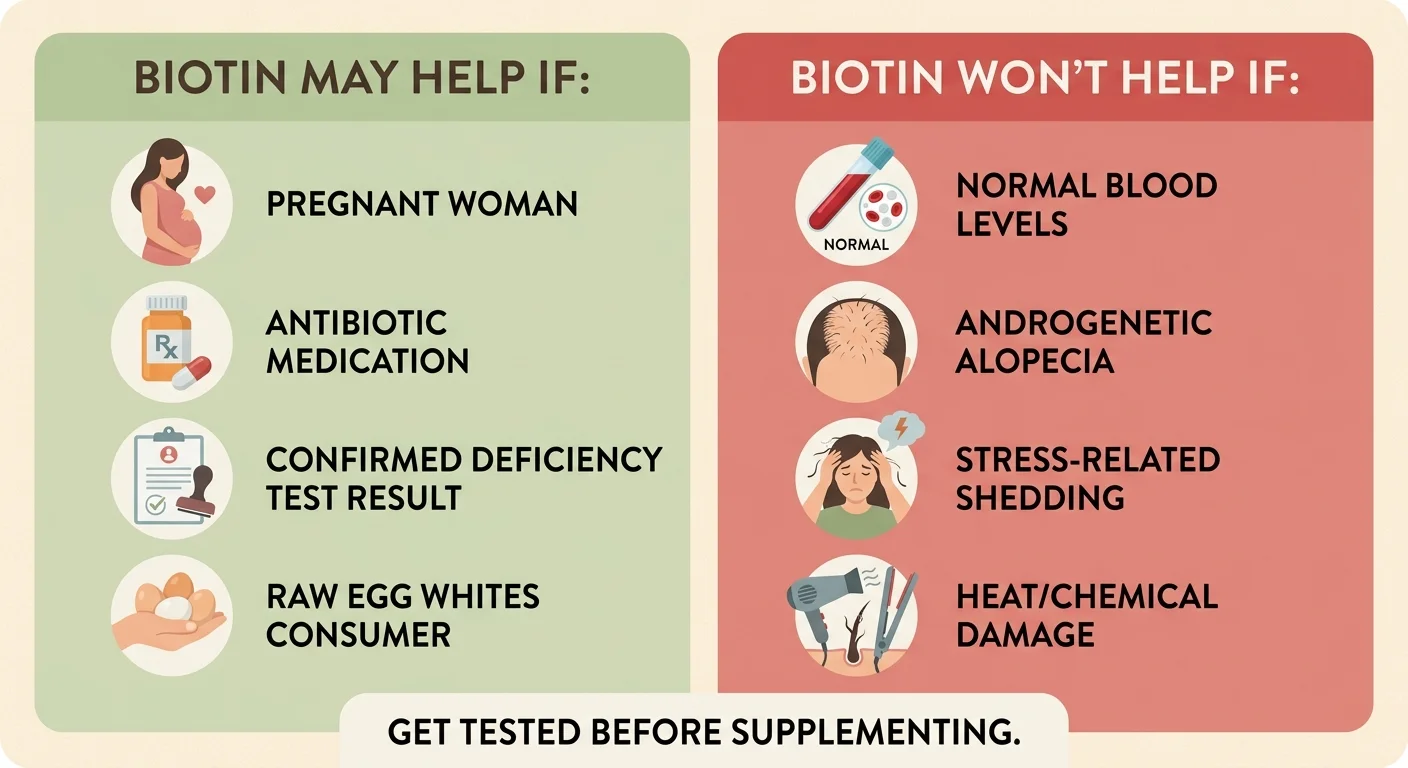
Quick Answer: Biotin (vitamin B7) is essential for keratin production, and a true biotin deficiency causes hair loss. However, deficiency is rare — most people get more than enough biotin from food. For the vast majority of people with normal biotin levels, supplementation has no proven effect on hair growth. Your body simply excretes the excess in urine. Biotin supplements genuinely help only those with a confirmed deficiency, and the hair growth supplement industry profits heavily from this misunderstanding.
Table of Contents
What Biotin Actually Does in Your Body
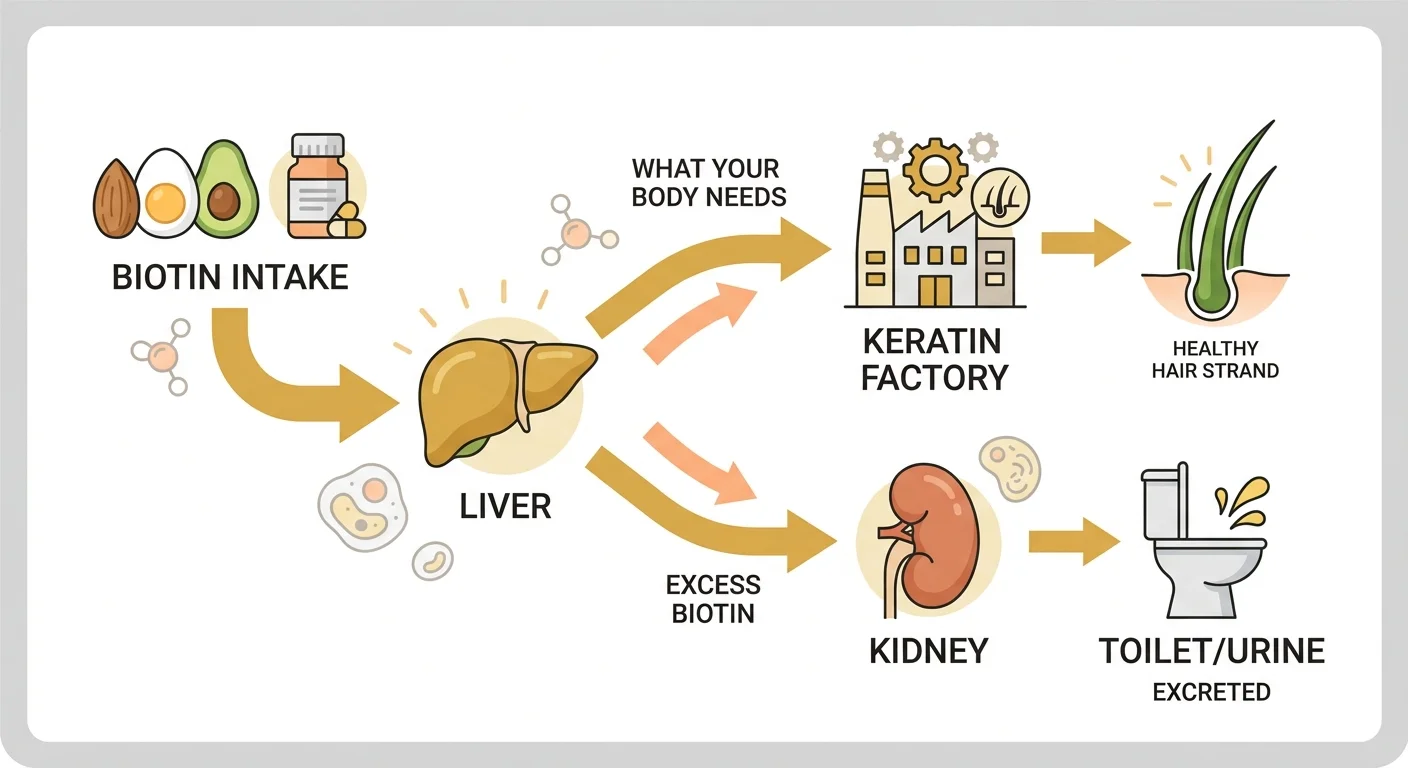
Biotin (vitamin B7, also called vitamin H) is a water-soluble B vitamin that functions as a coenzyme in several metabolic processes. For hair specifically, biotin supports the production of keratin — the protein that makes up 85–90% of your hair shaft.
When your body has enough biotin, keratin synthesis proceeds normally and your hair grows at its genetically determined rate (approximately 1.25 cm or 0.5 inches per month). When biotin is severely deficient, keratin production falters, leading to brittle nails, skin rashes, and — yes — hair thinning and loss.
The critical distinction: biotin is necessary for normal hair growth, but taking extra beyond what your body needs does not accelerate growth or increase thickness. Your body doesn’t stockpile water-soluble vitamins — it uses what it needs and eliminates the rest through urination. This is why the “expensive urine” label, while blunt, is biochemically accurate for most supplement users. For a broader overview of hair health factors, see our hair care basics guide.
What the Clinical Evidence Shows
This is where the marketing narrative diverges sharply from the research:
- In people with biotin deficiency: Supplementation clearly works. A 2017 review in the journal Skin Appendage Disorders examined all published cases of biotin and hair/nail changes and found that every case showing improvement involved a patient who was biotin-deficient. When deficiency was corrected, hair and nail quality improved.
- In people without deficiency: The same review found no controlled studies demonstrating that biotin supplementation improves hair growth in people with normal biotin levels. Zero. The evidence simply doesn’t exist.
- Hair growth supplements in general: Many “hair vitamins” contain biotin plus other ingredients (zinc, iron, folic acid, marine collagen). When these products show results in trials, it’s often the other ingredients — particularly iron and zinc — that drive the improvement, not the biotin itself.
The supplement industry funds the vast majority of “studies” showing biotin benefits, and these are often uncontrolled, small, and combined with other active ingredients — making it impossible to isolate biotin’s contribution.
Who Actually Has a Biotin Deficiency?
True biotin deficiency is uncommon in healthy adults eating a varied diet. However, certain groups are at higher risk:
| Risk Group | Why Deficiency Occurs |
|---|---|
| Pregnant or breastfeeding women | Biotin requirements increase during pregnancy; up to 50% of pregnant women have marginal deficiency |
| People on long-term antibiotics | Antibiotics disrupt gut bacteria that produce biotin naturally |
| Heavy alcohol users | Alcohol inhibits biotin absorption in the intestine |
| People with biotinidase deficiency | A rare genetic condition that prevents biotin recycling in the body |
| People eating large amounts of raw egg whites | Raw egg whites contain avidin, a protein that binds biotin and prevents absorption (cooking denatures avidin) |
| People on certain anti-seizure medications | Drugs like carbamazepine and valproic acid can deplete biotin levels |
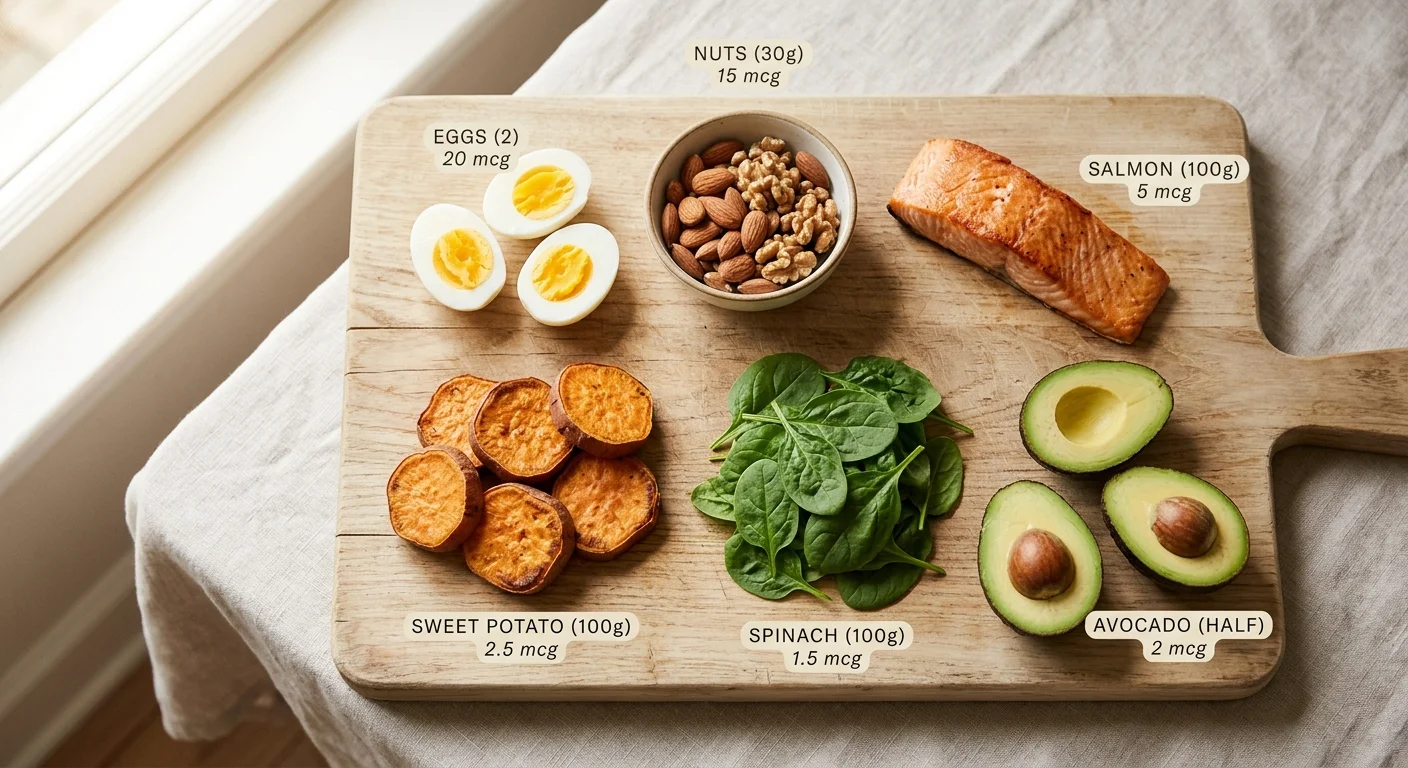
If you fall into any of these categories and are experiencing hair thinning, ask your doctor for a blood test to check biotin levels before spending money on supplements. For most other people, the 30 mcg of biotin obtained daily from eggs, nuts, seeds, salmon, sweet potatoes, and other common foods is more than sufficient.
The Biotin Side Effect Nobody Talks About
Beyond wasting money, high-dose biotin supplements carry a genuine medical risk that most consumers don’t know about. The FDA issued a safety communication warning that high biotin levels can interfere with common laboratory blood tests, including:
- Troponin tests — used to diagnose heart attacks. Biotin interference can produce falsely low results, potentially masking a cardiac event.
- Thyroid function tests — can show falsely abnormal results, leading to unnecessary medication changes or misdiagnosis.
- Hormone panels — vitamin D, testosterone, estrogen, and cortisol tests can all be affected.
If you take high-dose biotin (5,000+ mcg) and have blood work scheduled, stop supplementing at least 48–72 hours before your test and inform your doctor. This interference has led to at least one documented death from a missed heart attack diagnosis.
What to Try Instead of Biotin for Hair Growth
If you’re experiencing thinning hair and your biotin levels are normal, the supplement aisle is the wrong starting point. Focus on these evidence-based approaches instead:
- Check your iron and ferritin levels. Iron deficiency is the most common nutritional cause of hair loss in women, and it’s frequently overlooked. Ferritin (stored iron) below 30 ng/mL is associated with increased hair shedding even if your hemoglobin is “normal.” See our hair type guide for more on how internal health affects different hair types.
- Check your vitamin D. Low vitamin D is linked to telogen effluvium (stress-related hair shedding) and may worsen androgenetic alopecia.
- Address thyroid function. Both hypothyroidism and hyperthyroidism cause hair thinning. A simple TSH blood test screens for this.
- Consider proven topical treatments. Minoxidil has 40+ years of clinical evidence for hair regrowth. Even rosemary oil has a direct comparison study — which is more than biotin has for non-deficient individuals. Check our best hair products page for treatment options.
- Reduce physical hair damage. Sometimes the issue isn’t internal at all — excessive heat styling, tight hairstyles, harsh chemical treatments, and aggressive brushing break hair faster than it grows. Protecting your hair externally with proper tools and techniques can stop unnecessary loss.
Common Mistakes With Biotin and Hair Supplements
- Taking biotin without testing for deficiency. If your levels are already normal, supplementation does nothing for your hair. Get bloodwork first — it could save you years of wasted spending.
- Crediting biotin for results caused by other ingredients. Most hair supplement blends contain iron, zinc, vitamin D, collagen, and saw palmetto alongside biotin. If the supplement works, it’s probably not the biotin that’s responsible.
- Expecting visible results in weeks. Even in genuinely deficient people, hair grows at 1.25 cm per month. Visible improvements from any supplement take 3–6 months at minimum. Claims of faster results are marketing fiction.
- Ignoring the real cause of hair loss. Biotin supplements are appealing because they’re easy — just swallow a pill. But hair loss has dozens of potential causes (hormonal, autoimmune, nutritional, medication-related, stress-induced), and a supplement can’t address most of them.
- Not disclosing biotin use to doctors. High-dose biotin interferes with blood tests. If your doctor doesn’t know you’re taking it, test results may be dangerously inaccurate. Always disclose all supplements during medical visits.
What to Expect If You Truly Need Biotin
| Timeframe | What Happens (If Deficient) |
|---|---|
| Month 1 | Blood levels normalize. No visible hair changes yet — hair growth is slow by nature. |
| Month 2–3 | New growth from follicles may begin to strengthen. Nails often improve before hair becomes visibly different. |
| Month 4–6 | Visible improvement in hair density and thickness in areas that were thinning. Reduced shedding during brushing and washing. |
| Month 6+ | Full results visible. Ongoing supplementation recommended only if the underlying cause of deficiency persists (e.g., medication, pregnancy). |
If you supplement for 6 months with no improvement, biotin was never your issue. Return to your doctor and investigate other causes — iron, thyroid, hormones, or dermatological conditions. Consult our seasonal hair care guide for environmental factors that may also be contributing.
Final Verdict: Biotin for Hair Growth
Biotin for hair growth is one of the most overhyped supplements in the wellness industry. It works — but only for people who are actually deficient, which is a small fraction of the population. For everyone else, the money spent on biotin gummies would be better invested in a blood panel to identify the real cause of hair thinning, or on proven topical treatments like minoxidil.
The uncomfortable truth: the biotin supplement market is worth billions of dollars because “take a daily vitamin for beautiful hair” is a much easier sell than “get blood work, address underlying health issues, and be patient for 6 months.” Don’t let marketing override the science. Test first, supplement only if needed, and always tell your doctor what you’re taking.