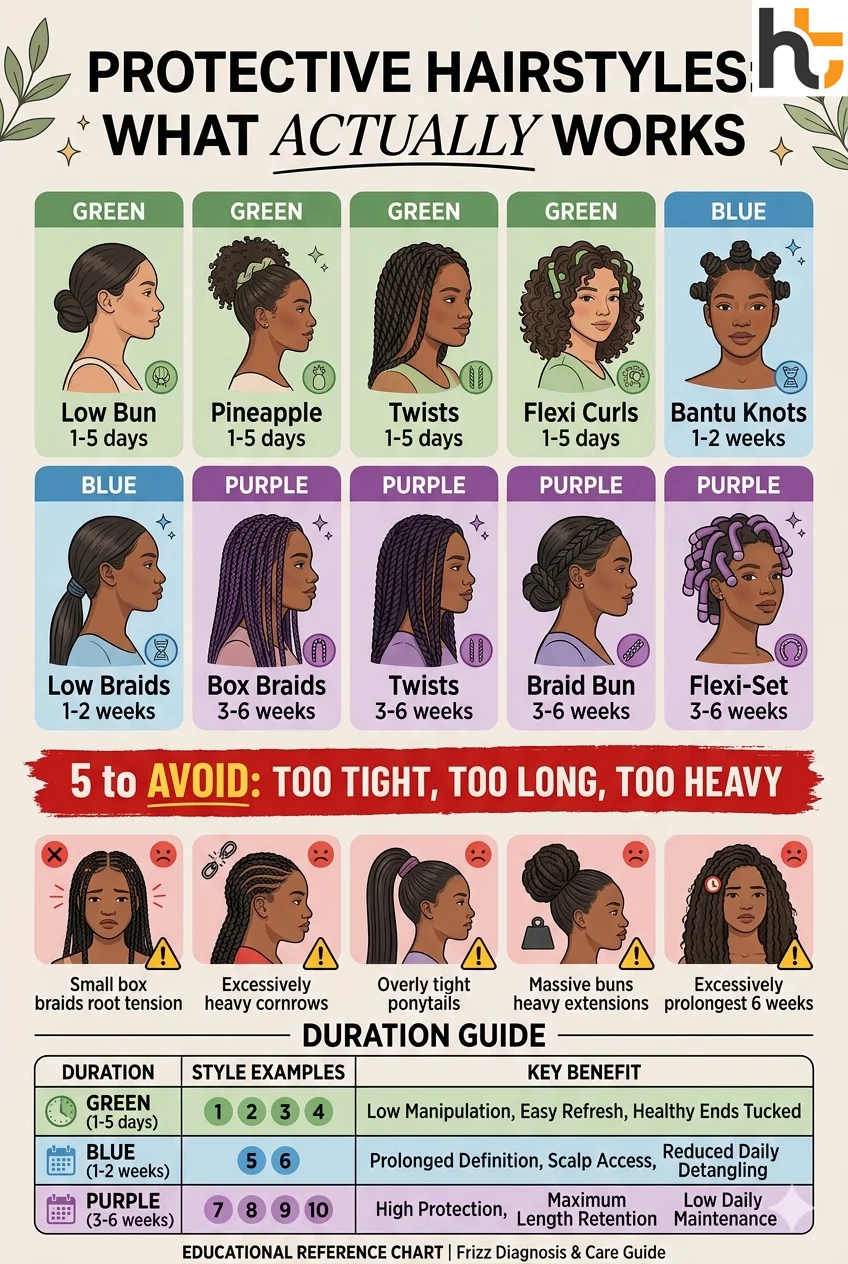
Protective hairstyles are low-manipulation styles that tuck away and protect your ends while minimizing daily handling. The goal is to prevent breakage, retain length, and give hair a break from constant styling stress.
But not all styles marketed as “protective” actually protect. Some cause severe damage through excessive tension, prolonged wear, or improper installation. This guide identifies 10 truly protective styles and 5 damaging styles disguised as protective.
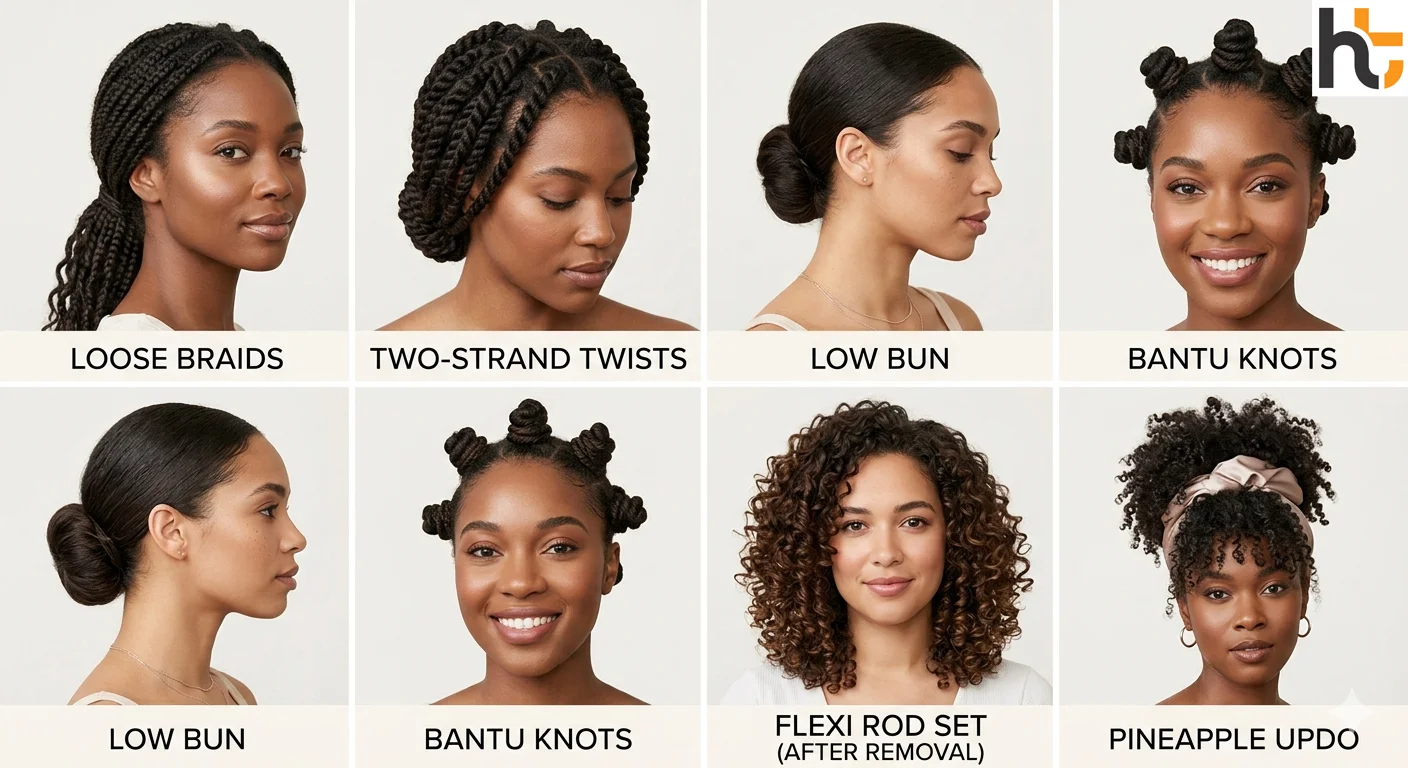
Quick Answer: Protective hairstyles minimize daily manipulation and tuck away fragile ends. True protective styles: loose braids, twists, low buns, bantu knots, flexi rod sets, wig/weave with proper install, pineapple updo, halo braid, crown braid, twist-outs/braid-outs. Damaging “protective” styles: tight braids, sew-ins left 3+ months, heavy extensions, styles causing tension headaches, anything too tight.
Table of Contents
What Makes a Style Truly Protective?
A legitimate protective style has three characteristics:
- Low manipulation: You’re not combing, brushing, or touching hair daily
- Ends tucked away: The oldest, most fragile part of hair is protected from environment and friction
- No excessive tension: Style doesn’t pull on scalp or stress hair shaft
Research shows that reducing mechanical manipulation significantly decreases breakage [IJT]. But tension-based damage can outweigh these benefits if style is too tight.
The 10 Truly Protective Hairstyles
Style #1: Loose Box Braids or Singles
Why it’s protective: Hair is sectioned and braided, ends are sealed, minimal daily manipulation needed.
Duration: 4-6 weeks maximum. Beyond that, new growth creates tension.
Critical rules:
- Braids must be loose enough to move freely
- No pulling or tension at scalp
- Edges left completely loose or very gentle
- Don’t add heavy extensions
Best for: Type 3-4 hair, length retention
Style #2: Two-Strand Twists
Why it’s protective: Gentle installation, less tension than braids, preserves natural curl pattern.
Duration: 2-4 weeks
Advantages:
- Can be done on natural hair without extensions
- Creates beautiful twist-out when removed
- Less time to install than braids
- Very low tension
Best for: Type 3-4 hair, transitioning hair
Style #3: Low Bun or Chignon
Why it’s protective: Ends completely tucked and secured, no daily manipulation, works on all hair types.
Duration: Daily style (redo each day or every few days)
Critical rules:
- Use fabric scrunchies or spin pins (never tight elastics)
- Bun should sit at nape, not crown (reduces tension)
- Don’t pull hair tight when gathering
- Vary position daily to prevent weak spots
Best for: All hair types, workplace-appropriate protective styling
Style #4: Bantu Knots
Why it’s protective: Hair is twisted and coiled against scalp, ends completely protected, no loose pieces.
Duration: 1-7 days (can wear as style or unravel for bantu knot-out)
Benefits:
- No extensions needed
- Creates defined curl pattern when unraveled
- Works on various lengths
Best for: Type 3-4 hair, creating definition
Style #5: Flexi Rod or Perm Rod Set
Why it’s protective: Hair is set on rods overnight, no heat needed, minimal manipulation until time to remove.
Duration: Overnight setting, wear the resulting curls 3-5 days
Advantages:
- Heatless curl creation
- Protective while set AND while wearing
- Beautiful, defined results
Best for: Type 2-4 hair seeking heatless curls
Style #6: Wigs (With Proper Installation)
Why it’s protective: Your real hair is completely covered and undisturbed for days or weeks.
Duration: Can wear daily for months if removing nightly for scalp care
Critical rules:
- Cornrow or flat twist hair underneath
- Use wig cap to protect edges
- Remove wig nightly or at minimum weekly
- Moisturize braids underneath regularly
- Never use glue on edges
Best for: All hair types, versatility
Style #7: Pineapple Updo
Why it’s protective: Gathers hair loosely at crown, prevents crushing curls during sleep, minimal manipulation.
Duration: Nightly protective style
How to do it:
- Flip head upside down
- Gather all hair at very top of head
- Secure with fabric scrunchie (loose)
- Use satin/silk pillowcase
Best for: Type 2-3 curly/wavy hair for overnight protection
See our silk vs satin pillowcases guide for nighttime protection.
Style #8: Halo or Crown Braid
Why it’s protective: Hair is braided around head like crown, ends tucked in, elegant and protective.
Duration: 3-5 days
Advantages:
- Works on medium to long hair
- Professional appearance
- No extensions needed
- Distributes tension evenly
Best for: Type 1-3 hair, formal occasions
Style #9: Flat Twists
Why it’s protective: Similar to braids but gentler installation, hair lays flat against scalp.
Duration: 1-2 weeks
Benefits:
- Less tension than cornrows
- Can be done without extensions
- Creates nice twist-out pattern
Best for: Type 3-4 hair
Style #10: Braid-Outs and Twist-Outs
Why it’s protective: While set (overnight), hair is protected. Once unraveled, creates heatless definition with minimal manipulation.
Duration: Set overnight, wear 3-5 days
Advantages:
- No heat needed
- Beautiful, natural-looking results
- Works on various curl patterns
Best for: Type 2-4 hair
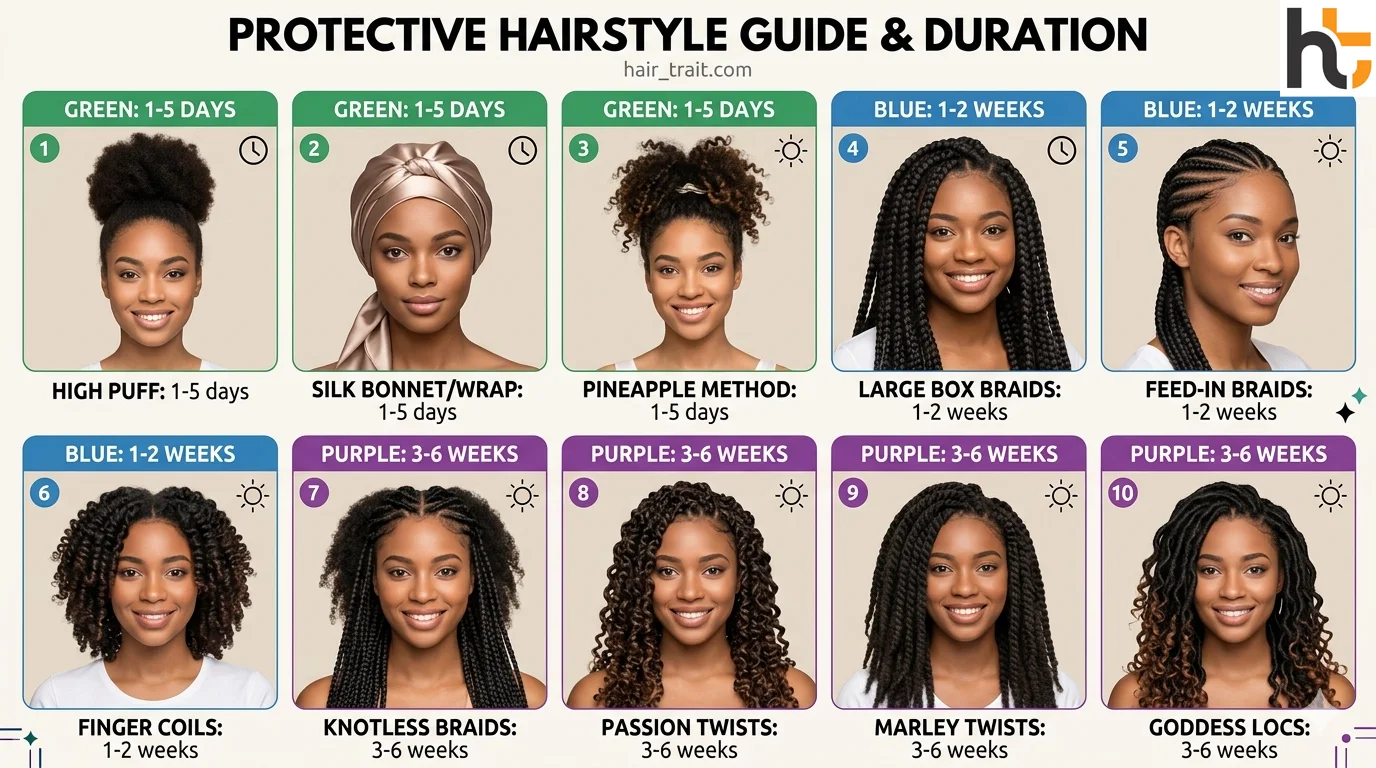
The 5 “Protective” Styles That Actually Cause Damage
Damaging Style #1: Tight Box Braids or Cornrows
Why it’s damaging: Excessive tension causes traction alopecia — permanent hair loss from pulling. If it hurts, it’s damaging.
Signs of damage:
- Headache after installation
- White bumps on scalp
- Thinning edges
- Bald patches after removal
The fix: Braids should never hurt. If they do, take them out immediately.
Damaging Style #2: Sew-In Weaves Left Too Long
Why it’s damaging: After 6-8 weeks, your natural hair has grown significantly. The tracks create tension and matting. New growth tangles around thread.
Maximum duration: 6 weeks. 8 weeks absolute maximum.
Signs it’s time to remove:
- Visible new growth at base
- Itchy scalp
- Feeling tightness
Damaging Style #3: Heavy Extensions
Why it’s damaging: Weight of extensions (especially long, thick ones) pulls on hair shaft and follicle constantly. This causes breakage and traction alopecia.
Rule: Extensions should not feel heavy on your scalp. If you feel pulling or weight, they’re too heavy.
Damaging Style #4: Tight High Ponytails
Why it’s damaging: Despite being called “protective,” tight ponytails cause significant tension damage, especially at hairline and temples.
Damage signs:
- Receding hairline
- Thinning temples
- Breakage where elastic sits
- Headaches
Better alternative: Low, loose ponytails with fabric scrunchies
Damaging Style #5: Faux Locs Installed Too Tightly
Why it’s damaging: When base is too tight or locs are too heavy, you get same traction issues as tight braids.
Safe installation:
- Base must be loose
- Don’t use excessively heavy hair
- Maximum 6-8 weeks wear
- Edges should be left loose
For understanding breakage from protective styles gone wrong, see our hair breakage vs hair loss guide.
Duration Guidelines for Protective Hairstyles
| Style Type | Maximum Duration | Why |
|---|---|---|
| Box braids, twists (no extensions) | 6 weeks | New growth creates tension, tangling |
| Box braids with extensions | 4-6 weeks | Weight + new growth = stress |
| Sew-in weaves | 6 weeks (8 max) | Matting, tangling at base |
| Wigs (removed nightly) | Indefinite | Hair gets rest each night |
| Wigs (worn 24/7) | 1 week before removing for care | Scalp needs cleansing, moisturizing |
| Daily updos (buns, etc) | Redo daily | Vary position to prevent weak spots |
Caring for Hair in Protective Styles
A style is only protective if you maintain hair underneath. Without care, even good styles cause damage.
Weekly Maintenance
- Cleanse scalp: Use diluted shampoo in applicator bottle or dry shampoo
- Moisturize: Light spray of water + leave-in on braids/twists
- Oil scalp: Lightweight oil massaged into scalp
- Sleep protection: Satin/silk scarf or bonnet every night
What NOT to Do
- Leave style in beyond recommended duration
- Neglect scalp care
- Use heavy products that cause buildup
- Sleep without protection
- Re-braid or re-twist before washing
Protective Styling for Different Hair Types
Type 1-2 (Straight/Wavy)
Best options: Low buns, braids, loose twists, updos
Avoid: Styles requiring tight tension to hold (hair too slippery)
Type 3 (Curly)
Best options: Twists, braids, bantu knots, pineapple, braid-outs
Advantage: Most protective styles work well
Type 4 (Coily)
Best options: Box braids, twists, flat twists, bantu knots, wigs
Note: Type 4 hair benefits most from protective styling due to fragility
For complete hair type understanding, see our complete hair type guide.
Signs Your Protective Style Is Actually Damaging
Remove style immediately if you experience:
- Pain or headaches that don’t subside after 24 hours
- Bumps or sores on scalp
- Excessive itching beyond first few days
- Visible thinning edges
- Bald patches appearing
- Significant shedding when style is removed (more than 50-100 hairs per section)
For proper detangling after removing protective styles, see our detangling guide.
Final Thoughts
Protective hairstyles are powerful tools for length retention and reducing breakage — when done correctly. The style must be low-manipulation, tuck away ends, and avoid excessive tension. Duration matters: even good styles cause damage if left too long.
Choose styles appropriate for your hair type. Follow duration guidelines. Maintain hair underneath. Never tolerate pain or tension. Do these things, and protective styling accelerates your hair goals. Ignore them, and you’ll create the opposite of protection.