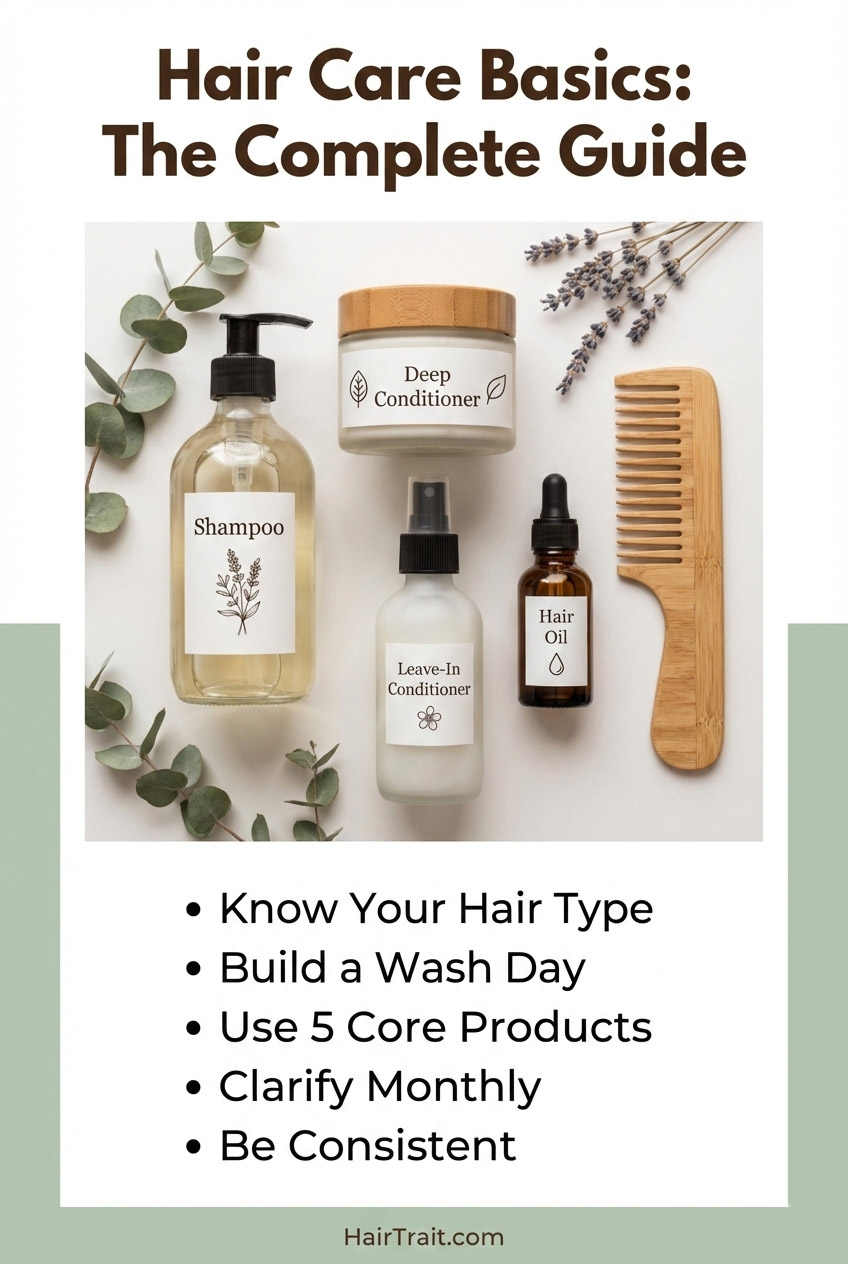
Understanding hair care basics is the most important step toward healthier hair. Most people skip it completely.
I spent years buying products that did nothing for my hair. I was following generic advice that was never meant for my hair type. Once I understood the basics, everything changed.
This guide covers what you need to know. How to identify your hair type. How to build a wash day routine that works. Which products matter most. And the mistakes that quietly undo your progress.
By the end, you’ll know exactly what your hair needs and why. No guesswork. No wasted money.
Table of Contents
What Hair Care Basics Really Mean (And Why Most People Get Them Wrong)
Hair care basics are not about expensive products or 12-step routines. They’re about three things. What your hair is made of. What it needs. And what damages it.
Every hair strand has three layers. The core in the middle. The middle layer that holds moisture and color. And the outer protective layer. Experts say most hair problems start from a damaged outer layer [AAD.org].
The outer layer is where products either work or fail. When it’s smooth, moisture stays in. When it’s rough or stripped, your hair loses moisture faster than you can replace it.
This is why hair care basics matter so much. They determine whether everything else you do actually produces results.
Step 1 — Know Your Hair Type Before Buying a Single Product
Hair type is your starting point. Using products for the wrong hair type is the number one reason routines fail.
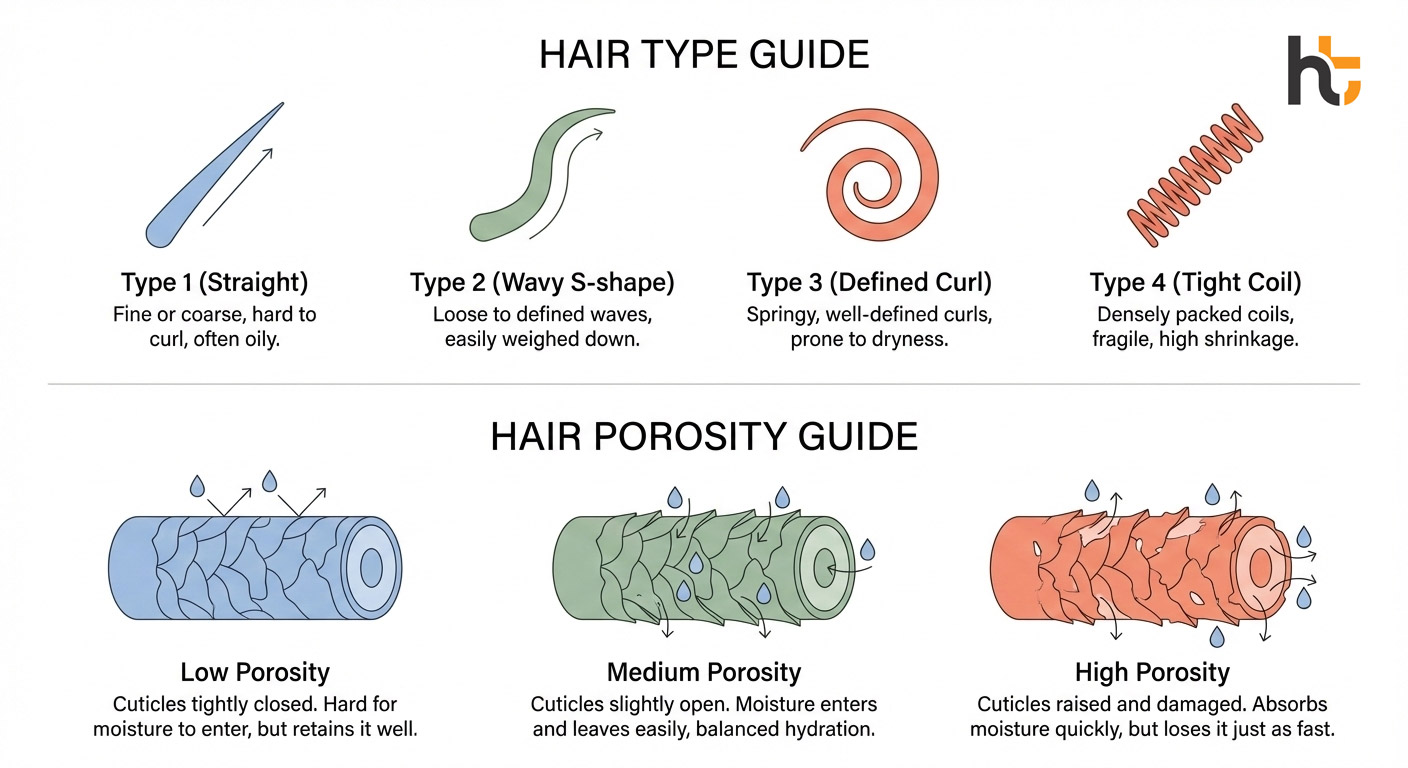
There are two systems you need to know:
Curl Pattern (Type 1–4)
- Type 1 — Straight hair. Gets oily fast. Needs lightweight products.
- Type 2 — Wavy hair. Can get frizzy. Needs balance.
- Type 3 — Curly hair. Naturally drier. Needs consistent moisture.
- Type 4 — Coily or kinky hair. The driest type. Needs the most moisture and gentle handling.
Porosity — How Easily Water Soaks In
Porosity matters more than curl pattern for product choice.
- Low porosity — Sealed outer layer. Products sit on top. Needs lightweight moisture-grabbers, not heavy butters.
- Medium porosity — The ideal. Products soak in and stay in well. Most products work.
- High porosity — Raised or damaged outer layer. Soaks up moisture quickly but loses it fast. Needs heavier creams and protein.
Our complete hair type guide explains every type in detail. If you have low porosity hair specifically, our guide to the best deep conditioners for low porosity hair shows exactly which formulas work and why.
Step 2 — Build Your Wash Day Routine Around These Principles
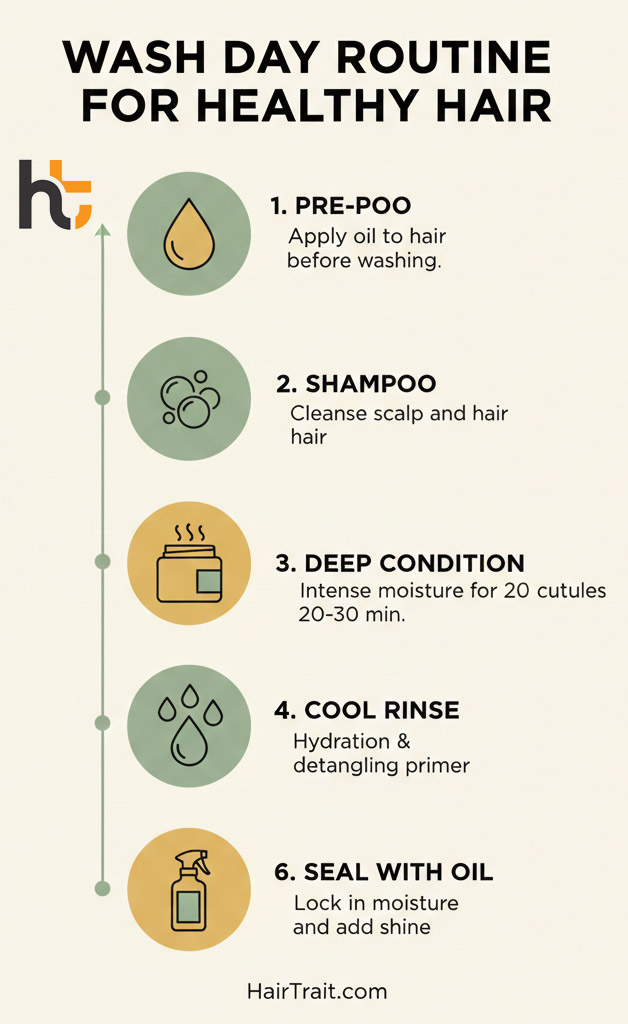
A wash day routine is a system of steps that clean, restore, and protect your hair.
How Often Should You Wash?
It depends on your hair type and scalp. Studies show over-washing strips natural oils [NCBI]. Under-washing causes buildup that blocks moisture.
- Straight and wavy (Type 1–2): Every 2–3 days or when scalp feels oily.
- Curly (Type 3): Once a week. Co-washing between wash days is common.
- Coily (Type 4): Every 1–2 weeks. Moisture is the priority.
The Correct Order of Steps
- Pre-poo (optional) — apply oil before shampooing to protect strands.
- Shampoo — cleanse the scalp, not the lengths.
- Deep condition — apply to damp hair with heat for 15–30 minutes.
- Rinse with cool water — closes the outer layer and seals moisture.
- Leave-in conditioner — apply to soaking-wet hair.
- Seal with oil or cream — locks in moisture before it evaporates.
Step 3 — The Core Products Every Hair Type Actually Needs
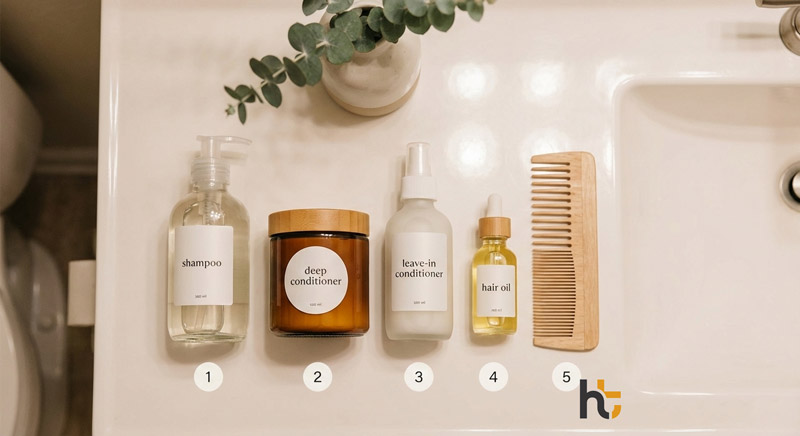
You don’t need 20 products. Every routine is built on five categories.
1. A Clarifying or Sulfate-Free Shampoo
Use clarifying shampoo once or twice a month to remove buildup. Use sulfate-free shampoo for regular wash days.
2. A Deep Conditioner
This is the most important product. It restores moisture to your hair. Choose based on porosity. Protein-free for low. Balanced for medium. Protein-heavy for high.
3. A Leave-In Conditioner
Applied to wet hair after washing. Creates a base layer of moisture. Lightweight leave-ins work for all types.
4. A Sealing Oil or Cream
Seals moisture in and stops it from evaporating. Lighter oils work for most types. Heavier oils suit drier textures.
5. A Wide-Tooth Comb
The right tool for detangling. Use on wet, conditioned hair. Creates far less breakage than a brush.
For curated product picks for each combination, see our best hair products guide and our best hair tools guide.
The Hair Care Basics Mistakes That Silently Undo Your Progress
You can follow every step correctly and still have struggling hair if these mistakes are happening.
Skipping Clarifying Shampoo
Product and mineral buildup layers on your hair over time. Even the best conditioner can’t get through weeks of coating. Clarify once or twice a month.
Using Heat Without Protection
High heat damages your hair permanently. Experts recommend keeping heat tools below 230°C [AAD.org]. Always use a heat protectant first. Never on wet hair — water boils inside the strand and causes damage.
Skipping the Cool Rinse
Rinsing with hot water keeps the outer layer open. Moisture escapes immediately. A 10-second cool rinse closes the layer and keeps moisture in.
Detangling Dry Hair
Dry hair has almost no stretch. Pulling a comb through dry knots snaps the strand. Always detangle on wet, slippery, conditioned hair.
Your Weekly Hair Care Schedule
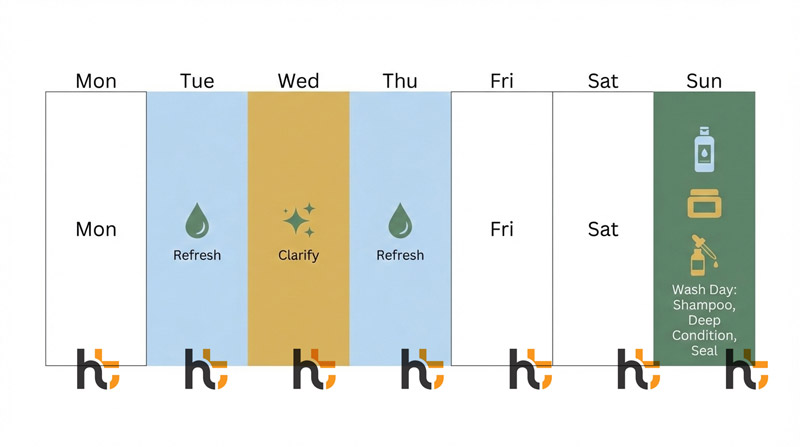
Consistency turns good habits into visible results. Here’s a realistic schedule:
Seasonally: Adjust routine for humidity, temperature, and UV changes. Our seasonal hair care guide covers this in full.
Weekly (wash day): Pre-poo, shampoo, deep condition with heat, cool rinse, leave-in, seal.
2–3 times per week: Refresh with water or diluted leave-in spray.
Monthly: Clarifying shampoo to remove buildup.
What to Realistically Expect
Hair grows about 1.25cm per month. Structural improvements take 4–8 weeks to become noticeable.
What you’ll notice first: less breakage during detangling, more slip when conditioned, less dryness. What takes longer: overall length, better texture, recovery from damage.
The most common reason people quit before it works is impatience during the first 2–3 weeks. Stick to the fundamentals consistently before changing anything.
When to See a Professional
Most hair care basics issues respond to a good home routine. But some need professional help:
- A lot of thinning or patchy hair loss
- Persistent scalp scaling, redness, or soreness
- Sudden change in texture without a clear cause
Experts recommend seeing a dermatologist for hair loss concerns [AAD.org]. These can be medical issues that products won’t fix.
Final Thoughts
Getting hair care basics right doesn’t require an expensive routine or hours of effort. It requires understanding your hair type, building a consistent wash day system, and avoiding the mistakes that work against you.
Start with the five core products. Learn your porosity. Commit to a weekly schedule for eight weeks. That consistency will produce more improvement than any trending product.