Understanding the hair growth timeline is critical for setting realistic expectations. Hair doesn’t grow overnight, and it doesn’t grow at the dramatic rates social media influencers claim. Science gives us specific, measurable rates.
This guide breaks down exactly what to expect month by month, the factors that speed up or slow down growth, and how to maximize your natural growth rate without falling for miracle products.
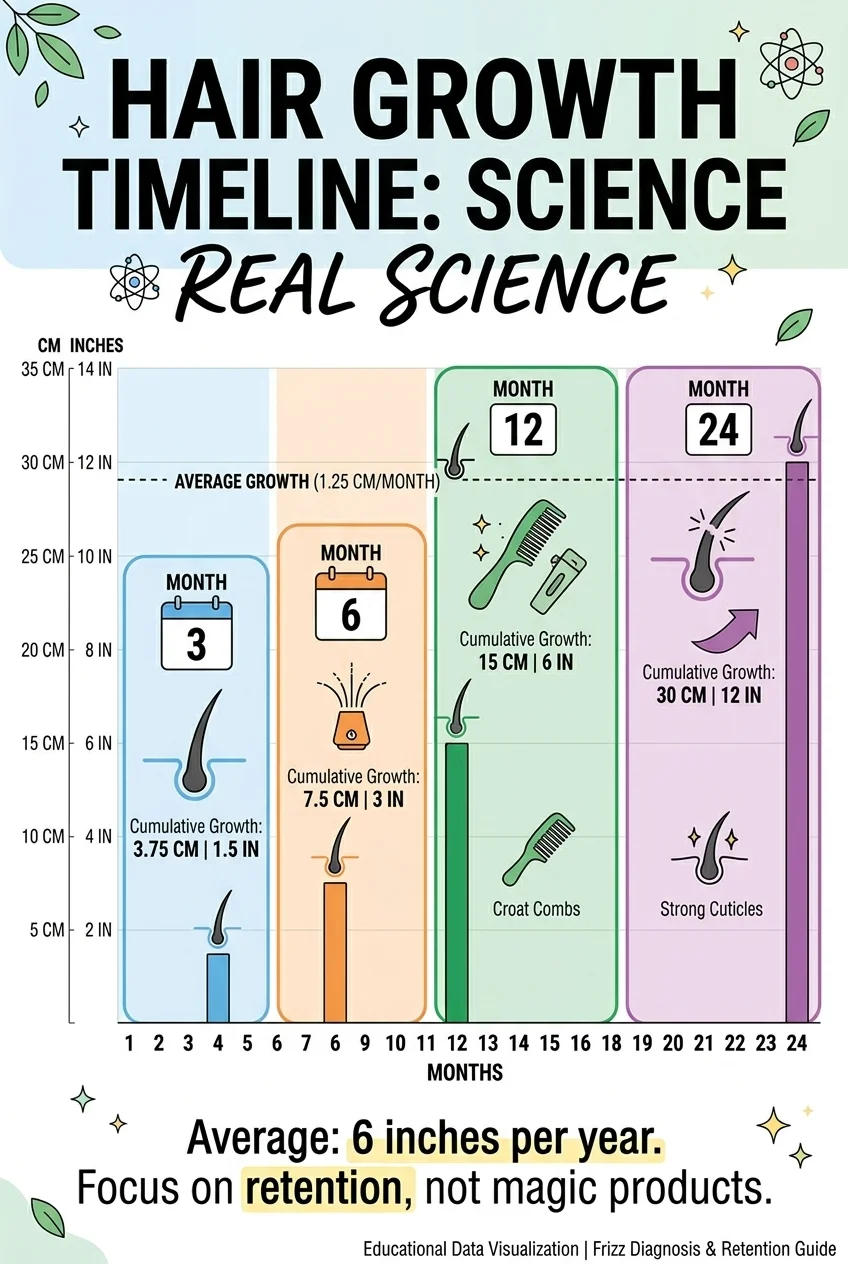
Quick Answer: Hair growth timeline averages 1.25cm (0.5 inches) per month, or 15cm (6 inches) per year. This means: Month 3 = 3.75cm, Month 6 = 7.5cm, Month 12 = 15cm. Individual rates vary 20-30% based on genetics, age, health, and hair care. You cannot significantly speed this up — only prevent slowdowns from damage and breakage.
Table of Contents
The Science of Hair Growth Rate
Hair growth happens in the follicle beneath your scalp. Research shows the average growth rate is 0.3-0.4mm per day [International Journal of Trichology].
This translates to:
- Per week: 2-3mm (barely visible)
- Per month: 1-1.5cm (0.4-0.6 inches)
- Per year: 12-18cm (5-7 inches)
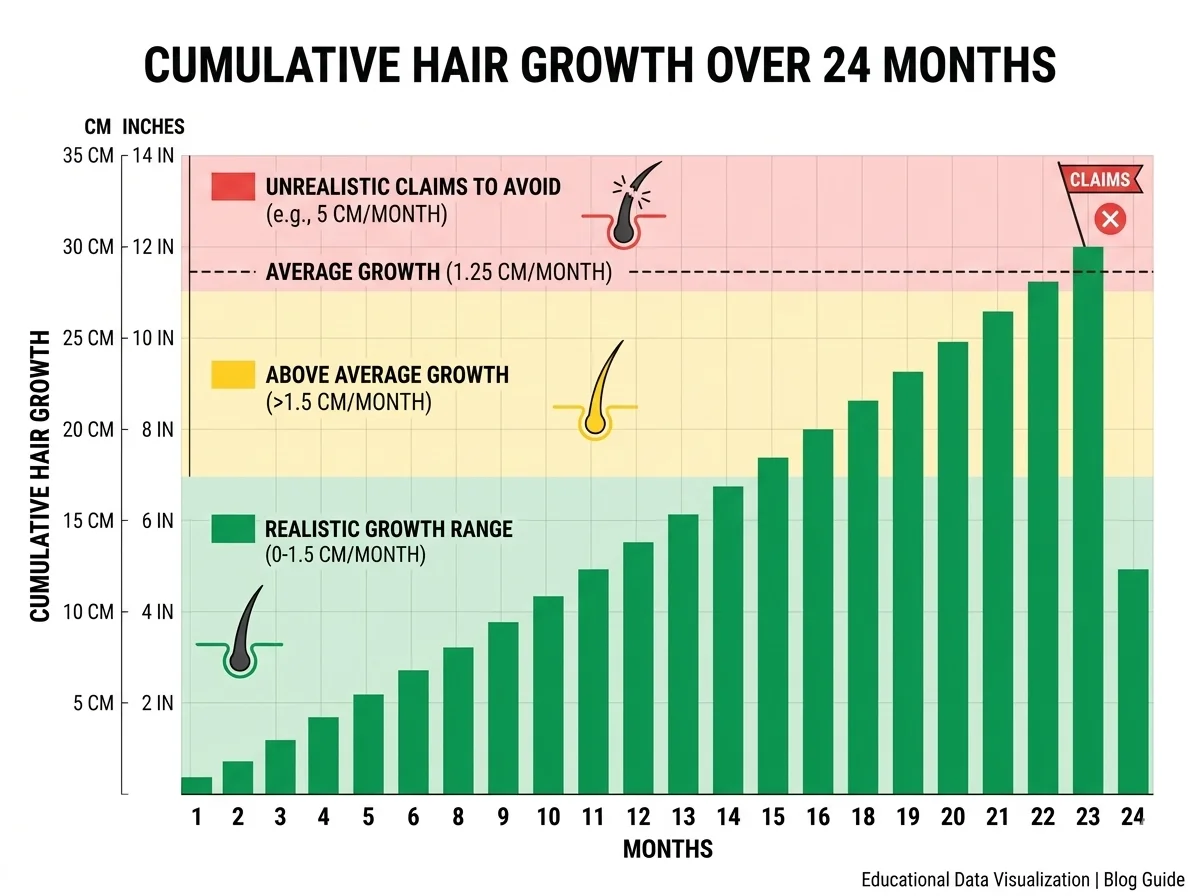
Most people average 1.25cm per month. This is your baseline. Genetics determine your specific rate within this range.
Why You Can’t Grow Faster
Growth rate is determined by:
- Cell division speed in the follicle (genetically programmed)
- Blood supply to scalp (determines nutrient delivery)
- Hormones (testosterone, estrogen, thyroid)
- Age (peaks 15-30, slows after 40)
No product can make your follicle cells divide faster than your genetics allow. Products claiming 2-3x growth are lying.
Month-by-Month Hair Growth Timeline
Starting from a fresh cut or big chop, here’s what to expect:
| Month | Growth (cm) | Growth (inches) | What You’ll Notice |
|---|---|---|---|
| Month 1 | 1.25cm | 0.5 inch | Barely visible. Might feel stubble if buzzed. No styling change. |
| Month 2 | 2.5cm | 1 inch | Noticeable if very short. Still not enough to style differently. |
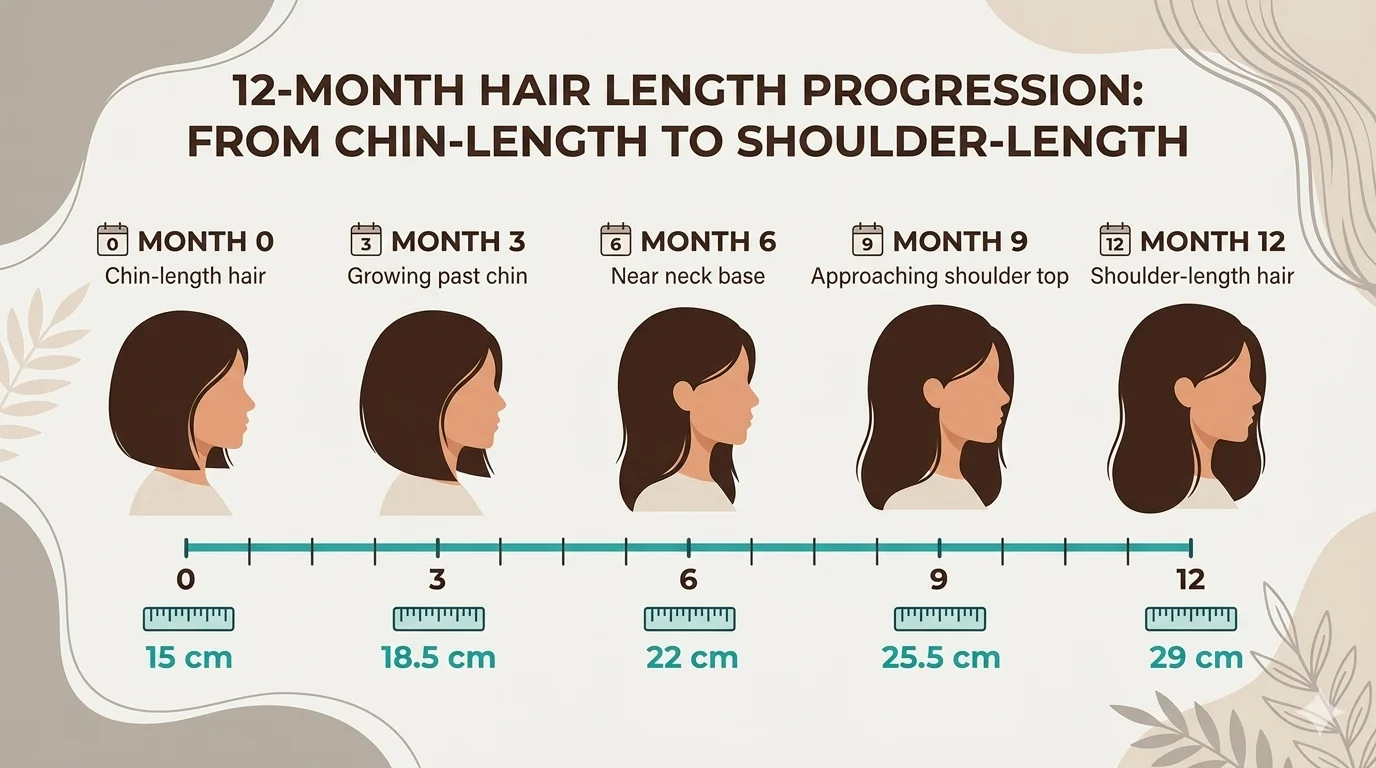
| Month 3 | 3.75cm | 1.5 inches | Short hair becomes styleable. Pixie grows to bob length. |
| Month 6 | 7.5cm | 3 inches | Significant visible change. Bob becomes shoulder-length. |
| Month 9 | 11.25cm | 4.5 inches | Shoulder-length becomes mid-back on short torsos. |
| Month 12 | 15cm | 6 inches | One year = 6 inches longer than start. This is significant growth. |
| Month 18 | 22.5cm | 9 inches | A year and a half = nearly 10 inches. Waist-length possible from shoulder start. |
| Month 24 | 30cm | 12 inches | Two years = one foot of growth. Shoulder to waist for most people. |
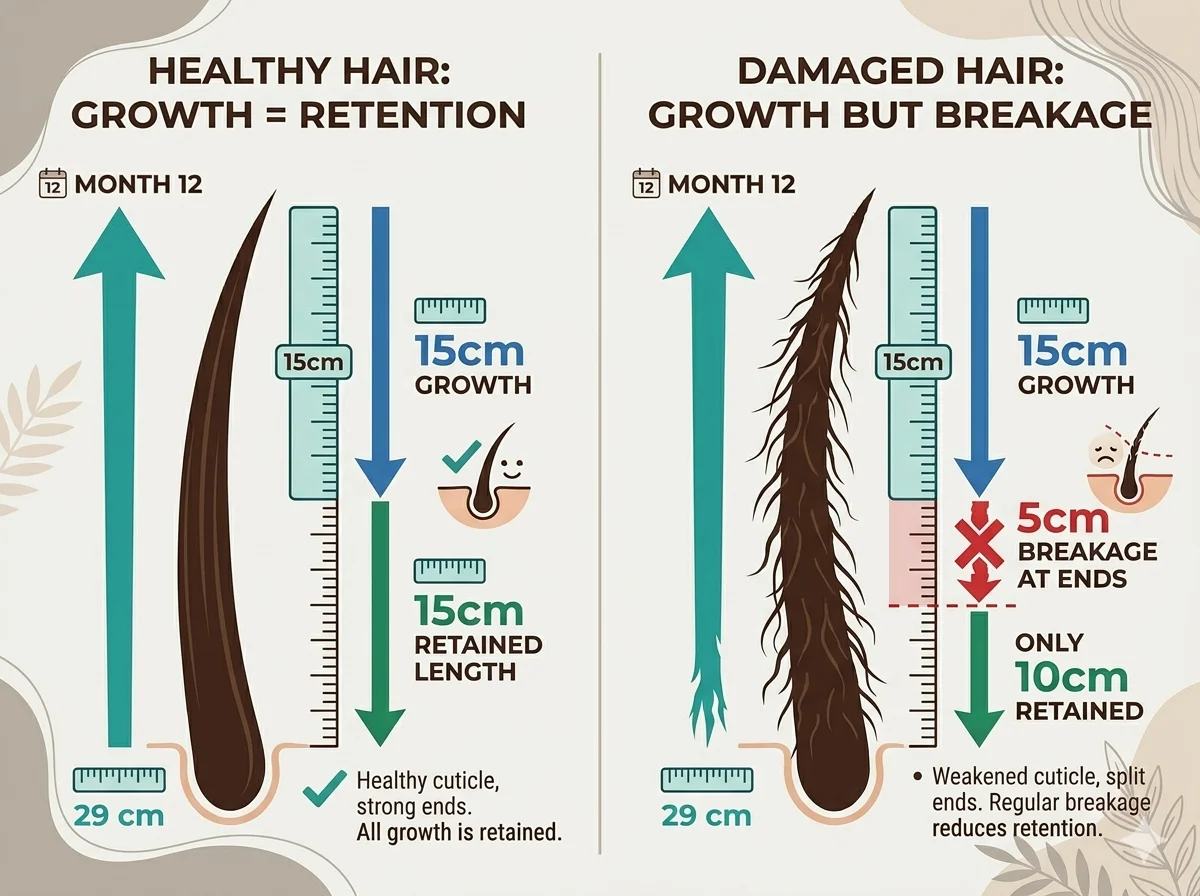
Critical note: These numbers assume ZERO breakage. If you’re experiencing breakage from damage, your retained length will be less than grown length.
See our hair breakage vs hair loss guide to identify if breakage is limiting your length retention.
Factors That Affect Your Hair Growth Timeline
Age
- 15-30 years: Peak growth rate
- 30-50 years: Slight slowdown (10-15%)
- 50+ years: Noticeably slower (20-30% reduction)
Genetics
Your family’s hair determines your maximum growth rate and terminal length (longest your hair can grow before entering rest phase). Some people’s hair stops at shoulder length. Others can grow to waist or longer. This is genetic.
Ethnicity
Studies show slight variations by ethnicity [NCBI]:
- Asian hair: Fastest (1.3cm/month average)
- Caucasian hair: Medium (1.2cm/month)
- African hair: Slower (0.9cm/month) BUT this is growth rate, not length retention. Afro-textured hair often retains less length due to fragility and shrinkage.
Health and Nutrition
Deficiencies slow growth:
- Iron deficiency → 20-30% slower growth
- Protein deficiency → thin, slow-growing hair
- Biotin deficiency (rare) → slower growth
- Vitamin D deficiency → linked to hair loss
But taking excess vitamins won’t speed growth beyond your genetic rate.
Hormones
- Pregnancy: Often faster growth during, significant shedding 3-6 months after
- Thyroid issues: Both hypo and hyperthyroidism slow growth
- PCOS/hormonal imbalance: Can affect growth and cause thinning
Stress
Severe stress triggers telogen effluvium — pushes hair into shedding phase prematurely. Doesn’t slow growth of actively growing hairs, but reduces the number of hairs growing at once.
Seasons
Hair grows slightly faster in summer (warmer weather increases blood flow to scalp). Difference is minimal (5-10%) but measurable.
What You Can Control: Length Retention
You can’t change your growth rate significantly. But you can maximize length retention by preventing breakage.
Retention Strategies
- Minimize heat styling: Heat damage = breakage = lost length
- Gentle detangling: Rough combing breaks hair
- Protective styling: Reduces daily manipulation
- Regular trims: Remove split ends before they travel up strand
- Moisture balance: Dry hair breaks easily
- Protein treatments: Strengthen to prevent breakage
- Satin/silk pillowcase: Reduces friction while sleeping
See our frizzy hair solutions guide for preventing damage that limits retention.
Realistic Goals by Starting Length
From Buzz Cut to Chin Length
- Timeline: 10-12 months
- Requires: ~12-15cm of growth
- Challenge: Awkward stages at 3-6 months
From Chin to Shoulder
- Timeline: 8-10 months
- Requires: ~10-12cm of growth
- Challenge: Patience during middle stage
From Shoulder to Bra Strap
- Timeline: 12-18 months
- Requires: ~15-20cm of growth
- Challenge: Ends get older and more prone to damage
From Bra Strap to Waist
- Timeline: 18-24 months
- Requires: ~20-25cm of growth
- Challenge: May hit terminal length before reaching goal
Why Length Seems to “Stop Growing”
Many people feel their hair stops at a certain length. Three reasons:
Reason #1: Terminal Length
Hair grows for 2-7 years (anagen phase) then falls out. Your terminal length = growth rate × years in growth phase. If your anagen phase is 3 years and you grow 15cm/year, your maximum length is 45cm.
Reason #2: Breakage Equals Growth
Hair is growing, but breaking at the same rate. Net length change = zero. Feels like it stopped growing but it’s actually a retention problem.
Reason #3: Slower Growth with Age
Hair that grew quickly at 20 grows 20-30% slower at 50. Feels like it stopped but it’s just much slower.
What Doesn’t Work (Save Your Money)
Miracle Growth Oils
No oil makes hair grow from the follicle. Oils prevent breakage (good for retention) but don’t speed growth.
Vitamins (Unless Deficient)
Biotin, hair vitamins, etc. only help if you’re actually deficient. Taking extra when you’re not deficient does nothing for growth.
Scalp Massage
Feels good, may slightly improve circulation, but studies show minimal to no effect on actual growth rate.
Inversion Method
Hanging upside down doesn’t make hair grow faster. No scientific basis.
Rice Water (For Growth)
Rice water strengthens hair (good for retention) but doesn’t make follicles grow faster.
Tracking Your Progress
How to Measure Accurately
- Take photos same day each month, same lighting, same position
- Measure from crown to longest point with hair stretched straight
- Record in spreadsheet or journal
- Expect 1-1.5cm per month (0.5 inch)
- Don’t measure more than monthly — weekly changes too small to see
Celebrate Milestones
- 3 months: First noticeable change
- 6 months: Significant visible growth
- 12 months: 6 inches — major achievement
- 24 months: 12 inches — transformation complete
When to See a Doctor
If your hair growth timeline is significantly slower than expected, see a dermatologist for:
- Growth less than 0.5cm per month for 6+ months
- Sudden slowdown or increased shedding
- Bald patches appearing
- Thinning that worsens over time
Medical conditions (thyroid, iron deficiency, alopecia) require treatment, not just better hair care.
Final Thoughts
The hair growth timeline is fixed by biology: ~1.25cm per month, ~15cm per year. You can’t change this significantly. What you can control is retention — preventing breakage so you keep the length you grow.
Set realistic expectations: shoulder to waist takes 18-24 months. Short to long takes 2-3 years. Anyone promising faster is selling something that doesn’t work.
Focus on health, gentle care, and patience. Your hair is growing. You just need to stop breaking it off.
For complete care supporting healthy growth, see our hair care basics guide.