The Truth About Hair Vitamins
Hair vitamins are a billion-dollar industry built on hope and marketing. The reality: vitamins only help hair if you have a nutritional deficiency. Taking extra when you’re not deficient does nothing for growth or thickness.
Your hair grows from follicles beneath your scalp. These follicles need specific nutrients. If those nutrients are missing (deficiency), hair growth slows or stops. Supplementing corrects the deficiency and restores normal growth. But if you’re not deficient, adding more vitamins doesn’t make hair grow faster than its genetic rate.
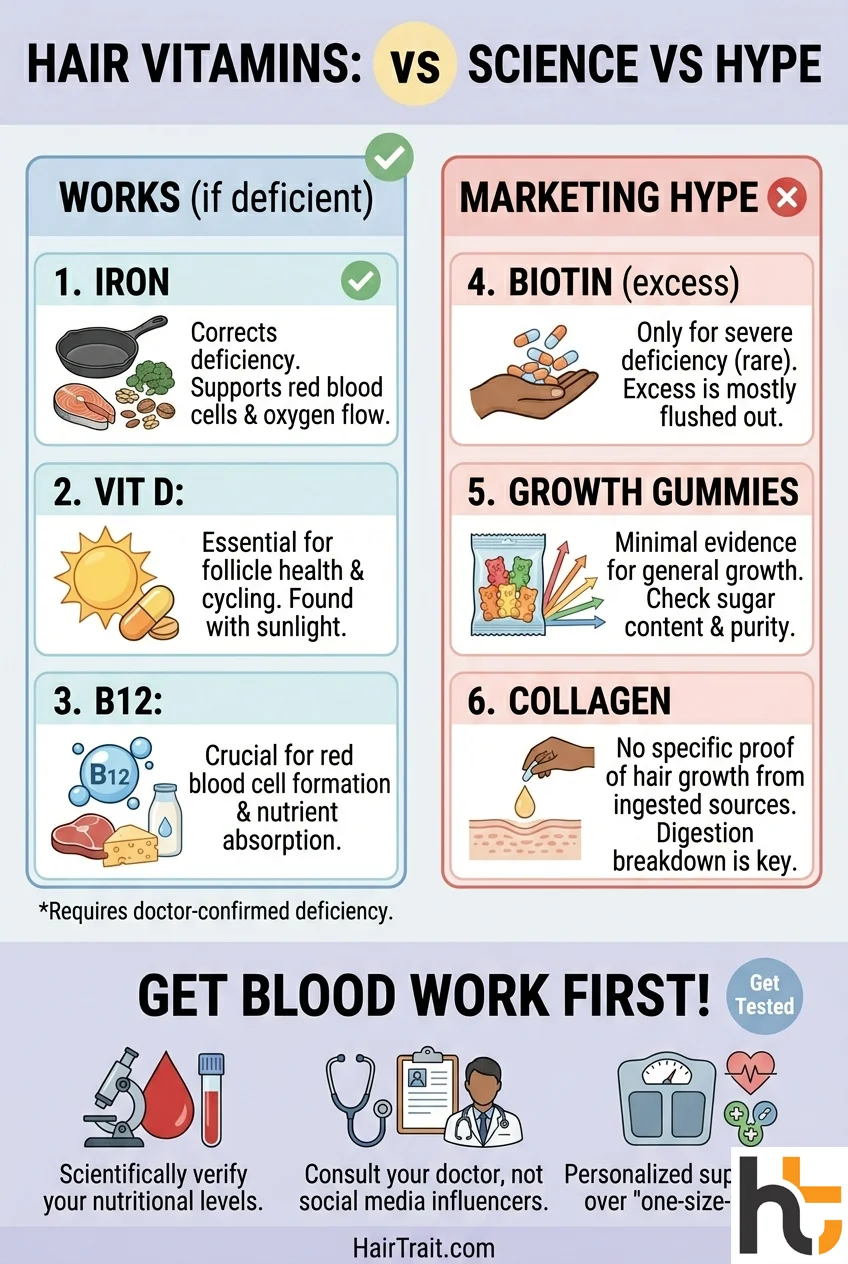
Quick Answer: Hair vitamins only work if you’re actually deficient. Biotin (rarely deficient, won’t speed growth if normal), Iron (helps IF deficient, blood test required), Vitamin D (linked to hair loss IF low), B-complex (only if deficient). Taking excess vitamins when not deficient does nothing for hair growth. Get blood work before supplementing. Focus on balanced diet over supplements.
Think of it like gas in a car. If your tank is empty, adding gas gets you moving. But if your tank is full, adding more gas doesn’t make you go faster.
Table of Contents
Biotin: The Most Overhyped Hair Vitamin
What marketers claim: Biotin (vitamin B7) grows hair faster, thicker, stronger. Take 5,000-10,000 mcg daily for amazing results.
What science actually shows: Biotin deficiency is extremely rare in people eating normal diets. Only helps hair if you have confirmed biotin deficiency. Does not speed growth in people with normal biotin levels.
The Real Story
Biotin deficiency occurs in:
- People with biotinidase deficiency (genetic disorder, very rare)
- Long-term antibiotic use
- Eating raw egg whites daily (avidin binds biotin)
- Severe malnutrition
If you don’t have these conditions, you’re probably not biotin deficient. Studies show supplementing when not deficient has no effect on hair growth.
Recommended Daily Amount
- Adults: 30 mcg per day
- Most hair supplements: 5,000-10,000 mcg (167-333x the RDA)
- Excess is peed out (water-soluble vitamin)
Important Warning
High-dose biotin (5,000+ mcg) interferes with lab tests, including thyroid tests and troponin (heart attack marker). Can cause false results. Always tell your doctor if taking biotin before blood work.
Iron: Actually Important (If You’re Deficient)
What science shows: Iron deficiency is the most common nutritional deficiency worldwide and a proven cause of hair loss. Correcting iron deficiency restores normal hair growth.
How Iron Affects Hair
Iron is essential for red blood cells that carry oxygen to hair follicles. Low iron = less oxygen = follicles enter resting phase = more shedding, less growth.
Signs of iron deficiency:
- Excessive hair shedding
- Fatigue
- Pale skin
- Shortness of breath
- Cold hands/feet
- Brittle nails
Who’s at Risk
- Women with heavy periods
- Vegans/vegetarians (plant iron absorbed less efficiently)
- Pregnant women
- People with digestive disorders
Testing and Treatment
Get blood work first:
- Ferritin test (stored iron) – most important for hair
- Serum iron
- Total iron binding capacity
- Hemoglobin
Optimal ferritin for hair: 70+ ng/mL (standard “normal” is 12-150, but hair needs higher levels)
Supplementing:
- Only if blood work confirms deficiency
- Take with vitamin C for better absorption
- Avoid calcium, tea, coffee near iron dose
- Takes 3-6 months to restore levels
- Hair regrowth visible after 6-12 months
For understanding hair loss from deficiency, see our hair breakage vs hair loss guide.
Vitamin D: Linked to Hair Loss
What science shows: Low vitamin D levels are associated with alopecia (hair loss). Correcting deficiency may help, but more research needed on exact mechanisms.
The Evidence
Studies show people with alopecia areata often have low vitamin D. Vitamin D plays a role in creating new hair follicles. Deficiency linked to telogen effluvium (temporary hair shedding).
However: Not everyone with low vitamin D loses hair, and not everyone with hair loss has low vitamin D. It’s one factor among many.
Testing and Dosing
Get tested: 25-hydroxyvitamin D blood test
Optimal levels:
- Deficient: Under 20 ng/mL
- Insufficient: 20-30 ng/mL
- Sufficient: 30-50 ng/mL
- Optimal for hair: 40+ ng/mL
Supplementing:
- Standard dose: 1,000-2,000 IU daily
- For deficiency: 5,000+ IU daily (doctor supervised)
- Take with fat (vitamin D is fat-soluble)
- Retest after 3 months
B-Complex Vitamins: Only If Deficient
B vitamins important for hair:
- B12 (cobalamin) – cell production
- B6 (pyridoxine) – protein metabolism
- Folate (B9) – cell division
- Niacin (B3) – scalp circulation
Who gets deficient:
- Vegans (B12 only in animal products)
- People over 50 (absorption decreases)
- People with digestive disorders
- Heavy alcohol users
Testing: Blood test for B12 and folate
Supplementing: B-complex covers all B vitamins. Only needed if deficient.
What Doesn’t Work
Collagen Supplements for Hair Growth
No solid evidence that oral collagen increases hair growth. Hair is made of keratin, not collagen. Collagen is broken down into amino acids during digestion – body uses them wherever needed, not specifically for hair.
Hair Growth Gummies
Overpriced biotin with sugar. Usually 5,000 mcg biotin + minimal other ingredients. Same effect as cheaper biotin tablets (which is to say, none if you’re not deficient).
Proprietary Hair Blends
Supplements with “secret formulas” are marketing. Ingredients often include biotin, random herbs, and fillers. No clinical trials proving effectiveness.
MSM (Methylsulfonylmethane)
Popular in hair supplements. Very little scientific evidence it affects hair growth. Studies that exist are low-quality.
Horsetail Extract
Contains silica. No strong evidence it grows hair. Some evidence it may strengthen, but effect is minimal.
What Actually Affects Hair Growth
| Factor | Impact on Hair | What to Do |
|---|---|---|
| Genetics | Determines growth rate (0.9-1.3cm/month) | Accept your natural rate |
| Age | Growth slows 20-30% after age 40 | Can’t prevent, only optimize care |
| Protein intake | Hair is 95% protein – need adequate dietary protein | 0.8-1g per kg body weight daily |
| Overall nutrition | Multiple nutrients needed for growth | Eat varied, balanced diet |
| Stress | Severe stress causes telogen effluvium | Manage stress, gets better with time |
| Damage/breakage | Limits length retention | Proper care, gentle handling |
For realistic growth expectations, see our hair growth timeline guide.
When to See a Doctor
Get medical evaluation for:
- Sudden excessive hair loss (200+ hairs daily)
- Bald patches appearing
- Hair loss with other symptoms (fatigue, weight changes)
- Hair that won’t grow past certain length
- Thinning that worsens over time
Ask for these tests:
- Complete blood count (CBC)
- Ferritin
- Thyroid panel (TSH, T3, T4)
- Vitamin D
- B12 and folate
- Zinc
The Bottom Line on Hair Vitamins
Take vitamins IF:
- Blood work confirms deficiency
- You have restricted diet (vegan, medical condition)
- Doctor recommends based on symptoms
Don’t bother IF:
- You eat balanced diet
- No blood work showing deficiency
- Expecting faster growth than genetics allow
- Falling for marketing promises
Better Investments Than Hair Vitamins
If you’re not deficient, these help hair more than supplements:
- Quality shampoo/conditioner: Proper cleansing and moisture
- Deep conditioning treatments: Weekly repair and hydration
- Silk pillowcase: Reduces overnight breakage
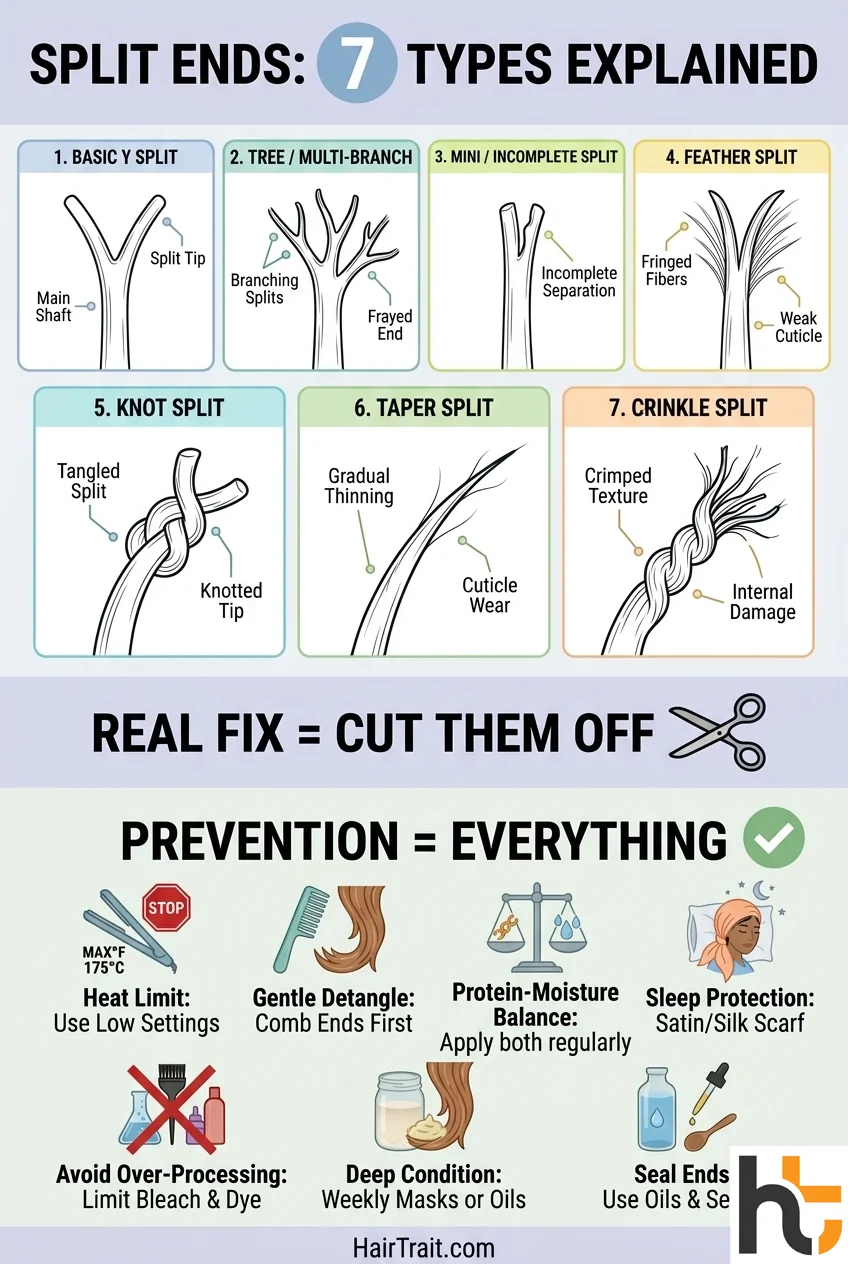
- Regular trims: Remove split ends before they worsen
- Heat protectant: Prevent damage from styling
- Gentle detangling tools: Wide-tooth comb, wet brush
For preventing damage that limits growth, see our split ends guide.
Diet for Healthy Hair
Better than supplements:
Protein sources: Eggs, fish, chicken, beans, Greek yogurt
Iron sources: Red meat, spinach, lentils, fortified cereals (with vitamin C)
Vitamin D: Fatty fish, egg yolks, fortified milk, sunlight
B vitamins: Whole grains, meat, eggs, leafy greens
Omega-3s: Salmon, walnuts, flaxseed (scalp health)
Zinc: Oysters, beef, pumpkin seeds
Final Thoughts
Hair vitamins are not magic pills. They only work if you have a nutritional deficiency. Biotin is massively overhyped. Iron and vitamin D help IF you’re deficient (get tested). B vitamins only if you’re at risk for deficiency.
Save your money on expensive hair growth blends. Get blood work. If deficient, supplement that specific vitamin. If not deficient, focus on proper hair care, gentle handling, and patience. Your hair grows at its genetic rate – no vitamin changes that.
For complete hair care fundamentals, see our hair care basics guide.