

The idea that you can train your hair to be less oily is one of the most persistent myths in hair care. The advice sounds intuitive: stop washing so often, let your scalp “reset,” and it will eventually calm down and produce less oil. Reddit threads, TikTok videos, and beauty blogs have repeated this claim for years.
Quick Answer: No — you cannot truly train your hair to be less oily. Sebum production is controlled by sebaceous glands regulated primarily by hormones (especially DHT and testosterone) and genetics, not by how often you wash your hair. Scientific research confirms that the rate of sebum secretion is relatively constant for an individual and is not significantly modified by shampooing frequency. However, switching to gentler shampoos, using scalp-targeted ingredients like salicylic acid and niacinamide, adjusting your diet, and managing stress can all help you manage oily hair more effectively — even if they don’t change how much oil your glands produce.
But the science doesn’t support it. Your sebaceous glands don’t take cues from your shampoo schedule. They take cues from your hormones, your genes, and your biology. Washing less doesn’t reduce oil production — it just lets oil accumulate.
That said, there are real, evidence-based strategies that genuinely help manage oily hair. This article separates the myth from the science, explains what actually controls sebum production, and gives you a practical routine that works with your biology instead of against it.
Table of Contents
What Is Hair Training?
“Hair training” is the belief that gradually reducing your wash frequency forces your scalp to adapt and produce less sebum over time. The typical approach looks like this:
- Extend the gap between washes by one day each week
- Use dry shampoo to absorb excess oil on non-wash days
- Tolerate a greasy “transition period” lasting 2–6 weeks
- Expect your scalp to eventually reach a less oily equilibrium
The underlying theory: frequent washing strips natural oils, triggering your scalp to overcompensate by producing even more sebum. Stop the stripping, and the overproduction stops too.
It’s a clean narrative. But it misunderstands how sebaceous glands actually function.
How Sebum Production Actually Works
Sebum is the waxy, lipid-rich substance produced by sebaceous glands attached to every hair follicle on your scalp. It serves essential functions — moisturizing the scalp, protecting the hair shaft, maintaining the skin barrier, and supporting the scalp microbiome. Sebum isn’t the problem. Excess sebum is.
Here’s the critical fact: sebaceous glands are holocrine glands. They produce sebum by filling their cells with lipids until the cells rupture and release their contents onto the skin surface. This process runs on a biological clock driven primarily by androgen hormones — not by what’s happening on the surface of your scalp.
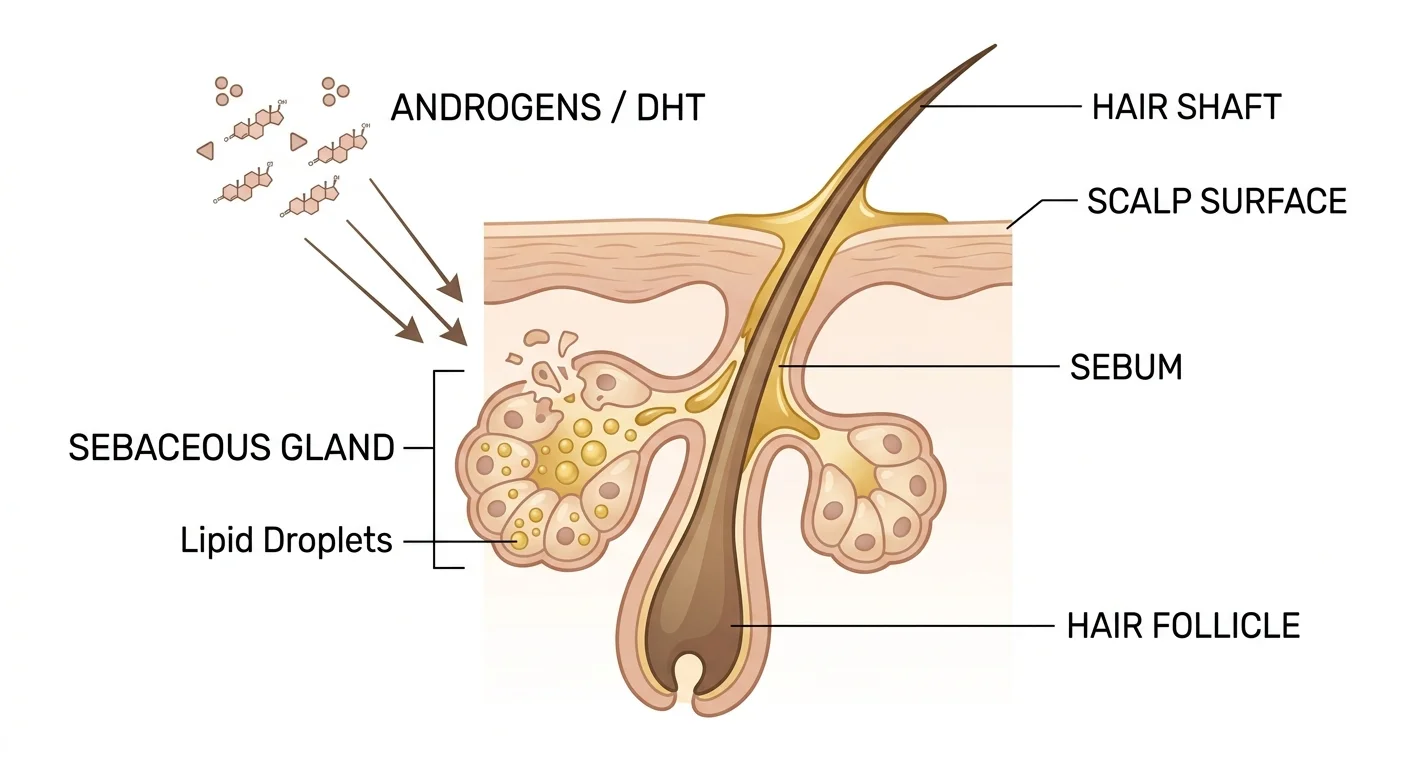
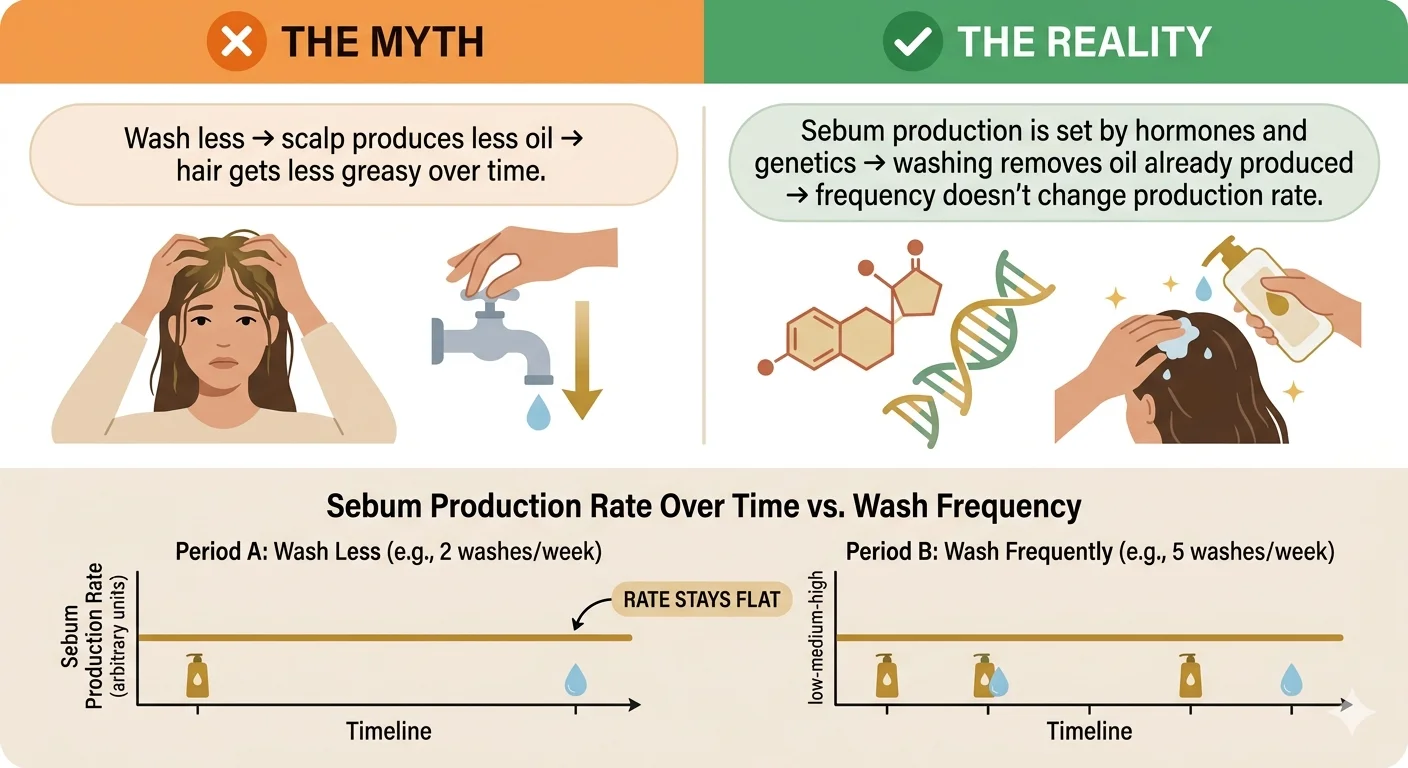
Research published in dermatology journals confirms that the rate of sebum secretion is relatively constant for an individual and is not significantly modified by the frequency of shampooing. Washing removes the oil that has already been deposited on your scalp and hair. It does not send a signal to your sebaceous glands to produce more or less.
Think of it like a dripping faucet. Emptying the sink (washing) doesn’t change how fast the faucet drips (sebum production). The faucet speed is set by your hormones and genetics.
What Actually Controls How Oily Your Hair Gets
If shampooing frequency doesn’t regulate sebum, what does? Six factors dominate:
1. Hormones — The Primary Driver
Androgens — particularly dihydrotestosterone (DHT) and testosterone — are the main regulators of sebaceous gland activity. This is why oily hair often intensifies during puberty, menstrual cycles, pregnancy, PCOS, and hormonal medication changes. Research in the Journal of Investigative Dermatology confirms androgens as the primary hormonal regulators of sebum output.
2. Genetics
The size and activity level of your sebaceous glands are largely inherited. If your parents had oily hair, you likely will too. No wash schedule changes this.
3. Age
Sebum production peaks during adolescence and early adulthood, then gradually declines. Many people who think hair training “worked” in their late 20s or 30s are actually experiencing natural age-related hormonal shifts.
4. Diet
Research links high-glycemic diets and dairy consumption to increased sebum production. Omega-3 fatty acids and zinc may help regulate it. This is one of the few factors you can directly control.
5. Stress
Chronic stress elevates cortisol, which can stimulate sebaceous glands. Stress-related oiliness is real and measurable.
6. Climate
Heat and humidity increase sebum spread along the hair shaft and can mildly increase production. Seasonal oiliness changes are normal.
| Factor | Impact on Oiliness | Can You Control It? |
|---|---|---|
| Hormones (DHT, testosterone) | High — primary driver | Partially (medical treatment) |
| Genetics | High | No |
| Age | Moderate — declines over time | No |
| Diet | Moderate | Yes |
| Stress | Moderate | Yes |
| Climate | Low to moderate | Partially |
| Wash frequency | Minimal to none | N/A — doesn’t change production |
Why Hair Training Is a Myth — And Why People Think It Works
If the science is clear, why do so many people believe hair training worked for them? Four explanations account for nearly every anecdotal success story:
1. They switched products, not just frequency. Most people who start hair training simultaneously switch from harsh sulfate shampoos to gentler formulas. Research shows that aggressive surfactants like sodium lauryl sulfate (SLS) can strip the scalp aggressively and trigger irritation, which can temporarily increase oil production or make the scalp feel more reactive. Switching to a milder cleanser reduces that irritation — but that’s a product change, not a frequency change.
2. Their perception shifted. After weeks of tolerating greasy hair, your baseline for “normal” recalibrates. You become more accepting of a level of oiliness that would have bothered you before.
3. Seasonal or hormonal timing. Starting hair training in winter and evaluating results in spring? Hormonal fluctuations and seasonal changes could easily account for the difference.
4. Age-related decline. Sebum production naturally decreases through your 20s and 30s. A months-long hair training experiment may simply coincide with this biological shift.
What Actually Works to Manage Oily Hair
You can’t change how much oil your scalp produces (without medical intervention). But you can manage how that oil behaves, how quickly it builds up visibly, and how your scalp environment supports or worsens the problem. Here’s what the evidence supports:
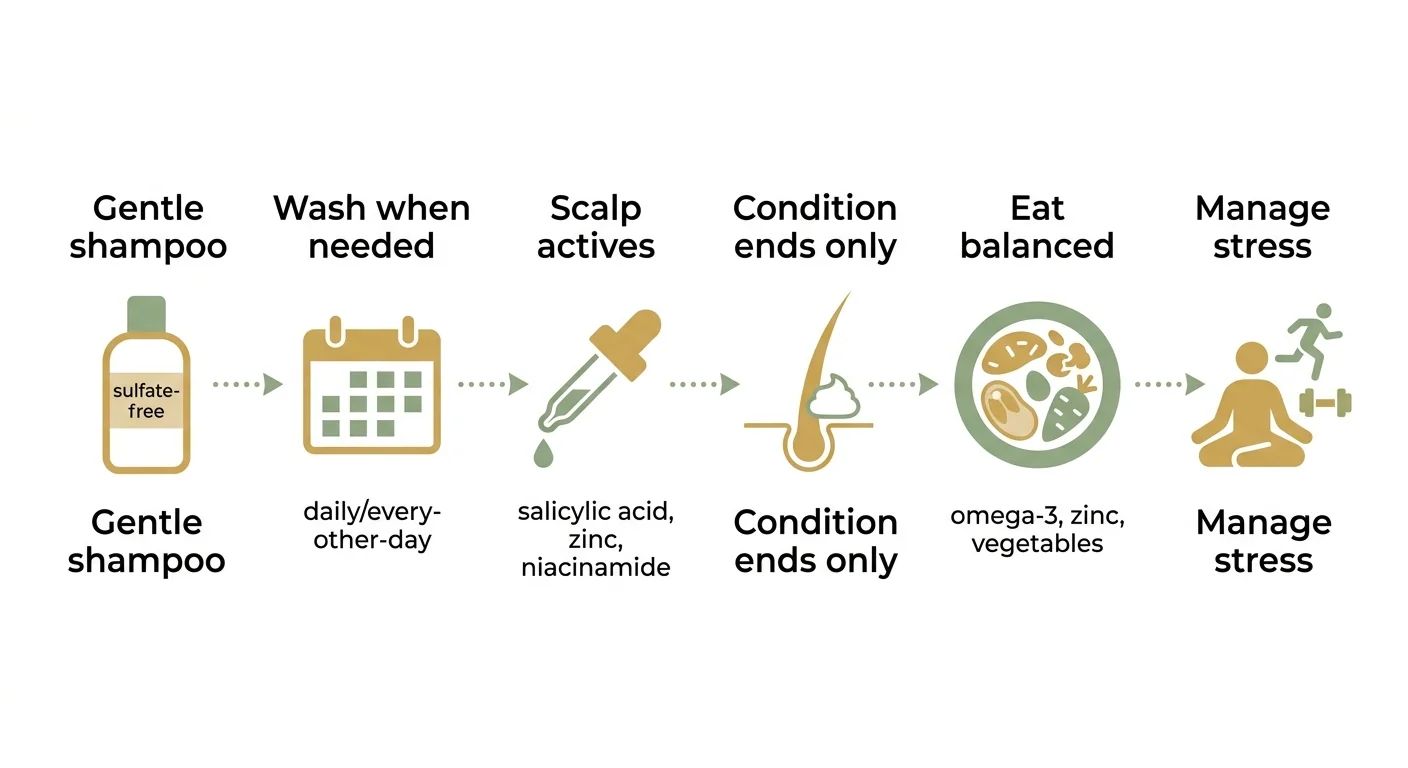
1. Switch to a Gentle, Sulfate-Free Shampoo
This is the single change most likely to improve your experience with oily hair. Harsh sulfates strip the scalp aggressively, which can cause irritation, disrupt the scalp barrier, and create a cycle of over-cleansing followed by rapid re-greasing. A gentle sulfate-free cleanser removes excess oil without triggering that rebound effect. For specific recommendations, see our guide to the best shampoo for oily hair.
2. Wash as Often as You Need To
There is no scientific reason to avoid daily washing if your hair is oily. The idea that daily washing damages hair or worsens oiliness is not supported by research — provided you’re using a gentle shampoo. If your hair looks and feels greasy by the end of the day, wash it. Letting oil accumulate doesn’t train anything; it just creates an environment where Malassezia fungi thrive, potentially leading to dandruff and scalp irritation. For more on finding the right schedule, read how often should you wash your hair.
3. Use Scalp-Targeted Active Ingredients
Certain ingredients can help regulate how oil behaves on your scalp without changing production rates:
| Ingredient | How It Helps | Where to Find It |
|---|---|---|
| Salicylic acid | Beta-hydroxy acid that penetrates oil-filled pores, dissolves excess sebum and dead skin buildup | Clarifying shampoos, scalp treatments |
| Zinc pyrithione | Anti-androgenic properties; helps regulate oil while controlling Malassezia (dandruff-causing fungus) | Medicated shampoos (Head & Shoulders, Vanicream Z-Bar) |
| Niacinamide (Vitamin B3) | Shown to reduce sebum production topically while improving skin barrier function | Scalp serums, some newer shampoo formulations |
| Green tea extract (EGCG) | Anti-androgenic polyphenol that can reduce sebum output when applied topically | Scalp treatments, some natural shampoos |
| Clay (kaolin / bentonite) | Absorbs excess oil from the scalp surface without stripping the skin barrier | Clay-based shampoos, scalp masks |
4. Condition Strategically
Apply conditioner only to the mid-lengths and ends — never the scalp. Heavy conditioners and silicone-rich formulas applied near the roots add weight and create the appearance of greasiness faster. If you have fine, oily hair, consider a lightweight or volumizing conditioner. For product guidance, see our best conditioner guide.
5. Adjust Your Diet
This is the most underrated lever for managing oily hair. Research consistently links dietary factors to sebum output:
- Reduce: High-glycemic foods (white bread, sugary snacks, processed carbs) and excessive dairy — both are associated with increased sebum production
- Increase: Omega-3 fatty acids (salmon, walnuts, flaxseed), zinc (pumpkin seeds, lentils, chickpeas), and vegetables — all support balanced sebum regulation
For a deeper look at how nutrition affects your hair, read our guide on the best vitamins for hair growth.
6. Manage Stress
Chronic stress elevates cortisol, which stimulates sebaceous glands. Regular exercise, adequate sleep, and stress-reduction practices aren’t just general wellness advice — they have a measurable impact on how oily your scalp gets.
The Truth About Dry Shampoo for Oily Hair
Dry shampoo is the most popular band-aid for oily hair — and it works as a temporary cosmetic fix. Starch or clay-based powders absorb surface oil, adding texture and reducing the visible shine between washes.
But dry shampoo does not reduce sebum production. And overuse creates real problems. Dermatology research shows that excessive dry shampoo use leads to product buildup on the scalp, potentially clogging follicles, causing irritation, and disrupting the scalp microbiome. It should supplement regular washing, not replace it.
Use dry shampoo as a tool — not a strategy. One application between washes is reasonable. Using it for three consecutive days to avoid washing is not. For product options, see our best dry shampoos for every hair type guide.
Common Mistakes That Make Oily Hair Worse
- Over-washing with harsh shampoos. Using a strong sulfate shampoo twice daily strips the scalp barrier, causes irritation, and can create a cycle of reactive oiliness. Switch to a gentle cleanser and wash once per day or every other day.
- Skipping shampoo entirely for days. The opposite extreme. Letting oil, dead skin, and product residue accumulate creates an environment for Malassezia overgrowth, dandruff, and scalp inflammation. If your hair is oily, it needs regular cleansing.
- Applying conditioner to the scalp. Conditioner is designed for the hair shaft, not the scalp. Applying it to your roots adds unnecessary weight and oil to the area that’s already overproducing.
- Touching your hair constantly. Your hands transfer oil from your skin to your hair throughout the day. This is one of the simplest habits to change and one of the most impactful.
- Using heavy styling products near the roots. Serums, oils, and cream-based stylers applied near the scalp accelerate the greasy appearance. Use lightweight, water-based products and apply them from mid-lengths down.
- Relying on dry shampoo as a primary cleanser. Dry shampoo absorbs surface oil but doesn’t cleanse the scalp. Buildup from overuse can worsen oiliness and cause follicular irritation.
When to See a Doctor About Oily Hair
In most cases, oily hair is a cosmetic concern managed with the right products and habits. But certain situations warrant medical evaluation:
- Sudden, dramatic increase in oiliness — could indicate hormonal changes (thyroid issues, PCOS, medication side effects)
- Oily scalp accompanied by hair thinning or loss — may suggest androgenetic alopecia or another condition. See our guide on what causes hair loss in women
- Persistent scalp redness, flaking, or itching — could be seborrheic dermatitis, which requires targeted treatment
- Oiliness that doesn’t respond to any product or routine changes — a dermatologist can evaluate hormonal factors and prescribe treatments like spironolactone or topical retinoids if appropriate
Final Thoughts: Work With Your Biology, Not Against It
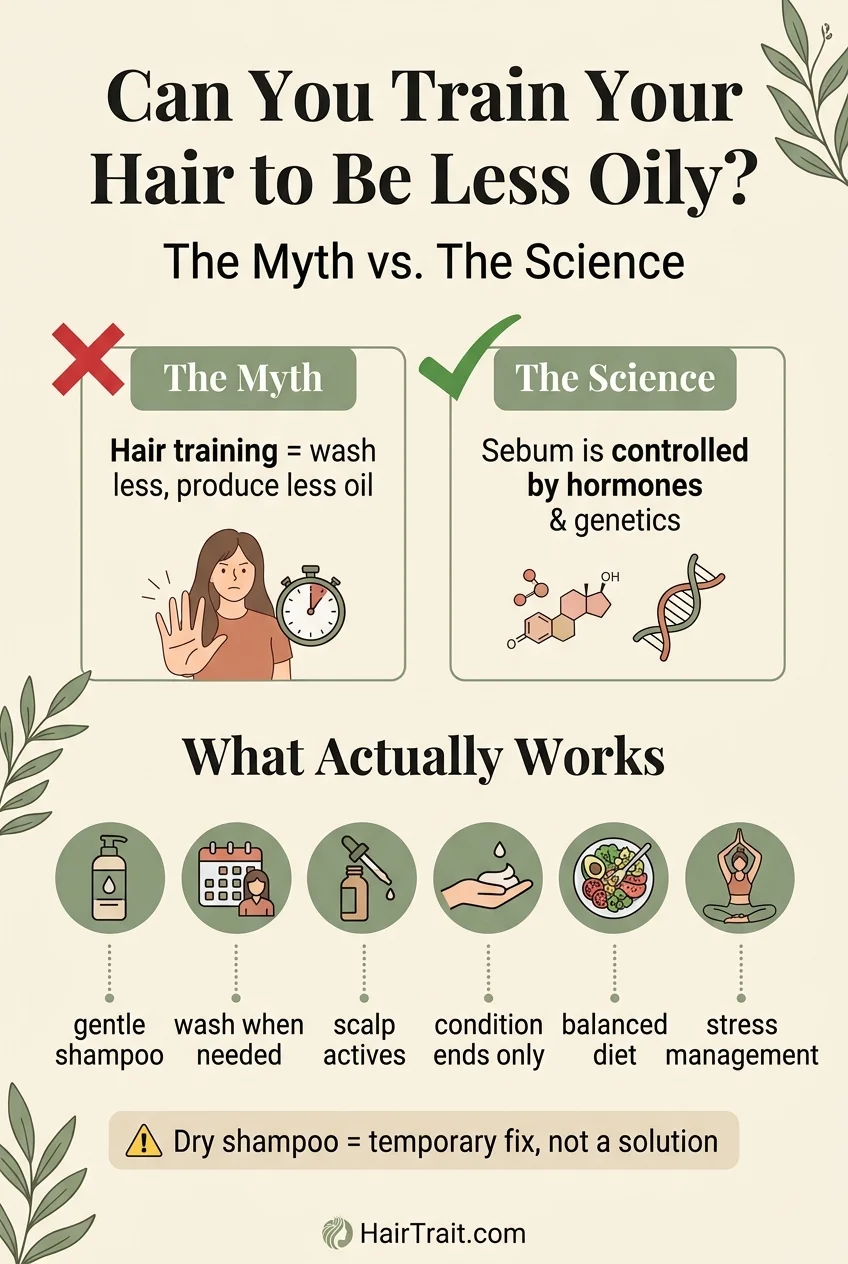
You cannot train your hair to be less oily. Sebum production is a biological process driven by hormones and genetics, and no wash schedule will change it. The hair training trend persists because it offers a simple, appealing narrative — but the science doesn’t support it.
What you can do is manage oily hair effectively by working with your biology: use a gentle shampoo, wash as often as your scalp needs, incorporate active ingredients like salicylic acid and niacinamide, eat a balanced diet, and stop feeling guilty about washing your hair daily. That’s not over-washing. That’s proper scalp hygiene for your hair type.
The goal isn’t to produce less oil. It’s to keep your scalp clean, balanced, and healthy — and to stop chasing a myth that was never going to deliver.
