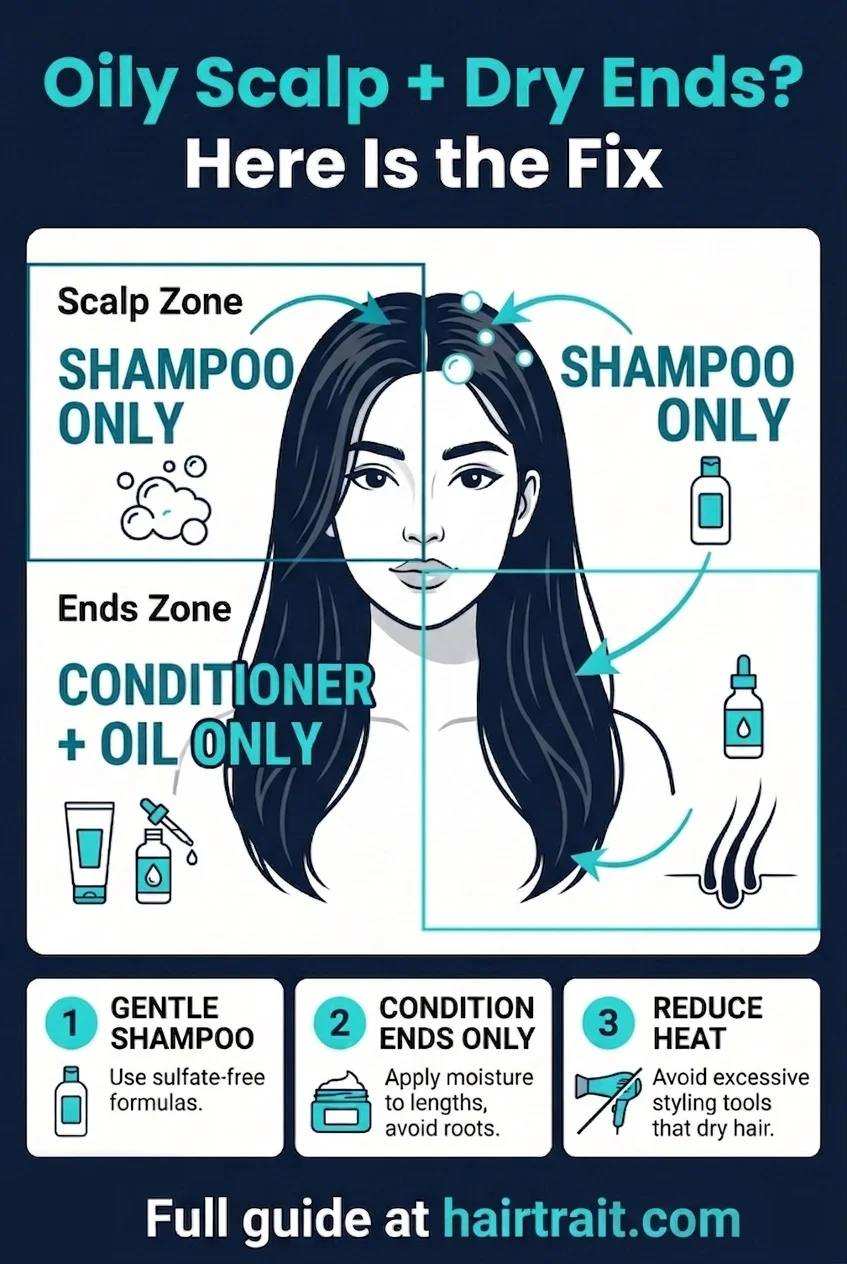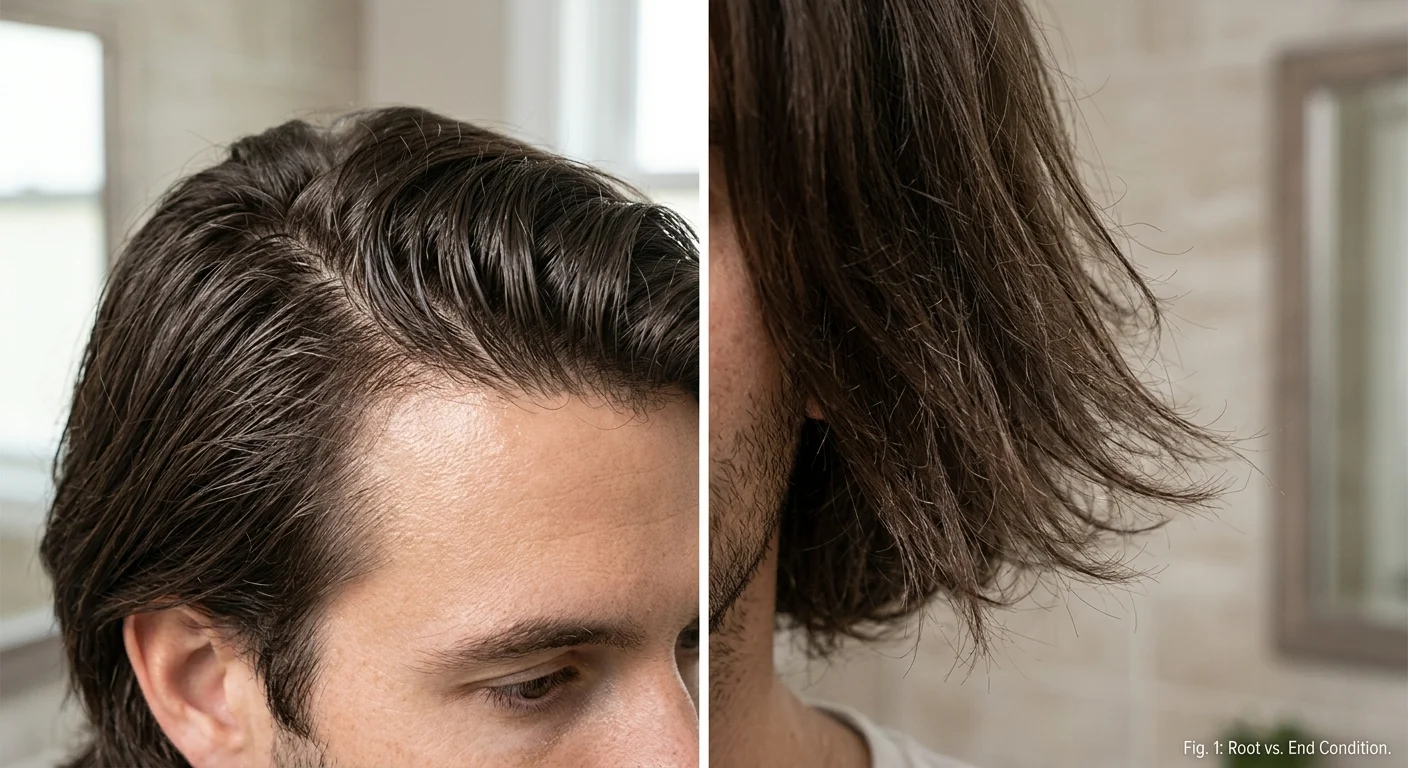
Greasy roots by midday, dry and brittle ends by the time you go to bed. If that sounds familiar, you have oily scalp dry ends — a condition known as combination hair, and one of the most common and most mismanaged hair problems men deal with.
The problem is not that your hair is broken. The problem is that most men treat the scalp and the ends as if they are the same thing — using one shampoo from root to tip, skipping conditioner because they are worried about greasiness, or washing daily to fight the oil. Each habit makes things worse.
This guide explains exactly why oily scalp dry ends happens to men, what you have been doing that makes it worse, and the specific routine, products, and ingredients that fix the imbalance without creating new problems.
Why Men Get Oily Scalp Dry Ends
Understanding what is actually happening to your hair makes the solution obvious. Your scalp and your ends have very different needs — and they need different treatment.
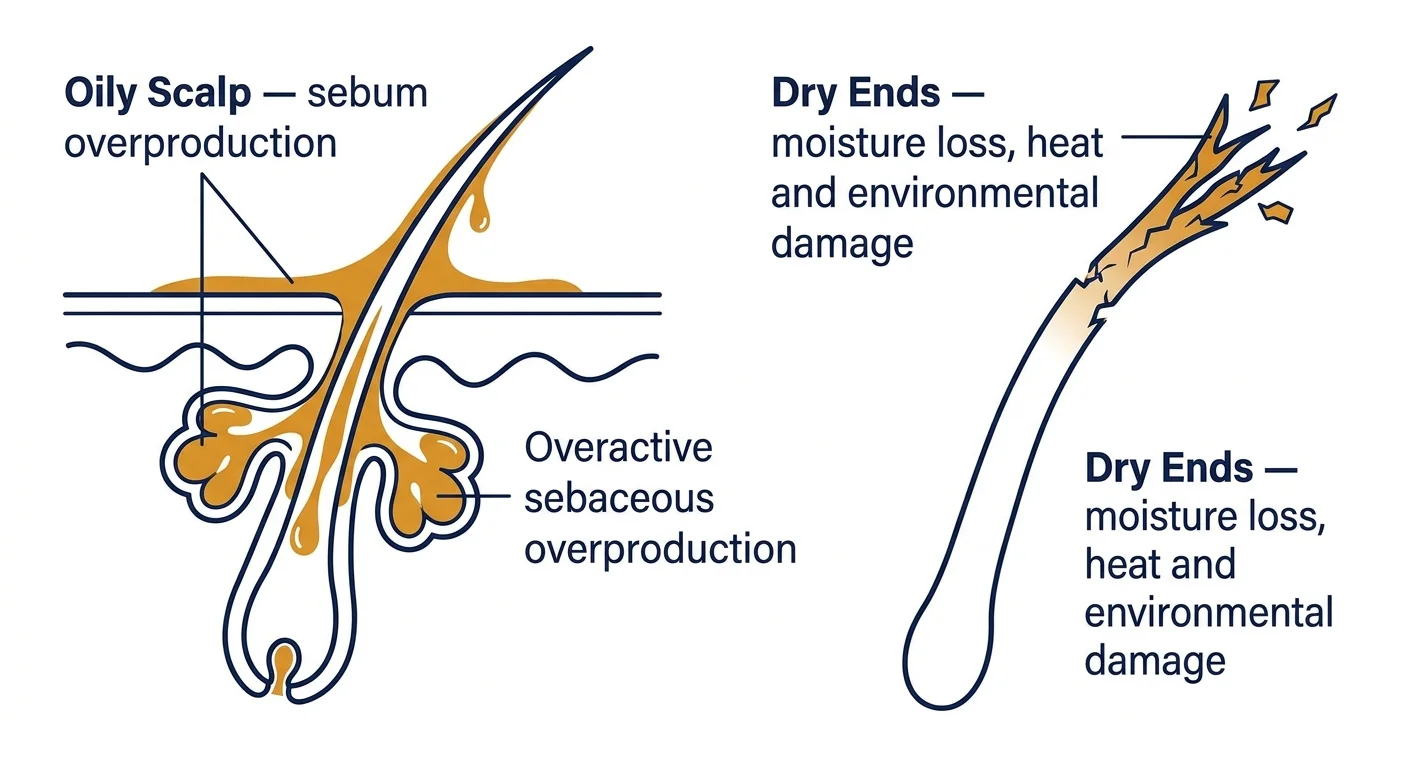
Your scalp is skin. It has sebaceous glands that make sebum — a natural oil that protects the scalp and hair follicles. When these glands overproduce sebum, the roots become greasy. According to Columbia Skin Clinic, excess sebum has several causes. These include genetics, hormones like DHT, over-washing, stress, and too many refined carbs.
Your hair ends, meanwhile, are the oldest part of your hair. They have been through months or years of heat styling, sun exposure, friction, washing, and environmental damage. Sebum at the roots rarely reaches the ends — especially in short to medium hair that gets washed often. The result is roots swimming in oil while the ends are dry, brittle, and prone to breakage.
Cosmetologist Madison Dufour notes that an oily scalp often means the skin underneath is dry. Sebaceous glands then overproduce oil to try to rehydrate the scalp and restore its pH. This is why washing more often to fight grease makes the problem worse — not better.
The 3 Mistakes Men Make with Oily Scalp Dry Ends
Before covering the solution, it is worth understanding what makes the oily scalp dry ends problem worse. Most men make at least one of these mistakes — some make all three.
❌ Mistake 1: Washing Daily to Fight Grease
This is the most damaging mistake. Washing daily strips sebum so fast that sebaceous glands overproduce oil to make up for it — leaving you greasier than before. The shampoo also runs down the lengths and dries out the ends. According to Davines, over-cleansing is one of the worst things a man with combination hair can do.
❌ Mistake 2: Skipping Conditioner Entirely
Men with oily roots often skip conditioner out of fear it will make grease worse. This is the wrong move. Your scalp does not need conditioner — but your ends do. Skipping it leaves ends dry, weak, and bare. The fix is not to skip it but to use it right — on the mid-lengths and ends only, never on the scalp.
❌ Mistake 3: Using the Same Product Root to Tip
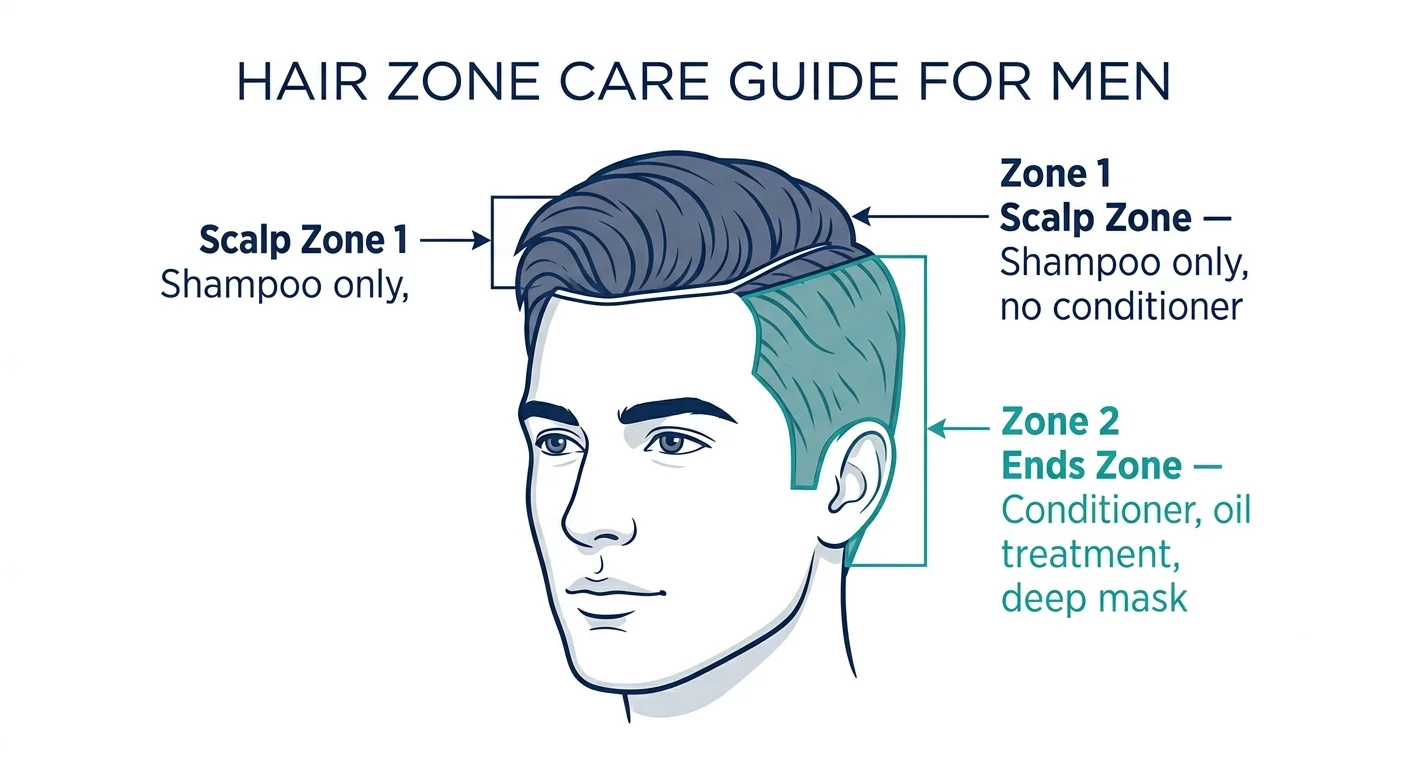
Applying shampoo from root to tip strips moisture from the ends. Applying conditioner from root to tip adds weight and greasiness to the roots. Men with oily scalp dry ends need a zone-based approach — different products on different areas. Using one product from root to tip is why most men cannot fix this even after trying many products.
The Correct Routine for Oily Scalp Dry Ends in Men
Here is the step-by-step routine that addresses oily scalp dry ends properly. Each step treats the scalp and the ends as what they are — two different things that need different care.
1 Shampoo the Scalp Only (Every 2–3 Days)
Use a balancing or clarifying sulfate-free shampoo. Apply it exclusively to the scalp — massage it in with your fingertips for 60 to 90 seconds, then let the lather rinse through the lengths as the water runs. Do not scrub the shampoo down the hair shaft. This cleans the scalp without stripping the ends.
Wash every two to three days rather than daily. If your scalp gets greasy on day two, use a dry shampoo at the roots to absorb oil and extend the time between washes. According to our guide on how often should men wash their hair, reducing wash frequency is the single most effective step men can take to reduce long-term oiliness.
Key ingredients to look for in shampoo: Salicylic acid (dissolves oil and buildup), zinc pyrithione (regulates sebum and controls dandruff), tea tree oil (antimicrobial, sebum-regulating), niacinamide (balances oil production without drying).
2 Condition the Ends Only (Every Wash)
After shampooing, apply conditioner from the mid-lengths down to the ends only. Never apply conditioner to the roots or scalp. Leave it on for two to three minutes, then rinse with cool water to seal the cuticle.
Choose a light, moisture-rich conditioner — not a heavy one loaded with protein. Look for hyaluronic acid, argan oil, ceramides, and panthenol. These add moisture and rebuild the hair barrier without weighing down the roots.
Avoid silicone-heavy conditioners — look for -cone ingredients like dimethicone. They coat the ends short-term but block moisture over time, making dryness worse.
3 Use a Leave-In Treatment on Dry Ends (2–3 Times Per Week)
On days you do not wash your hair, apply a small amount of lightweight hair oil or leave-in serum to the ends only. Argan oil and jojoba oil are the best options for dry ends. They mimic the structure of sebum and absorb well without feeling greasy.
Apply a few drops to the palms, rub together, then work through the ends only. This replaces lost moisture between washes and prevents further breakage without affecting the scalp.
4 Weekly Scalp Exfoliation
Once a week, use a scalp scrub or brush to remove dead skin cells, product buildup, and old sebum that regular washing misses. This stops follicle clogging that can worsen oiliness over time. Massage in circular motions for two minutes before shampooing, then wash as normal.
5 Weekly Deep Conditioning Mask on the Ends
Once per week, apply a deep conditioning mask or hot oil treatment to the ends only. Leave on for five to ten minutes, then rinse thoroughly. It repairs damage and improves the texture, softness, and look of your ends within two to three weeks of regular use.
Best Products for Oily Scalp Dry Ends in Men
Products matter, but product application matters more. Here is what to use and where to use it:
| Product Type | Where to Apply | Key Ingredients | Frequency |
|---|---|---|---|
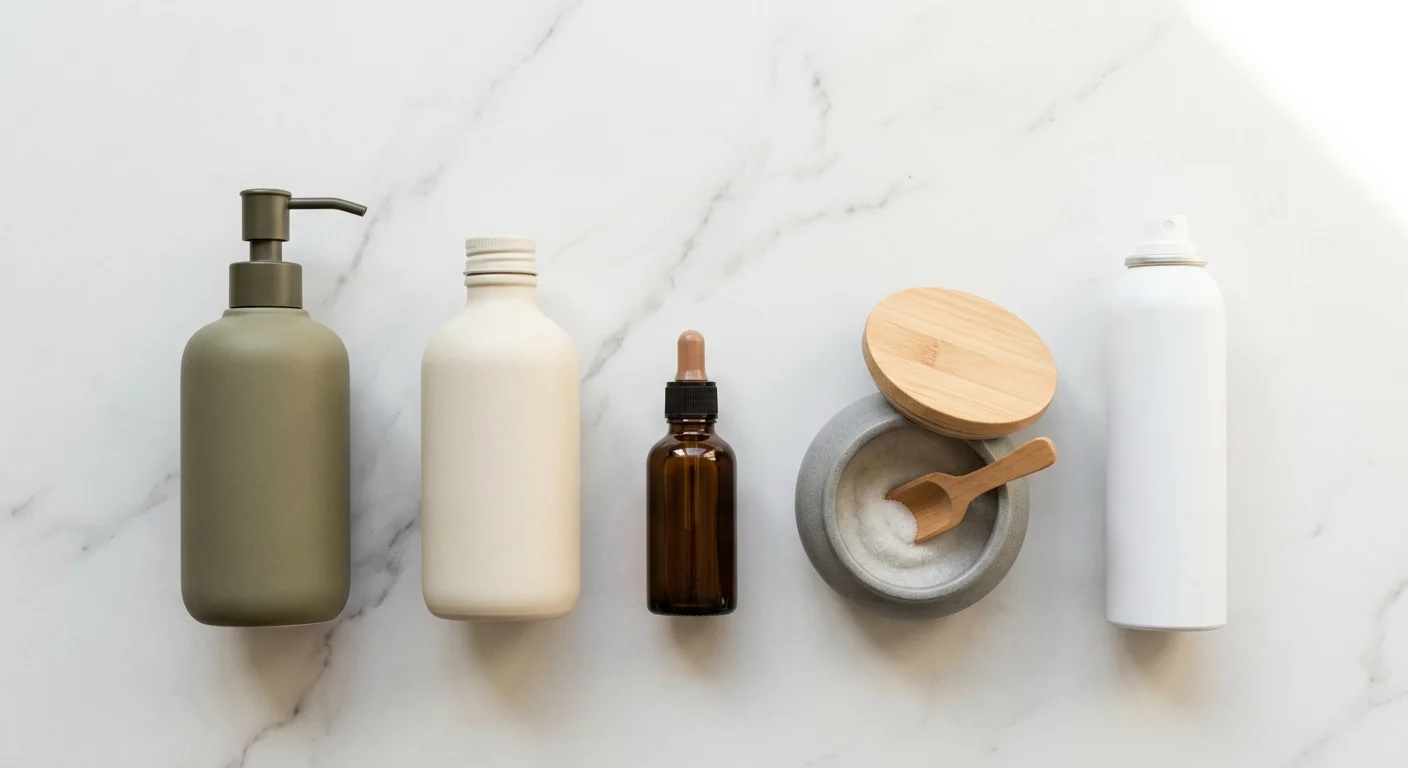
| Balancing Shampoo | Scalp only | Salicylic acid, zinc pyrithione, niacinamide | Every 2–3 days |
| Lightweight Conditioner | Mid-lengths to ends | Hyaluronic acid, ceramides, panthenol | Every wash |
| Dry Shampoo | Roots only | Tapioca starch, rice starch (avoid talc) | Between washes |
| Hair Oil / Leave-In | Ends only | Argan oil, jojoba oil | 2–3x per week |
| Scalp Scrub | Scalp only | Salicylic acid, tea tree, sugar or salt | Once per week |
| Deep Conditioning Mask | Ends only | Shea butter, keratin, argan oil | Once per week |
Ingredients to Use and Ingredients to Avoid
The right ingredients make the biggest difference in managing oily scalp dry ends. Here is a clear breakdown, based on L’Oreal’s dermatologist-backed guidance:
| For the Scalp | For the Ends | Avoid Everywhere |
|---|---|---|
| Salicylic acid | Hyaluronic acid | Sulphates (SLS, SLES) |
| Zinc pyrithione | Argan oil | Heavy silicones (dimethicone near roots) |
| Tea tree oil | Ceramides | Alcohol-heavy sprays (drying) |
| Niacinamide | Shea butter | Heavy waxes at the scalp |
| Witch hazel | Panthenol (Vitamin B5) | Daily clarifying shampoo |
Lifestyle Changes That Help Oily Scalp Dry Ends in Men
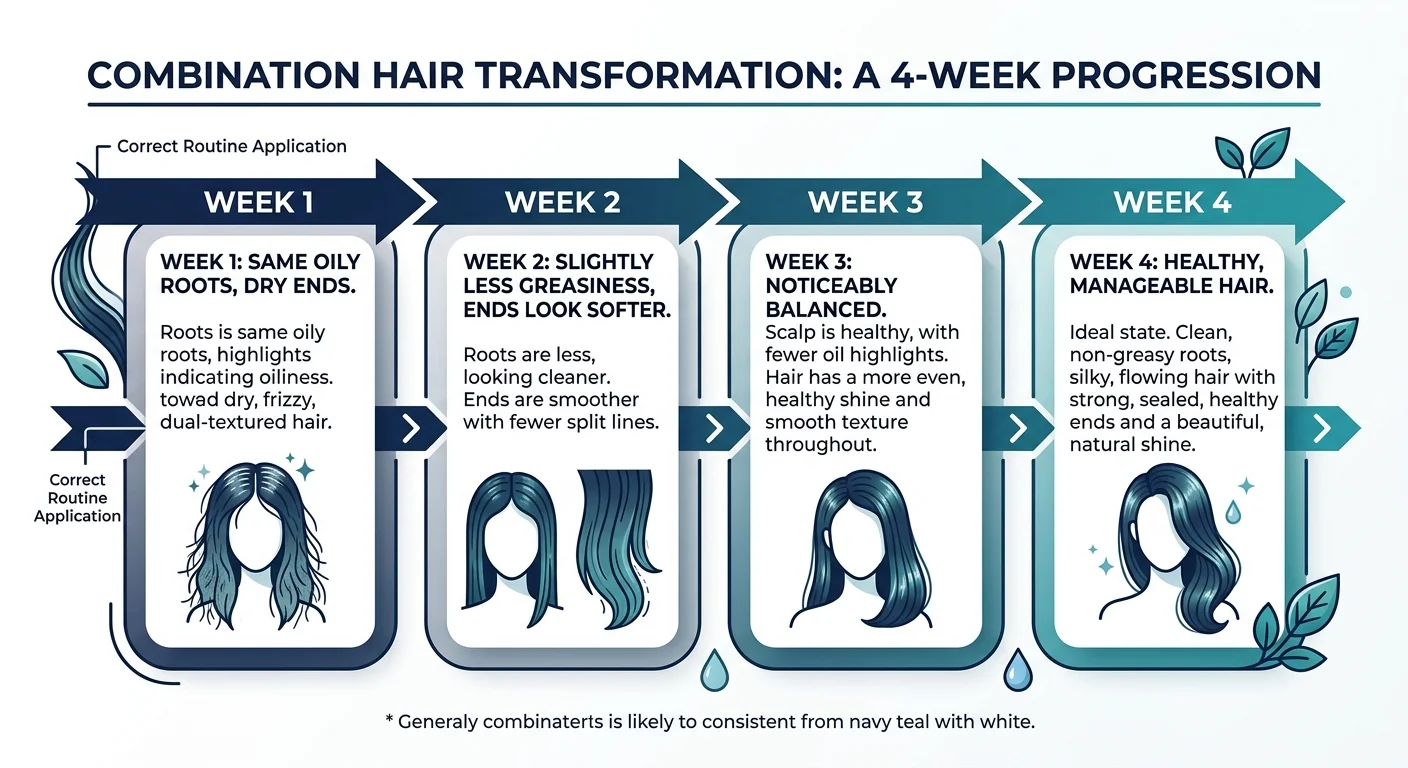
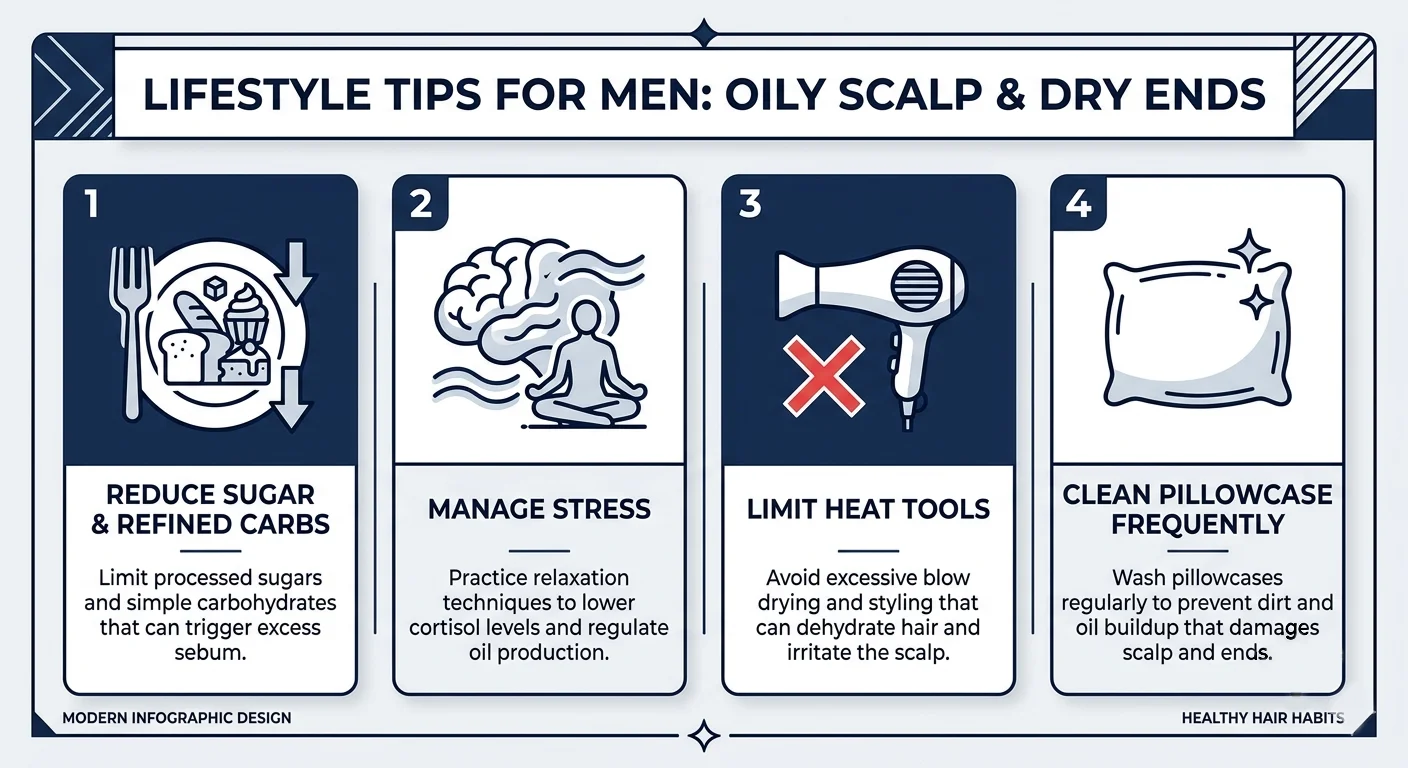
Products are only part of the solution. Several habits affect how oily your scalp gets and how dry your ends stay. Even small changes can show results in two to four weeks.
Diet: A diet high in sugar and refined carbs raises androgen levels, which boosts oil production. Eating less processed food and more zinc-rich foods (pumpkin seeds, nuts), omega-3s (salmon, walnuts), and leafy greens can cut scalp oiliness over time. It is one of the most effective steps for chronic oily scalp dry ends that most people skip.
Stress: Cortisol raises androgen levels, which boosts oil production. Men under long-term stress often see more scalp oil even if nothing else changes. Regular exercise, 7–8 hours of sleep, and lower stress all help reduce oil overproduction.
Heat tool use: Daily use of blow dryers on high heat and straighteners accelerates dryness in the ends while having no effect on scalp oiliness. Reduce heat tool frequency or always use a heat protectant on the ends before styling. With oily scalp dry ends, your ends are already low on moisture — heat without protection makes them much worse.
Pillowcase hygiene: Sebum, sweat, and product residue transfer from hair to pillow to hair every night. Wash pillowcases twice a week. A silk or satin pillowcase cuts friction damage to the ends and keeps the scalp cleaner between washes.
FAQ: Oily Scalp Dry Ends Men
Why do men get oily scalp and dry ends at the same time?
Oily scalp dry ends is caused by overactive sebaceous glands that make too much oil at the scalp, while the ends lose moisture from heat, damage, and friction. Sebum rarely travels all the way to the ends — especially in short to medium hair washed often. They are linked but need different treatments.
Does washing my hair more often help with oily scalp?
No — it makes it worse. Daily washing strips natural oils from the scalp. This triggers the glands to overproduce oil to make up for it. This starts a cycle where the scalp keeps getting oilier. Washing every 2–3 days and using dry shampoo in between gives your scalp time to regulate on its own.
Should men with oily scalp dry ends use conditioner?
Yes — but only on the mid-lengths and ends. Skipping it entirely leaves ends bare and makes dryness worse. The key is never applying conditioner to the scalp or roots, which is what causes extra greasiness. Apply from the mid-length down, leave for two to three minutes, and rinse with cool water.
What is the best shampoo for oily scalp and dry ends in men?
Choose a sulfate-free shampoo with salicylic acid, zinc pyrithione, or niacinamide. Avoid clarifying or oil-stripping shampoos used daily — these are too harsh for combination hair. Apply shampoo to the scalp only and let it rinse through the lengths rather than scrubbing it through the hair.
How long does it take to fix oily scalp and dry ends?
With the right routine — washing every 2–3 days, conditioning ends only, and a weekly deep mask — most men see results in four to six weeks. The scalp takes two to three weeks to regulate oil production when you reduce wash frequency. The ends respond faster, usually within two weeks of consistent conditioning and oil treatments.
Can hair loss be connected to oily scalp dry ends?
Excess sebum can clog follicles and cause scalp inflammation. Over time, this may lead to hair thinning. If you also notice more shedding or a receding hairline, check our guides on early signs of male pattern baldness and DHT blocking shampoos to understand whether DHT is a contributing factor.
Your Action Plan
The Bottom Line
Oily scalp dry ends in men is fixable — but only if you stop treating your scalp and your ends the same way. The key is a zone-based approach: oil-control products at the scalp only, moisture and repair products at the ends only.
Start with three changes this week: reduce wash frequency to every two to three days, apply conditioner to ends only, and add a lightweight argan oil to the ends on non-wash days. These three changes alone will produce visible results within two weeks.
For a complete daily routine that incorporates these steps, read our hair care routine for men guide. For the best styling products that work with combination hair — choose matte clay, which absorbs oil at the roots without adding moisture you do not need there.