Rice water for hair is not a new trend. It’s been used in Asian cultures for over 1,000 years as a hair treatment. But does it actually work, or is it just internet hype?
The science says it works. Rice water contains inositol, a carbohydrate that repairs damaged hair and protects it from future damage. It also contains amino acids that strengthen roots and add shine. But — and this is critical — most people use it wrong.
This guide covers the 5 proven benefits of rice water for hair, the correct preparation method, how often to use it by hair type, and the 3 mistakes that turn a beneficial treatment into a protein overload disaster.
Before adding any treatment to your routine, understand your baseline needs using our hair care basics guide. Rice water is powerful. It needs to fit into a balanced routine, not replace one.
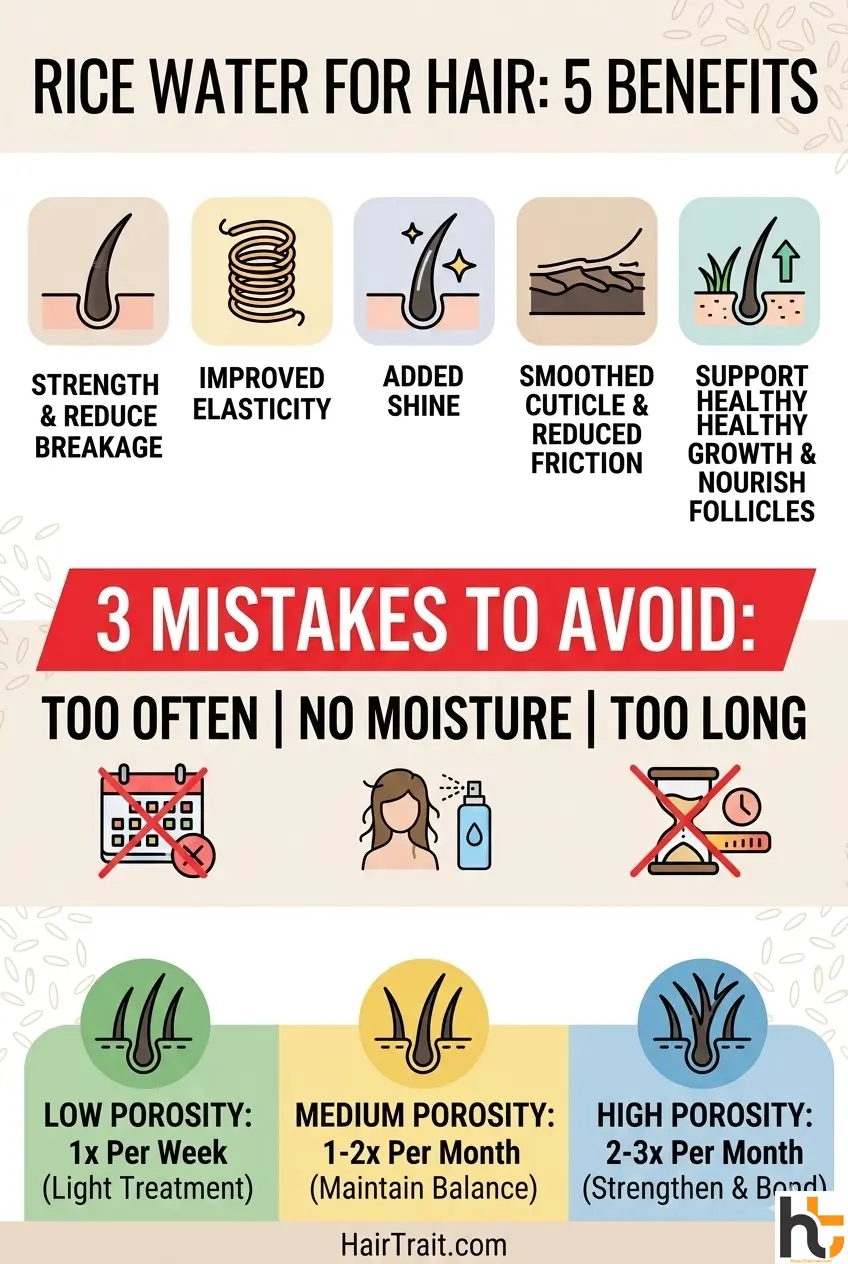
Quick Answer: Rice water for hair strengthens strands, adds shine, improves elasticity, reduces surface friction, and supports growth. Use fermented rice water 1-2 times per week for high porosity hair, every 2 weeks for medium porosity, monthly for low porosity. Always follow with deep conditioning to prevent protein overload.
What’s Actually In Rice Water (The Science)
When you soak or boil rice, the water absorbs several beneficial compounds from the grain. Research has identified the key active ingredients in rice water for hair:
- Inositol: A carbohydrate that penetrates damaged hair and repairs it from the inside. Studies show inositol remains inside the hair even after rinsing, providing ongoing protection [International Journal of Cosmetic Science].
- Amino acids: The building blocks of protein (keratin). Rice water contains 8 amino acids that help strengthen hair structure.
- Vitamins B and E: Support scalp health and hair growth.
- Minerals: Magnesium, manganese, selenium. All contribute to hair strength.
- Antioxidants: Protect against environmental damage.
Additionally, fermented rice water (more on this below) contains additional beneficial compounds created during fermentation that lower pH and improve outer layer health.
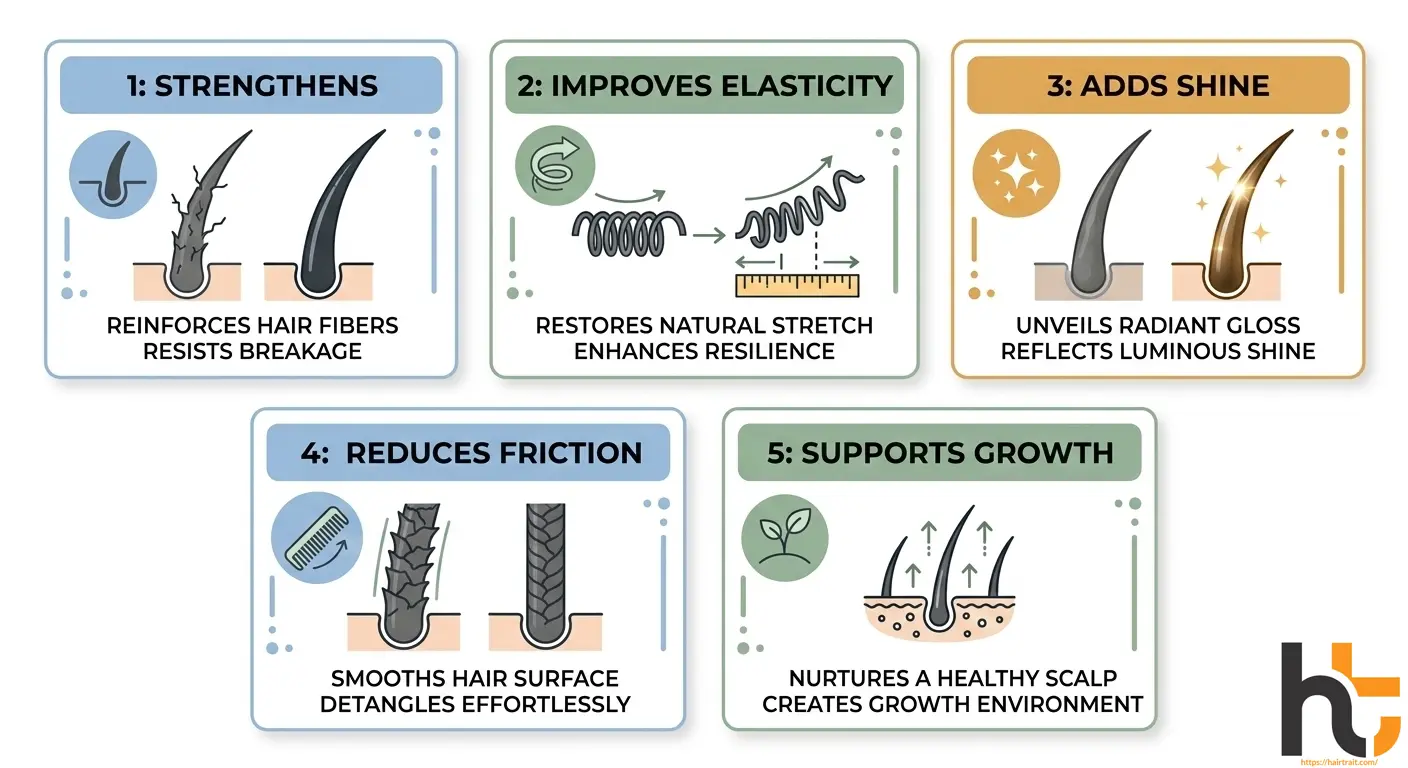
Benefit #1: Strengthens Hair and Reduces Breakage
The amino acids and inositol in rice water for hair penetrate the hair shaft and fill structural gaps. This is particularly beneficial for damaged or high porosity hair.
Research shows that inositol treatment significantly improves hair’s resistance to breakage [NCBI]. The improvement is measurable within 2-4 weeks of consistent use.
Best For
- High porosity hair with breakage
- Heat-damaged or chemically treated hair
- Fine hair that breaks easily
Benefit #2: Improves Elasticity
Healthy hair stretches and returns to its original shape. Damaged hair snaps. Rice water improves elasticity by providing the protein building blocks hair needs to maintain flexibility with strength.
How to Test
Before starting rice water treatments, do the stretch test from our protein vs moisture balance guide. Repeat after 4 weeks. You should notice improved stretch without snapping.
Benefit #3: Adds Shine and Smoothness
Rice water smooths the outer protective layer of hair. When these scales lie flat, hair reflects light better (shine) and feels smoother to touch.
This is why many people notice immediate shine after their first rice water rinse. It’s a surface effect that happens quickly, unlike the internal strengthening which takes longer.
Benefit #4: Reduces Surface Friction
Studies show rice water creates a protective film on the hair surface that reduces friction during combing and styling [Journal of Cosmetic Dermatology]. Less friction means less mechanical damage and breakage.
Noticeable Effects
- Easier detangling
- Less hair in comb after styling
- Reduced static and flyaways
Benefit #5: May Support Scalp Health and Growth
Rice water contains vitamins and minerals that nourish the scalp. While it won’t create hair growth where follicles are inactive, it can support optimal growth from active follicles.
Realistic Expectations
Rice water for hair is not a hair growth miracle. It optimizes the environment for growth. If you have genetic hair loss or inactive follicles, rice water won’t overcome that. If you have healthy follicles that are underperforming due to poor scalp health, it may help.
3 Preparation Methods: Which One to Use
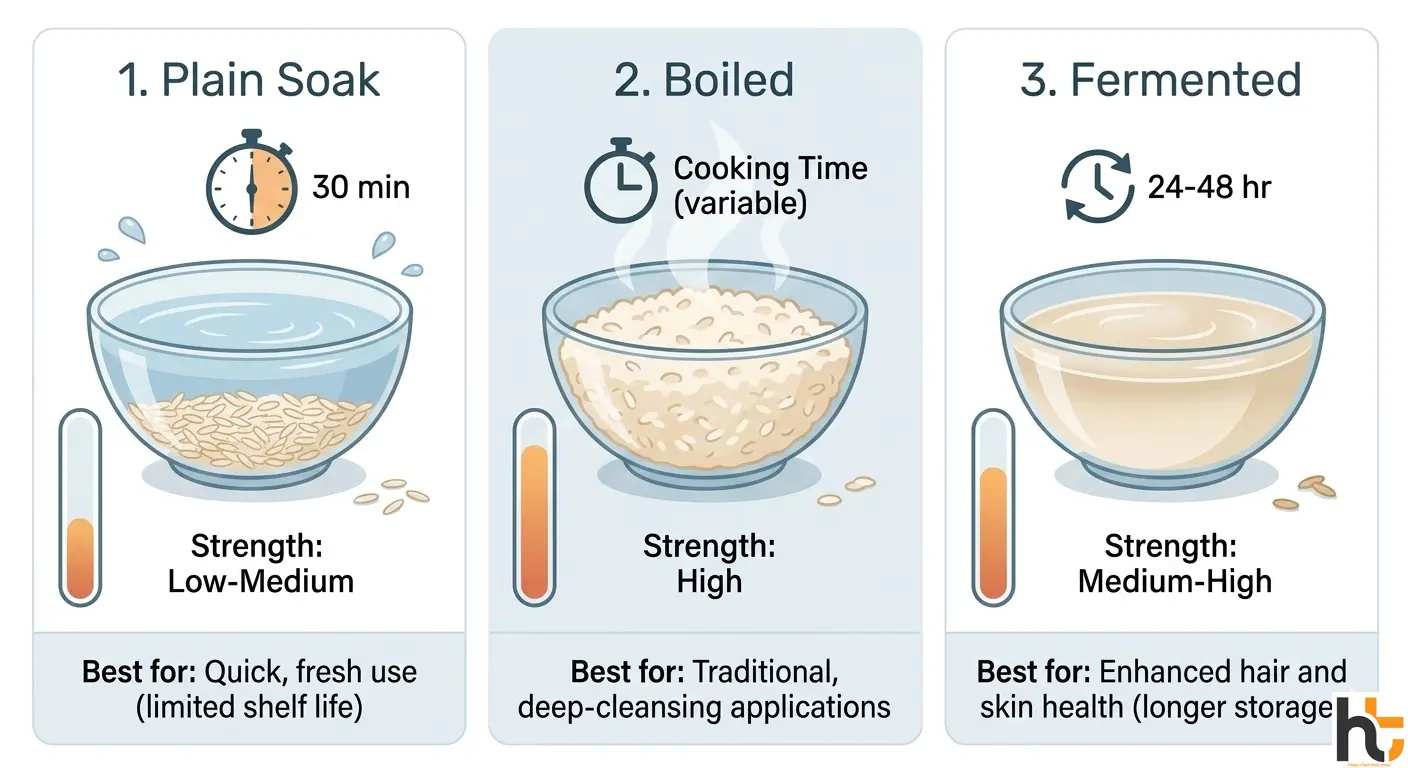
There are three ways to prepare rice water for hair. Each has different benefits and potency.
Method #1: Plain Soak (Gentlest)
How to make it:
- Rinse ½ cup uncooked rice to remove dirt and impurities
- Place rice in bowl with 2 cups water
- Let sit at room temperature for 30 minutes
- Strain out rice, keep the water
- Use immediately or refrigerate up to 5 days
Best for: Low porosity hair, first-time users, sensitive scalps
Method #2: Boiled (Strongest)
How to make it:
- Cook rice in extra water (use 3× more water than normal)
- Once rice is cooked, strain and keep the excess water
- Let cool completely
- Dilute with equal parts water (boiled rice water is very concentrated)
- Refrigerate up to 7 days
Best for: High porosity or severely damaged hair
Method #3: Fermented (Most Popular)
How to make it:
- Rinse ½ cup uncooked rice
- Place in bowl with 2 cups water
- Let sit at room temperature for 24-48 hours until it smells slightly sour
- Strain out rice
- Boil the fermented water for a few minutes to stop fermentation
- Let cool, then refrigerate up to 1 week
Benefits of fermentation: Lowers pH to match hair’s natural acidity (4.5-5.5). Creates additional antioxidants. Most effective for improving shine and smoothness.
Best for: Medium to high porosity hair, color-treated hair
Critical Note on Preparation
Always use organic rice if possible. Conventional rice may contain pesticide residue you don’t want in your hair treatment. White rice works best. Brown rice contains oils that can weigh hair down.
How to Use Rice Water for Hair (Step by Step)
Correct application matters. Here’s the method that maximizes benefits while avoiding protein overload:
The Complete Process
- Shampoo first: Always apply rice water to clean, freshly shampooed hair. It works best on clean hair without product buildup.
- Apply to damp hair: Squeeze out excess water. Pour rice water over hair, or use a spray bottle for better coverage.
- Massage into scalp and lengths: Focus on mid-lengths and ends where damage is worst. Massage scalp gently for circulation.
- Leave on 15-30 minutes: Cover with shower cap if desired. Do NOT leave on for hours. More time ≠ better results.
- Rinse thoroughly with cool water: Make sure all rice water is removed.
- CRITICAL: Deep condition immediately: Rice water is protein-heavy. You must follow with moisture to maintain balance. Use a protein-free deep conditioner.
Frequency by Hair Type
| Hair Porosity | Frequency | Preparation Method |
|---|---|---|
| Low porosity | Once monthly | Plain soak only (fermented too strong) |
| Medium porosity | Every 2 weeks | Fermented or plain soak |
| High porosity | 1-2 times per week | Fermented or boiled |
For complete product recommendations to pair with rice water, see our best hair products guide.
The 3 Mistakes That Ruin Rice Water Results
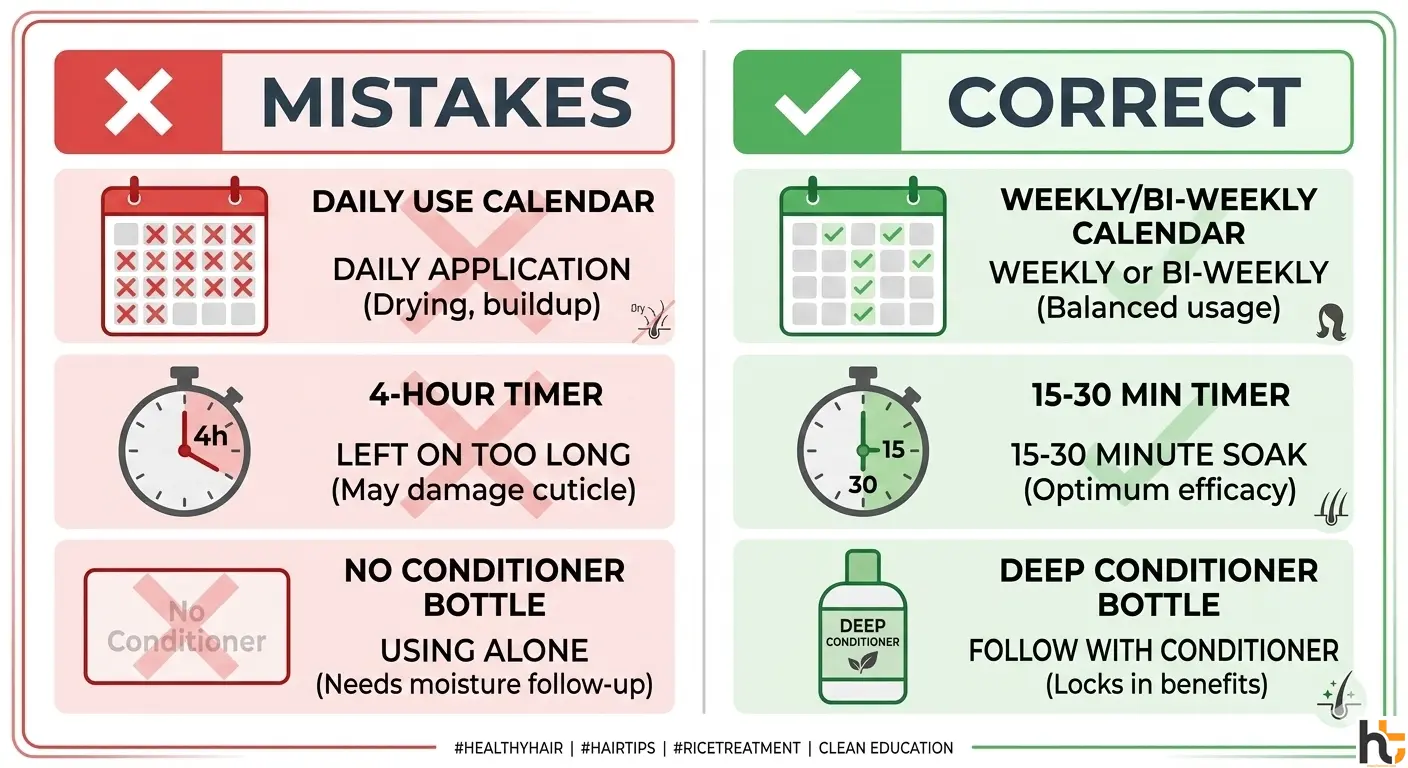
Mistake #1: Using It Too Often
This is the #1 reason people end up with protein overload from rice water for hair. More is not better. Rice water is protein treatment. Using it daily or multiple times per week on low-medium porosity hair causes stiffness, breakage, and dryness.
Signs of overuse: Hair feels stiff and straw-like, breaks easily, loses curl pattern, becomes dull.
Mistake #2: Not Following with Moisture
Rice water provides protein. Hair also needs moisture. If you don’t deep condition after rice water, you create protein-moisture imbalance.
The fix: ALWAYS follow rice water with protein-free deep conditioning. Every single time. No exceptions.
Mistake #3: Leaving It On Too Long
Some people leave rice water on for 2-4 hours, or even overnight, thinking longer = better. This oversaturates hair with protein.
15-30 minutes is optimal. Beyond that, you’re not gaining additional benefits. You’re risking overload.
What to Expect and When
Week 1-2: Immediate shine and smoothness after first use. Hair feels slightly stronger. This is the surface effect.
Week 3-4: Less breakage during styling. Improved elasticity on the stretch test. Hair detangles more easily.
Week 6-8: Overall texture improvement. Reduced split ends (new ones forming less frequently). Hair holds styles better.
What won’t improve: Existing split ends (those must be cut). Genetic hair loss. Scalp conditions like seborrheic dermatitis (rice water doesn’t treat medical conditions).
When NOT to Use Rice Water for Hair
Skip rice water if:
- Your hair is already protein overloaded (stiff, breaks easily, lacks elasticity)
- You have very low porosity hair and haven’t done a patch test first
- You’re dealing with hard water and haven’t addressed that first (see our hard water hair care routine)
- Your scalp is irritated or inflamed
- You’re not willing to follow with deep conditioning every time
Final Thoughts
Rice water for hair is a legitimate treatment backed by both historical use and modern science. The inositol and amino acids it contains provide real strengthening and shine benefits. But like any protein treatment, it must be used correctly.
Choose the right preparation method for your hair type. Use it at the appropriate frequency. Always follow with moisture. Avoid the three mistakes. Do these things, and rice water becomes a valuable addition to your routine.
Skip these rules, and you’ll end up with protein overload wondering why everyone else sees great results while your hair gets worse.