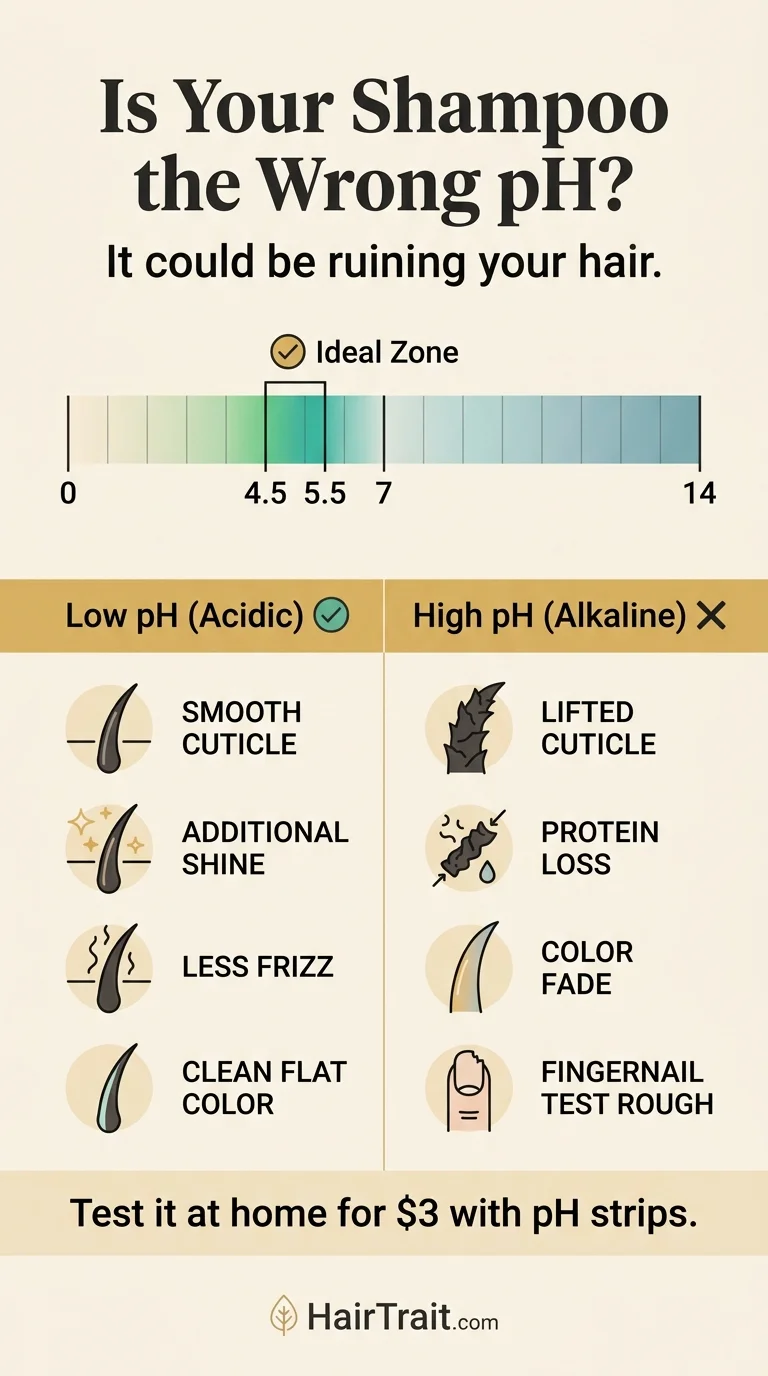
Most people pick shampoo based on fragrance, brand, or whether it says “sulfate-free.” Almost nobody checks the shampoo pH — yet it may be the single most impactful property of the formula. A well-formulated shampoo at the wrong pH can still damage your hair, while a basic formula at the correct pH will outperform it.
Understanding shampoo pH gives you a tool to evaluate any product in seconds, regardless of its marketing claims. This article explains the science behind pH and hair, shows you the ideal range to look for, and teaches you how to test any shampoo at home for less than $5.
Quick Answer: Your hair and scalp have a natural pH of 4.5–5.5 (mildly acidic). Shampoos within this range keep the cuticle flat, smooth, and strong. Shampoos with a pH above 5.5 — especially above 7.0 — lift the cuticle, increase friction, cause frizz, and accelerate protein loss and color fading. Most salon and premium shampoos are pH-balanced. Many budget shampoos and “natural” bar soaps are not. A $3 pack of pH test strips can tell you more about your shampoo’s quality than any marketing claim on the label.
Table of Contents
Quick Refresher: What Is pH?
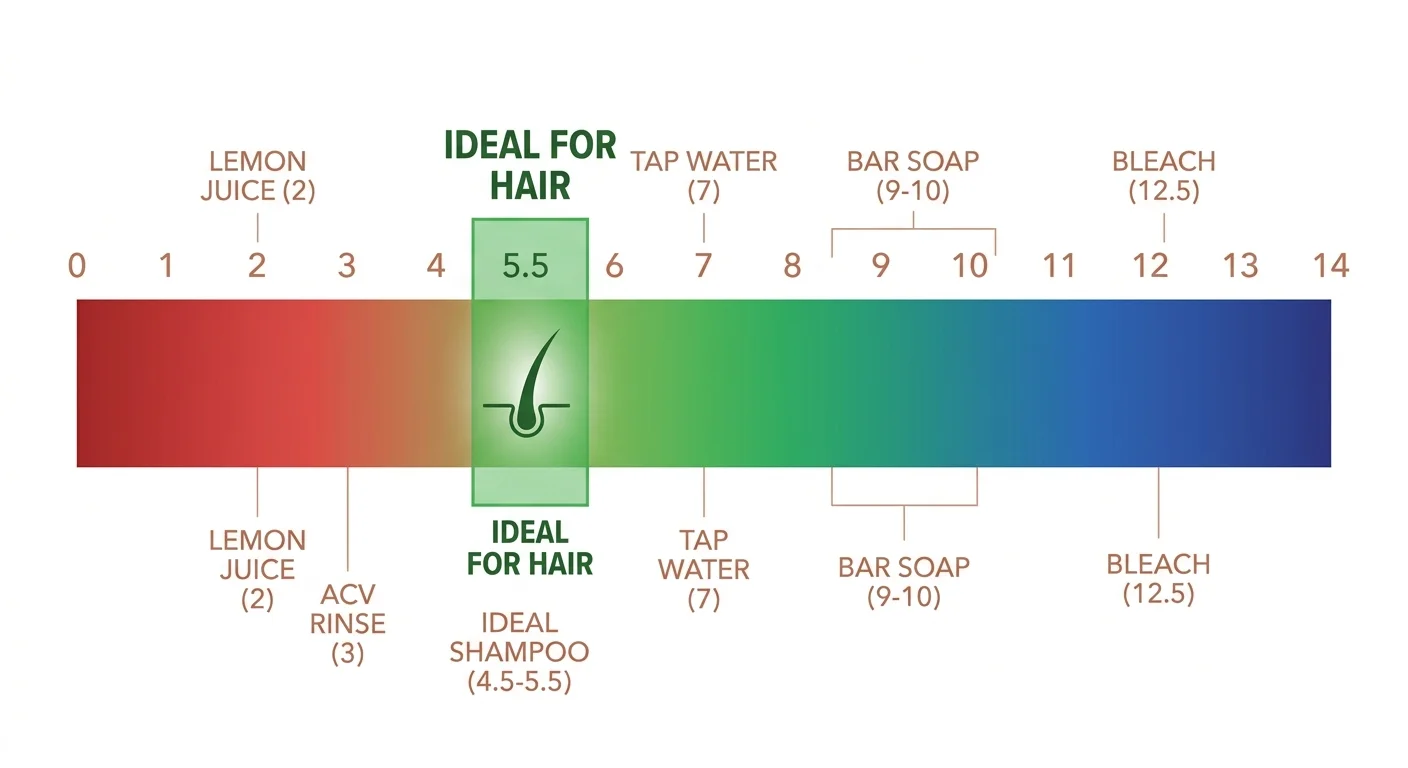
pH is a scale from 0 to 14 that measures how acidic or alkaline (basic) a substance is. The scale’s midpoint — 7.0 — is neutral (pure water). Numbers below 7 are acidic, and numbers above 7 are alkaline.
| pH Value | Classification | Examples |
|---|---|---|
| 1–3 | Strongly acidic | Lemon juice (2.0), vinegar (2.5) |
| 4–5.5 | Mildly acidic (ideal for hair) | Healthy hair/scalp (4.5–5.5), good shampoos |
| 6–7 | Near neutral | Tap water (6.5–8.5), milk (6.7) |
| 7.5–9 | Mildly alkaline | Baking soda (8.3), most bar soaps (9–10) |
| 10+ | Strongly alkaline | Bleach (12.5), relaxers (13+) |
Each whole number on the pH scale represents a 10× difference in acidity or alkalinity. A shampoo with pH 7 is 100 times more alkaline than one at pH 5. That’s not a small difference — it has measurable effects on your hair’s cuticle, protein structure, and moisture levels.
How Shampoo pH Affects Your Hair
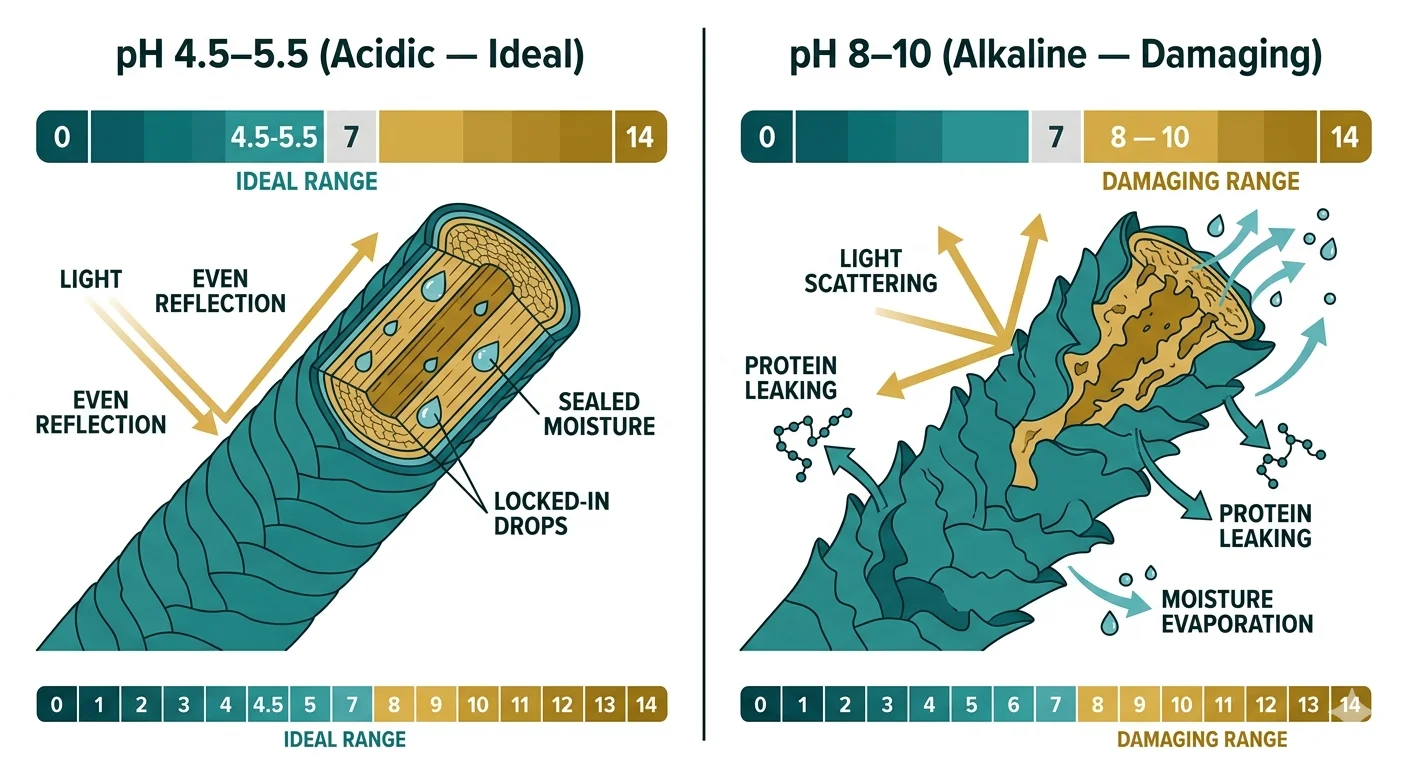
Your hair’s cuticle responds directly to pH. Research published in the International Journal of Trichology measured the effects of different pH levels on hair and found clear, dose-dependent damage from alkaline solutions. Here’s what happens at each end of the spectrum:
Acidic pH (4.5–5.5) — the sweet spot
At your hair’s natural pH, the cuticle scales lie flat against the shaft like smooth shingles on a roof. This creates a surface that reflects light evenly (shine), resists friction (less tangling and breakage), and locks in moisture and protein. A properly pH-balanced shampoo cleans your hair without disrupting this protective layer.
Alkaline pH (above 5.5, especially above 7)
Alkaline solutions cause the cuticle to swell and lift open. The higher the pH, the more severely the cuticle separates. With the cuticle open:
- Protein loss increases. Keratin proteins leach out through the open cuticle, weakening the hair shaft with every wash.
- Moisture escapes. The open cuticle can’t seal in hydration, leaving hair dry and porous.
- Friction skyrockets. Raised cuticle edges catch on each other, causing tangles, matting, and breakage — especially when wet.
- Frizz worsens. Lifted cuticles allow environmental humidity to penetrate unevenly, swelling the cortex and creating frizz.
- Color fades faster. Dye molecules escape through the open cuticle, dramatically shortening the life of semi-permanent and permanent color. See our product recommendations for color-safe options.
What’s the Ideal Shampoo pH?
Based on the research, the ideal shampoo pH sits between 4.5 and 5.5 — matching your hair and scalp’s natural acid mantle. Here’s how different product categories typically compare:
| Product Type | Typical pH Range | Hair Impact |
|---|---|---|
| Professional/salon shampoos | 4.5–5.5 | Optimal — cuticle stays smooth, minimal protein loss |
| Most drugstore shampoos | 5.0–7.0 | Variable — lower end is fine, higher end starts causing cuticle lifting |
| Shampoo bars / natural soap-based | 8.0–10.0 | Problematic — significantly raises cuticle, increases damage with regular use |
| Baking soda “washes” | 8.0–9.0 | Damaging — strips natural oils and opens cuticle aggressively |
| ACV rinses | 2.5–3.5 | Helpful as a finishing rinse — closes cuticle and adds shine (don’t use daily) |
Notice the shampoo bar entry. Many eco-friendly and “natural” shampoo bars are soap-based (saponified oils) with pH values between 8 and 10. They feel gentle, but their alkaline pH opens the cuticle with every wash. Syndet (synthetic detergent) bars, however, can be formulated at acidic pH and are a better alternative for those wanting solid shampoo. For broader guidance on product selection, check our hair care basics page.
How to Test Your Shampoo’s pH at Home
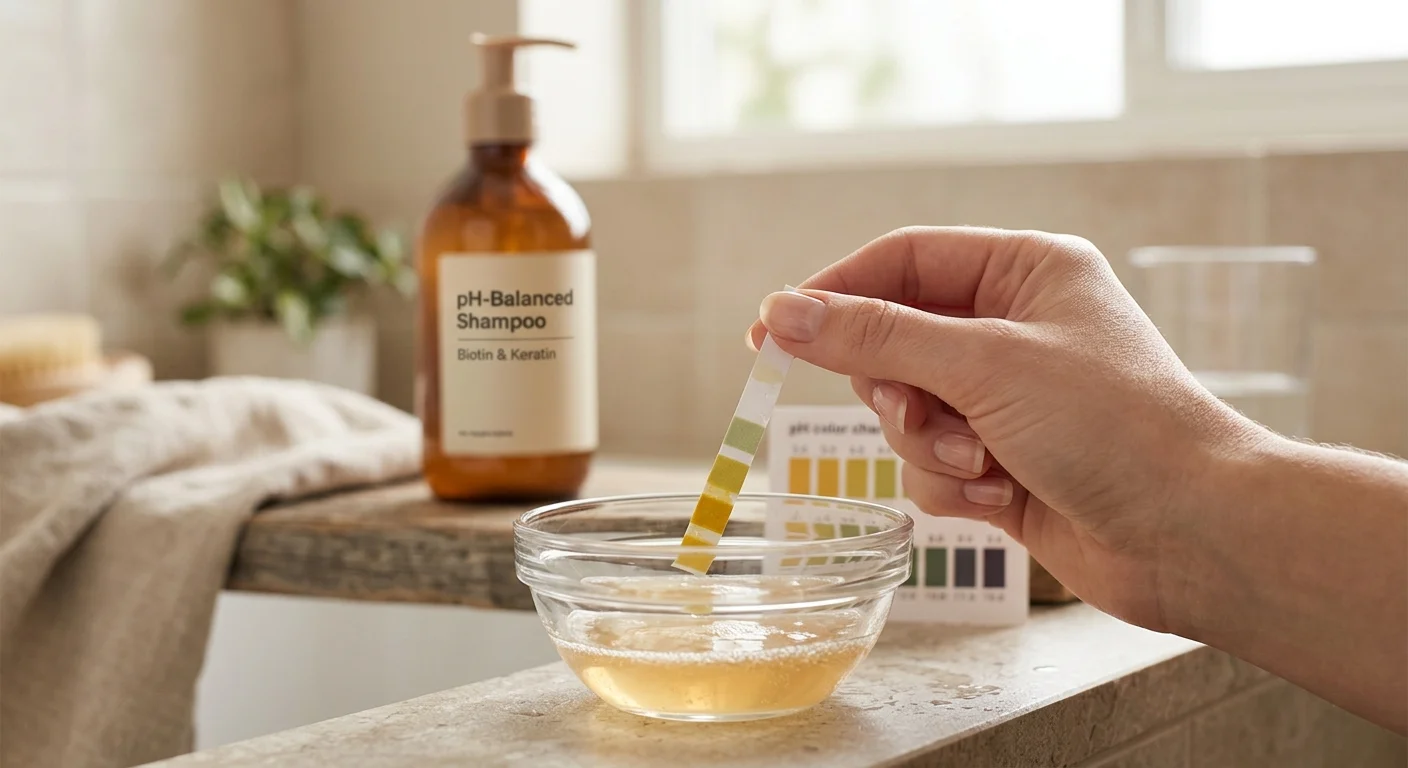
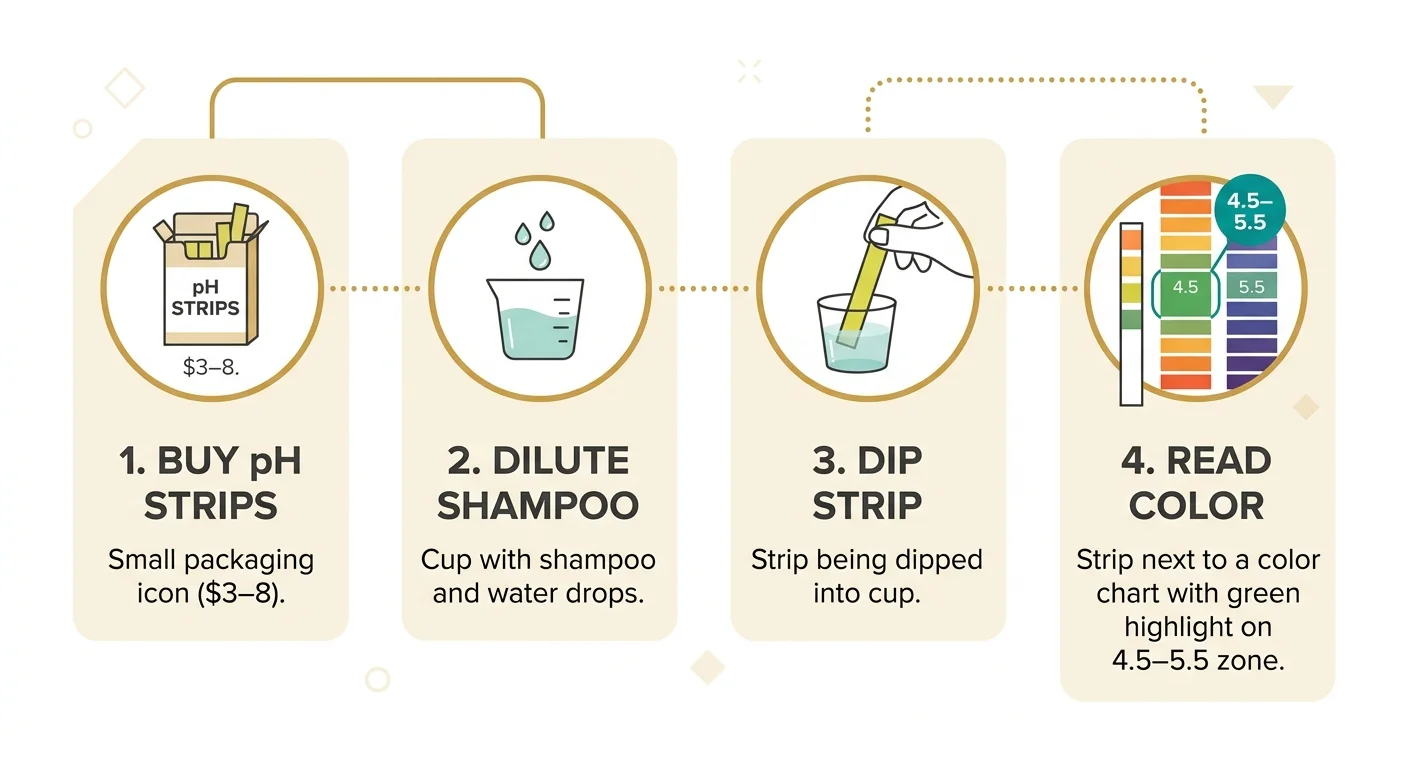
Testing shampoo pH takes 30 seconds and costs almost nothing. Here’s how:
- Buy pH test strips. Universal pH strips with a range of 1–14 are available online or at pharmacies for $3–8 per pack of 100+ strips. Look for strips that measure in 0.5 increments for better accuracy.
- Dilute slightly. Squeeze a small amount of shampoo into a cup and add a few drops of distilled water (tap water has its own pH that can skew results). Mix briefly.
- Dip the strip. Dip a pH strip into the shampoo solution for 1–2 seconds.
- Read the color. Compare the strip’s color change to the chart on the packaging. Your target range is 4.5–5.5.
If your shampoo tests above 6.0, it’s worth switching to a formula in the ideal range — especially if you have color-treated, curly, or damage-prone hair. Test your conditioner too; it should be in the 3.5–5.0 range to help close the cuticle after washing. Understanding how your hair type responds to different formulas is covered in our complete hair type guide.
Common Mistakes About Shampoo pH
- Assuming “pH-balanced” on the label means 4.5–5.5. “pH-balanced” is an unregulated marketing term. Some products use it to mean “not extremely alkaline” — which could still be pH 6.5 or 7.0. The only way to know is to test.
- Using baking soda as shampoo. With a pH of 8–9, baking soda aggressively lifts the cuticle, strips natural oils, and causes cumulative damage. It may feel like it “clarifies,” but it does so at a steep structural cost.
- Using ACV rinses undiluted or too frequently. Apple cider vinegar at full strength (pH ~2.5) is too acidic for regular use and can over-constrict the cuticle, making hair feel stiff. Dilute to 1–2 tablespoons per cup of water and use once a week maximum.
- Ignoring pH because of other “good” ingredients. A shampoo can contain excellent moisturizers, proteins, and plant extracts — but if the overall pH is 7.5, it’s still lifting your cuticle every wash. pH is the foundation that determines whether other ingredients can even do their job effectively.
- Thinking pH only matters for damaged hair. Even virgin, healthy hair loses more protein and moisture at higher pH levels. The damage is just slower and less obvious initially. Over months of daily washing with an alkaline shampoo, the cumulative effect becomes visible. Protecting your hair proactively with proper tools and products prevents this slow degradation.
What to Expect When You Switch to a pH-Balanced Shampoo
| Timeframe | What You’ll Notice |
|---|---|
| First wash | Hair may feel different — less “squeaky clean” but smoother and more slippery when wet. This is the cuticle lying flat instead of gripping. |
| Week 1–2 | Improved shine and reduced tangling during detangling. Conditioner absorbs more evenly. |
| Week 3–4 | Noticeable reduction in frizz, especially in humid conditions. Color-treated hair retains vibrancy longer between appointments. |
| Month 2+ | Reduced breakage, stronger elasticity, and less split-end development. Your hair feels consistently better because you’ve stopped damaging it at the most fundamental level — every single wash. |
Final Thoughts: pH Is the Foundation
Shampoo pH is the most overlooked and undervalued property in hair care. You can buy the most expensive shampoo on the market with the most impressive ingredient list, but if its pH is 7.0 or above, it’s lifting your cuticle and causing damage with every wash. Conversely, a simple, affordable shampoo at pH 4.5–5.5 protects your hair’s structure from the start.
Spend $5 on pH test strips and test every shampoo in your bathroom. You may be surprised — and the information will change how you evaluate products forever. Your shampoo pH is the foundation. Everything else you put on your hair works better when that foundation is right.
Once you know your shampoo pH, pair it with products and routines suited to your hair’s needs — check our seasonal hair care guide for how to adjust throughout the year.