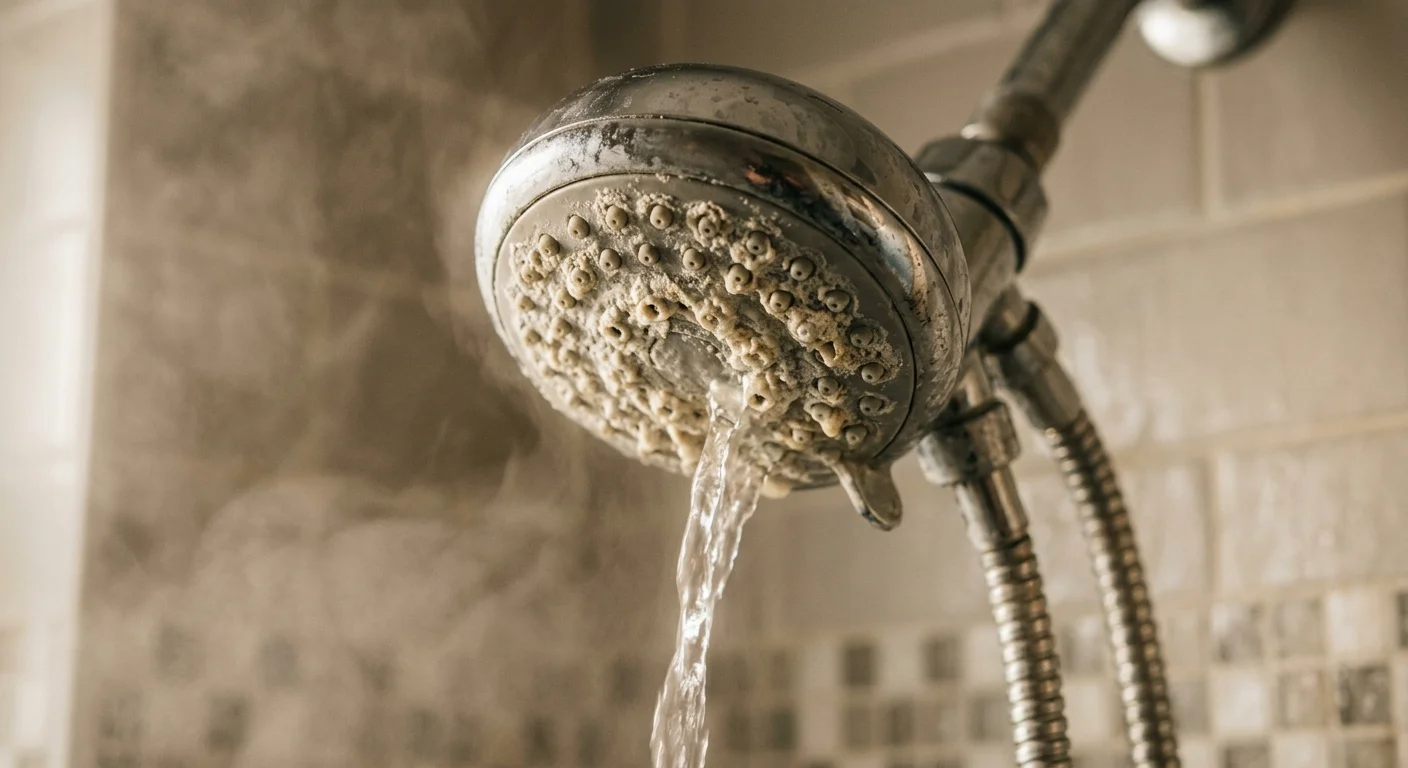
If your hair feels like straw no matter what products you use, hard water hair damage might be the invisible culprit. An estimated 85% of households in the United States have hard water, and the problem is equally common across Europe, the Middle East, and South Asia. Yet most people never consider their water quality when troubleshooting hair issues.
Hard water hair damage is frustrating because it mimics other problems — dryness, product buildup, protein overload — leading people to change shampoos, conditioners, and routines endlessly without fixing the actual cause. This guide explains exactly what hard water does to your hair at a chemical level and gives you a practical plan to reverse and prevent it.
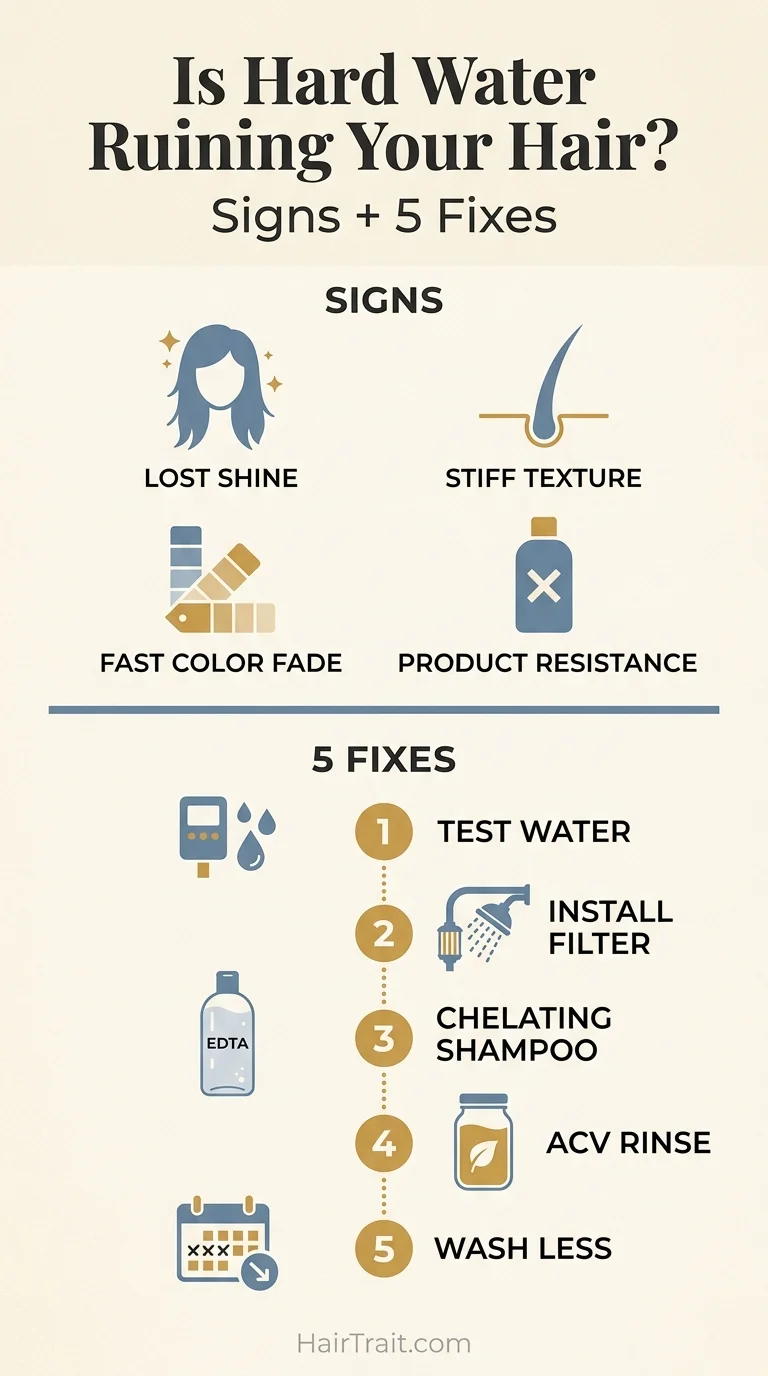
Quick Answer: Hard water contains high concentrations of dissolved calcium and magnesium that deposit onto your hair shaft with every wash. Over time, this mineral film makes hair feel stiff, look dull, causes tangles, accelerates color fading, and blocks moisture from conditioners. The fix requires a combination of chelating shampoo (every 1–2 weeks), a shower filter (for prevention), and potentially an ACV rinse for ongoing maintenance. Products alone won’t solve it — you need to address the water itself.
Table of Contents
What Makes Water “Hard”?
Hard water is water that contains high levels of dissolved minerals — primarily calcium (Ca²⁺) and magnesium (Mg²⁺) ions. These minerals are picked up as groundwater passes through limestone, chalk, and gypsum deposits underground. The hardness of your water depends entirely on your local geology and water source.
| Hardness Level | Concentration (mg/L or ppm) | Impact on Hair |
|---|---|---|
| Soft | 0–60 ppm | Minimal — hair rinses clean and responds well to products |
| Moderately hard | 61–120 ppm | Slight buildup over weeks — occasional chelating wash helps |
| Hard | 121–180 ppm | Noticeable film, dullness, and increased tangling within weeks |
| Very hard | 181+ ppm | Significant damage — rapid color fading, brittleness, and product resistance |
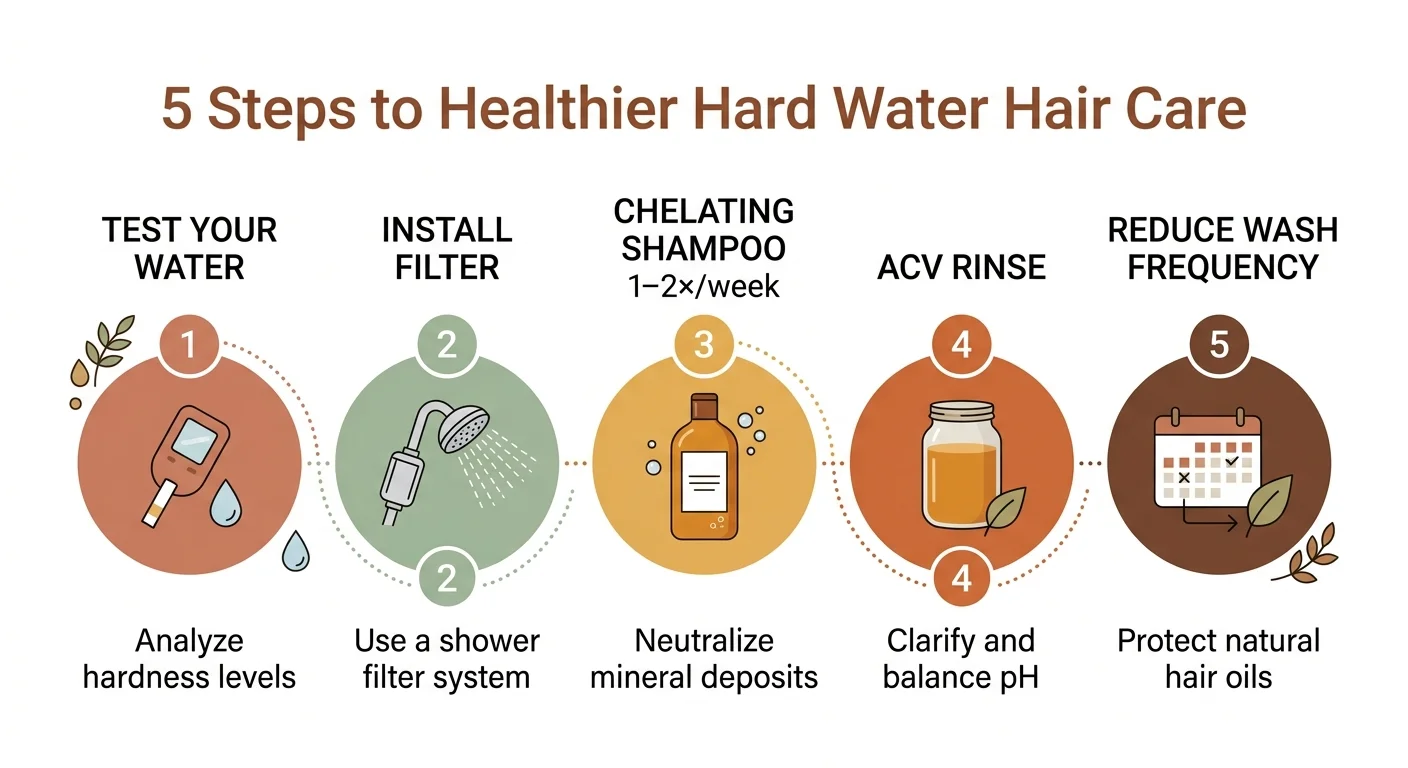
You can test your water hardness with an inexpensive test strip kit (available at hardware stores or online for $5–10) or check your local water utility’s annual quality report, which is publicly available in most countries.
How Hard Water Damages Your Hair
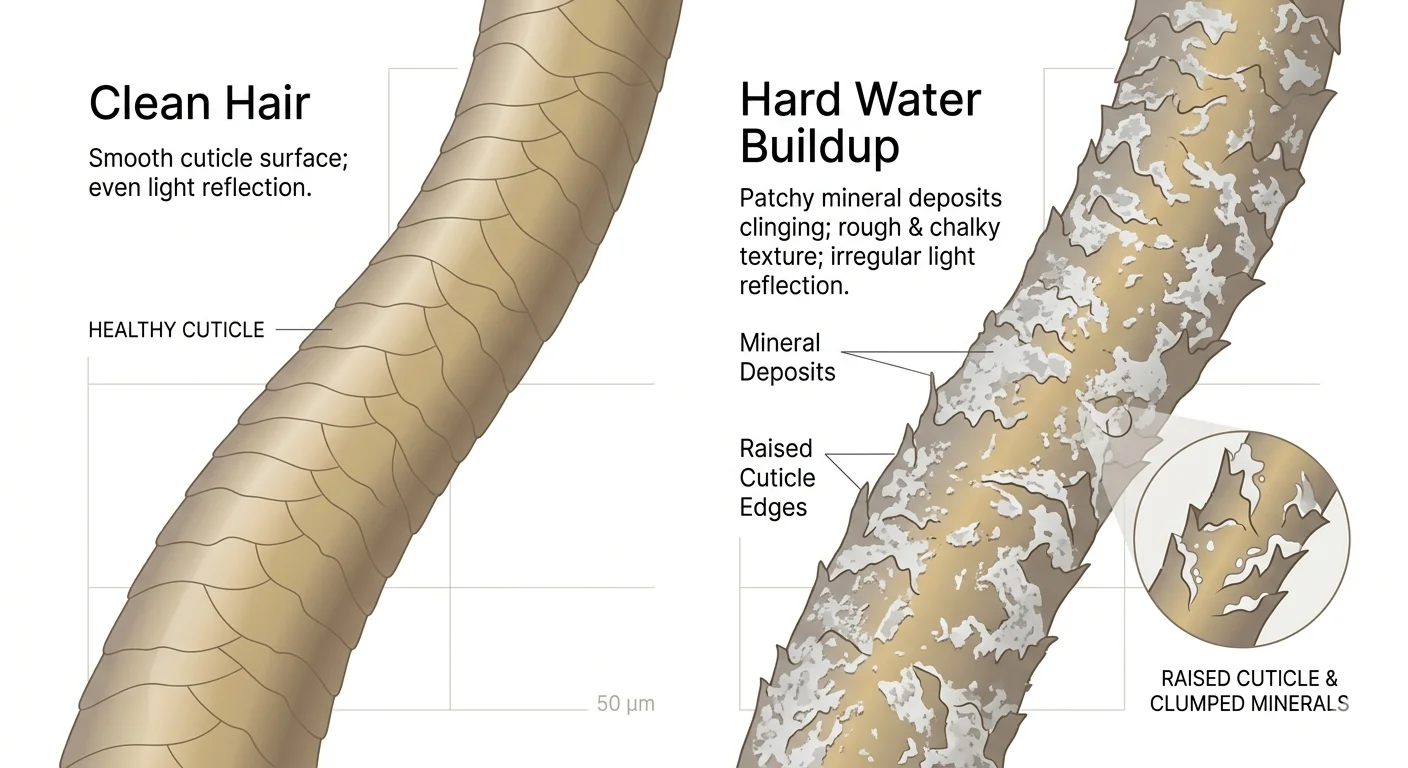
The damage mechanism is straightforward but cumulative. When you wash your hair with hard water, calcium and magnesium ions bond to the negatively charged surface of your hair shaft. Each wash adds another thin layer of mineral deposits. Research published in the International Journal of Trichology confirmed that hair treated with hard water showed increased roughness, reduced elasticity, and more difficulty in detangling compared to soft-water-treated hair.
Here’s what this mineral film actually does:
- Blocks moisture absorption. The mineral layer acts as a barrier that prevents water and conditioning ingredients from reaching the hair cortex. Your conditioner sits on top of the minerals instead of penetrating your hair.
- Creates friction. Mineral deposits roughen the cuticle surface, causing strands to catch on each other. This leads to more tangles, more breakage during brushing, and more split ends.
- Dulls shine. Healthy hair reflects light from a smooth cuticle. Mineral-coated hair scatters light unevenly, creating a flat, chalky appearance.
- Accelerates color fading. Minerals oxidize hair dye molecules and lift the cuticle, allowing color to escape faster. Some colorists estimate hard water can cut color life by 30–50%.
- Makes hair feel stiff and “waxy.” The mineral residue gives hair an unusual texture — not quite greasy, not quite dry, but coated and unresponsive to products. This is the signature feel of hard water hair damage.
Signs Your Hair Has Hard Water Damage
Hard water damage builds gradually, so most people don’t connect the dots immediately. Look for these specific signs, especially if multiple apply to you:
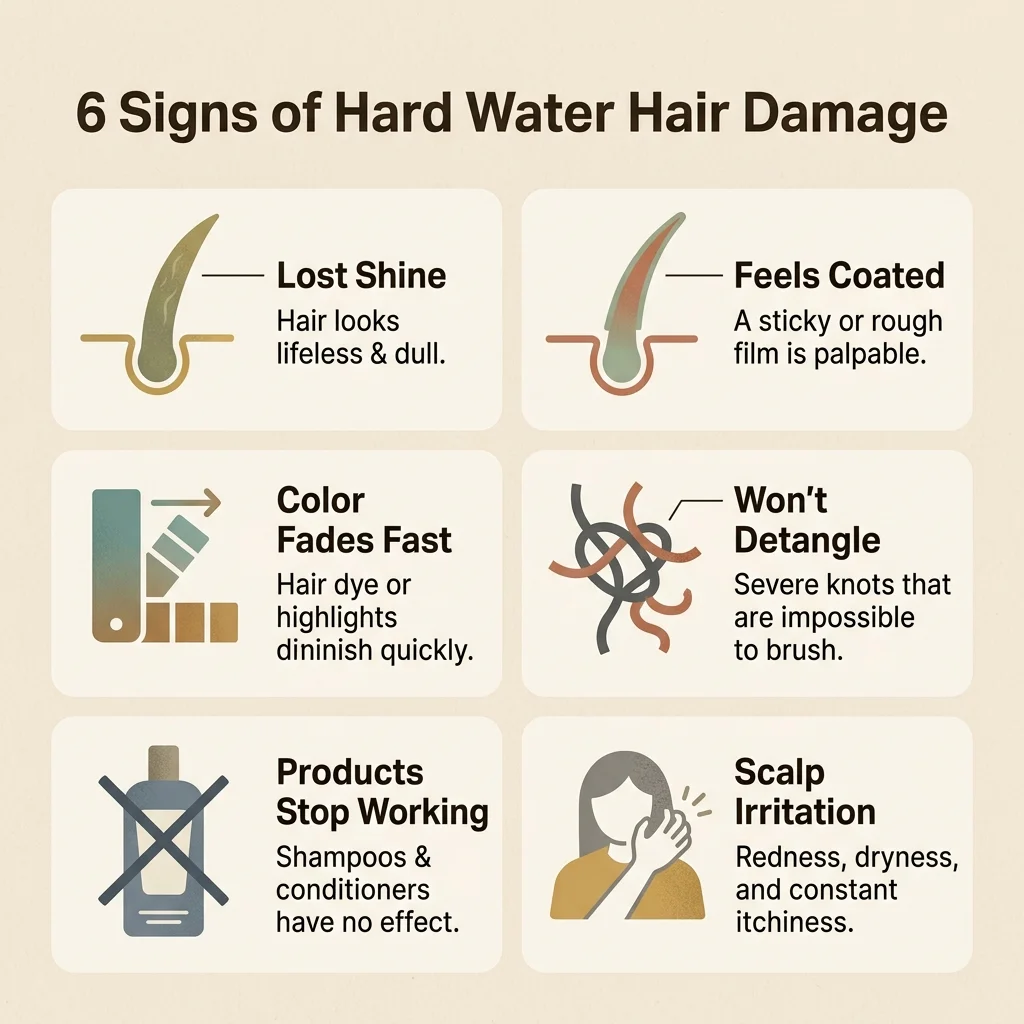
- Hair feels stiff, crunchy, or “coated” even right after conditioning
- Products seem to stop working — conditioner doesn’t soften, leave-ins don’t absorb
- Hair color fades unusually fast (within 1–2 weeks of coloring)
- Blonde hair develops a brassy, yellowish, or greenish tint
- Hair is dull and flat regardless of products or styling technique
- Increased tangles and breakage during brushing, especially when wet
- Scalp feels itchy or flaky despite using gentle, hydrating shampoo
- Moving to a new city coincided with your hair problems starting
That last point is a dead giveaway. If your hair was fine before you moved and deteriorated within weeks of arriving, your new water supply is almost certainly the issue. For more on identifying your hair’s condition, check our complete hair type guide.
How to Fix and Prevent Hard Water Hair Damage
1. Use a chelating shampoo (every 1–2 weeks)
Chelating shampoos contain ingredients like EDTA (ethylenediaminetetraacetic acid) or citric acid that chemically bind to mineral deposits and pull them off the hair shaft. This is different from a regular clarifying shampoo — clarifying removes product buildup, while chelating targets minerals specifically. Use a chelating shampoo once every 1–2 weeks if you have hard water. More often can be drying. Always follow with a deep conditioner.
2. Install a shower head filter
A shower filter with KDF (kinetic degradation fluxion) media or activated carbon can reduce some mineral content before the water hits your hair. Realistic expectation: most shower filters reduce chlorine effectively but have limited impact on calcium and magnesium. They help, but they won’t convert hard water to soft. For heavy hard water (180+ ppm), a whole-house water softener is the most complete solution. Browse our best hair tools page for filter recommendations.
3. Try an ACV (apple cider vinegar) rinse
Mix 1–2 tablespoons of apple cider vinegar in 1 cup (250ml) of distilled or filtered water. Apply to hair after shampooing, leave for 2–3 minutes, then rinse. The mild acidity (pH ~3–4) helps dissolve mineral deposits and closes the cuticle. This is a budget-friendly weekly maintenance step, not a replacement for chelating shampoo.
4. Rinse with distilled or filtered water
For a final rinse after washing, some people use a gallon jug of distilled water to flush hard water residue. This sounds extreme but makes a noticeable difference for very hard water areas (200+ ppm). It’s especially useful for preserving hair color.
5. Adjust your wash routine
The more you expose your hair to hard water, the more minerals accumulate. Washing every 2–3 days instead of daily reduces exposure. On non-wash days, use dry shampoo to manage oiliness. This alone won’t solve the problem, but it slows the buildup between chelating washes. For routine guidance, see our hair care basics guide.
Common Mistakes When Dealing With Hard Water
- Using a regular clarifying shampoo and assuming it removes minerals. Most clarifying shampoos use sulfates to strip product buildup — they’re not formulated to chelate mineral deposits. Look specifically for “chelating” on the label or check for EDTA, phytic acid, or citric acid in the ingredients.
- Over-washing to compensate. If your hair feels coated, washing more often with hard water just adds more mineral layers faster. Wash less frequently and use a chelating treatment when you do.
- Blaming your products when water is the problem. Many people cycle through dozens of shampoos and conditioners convinced they haven’t found the right one. If you have hard water above 120 ppm and haven’t addressed it, no product switch will solve the issue. Test your water first.
- Expecting a shower filter to do everything. Shower head filters are helpful for chlorine and some particulates, but most cannot meaningfully reduce calcium and magnesium hardness. If your water is very hard, a filter is one piece of the solution — not the whole fix.
- Skipping deep conditioning after chelating. Chelating shampoos are stripping by nature. If you don’t follow with a deep conditioner or moisture mask, your hair will feel dry and rough — and you’ll blame the chelating shampoo instead of the missing follow-up step.
What to Expect After Treating Hard Water Damage
| Timeframe | What You’ll Notice |
|---|---|
| After first chelating wash | Immediate difference in texture — hair feels lighter, softer, and more “slippery” in a good way. Color may look brighter. This is often a dramatic improvement. |
| Week 2–3 | Conditioners and leave-ins start absorbing properly again. Tangles decrease noticeably. Shine returns. |
| Month 1–2 | With consistent chelating + prevention (filter, reduced wash frequency), hair regains its pre-damage feel. Color lasts longer between appointments. |
| Ongoing | Hard water damage is managed, not cured — unless you install a water softener. Maintenance chelating washes every 1–2 weeks are a permanent part of your routine. |
The good news: hard water hair damage is one of the most reversible hair problems. Unlike chemical damage that breaks internal bonds, mineral deposits sit on the surface and can be removed. Once you start chelating consistently, the improvement is often visible after a single wash. For seasonal adjustments to your repair plan, consult our seasonal hair care guide.
Final Thoughts: Taking Hard Water Seriously
Hard water hair damage is one of the most underdiagnosed hair problems because people don’t think to test their water. If you’ve tried every shampoo, conditioner, mask, and oil on the market and your hair still feels dull, stiff, and uncooperative, test your water hardness before spending another dollar on products.
The solution is practical and affordable: a chelating shampoo every 1–2 weeks, a shower filter for chlorine reduction, an occasional ACV rinse, and reduced wash frequency. Together, these steps prevent new mineral buildup while removing what’s already there. Your products will finally work the way they’re supposed to, and your hair will feel like yours again.
If you’ve recently moved and your hair changed dramatically, hard water hair damage is the most likely explanation. Address the water first — everything else in your hair care routine depends on it.