

Choosing the best hair products for your hair should be straightforward. But the sheer volume of options, conflicting recommendations, and marketing claims make it one of the most confusing areas of hair care.
The truth is that no product is universally “the best.” The best hair products are the ones formulated for your specific curl pattern and porosity level. A deeply moisturizing shea butter cream that transforms Type 4 coily hair will sit like wax on Type 2 wavy hair. The same product — opposite results.
This guide cuts through the noise. Rather than recommending specific brands that come and go, it teaches you exactly which best hair products to look for in each category. What ingredients to prioritize for your type. And which common ingredients to actively avoid.
Before diving in, make sure you know your hair type and porosity. Our complete hair type guide walks through both systems in detail. Everything in this page builds on that foundation.
Quick Answer: The best hair products are determined by your porosity first, curl pattern second. Every recommendation in this guide is organized by those two factors.
Table of Contents
How to Read a Hair Product Ingredient List
Before recommending the best hair products by category, you need one skill: reading an ingredient list. Ingredients are listed in order of concentration. The first five ingredients make up the majority of what you’re actually putting on your hair.
Studies show the first five to seven ingredients in a hair product formula represent roughly 80–90% of its total composition [Journal of Cosmetic Dermatology]. Everything after that exists in trace amounts.
This means: if shea butter is ingredient number one in your conditioner and you have low porosity hair, that product will coat your outer layer rather than penetrate it. Regardless of what every other ingredient on the label is. The order matters as much as the ingredient itself.
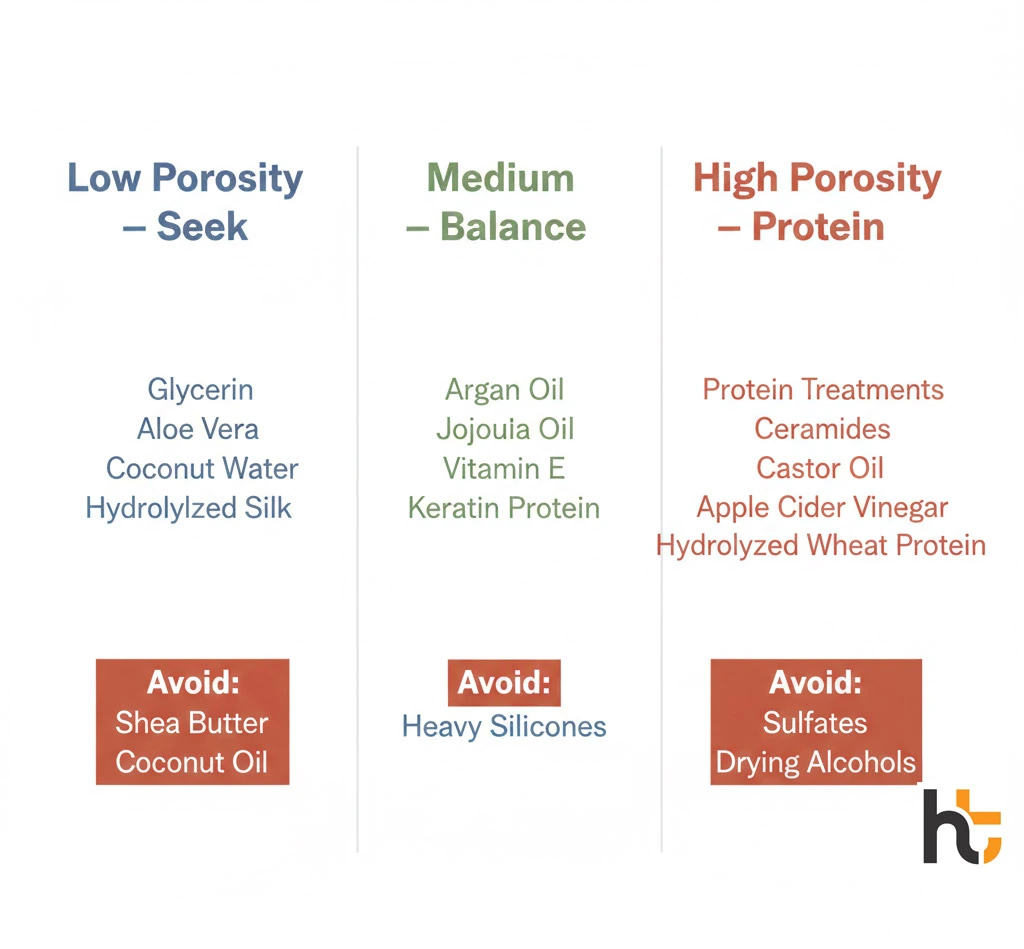
Ingredients to Seek by Porosity
- Low porosity: Glycerin, aloe vera juice, panthenol, honey, sorbitol — moisture-grabbers that are small enough to penetrate sealed outer layers. Avoid proteins and heavy butters in the top five ingredients.
- Medium porosity: Balanced formulas work well. Look for a mix of moisture-grabbers and oils. Light proteins (hydrolyzed silk, oat protein) monthly are beneficial.
- High porosity: Hydrolyzed proteins (keratin, wheat, rice), heavier butters and oils (shea, mango butter), and film-forming agents that temporarily seal lifted outer layers.
The 5 Categories of Best Hair Products and What Each Does
Every effective hair care routine — regardless of type — is built from the same five product categories. The formulas differ by hair type. The categories do not.
Category 1 — Shampoo (Clarifying and Sulfate-Free)
You need two types: a sulfate-free shampoo for regular wash days, and a clarifying shampoo for monthly reset. Experts say harsh cleansers strip the scalp’s natural oil barrier [AAD.org]. This leads to compensatory oil production and chronic dryness. That’s why daily shampooing with sulfate-heavy formulas is counterproductive for most hair types.
- Low porosity: Clarify more frequently — every 2–3 weeks — because buildup sits on sealed outer layers and blocks everything else. Look for a chelating shampoo if you have hard water.
- Medium porosity: Standard sulfate-free shampoo works well. Clarify monthly.
- High porosity: Use the gentlest sulfate-free option available. Over-clarifying further strips already-damaged layers.
What to look for on the label: Sodium lauroyl methyl isethionate, cocamidopropyl betaine, or disodium laureth sulfosuccinate. These are mild cleansers that clean without stripping. For chelating shampoos, look for EDTA or phytic acid to remove hard water mineral deposits.
Category 2 — Deep Conditioner
The most important product in any routine. A deep conditioner restores moisture to the middle layer of your hair and addresses specific porosity needs. Applied with heat, it is the single highest-impact treatment you can give your hair on wash day.
- Low porosity: Protein-free, moisture-led formulas. Heat is non-negotiable. Without it, low porosity hair absorbs very little. See our detailed guide on the best deep conditioners for low porosity hair for specific recommendations.
- Medium porosity: Balanced moisture-protein formula. Alternate between a moisture-focused and a light protein treatment monthly.
- High porosity: Protein-rich formulas every two to three weeks. Look for hydrolyzed keratin or hydrolyzed wheat protein in the first five ingredients.
Category 3 — Leave-In Conditioner
Applied to soaking-wet hair immediately after rinsing. A leave-in creates a moisture base layer that everything else locks in. Without a leave-in, hair begins losing moisture the moment you step out of the shower.
- Fine or low porosity hair: Spray leave-ins and water-based formulas. Avoid anything with a thick, creamy consistency — it will weigh your hair flat.
- Medium and thick hair: Cream leave-ins provide more slip and detangling support.
- High porosity and coily hair: Rich leave-in creams or curl creams that deliver both moisture and some sealing ability in one step.
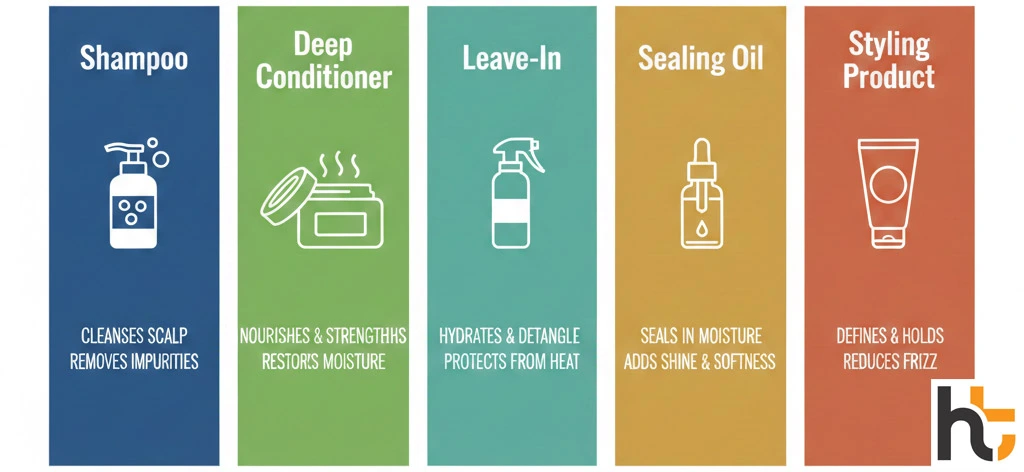
Category 4 — Sealing Oil or Butter
Applied after the leave-in, a sealing oil or butter locks moisture into the hair shaft and prevents evaporation throughout the day. This step is what makes moisture last. Skipping it means your leave-in dries out within a few hours.
- Low and fine porosity: Lightweight oils only — argan, jojoba, grapeseed, sweet almond. Heavy oils create the same surface-coating problem as heavy conditioners on sealed outer layers.
- Medium porosity: Most oils work. Coconut oil benefits medium porosity hair specifically because its smaller molecular size allows partial penetration.
- High porosity and coily: Heavier butters and oils (shea butter, castor oil, mango butter) are appropriate here. They physically fill and smooth raised outer layer gaps.
Category 5 — Styling Product
Styling products hold pattern, reduce frizz, and protect against humidity and environmental factors. Unlike the first four categories, the right styling product is more about your desired result and curl pattern than porosity.
Coily (Type 4): Thick butter creams, twisting creams, or heavy gels depending on the style. The LOC method (Leave-in, Oil, Cream) is a common and effective approach.
Straight and wavy (Type 1–2): Lightweight mousse or spray gel for hold without crunch.
Curly (Type 3): Medium-hold gel or curl cream for definition. Scrunch out the cast once dry for soft, defined curls.
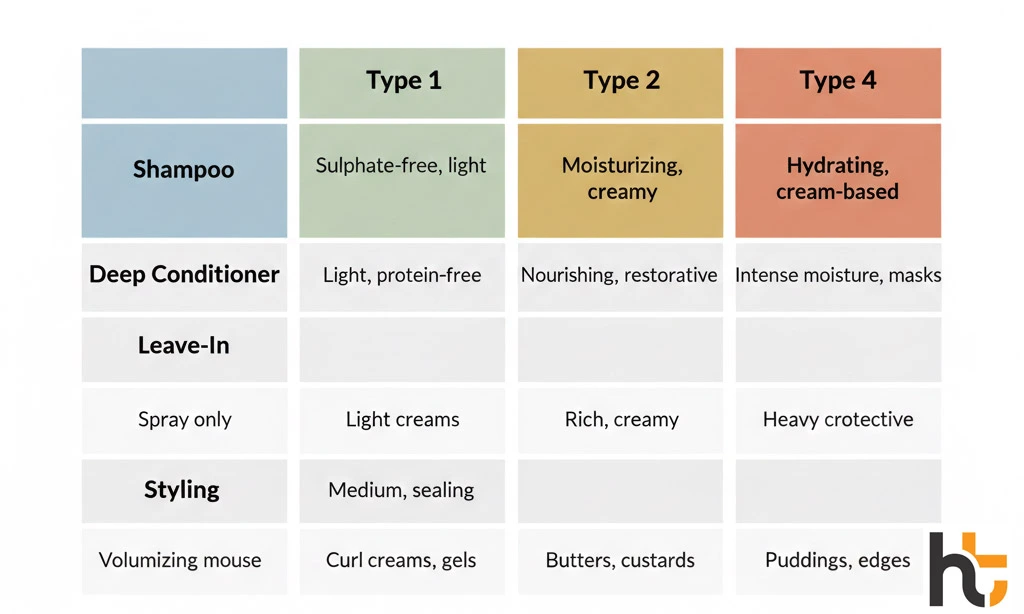
Best Hair Products Organized by Hair Type
Here is how to apply the category system above specifically to your curl pattern and porosity combination. This is the practical section of this best hair products guide. Bookmark it for reference.
Type 1–2 (Straight and Wavy) Hair
Priority: Avoid buildup and weight. Every product choice should default to the lightest possible formula that still does the job.
- Shampoo: Mild sulfate-free formula, clarifying shampoo every 2–3 weeks.
- Deep conditioner: Lightweight, moisture-forward, protein-free if low porosity.
- Leave-in: Water-based spray — no creams.
- Oil: Argan or jojoba, 2–3 drops maximum.
- Styling: Lightweight mousse or wave spray for texture, hold, and frizz control.
Type 3 (Curly) Hair
Priority: Consistent moisture and definition without protein buildup if low porosity, or with light protein support if high porosity.
- Shampoo: Gentle co-wash or sulfate-free shampoo. Clarify monthly.
- Deep conditioner: Moisture-focused for low porosity (protein-free), balanced for medium, protein-rich for high.
- Leave-in: Cream or milk leave-in for slip and detangling.
- Oil: Medium-weight oil — argan, sweet almond, or avocado.
- Styling: Medium-hold gel over a cream for definition and frizz control.
Type 4 (Coily and Kinky) Hair
Priority: Maximum moisture at every single step. The LOC or LCO method — applying Leave-in, Oil, and Cream in layers — is the most effective moisture strategy for this type.
- Shampoo: Ultra-gentle sulfate-free shampoo. Never strip the scalp more than necessary.
- Deep conditioner: Rich, protein-balanced formula applied with a steamer for maximum absorption.
- Leave-in: Rich cream leave-in as the first layer.
- Oil: Heavier oils — jamaican black castor oil, olive oil — as the sealing layer.
- Styling: Thick twisting cream or butter for definition and moisture retention.
Building Your Routine with the Right Best Hair Products
Selecting the right products from each category is only half the equation. Application order, frequency, and technique determine whether even the best hair products actually work.
The correct wash day order is: clarify or shampoo → deep condition with heat → rinse with cool water → leave-in on wet hair → seal with oil or butter → style. For a full step-by-step breakdown of wash day structure and frequency guidance, see our hair care basics guide.
If hard water is affecting your results — signs include persistent dryness despite correct product selection and buildup that returns quickly — our hard water hair care routine covers how mineral deposits block even the best hair products from working effectively.
For tool recommendations — combs, diffusers, steamers, and brushes by hair type — see our best hair tools guide. The right tools matter as much as the right products.
What to Realistically Expect
Switching to type-appropriate products produces noticeable improvement within two to four weeks for most people. What you will notice first: less dryness between wash days, improved detangling, and reduced breakage. What takes longer: overall texture improvement, length retention, and full recovery from previous product buildup or damage.
If you are switching from a routine that included heavy proteins on low porosity hair, or heavy butters on fine hair, expect a brief transition period of one to two weeks while existing product layers clear from the outer layer.
When to See a Professional
Product selection alone cannot address all hair concerns. Consider consulting a trichologist or dermatologist if:
- Hair loss or thinning persists despite improved product choices and routine consistency
- Scalp issues — persistent flaking, oiliness, or inflammation — do not respond to shampoo changes
- Hair breaks at the root rather than the length, suggesting an internal or medical cause
Studies show that breakage at the root, as opposed to mid-shaft or end breakage, is typically associated with scalp health, hormonal factors, or nutritional deficiencies rather than product choice [NCBI].
Final Thoughts
The best hair products are not the most expensive, the most popular, or the most heavily marketed. They are the ones formulated for your exact porosity level and curl pattern. Applied in the correct order. With the right frequency.
Use the five category system in this guide as your permanent shopping framework. When you pick up any new product, check the first five ingredients against your porosity needs before buying. That one habit will save more money and frustration than any specific product recommendation.
For the complete picture, explore our complete hair type guide and our seasonal hair care guide to adapt your product choices across different climates and seasons.
What brand has the best hair products?
From a scientific perspective, no single brand can claim to be the absolute best for everyone. As your article points out, the “best” brand is the one whose formulations align with your porosity and curl pattern.
For Low Porosity/Fine Hair: Brands like SheaMoisture (their Low Porosity line) or Mielle Organics are often cited for using lightweight humectants like honey and aloe vera that don’t cause buildup.
For High Porosity/Damaged Hair: Brands like Olaplex or K18 are leaders because they focus on bond-building and protein-rich formulas that repair the lifted cuticles common in high-porosity hair.
For Coily/Type 4 Hair: Brands like Pattern Beauty or Camille Rose are highly regarded for using the heavy butters (shea, mango) and oils (castor) necessary to seal moisture into tighter coils.
Which brand products are best for hair?
The best products are those that prioritize the first five ingredients on the label. Based on the categories in your guide:
Best for Cleansing: Look for brands that offer sulfate-free options using sodium lauroyl methyl isethionate (like Living Proof) or high-quality clarifying shampoos for monthly resets (like Ouai).
Best for Conditioning: Briogeo is frequently praised for its “Don’t Despair, Repair!” line, which balances protein and moisture, making it versatile for medium porosity types.
Best for Sealing: Pure oils from brands like The Ordinary (Argan or Jojoba) are often better than “oil blends” that may contain silicones which block moisture for low-porosity readers.
What is the number one hair care in the world?
In terms of global market share and consumer trust, L’Oréal remains the number one hair care company in the world. However, in the professional and “prestige” space, Olaplex has recently held the top spot for brand power due to its patented bond-building technology.
For your readers, the “number one” product should be their Deep Conditioner. As your guide mentions, it is the single highest-impact treatment in any routine. Regardless of the brand, a deep conditioner used with heat is the gold standard for maintaining hair health.
What products do top salons use?
Top salons typically use “Professional Grade” products, which differ from drugstore brands by having higher concentrations of active ingredients and fewer “fillers.” Common salon-staples include:
Kérastase: Known for highly specialized lines targeting specific scalp and fiber needs.
Oribe: Often used for styling and finishing because of its lightweight formulas and high-performance UV protection.
Redken: A favorite for their “Acidic Bonding Concentrate,” which helps balance the pH of the hair after chemical services—a crucial step for high-porosity hair.
Aveda: Preferred by salons focusing on plant-based, botanical ingredients that align with the “clean science” approach.
