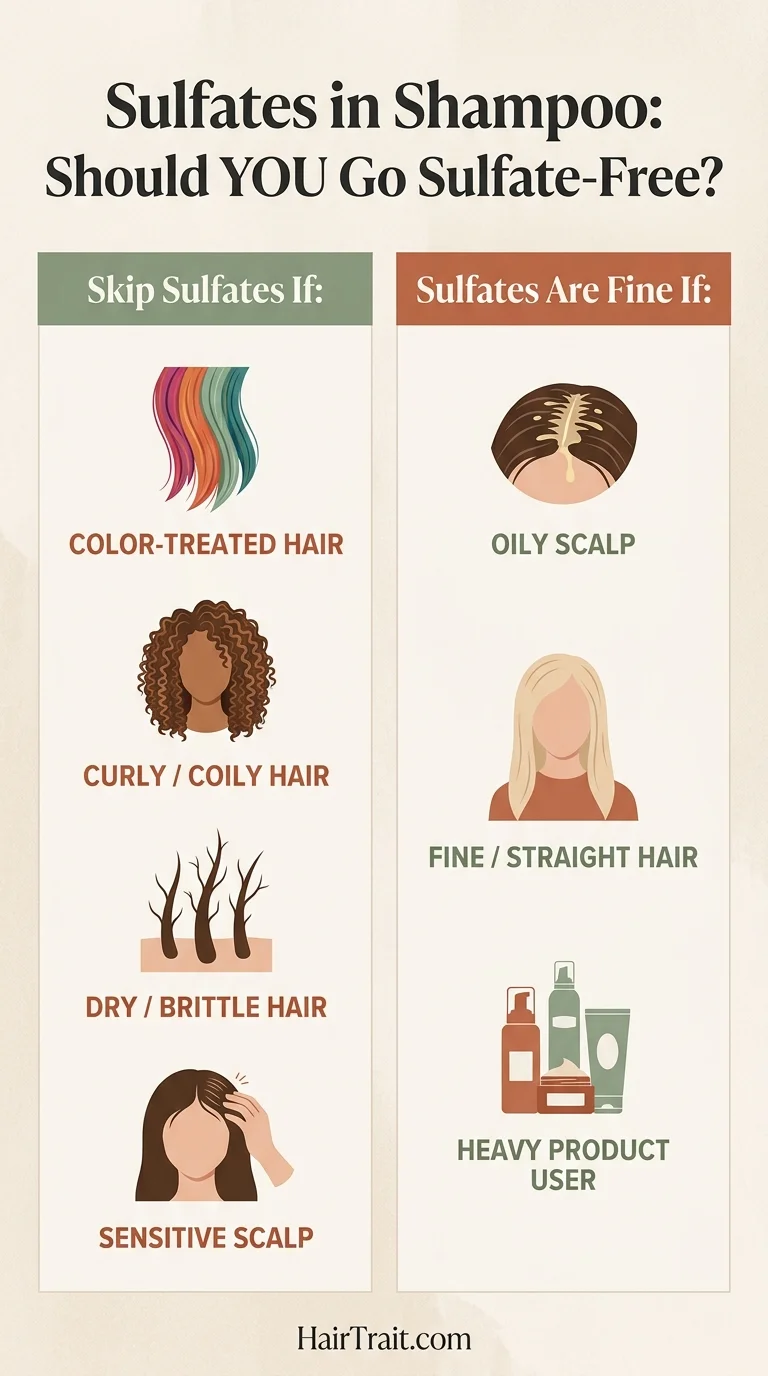
Quick Answer: Sulfates (SLS and SLES) are effective cleansing agents that strip dirt, oil, and product buildup from hair and scalp. For most people with normal-to-oily hair, they are perfectly safe when used 2–3 times per week. However, if you have color-treated, curly, dry, or sensitive-scalp hair, sulfates can strip natural moisture faster than your scalp replaces it — causing dryness, frizz, and irritation. The decision isn’t “sulfates are bad,” it’s about whether your hair type tolerates them well.
Few ingredients spark more debate than sulfates in shampoo. Scroll through any hair care forum and you’ll find confident claims in both directions — some say sulfates destroy your hair, while others call the sulfate-free movement a marketing gimmick. The truth, as usual, lives somewhere in the middle.
Sulfates in shampoo serve one primary purpose: cleaning. They are the reason your shampoo lathers, and that lather does a remarkably efficient job of removing grease, dead skin, styling residue, and environmental pollutants from your hair and scalp. The real question isn’t whether sulfates work — it’s whether your specific hair type pays too high a price for that cleaning power.
This article breaks down the chemistry, the clinical research, and the practical advice so you can make an informed decision instead of following trends.
Table of Contents
What Are Sulfates and Why Are They in Your Shampoo?
Sulfates are a class of surfactants — surface-active agents — that lower the surface tension between oil and water. In plain terms, they grab onto the oil and dirt sitting on your scalp and hair, then allow water to rinse it all away. Without surfactants of some kind, water alone cannot remove sebum effectively.
The two most common sulfates in shampoo formulas are:
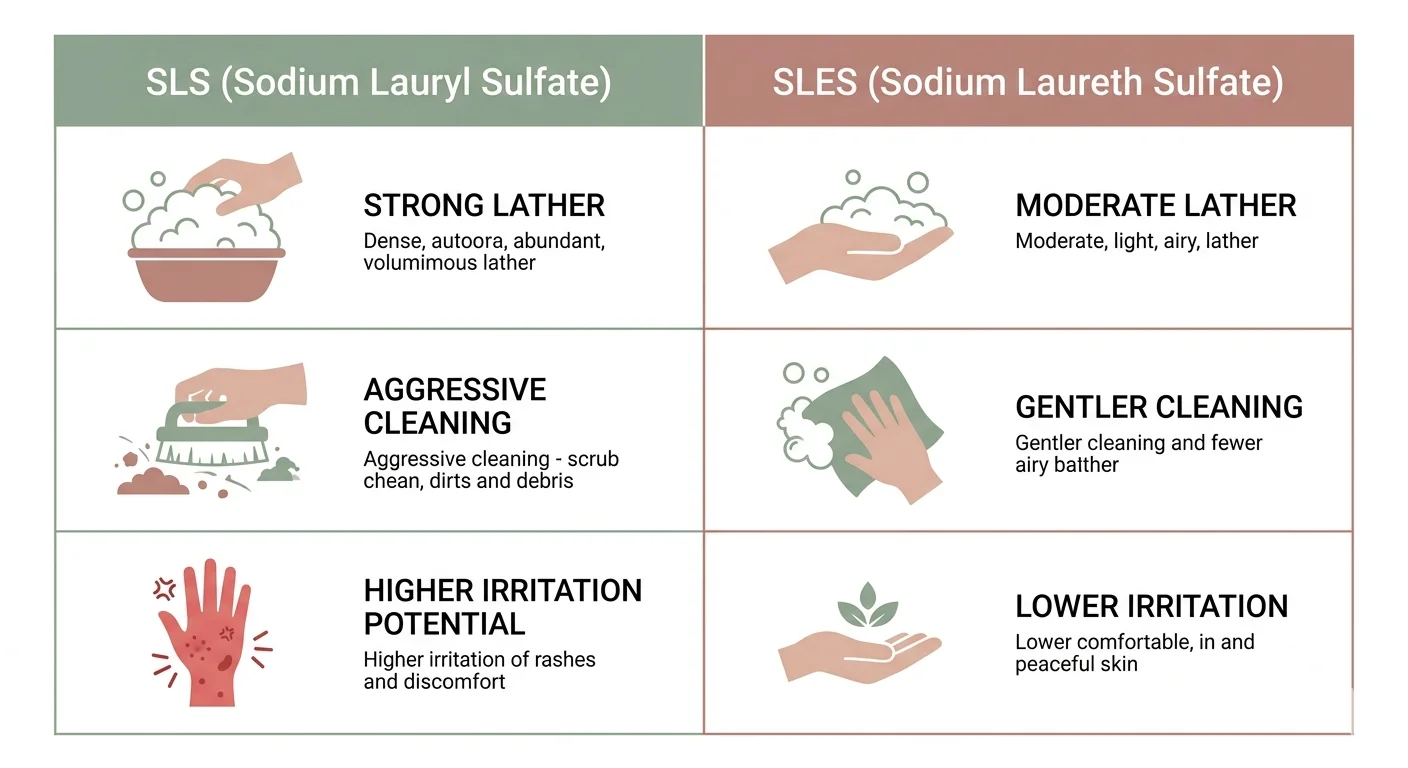
- Sodium Lauryl Sulfate (SLS) — the stronger of the two. It creates heavy lather and removes oil very aggressively. Often found in budget shampoos and clarifying formulas.
- Sodium Laureth Sulfate (SLES) — a chemically modified version of SLS that’s gentler on skin while still delivering good cleaning power. This is the more commonly used sulfate in mainstream shampoos.
Sulfates are inexpensive, stable, and effective. That’s why they’ve been the backbone of shampoo formulations since the 1930s. They aren’t in your shampoo because brands are cutting corners — they’re there because they work.
How Sulfates Affect Your Hair and Scalp
When a sulfate-based shampoo contacts your wet hair, the surfactant molecules arrange themselves around oil particles — one end attaches to the oil, the other to water. This is how oil gets lifted off the hair shaft and rinsed down the drain.
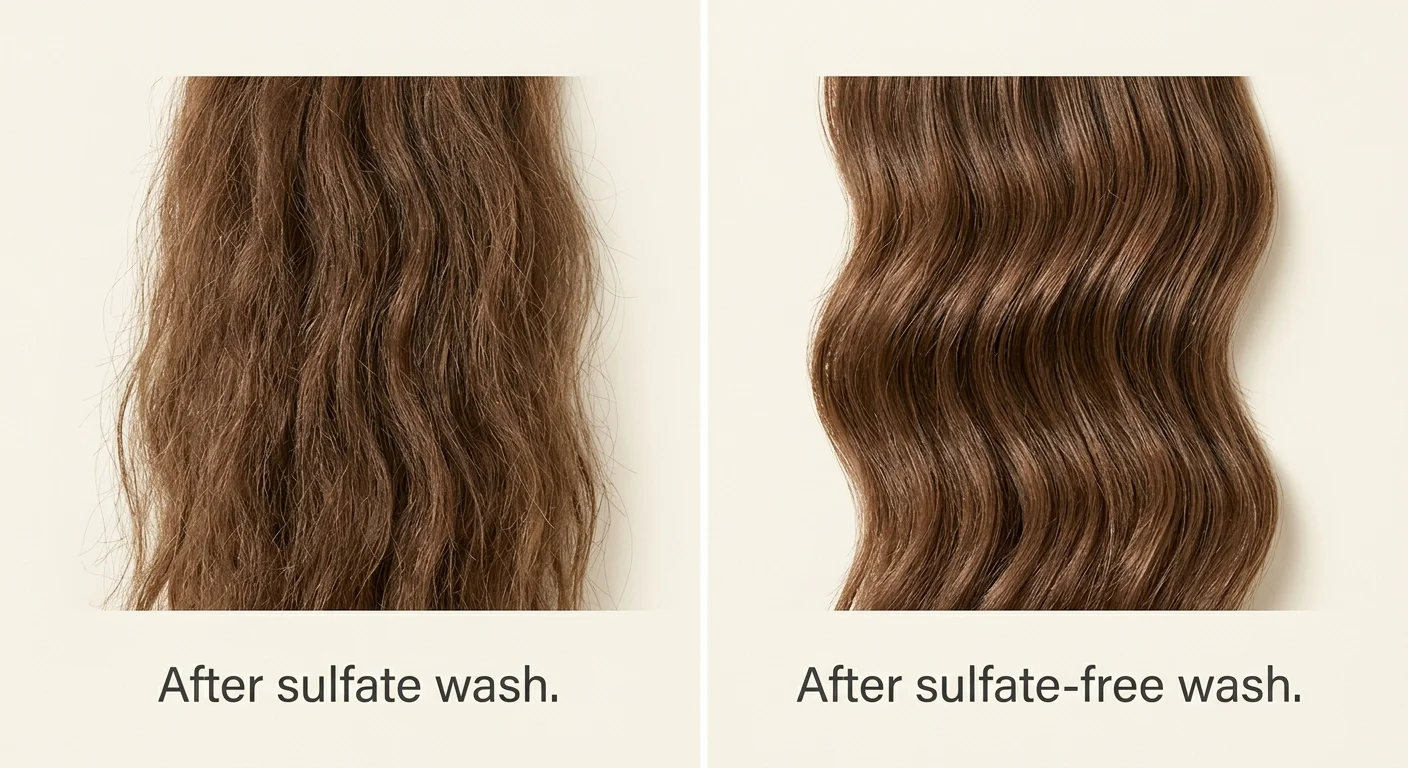
The problem? Sulfates don’t distinguish between unwanted buildup and the natural sebum your scalp produces to protect and moisturize your hair. Research published in the International Journal of Trichology confirms that anionic surfactants like SLS can strip lipids from the hair cuticle, increase protein loss, and raise the hair’s surface charge — all of which contribute to dryness and tangling.
What the research shows
- Protein loss: Hair washed repeatedly with SLS-based shampoos loses measurably more protein than hair washed with milder surfactants. Protein loss weakens the hair shaft over time.
- Cuticle damage: Sulfates can lift the outer cuticle layer, making hair feel rough, look dull, and become more vulnerable to mechanical breakage from brushing or heat styling.
- Scalp irritation: A 2005 study in the journal Contact Dermatitis found that SLS is a well-documented skin irritant at higher concentrations, though typical shampoo concentrations (10–15%) are generally tolerated by most people with brief exposure.
- Color fading: Sulfates accelerate color loss from semi-permanent and permanent dyes by opening the cuticle and allowing dye molecules to escape faster.
However — and this is the part often left out of anti-sulfate marketing — the severity of these effects depends heavily on your hair type, how long the shampoo stays on your hair (contact time), how often you wash, and the overall formulation of the shampoo. A well-formulated shampoo with SLES, conditioning agents, and a slightly acidic pH (4.5–5.5) causes far less damage than a cheap SLS-heavy formula at neutral pH.
Who Should Avoid Sulfates in Shampoo
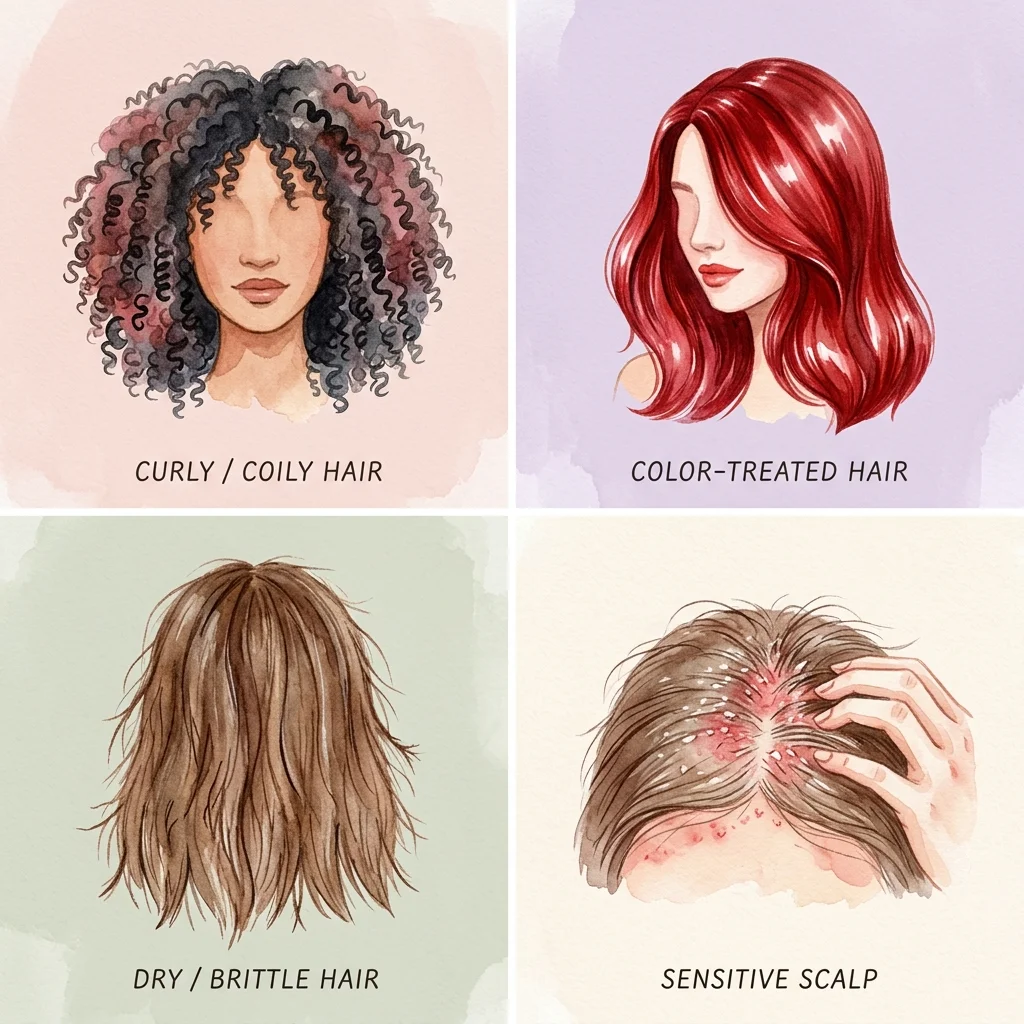
Not everyone needs to ditch sulfates. But certain hair types and conditions consistently respond poorly to them. If you fall into any of the following categories, switching to a sulfate-free or low-sulfate formula is worth trying for 4–6 weeks.
Color-treated or chemically processed hair
If you’ve bleached, colored, permed, or relaxed your hair, sulfates will strip those chemical bonds and dye molecules faster. Expect noticeably faster color fading — sometimes within just a few washes. Sulfate-free shampoos extend color life by 20–40% in most cases.
Curly, coily, or highly textured hair (Type 3A–4C)
Curly hair is structurally more prone to dryness because natural sebum has a harder time traveling down the coiled shaft. Sulfates remove what little oil makes it past the first few centimeters, leaving curls dry, frizzy, and prone to breakage. If your curls feel like straw after washing, sulfates are a likely culprit. For more detail on identifying your curl pattern, see our complete hair type guide.
Dry or damaged hair
If your hair already suffers from heat damage, environmental stress, or over-processing, adding aggressive sulfate stripping on top makes recovery harder. Switching to gentler surfactants reduces ongoing protein loss while you repair. You may also want to explore our best hair products page for bond-repair and deep conditioning recommendations.
Sensitive scalp conditions
If you have eczema, psoriasis, seborrheic dermatitis, or generally reactive skin, SLS in particular can trigger redness, itching, and flaking. SLES is somewhat better tolerated, but truly sensitive scalps often do best with amphoteric surfactants like cocamidopropyl betaine.
Who Can Safely Use Sulfates
If none of the above categories describe you, sulfates are probably fine — and possibly even preferable. Here’s when a sulfate shampoo earns its spot in your routine:
- Oily scalp: If your hair looks greasy within 24 hours of washing, gentler surfactants may not clean your scalp thoroughly. A sulfate-based shampoo every 2–3 days keeps sebum in check without requiring daily washing.
- Heavy product users: Silicone serums, pomades, heavy leave-ins, and dry shampoo create buildup that mild surfactants struggle to remove. A periodic clarifying wash with sulfates (once every 1–2 weeks) prevents product accumulation. Learn more about proper wash schedules in our hair care basics guide.
- Fine, straight hair: Fine hair tends to get weighed down by residue quickly, and a well-formulated sulfate shampoo keeps it bouncy and volumized.
Sulfate vs. Sulfate-Free Shampoo: Side-by-Side Comparison
| Factor | Sulfate Shampoo | Sulfate-Free Shampoo |
|---|---|---|
| Cleansing power | High — removes heavy oil and buildup effectively | Moderate — adequate for light to normal buildup |
| Lather | Rich, foamy lather | Light or minimal lather (still cleans) |
| Moisture retention | Strips more natural oils | Preserves more natural oils |
| Color preservation | Accelerates fading | Extends color life by 20–40% |
| Scalp sensitivity | May irritate reactive scalps | Better tolerated by sensitive skin |
| Best for | Oily, fine, or straight hair; clarifying washes | Curly, dry, color-treated, or sensitive hair |
| Price range | Generally more affordable | Slightly higher on average |
Common Mistakes People Make About Sulfates
- Assuming sulfate-free means clean. Some sulfate-free shampoos use surfactants that are too mild to remove silicone buildup. If you use silicone-based products but wash with a gentle sulfate-free formula, residue accumulates. You’ll need a clarifying wash every 2–4 weeks regardless.
- Judging cleaning by lather. Many people think no foam means no cleaning. Sulfate-free shampoos clean through different chemistry — they just don’t produce the satisfying foam you’re used to. Less lather does not mean less effective.
- Switching and quitting too soon. When you first drop sulfates, your hair may feel waxy, heavy, or “different” for 2–3 weeks. This is a transition period while your scalp adjusts its oil production. Give it at least 4 full weeks before deciding it doesn’t work.
- Thinking all sulfates are identical. SLS and SLES behave very differently. SLES is significantly milder. A well-formulated SLES shampoo with conditioning agents can be gentler than a poorly formulated “sulfate-free” shampoo with harsh secondary surfactants.
- Going sulfate-free but keeping hard water. If your water is high in calcium and magnesium, mineral buildup on your hair mimics the dullness and dryness people blame on sulfates. Consider a chelating shampoo or shower filter before assuming sulfates are the issue.
What to Expect When You Switch to Sulfate-Free
Switching away from sulfates isn’t instant magic. Here’s a realistic timeline:
| Timeframe | What You’ll Notice |
|---|---|
| Week 1–2 | Hair may feel heavier, waxier, or less “clean.” Scalp is recalibrating oil production. This is normal. |
| Week 3–4 | Oil production begins to stabilize. Hair starts feeling softer. Color-treated hair should already show less fading. |
| Week 5–8 | Noticeable improvement in moisture, reduced frizz, and improved curl definition (for textured hair). Scalp irritation should subside. |
| Month 3+ | Full adjustment. You’ll have a clear sense of whether sulfate-free works better for your hair. Some people also reduce wash frequency naturally. |
During the transition, do one clarifying wash with a sulfate-based shampoo every 3–4 weeks to remove any silicone or mineral buildup your new shampoo can’t handle. This prevents the “waxy” feeling many people blame on sulfate-free products. For seasonal considerations that affect how your hair handles this switch, check our seasonal hair care guide.
Final Thoughts: Should You Go Sulfate-Free?
The debate around sulfates in shampoo is not black and white. Sulfates are not toxic, dangerous, or universally harmful. They are strong cleansing agents that work extremely well — sometimes too well for certain hair types.
If your hair is oily, straight, or fine and you have no scalp sensitivity, a good sulfate shampoo used 2–3 times per week is a perfectly sound choice. If your hair is dry, curly, color-treated, or your scalp is reactive, switching to a sulfate-free formula and giving it 4–6 weeks will likely produce a noticeable improvement in moisture, softness, and overall hair health.
The smartest approach? Don’t commit to one camp. Keep a sulfate-based clarifying shampoo on hand for occasional deep cleans, and use a gentle sulfate-free formula for your regular wash days. That way your hair gets the best of both worlds — effective cleaning when it needs it, and gentle care the rest of the time.