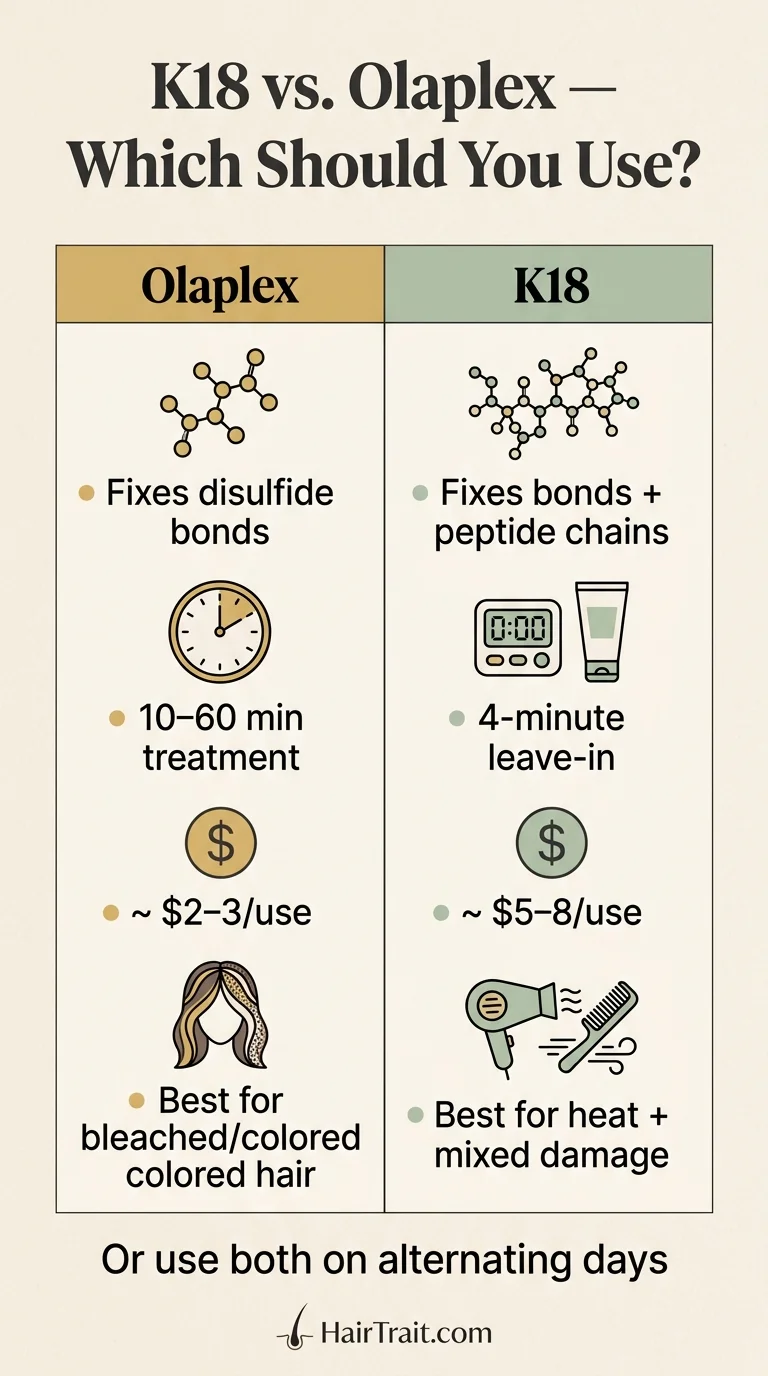
Quick Answer: K18 and Olaplex are both bond-repair treatments, but they fix different types of damage using different chemistry. Olaplex reconnects broken disulfide bonds and works best during or after chemical services like bleaching and coloring. K18 targets both disulfide bonds and polypeptide chains, offering broader structural repair in a faster 4-minute leave-in format. For most people, Olaplex No. 3 is the better weekly maintenance treatment, while K18 excels at restoring elasticity to heavily damaged or processed hair.
The K18 vs Olaplex debate is the single most discussed topic in online hair science communities — and for good reason. Both products promise to repair damaged hair at the molecular level, both carry premium price tags, and both have passionate supporters who swear the other product doesn’t compare.
But comparing K18 vs Olaplex without understanding what each actually does is like comparing ibuprofen to a cast — they both address injury, but at fundamentally different levels. This article breaks down the real science behind each product, when one outperforms the other, and whether you need both.
Table of Contents
How Hair Damage Actually Works
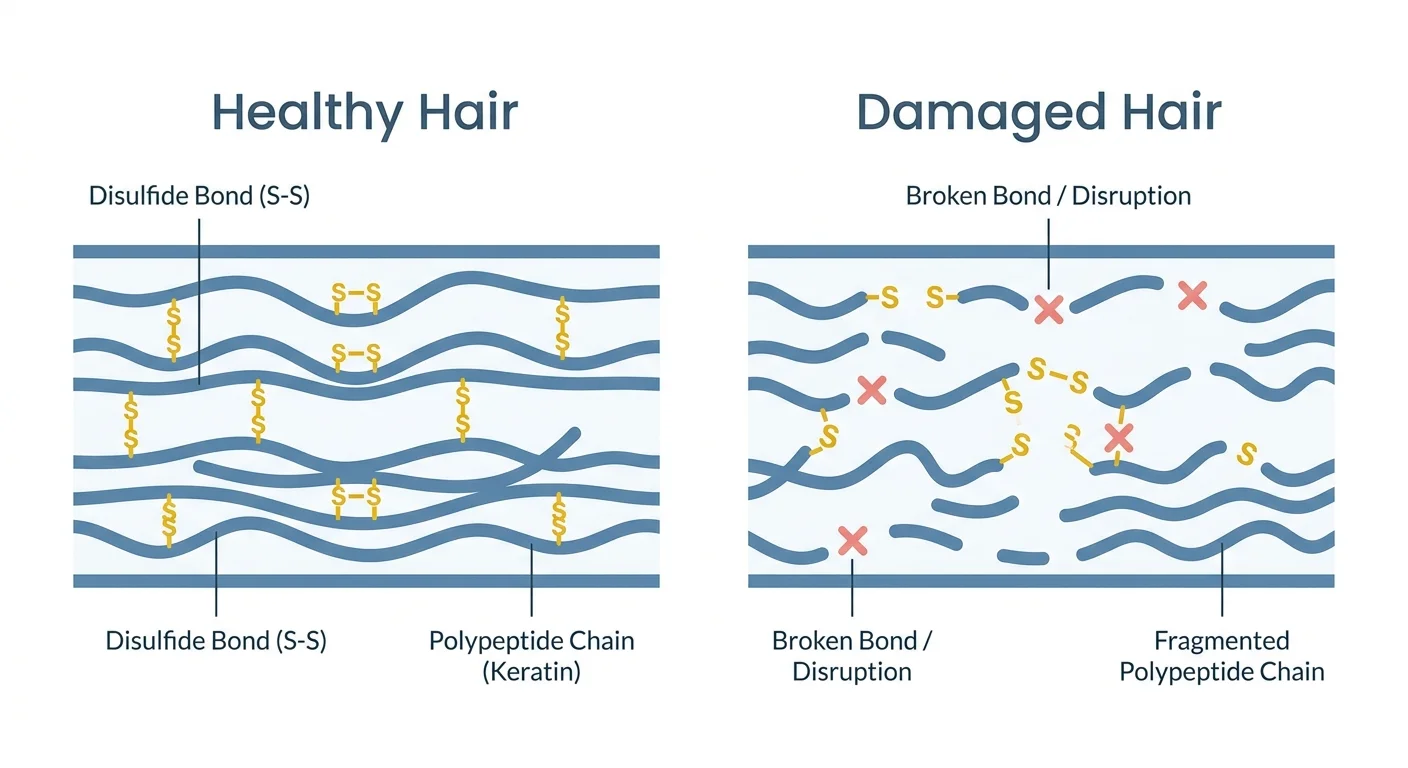
Before comparing these two treatments, you need to understand what they’re trying to fix. Your hair is made of a protein called keratin, held together by several types of chemical bonds:
- Disulfide bonds — strong sulfur-to-sulfur links that give hair its shape, strength, and elasticity. Bleaching, coloring, perming, and relaxing break these bonds.
- Hydrogen bonds — weaker bonds that temporarily break with water and heat (this is why wet hair stretches more). They reform when hair dries.
- Polypeptide chains — the actual keratin protein backbone. When these crack, you lose structural integrity that no conditioner can replace.
Heat styling, UV exposure, mechanical friction, and chemical processing all cause cumulative damage to these bonds. Traditional conditioners coat the surface to make damaged hair feel smoother, but they don’t repair internal structure. Bond builders do — or at least, they attempt to. For a deeper look at how damage develops, see our guide on hair care basics.
How Olaplex Works
Olaplex was the first mainstream bond-repair treatment, launched in 2014 and originally designed for salon use during bleaching services. Its patented active ingredient is bis-aminopropyl diglycol dimaleate — a small molecule that can penetrate into the hair cortex and relink broken disulfide bonds.
Think of it this way: when bleach snaps a disulfide bond in half, each side is left with a reactive sulfur atom. Olaplex’s active ingredient acts as a bridge, connecting those two loose ends back together. Research sponsored by Olaplex and published in peer-reviewed settings confirms that the ingredient reduces hair breakage during chemical services by relinking these bonds in real time.
Key Olaplex products
- Olaplex No. 1 & No. 2 — professional salon treatments mixed directly into bleach or color. This is the original use case.
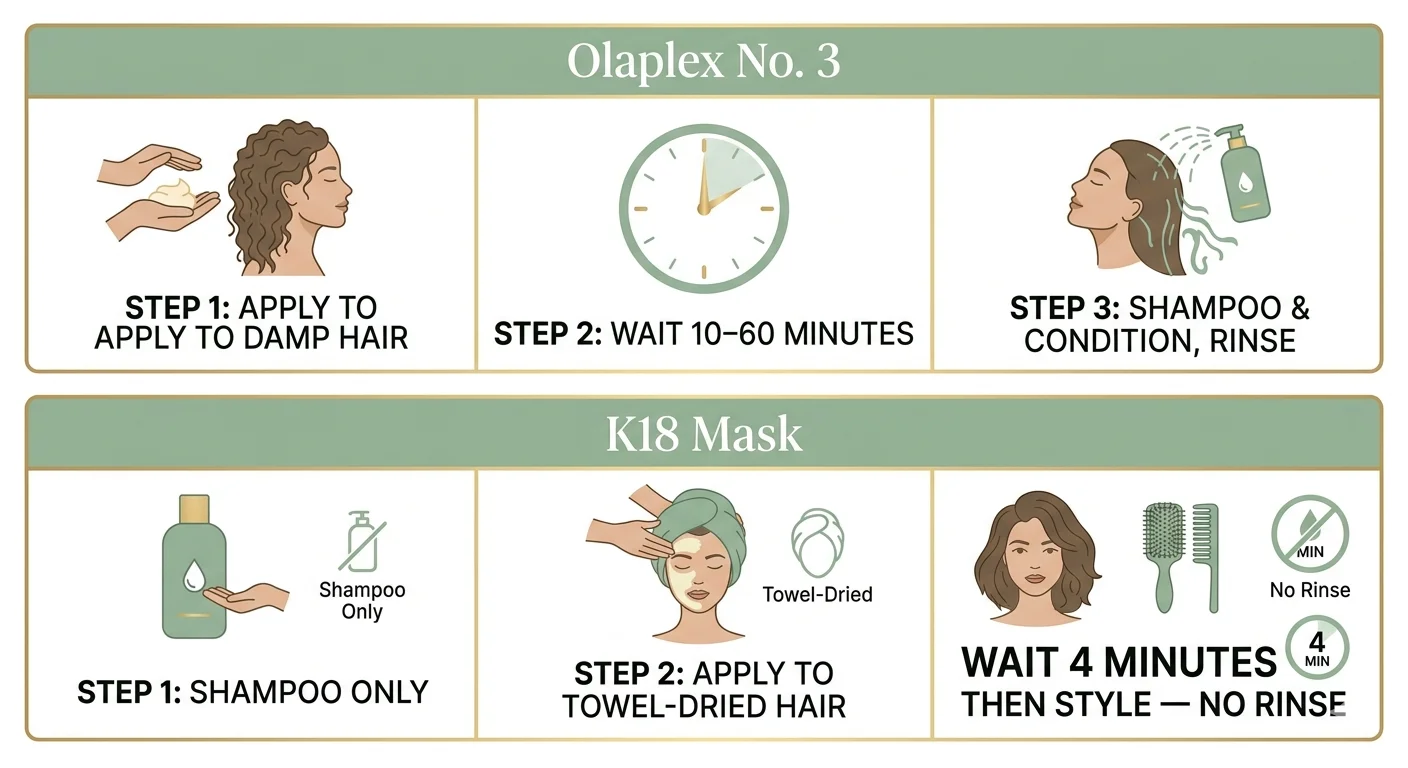
- Olaplex No. 3 Hair Perfector — the at-home hero. A pre-shampoo treatment applied to damp hair for a minimum of 10 minutes (many users leave it on for 30–60 minutes), then rinsed and followed with shampoo and conditioner.
- Olaplex No. 8 Bond Intense Moisture Mask — adds hydration on top of bond repair for dry, brittle hair.
How K18 Works
K18 arrived in 2020 with a different approach. Its active ingredient is K18PEPTIDE™ (sh-Oligopeptide-78) — a bioactive peptide that the company claims mimics the structure of keratin itself. Instead of only relinking disulfide bonds, K18 targets the polypeptide chain level, reconnecting broken protein chains as well as disulfide bonds.
If Olaplex is repairing the rungs of a ladder, K18 is repairing both the rungs and the rails. Clinical data from K18 shows up to 94% reversal of damage markers after four uses, measured by improvements in elasticity and tensile strength. Published research in the Journal of Cosmetic Science has explored peptide-based hair repair, though independent large-scale studies on K18 specifically are still limited.
How to use K18
K18’s application is faster and simpler than Olaplex No. 3. After shampooing, apply a small amount to towel-dried hair, wait 4 minutes, and style as usual without rinsing. No conditioner before — conditioner can coat the hair and block the peptide from penetrating.
K18 vs Olaplex: Full Side-by-Side Comparison
| Factor | Olaplex No. 3 | K18 Leave-In Mask |
|---|---|---|
| Active ingredient | Bis-aminopropyl diglycol dimaleate | K18PEPTIDE™ (sh-Oligopeptide-78) |
| What it repairs | Disulfide bonds | Disulfide bonds + polypeptide chains |
| Application time | 10–60 minutes (longer = better results) | 4 minutes |
| Rinse required? | Yes — shampoo and condition after | No — leave in and style |
| Best for | Color-treated, bleached, chemically processed hair | All damage types — heat, mechanical, chemical |
| How often to use | 1–2× per week | Every 4–6 washes (first 4 washes consecutively) |
| Approximate price | $30 / 100ml | $75 / 50ml |
| Cost per use | ~$2–3 per treatment | ~$5–8 per treatment |
| Adds moisture? | No — needs conditioner after | No — needs leave-in/oil after |
Neither product is a moisturizer. Both repair structural damage but leave hydration to your conditioner or leave-in. If you skip conditioning, your hair will feel stiff or dry regardless of which bond builder you use. For product pairing ideas, visit our best hair products page.
Which One Should You Choose?
Choose Olaplex No. 3 if:
- You regularly bleach or color your hair and want ongoing disulfide bond maintenance.
- You prefer a budget-friendly option — Olaplex costs roughly half as much per treatment.
- You don’t mind longer processing times and enjoy a deep-treatment ritual.
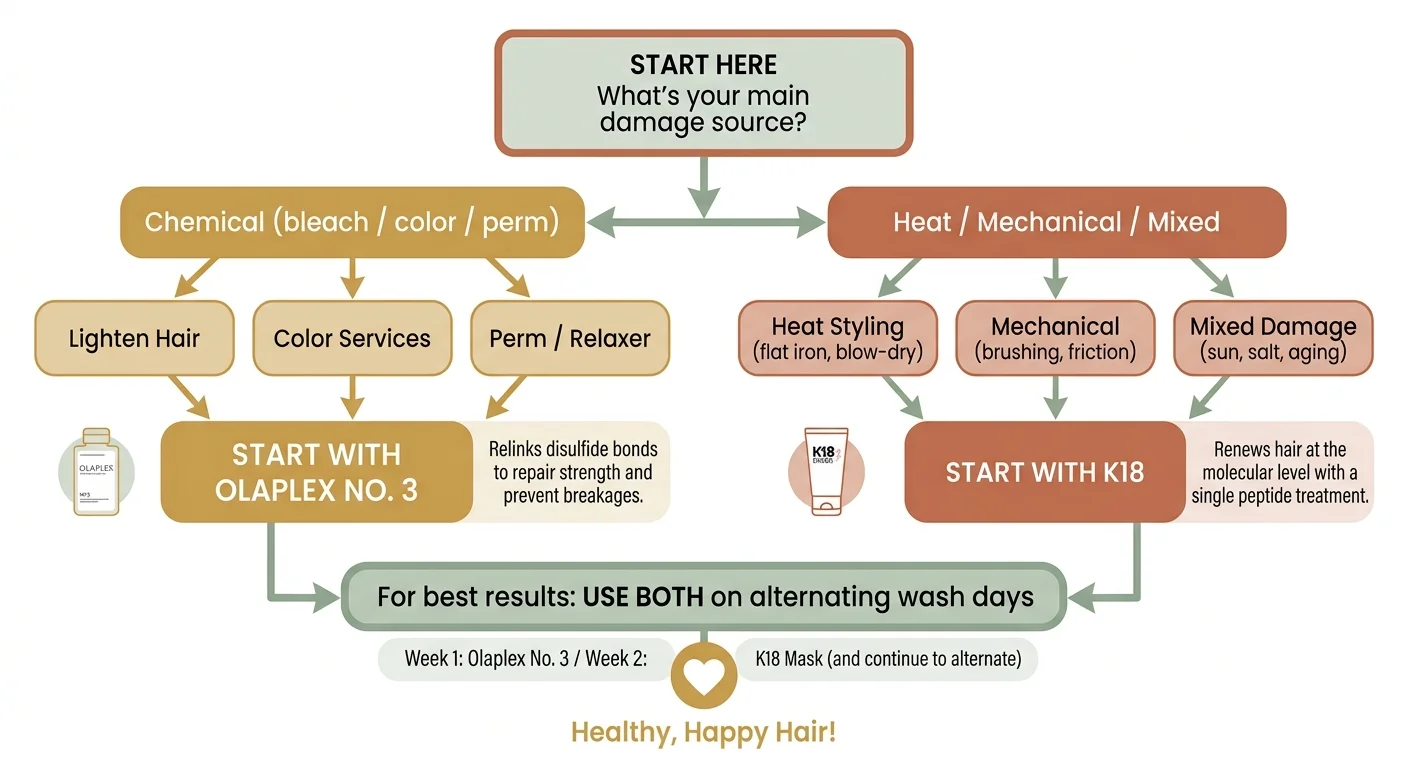
- Your damage is primarily chemical (color, bleach, perm, relaxer).
Choose K18 if:
- Your damage comes from heat styling, mechanical stress, or a combination of sources.
- You want speed — 4 minutes with no rinsing fits a busy routine.
- Your hair has lost elasticity and feels brittle or snaps when wet.
- You’ve tried Olaplex and felt it improved smoothness but didn’t fully restore your hair’s bounce and stretch.
Or use both
Many people in the K18 vs Olaplex debate land on using both — just not on the same wash day. A common approach: use Olaplex No. 3 as a weekly pre-shampoo treatment, and use K18 once every 4–6 washes for deeper structural repair. This gives you disulfide bond maintenance plus polypeptide chain repair without product overload.
Common Mistakes With Bond Builders
- Using K18 after conditioner. Conditioner coats the hair shaft and blocks the K18 peptide from penetrating. Always use K18 on freshly shampooed, towel-dried hair before any other product.
- Expecting moisture from bond repair. Neither K18 nor Olaplex hydrates your hair. They rebuild internal structure. You still need a good conditioner, leave-in, or oil on top. Skipping this step is why some people report their hair feeling “crunchy” after treatment.
- Overloading on protein. If you’re stacking a bond builder plus a protein treatment plus a protein-rich conditioner in the same wash, you risk protein overload — hair becomes stiff, brittle, and prone to snapping. Space treatments out and balance with moisture. Learn more about this in our hair type guide.
- Judging K18 after one use. K18’s instructions recommend using it for the first 4–6 washes consecutively to build up repair. Many negative reviews come from people who tried it once, felt their hair was flat or dry, and gave up. The cumulative effect matters.
- Applying Olaplex No. 3 to dry hair. It’s designed for damp hair. Dry hair limits the product’s ability to distribute evenly and penetrate the cortex.
What to Expect: Realistic Timelines
| Product | After 1 use | After 4–6 uses | Ongoing maintenance |
|---|---|---|---|
| Olaplex No. 3 | Smoother feel, easier detangling, subtle shine improvement | Reduced breakage (20–40%), stronger elasticity, improved color retention | Use 1× weekly to maintain; reduce to biweekly once hair stabilizes |
| K18 Mask | May feel flat or different initially — this is normal | Noticeable elasticity improvement, softer texture, less snapping when wet | Use every 4–6 washes; increase if you heat-style frequently |
Important: neither product can resurrect severely fried hair. If your hair stretches like gum and snaps, or if split ends travel several centimeters up the shaft, a trim is the only real solution. Bond builders maintain and improve hair that still has enough structure left to repair. For guidance on how tools affect your damage level, see our best hair tools recommendations.
Final Verdict: K18 vs Olaplex
The K18 vs Olaplex question doesn’t have a single winner — it depends on your damage type, budget, and routine preferences. Olaplex No. 3 remains the gold standard for chemical damage protection, especially during salon services. K18 offers faster, broader repair that addresses both polypeptide chains and disulfide bonds, making it ideal for multi-source damage.
If your budget allows only one, start with Olaplex No. 3 — it’s more affordable per use and covers the most common damage scenario (chemical processing). If you’ve been using Olaplex and feel your hair needs more help, add K18 as a targeted boost every few washes. Together, they cover the full spectrum of bond repair better than either does alone.
Whatever you choose, remember: bond builders fix structure, not moisture. Pair them with a solid conditioner and adjust based on what your hair tells you over 6–8 weeks of consistent use. Check our seasonal hair care guide for tips on adjusting your routine as weather and humidity change.