Quick Answer: Silicones are not inherently bad for your hair. They reduce frizz, add shine, protect against heat, and lower friction during brushing. The real issue is that some silicones — particularly heavy, non-water-soluble types like dimethicone — can build up over time if you don’t clarify regularly. Water-soluble silicones rinse clean with normal shampoo and cause no buildup. The decision to go silicone-free depends on your hair type, wash routine, and the specific silicones in your products — not a blanket rule.
The question of whether silicones are bad for hair is one of the most persistent debates in the hair care world. The Curly Girl Method says avoid them entirely. Clean beauty brands market “silicone-free” as a selling point. But cosmetic chemists and trichologists have a more nuanced take — and the science supports them.
Silicones are a family of synthetic polymers that coat the outside of your hair shaft, creating a smooth, protective layer. Whether silicones are bad for hair depends entirely on which type you’re using, how often you wash, and whether you clarify. This article breaks down every major silicone category, tells you exactly which ones to watch out for, and helps you decide whether going silicone-free is right for your hair.
Table of Contents
What Silicones Actually Do to Your Hair
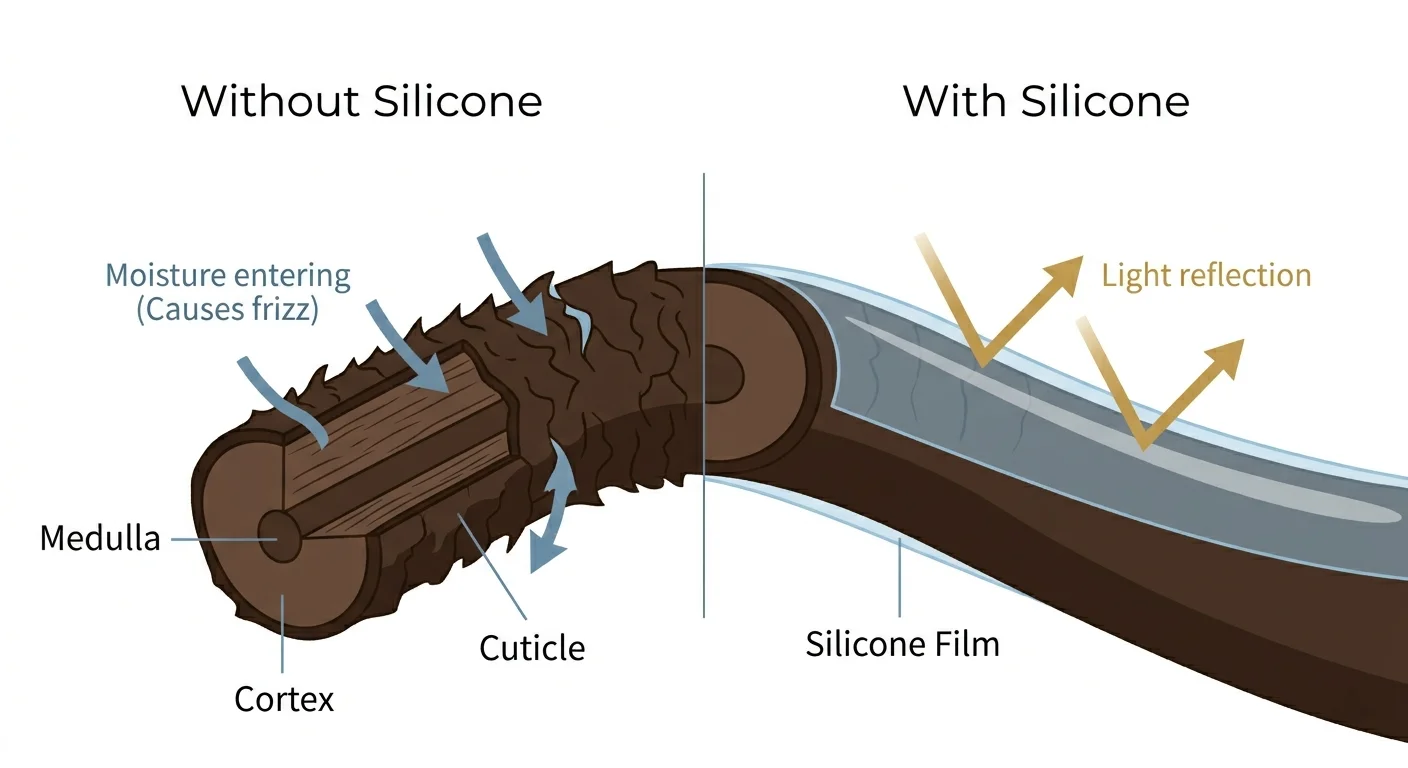
Silicones form a thin film around each hair strand. This film does several measurable things:
- Reduces friction — less tangling and breakage during brushing. Studies in the Journal of Cosmetic Science show that silicone-treated hair has significantly lower combing force, meaning less mechanical damage.
- Blocks humidity — the coating prevents moisture from entering and swelling the hair shaft, which is the primary cause of frizz.
- Adds shine — the smooth surface reflects light more evenly, creating visible gloss.
- Provides heat protection — some silicones form a barrier that reduces heat transfer from styling tools. Not a replacement for dedicated heat protectant, but it helps.
- Seals the cuticle — damaged hair has raised cuticles that catch and snag. Silicones temporarily smooth them down.
None of these effects repair your hair internally — silicones are cosmetic, not corrective. They make damaged hair look and feel better without changing its actual structure. For structural repair, you need bond builders (see our best hair products guide).
The Real Problem: Buildup (And Which Silicones Cause It)
Here’s where the “silicones are bad for hair” reputation actually comes from — and it’s a valid concern for some people. Certain silicones are hydrophobic, meaning they repel water. When you use a product containing a heavy non-water-soluble silicone, normal shampoo may not fully remove it. Layer after layer accumulates over weeks, creating a thick residue that:
- Makes hair feel heavy, limp, and greasy at the roots
- Prevents moisture from conditioners from reaching the hair shaft
- Causes dullness (the opposite of the shine silicones initially provide)
- Can clog scalp pores and contribute to irritation in sensitive individuals
But — and this is the critical distinction — not all silicones behave this way. The silicone family includes dozens of variants, and they fall into distinct categories based on how easily they wash out.
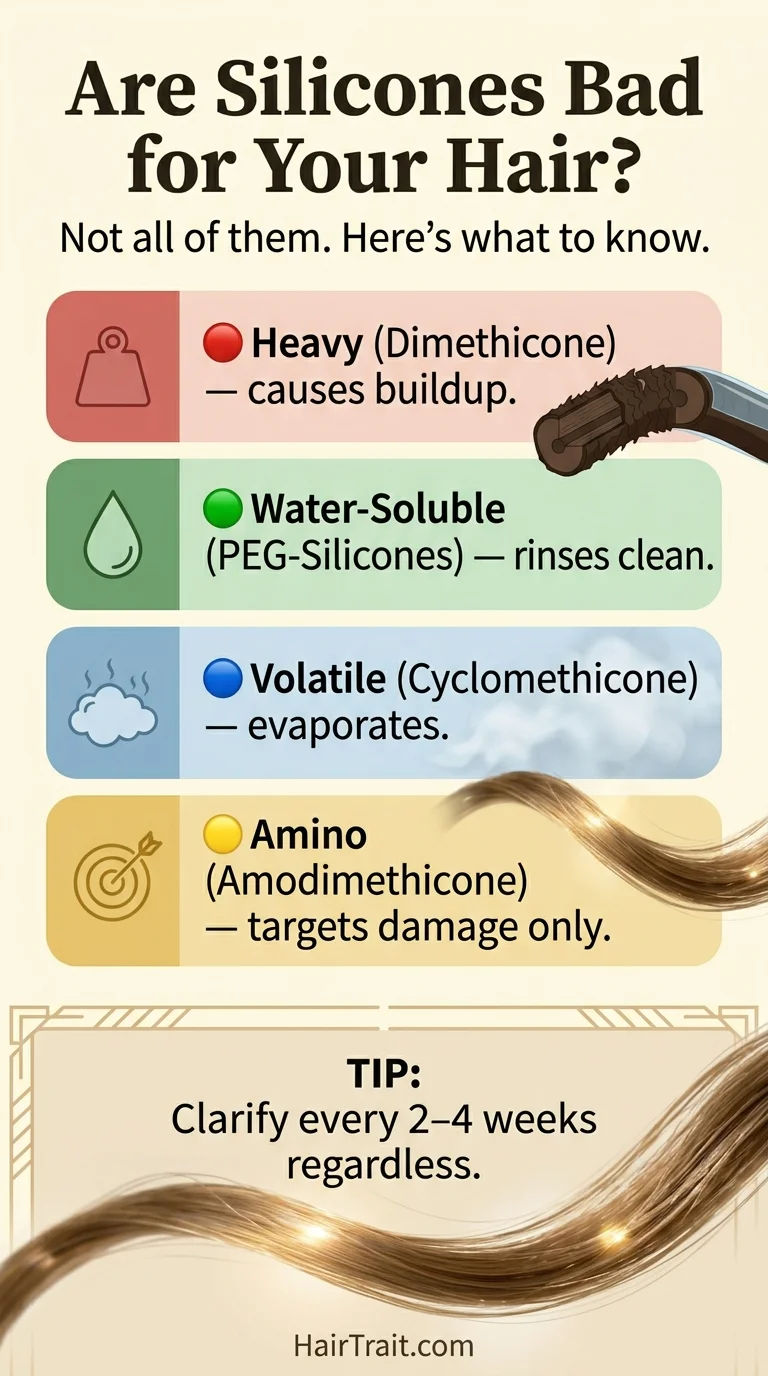
Silicone Types: The Complete Breakdown
| Category | Common Names | Washes Out With | Buildup Risk |
|---|---|---|---|
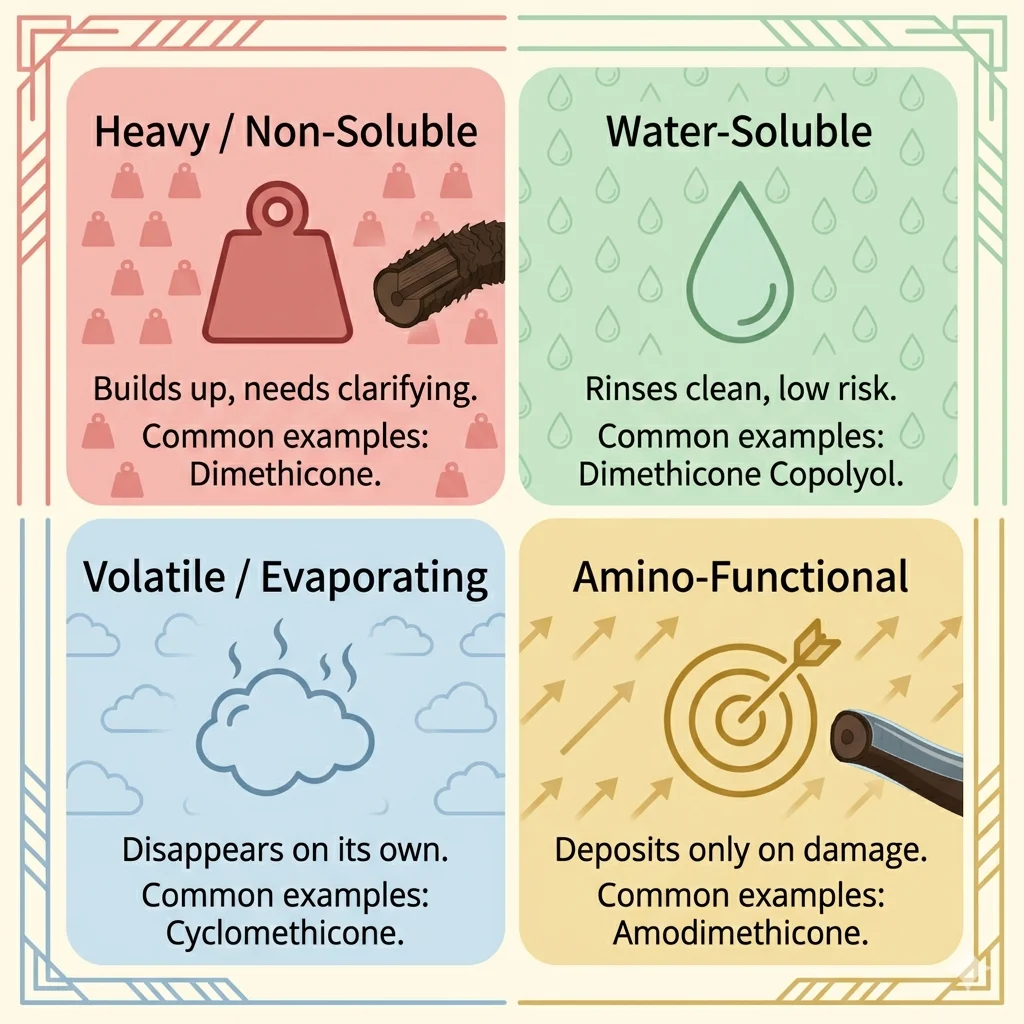
| Non-water-soluble (heavy) | Dimethicone, Dimethiconol, Cetyl dimethicone | Sulfate shampoo or clarifying wash only | High — accumulates without clarifying |
| Water-soluble | Dimethicone copolyol, PEG-modified silicones (PEG-12 Dimethicone) | Any shampoo, including sulfate-free | Low — rinses clean easily |
| Volatile / evaporating | Cyclomethicone, Cyclopentasiloxane | Evaporates on its own during drying | None — disappears after application |
| Amino-functional (charged) | Amodimethicone, Bis-aminopropyl dimethicone | Gentle shampoo — deposits selectively on damage | Very low — self-limiting application |
The standout performer in this list is amodimethicone. According to cosmetic chemist analysis referenced by Lab Muffin Beauty Science, amodimethicone carries a positive charge that attracts it selectively to damaged (negatively charged) areas of the hair shaft. It deposits a thin layer only where needed, and excess is repelled. It’s one of the lightest, most effective silicones available — yet it gets lumped in with heavy dimethicone in most “silicone-free” marketing.
How to Read a Label for Silicones
You don’t need a chemistry degree. Use these shortcuts to identify silicones on any ingredient list:
- Ingredients ending in -cone are silicones (dimethicone, cyclomethicone, amodimethicone).
- Ingredients ending in -xane are silicones (cyclopentasiloxane, dimethylpolysiloxane).
- Ingredients ending in -conol are silicones (dimethiconol).
- If you see PEG- before a silicone name, it’s water-soluble and rinses easily.
If dimethicone appears in the first five ingredients of your conditioner, that product relies heavily on a non-water-soluble silicone. If it appears near the bottom of the list, the concentration is low enough that occasional clarifying will manage it. Understanding your hair type helps determine how much buildup you can tolerate before it becomes an issue.
Who Should Actually Go Silicone-Free
Despite the nuance above, there are real situations where avoiding silicones makes sense:
Fine or thin hair
Heavy silicones weigh fine strands down quickly, making hair look flat and greasy within a day. Water-soluble silicones or volatile silicones are lighter alternatives that still provide smoothness without the weight.
Curly hair following the Curly Girl Method
The CGM eliminates sulfates and non-soluble silicones as a pair — because without sulfate cleansing, non-water-soluble silicones accumulate indefinitely. If you’re committed to sulfate-free washing, you should either use only water-soluble silicones or go silicone-free entirely. For more on this approach, see our hair care basics.
Low-porosity hair
Low-porosity hair has a tightly sealed cuticle that already resists moisture entry. Adding a silicone coating on top can make it even harder for conditioning ingredients to penetrate, leading to limp, unresponsive hair that feels coated but not actually moisturized.
Sensitive or acne-prone scalps
Non-water-soluble silicone residue on the scalp can contribute to clogged follicles and irritation in some people, particularly those prone to scalp acne or folliculitis.
Common Mistakes When Dealing With Silicones
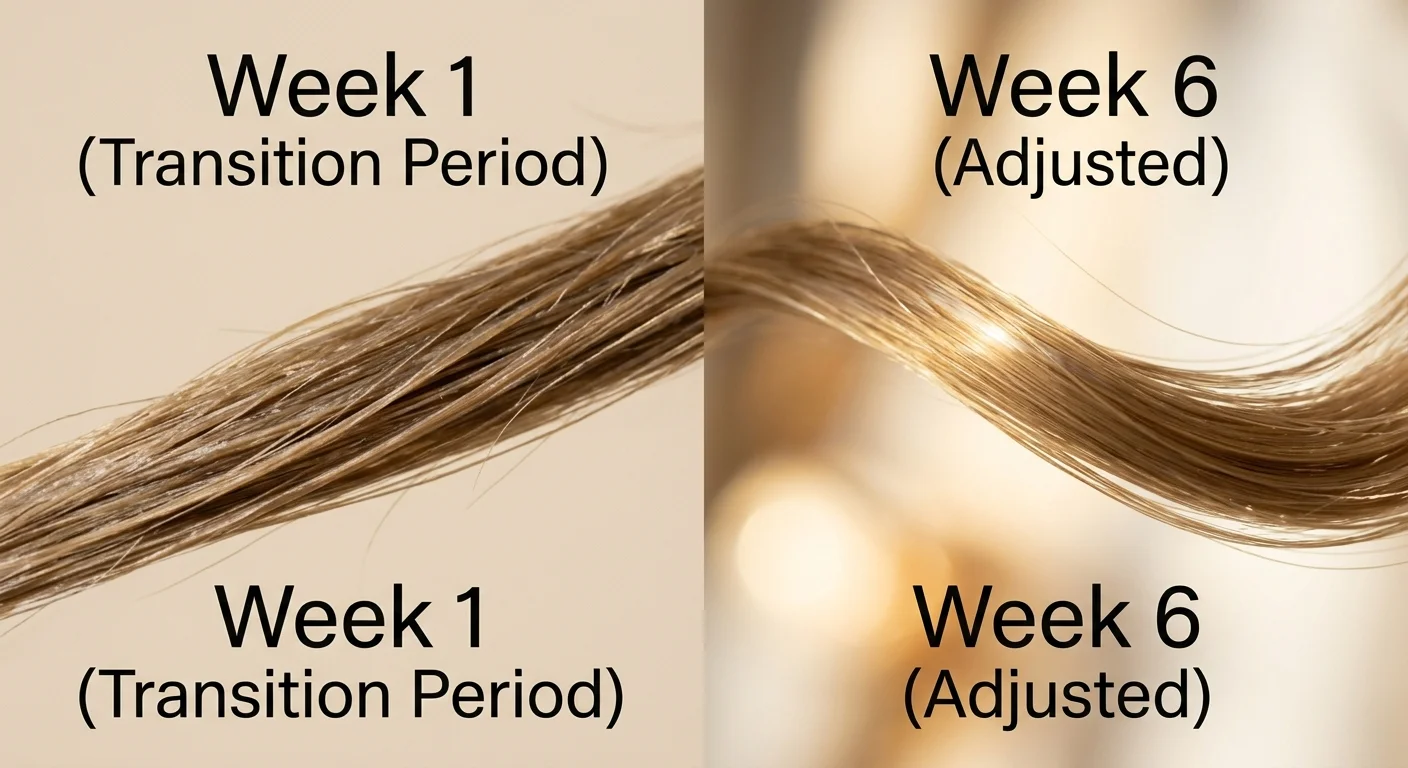
- Quitting silicones without a transition plan. When you drop silicone-coated products, your hair may feel rough, tangly, or dull for 2–4 weeks while accumulated layers wash away and your hair adjusts. Start with a clarifying wash to remove existing buildup, then give it 4–6 weeks before judging results.
- Treating all silicones the same. Avoiding amodimethicone because it ends in “-cone” is like avoiding all fats because butter exists. Different silicones behave in fundamentally different ways. Read the label — category matters more than the word “silicone.”
- Going silicone-free but skipping clarifying washes. Even without silicones, natural oils, styling products, and mineral deposits build up. A clarifying shampoo every 2–4 weeks keeps your hair and scalp clean regardless of your silicone stance. For guidance on product selection, check our hair tools and product page.
- Blaming silicones when hard water is the real problem. Mineral deposits from hard water create dullness and dryness that feels exactly like silicone buildup. If you’ve gone silicone-free and still have issues, test your water hardness before changing anything else.
- Expecting silicone-free products to give the same instant smoothness. Silicones provide immediate cosmetic results. Without them, smoothness comes from protein repair, proper conditioning, and moisture balance — which takes longer but produces genuinely healthier hair over time.
What to Expect If You Go Silicone-Free
| Timeframe | What You’ll Notice |
|---|---|
| Week 1–2 | Hair feels rougher, tangles more easily, and may look duller. Old silicone layers are washing away. This is the hardest phase. |
| Week 3–4 | Texture begins normalizing. Curls may start showing more natural definition. Volume improves for fine hair. |
| Week 5–8 | Hair finds its natural balance. Conditioning products absorb better. You’ll notice whether your hair genuinely prefers silicone-free or whether you should reintroduce water-soluble options. |
Final Thoughts: Are Silicones Bad for Hair?
The idea that silicones are bad for hair is an oversimplification that has become marketing gospel. The reality: heavy non-water-soluble silicones cause buildup problems if you don’t clarify regularly. Water-soluble, volatile, and amino-functional silicones are lightweight, effective, and wash out easily — they’re some of the best cosmetic ingredients available for smoothness, frizz control, and heat protection.
Instead of asking “are silicones bad for hair,” ask a better question: which silicones are in my products, and does my wash routine remove them properly? If you clarify every 2–4 weeks and choose products with lighter silicone variants, you get the benefits without the buildup. If your hair is fine, low-porosity, or you wash exclusively with gentle sulfate-free formulas, going silicone-free (or water-soluble-only) is a smart move.
The best approach is informed choice, not blanket avoidance. Read labels, match your products to your seasonal needs and hair type, and let your hair’s response over 6–8 weeks guide your decision.