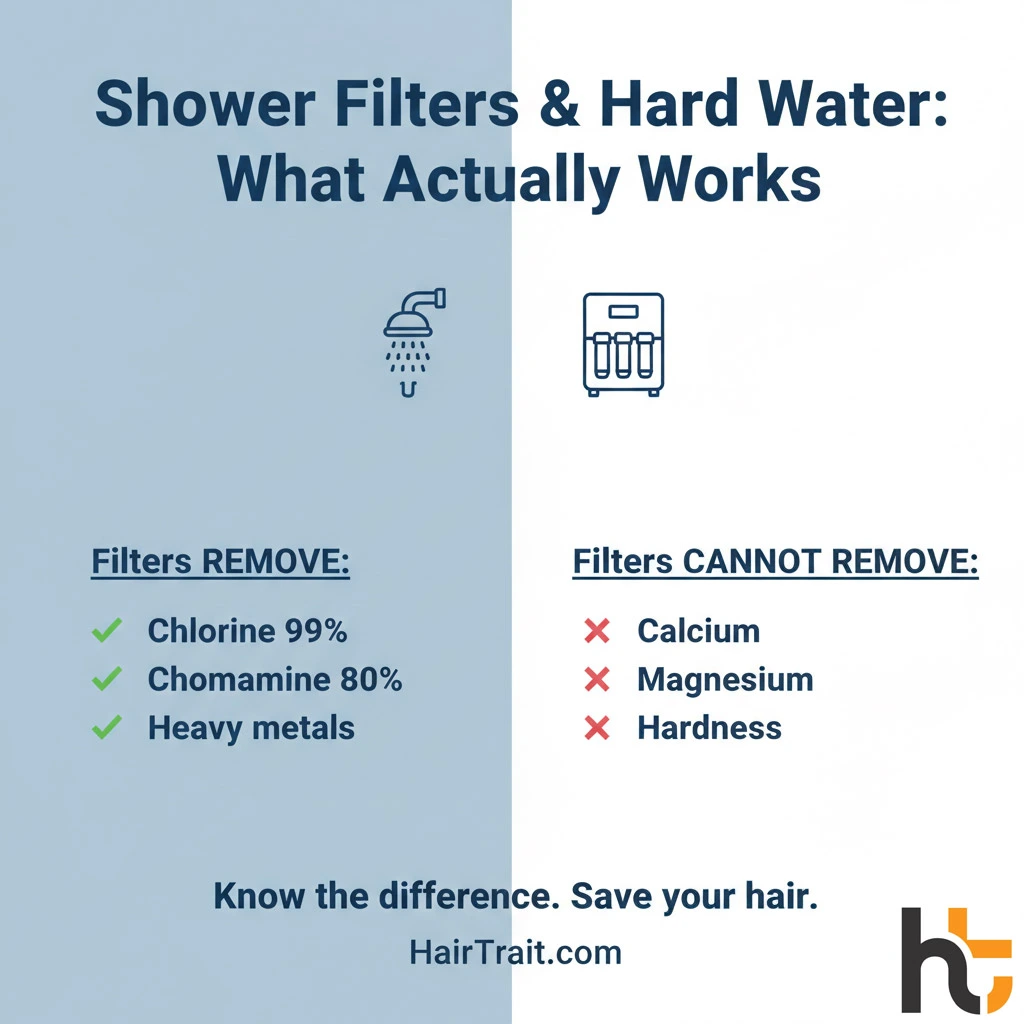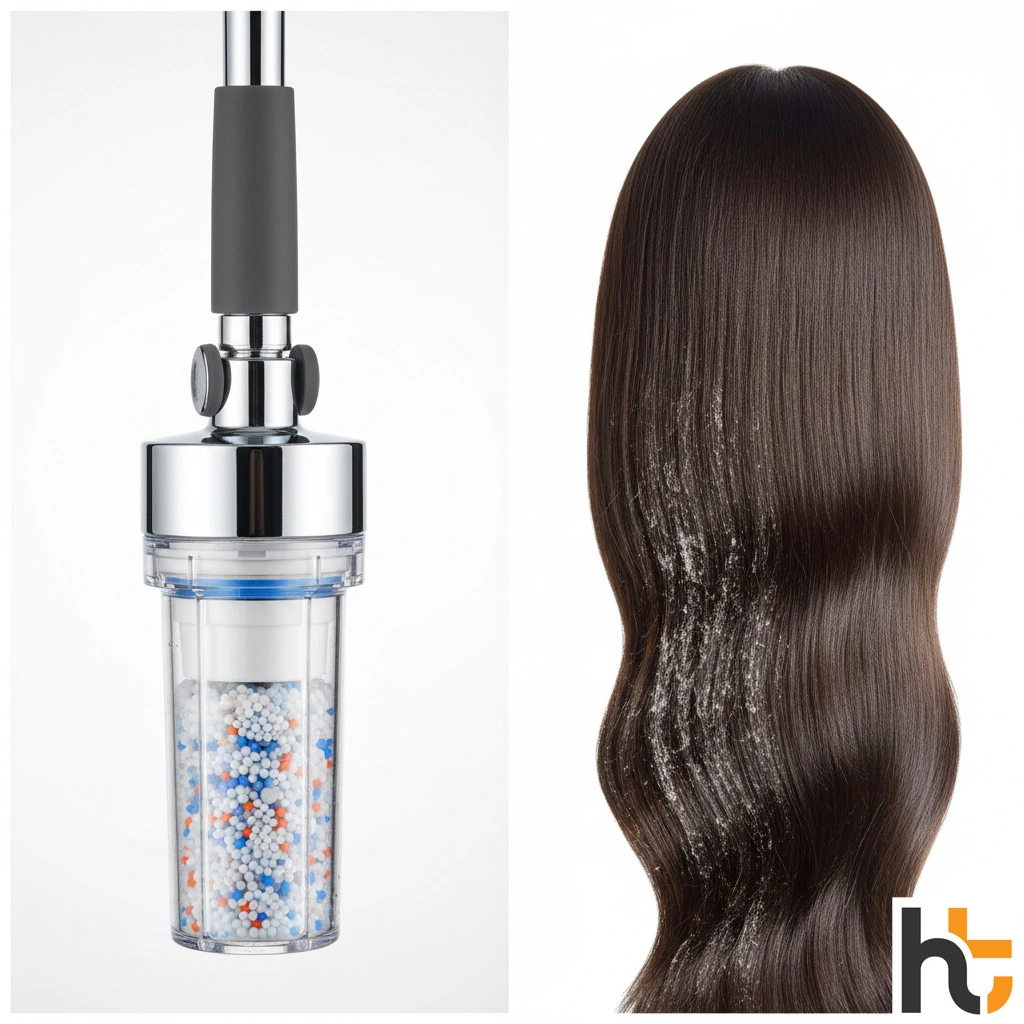
Here’s the first surprising fact about shower filters hard water hair solutions that most companies won’t tell you: shower filters don’t actually soften hard water. They can’t remove the calcium and magnesium that make water “hard.” Only a whole-house water softener can do that.
But here’s the twist — shower filters hard water hair products can still significantly improve your hair. Just not in the way you think.
This guide explains exactly what these solutions actually do, what they’re physically incapable of doing, and whether spending money on one makes sense for your specific situation. No marketing hype. Just chemistry.
If you’re already dealing with hard water damage, our hard water hair care routine covers the product side. This article focuses specifically on whether a filter is worth it.
Quick Answer: When it comes to shower filters hard water hair solutions, filters can’t soften water, but they DO remove chlorine, chloramine, and some heavy metals that damage hair. For most people, that’s enough to see real improvement. A water softener is better but costs $500–2,000 installed.
Table of Contents
Fact #1: What “Hard Water” Actually Means (And Why It Destroys Your Hair)
Hard water contains dissolved minerals. Primarily calcium and magnesium. These minerals come from groundwater passing through limestone, chalk, and gypsum deposits underground.
Water hardness is measured in parts per million (ppm) or grains per gallon (gpg). Here’s what the numbers mean:
| Water Hardness Level | ppm (mg/L) | grains per gallon |
|---|---|---|
| Soft | 0–60 ppm | 0–3.5 gpg |
| Moderately hard | 61–120 ppm | 3.5–7 gpg |
| Hard | 121–180 ppm | 7–10.5 gpg |
| Very hard | 180+ ppm | 10.5+ gpg |
Most US municipal water falls between 100–300 ppm. According to the Water Quality Association, approximately 85% of American homes have hard or very hard water.
Studies show these minerals bind to the negatively charged surface of hair strands. They form an invisible coating that blocks moisture from getting in and prevents your conditioner from working properly [NCBI].
Over time, this mineral layer builds up. Hair feels dry, rough, and heavy. Products stop working. Colors fade faster. That’s hard water damage. This is why people search for shower filters hard water hair solutions.
Fact #2: What Shower Filters Actually Remove (And What They Don’t)
Most shower filters hard water hair products use a combination of KDF (Kinetic Degradation Fluxion) media and activated carbon. Here’s what each one does:
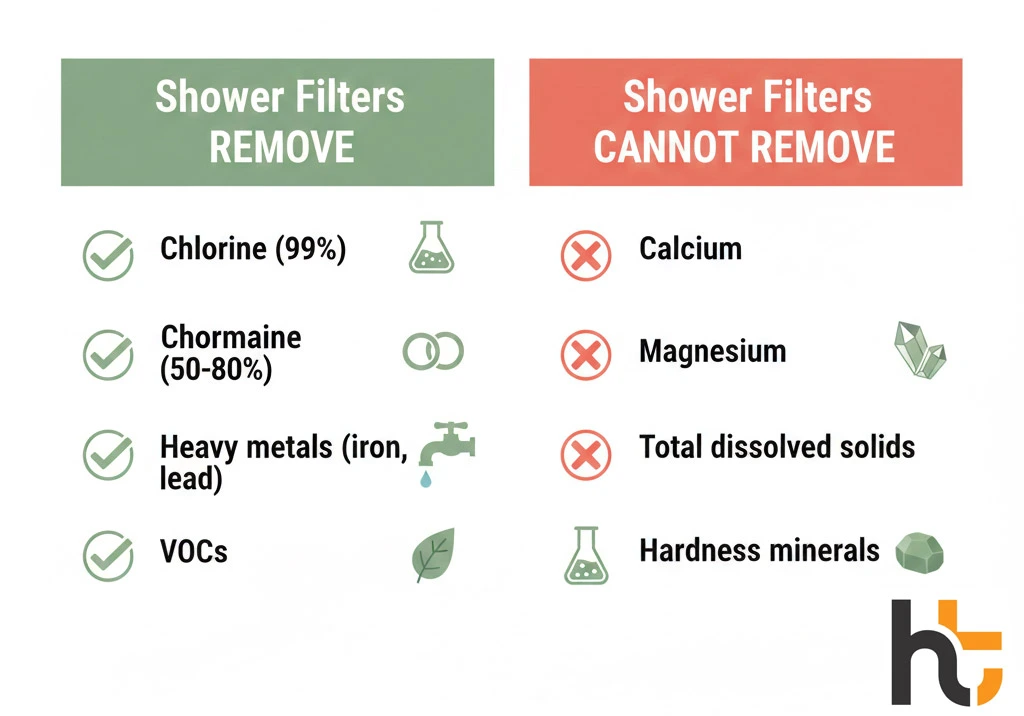
What Shower Filters DO Remove
- Chlorine: 90–99% removal. Chlorine is added to municipal water to kill bacteria. It’s great for making water safe to drink. Terrible for hair. It strips natural oils and oxidizes protein structure.
- Chloramine: 50–80% removal depending on the filter. Chloramine is chlorine + ammonia. Many cities switched to it because it lasts longer in pipes. It’s even more damaging to hair than chlorine alone.
- Some heavy metals: Lead, mercury, and iron. KDF media removes these through a chemical process called redox (reduction-oxidation). Iron specifically causes orange/brassy tones in light hair.
- Volatile organic compounds (VOCs): Activated carbon traps these. They’re byproducts of water treatment and industrial pollution.
What Shower Filters CANNOT Remove
- Calcium and magnesium (hardness minerals): These require ion exchange to remove. That’s what a water softener does. A filter can’t do it. The molecules are too small and the chemistry is wrong.
- Total dissolved solids (TDS): Filters don’t change TDS. Only reverse osmosis or distillation can do that.
- Bacteria or viruses: Shower filters are not designed for microbial filtration. Municipal water is already treated for this.
Fact #3: Why Shower Filters Help Hair Even Though They Don’t Soften Water
This is why shower filters hard water hair solutions work even though they don’t remove hardness minerals. Because chlorine damage is often worse than mineral buildup. Let me explain.
Research published in the Journal of Cosmetic Science shows that chlorine exposure causes significant protein loss from hair fibers. The oxidative damage from chlorine increases hair porosity, which then makes the hair even MORE vulnerable to mineral deposits [Journal of Cosmetic Science].
It’s a vicious cycle:
- Chlorine damages the protective outer layer
- Damaged outer layer becomes more porous
- Porous hair absorbs more calcium and magnesium
- Mineral buildup makes hair feel even drier
- You use more conditioner, which also builds up
By removing chlorine, a shower filter breaks this cycle at step 1. Your hair still has to deal with hard water minerals. But it’s dealing with them from a position of strength rather than from already-damaged hair.
Most people notice softer, shinier hair within 2–4 weeks of installing a filter. Not because the water is softer. But because chlorine is gone.
Fact #4: Shower Filters vs Water Softeners — The Real Difference
Understanding the difference between shower filters hard water hair products and water softeners is crucial. A water softener removes calcium and magnesium through ion exchange. It replaces them with sodium or potassium. This actually softens the water.
| Feature | Shower Filter | Water Softener |
|---|---|---|
| Removes chlorine | ✅ Yes (99%) | ❌ No |
| Removes hardness | ❌ No | ✅ Yes (100%) |
| Cost | $20–80 | $500–2,000 installed |
| Maintenance | Replace filter every 6 months | Refill salt monthly |
| Installation | DIY (screws onto shower arm) | Professional plumber required |
| What it treats | Shower only | Entire house |
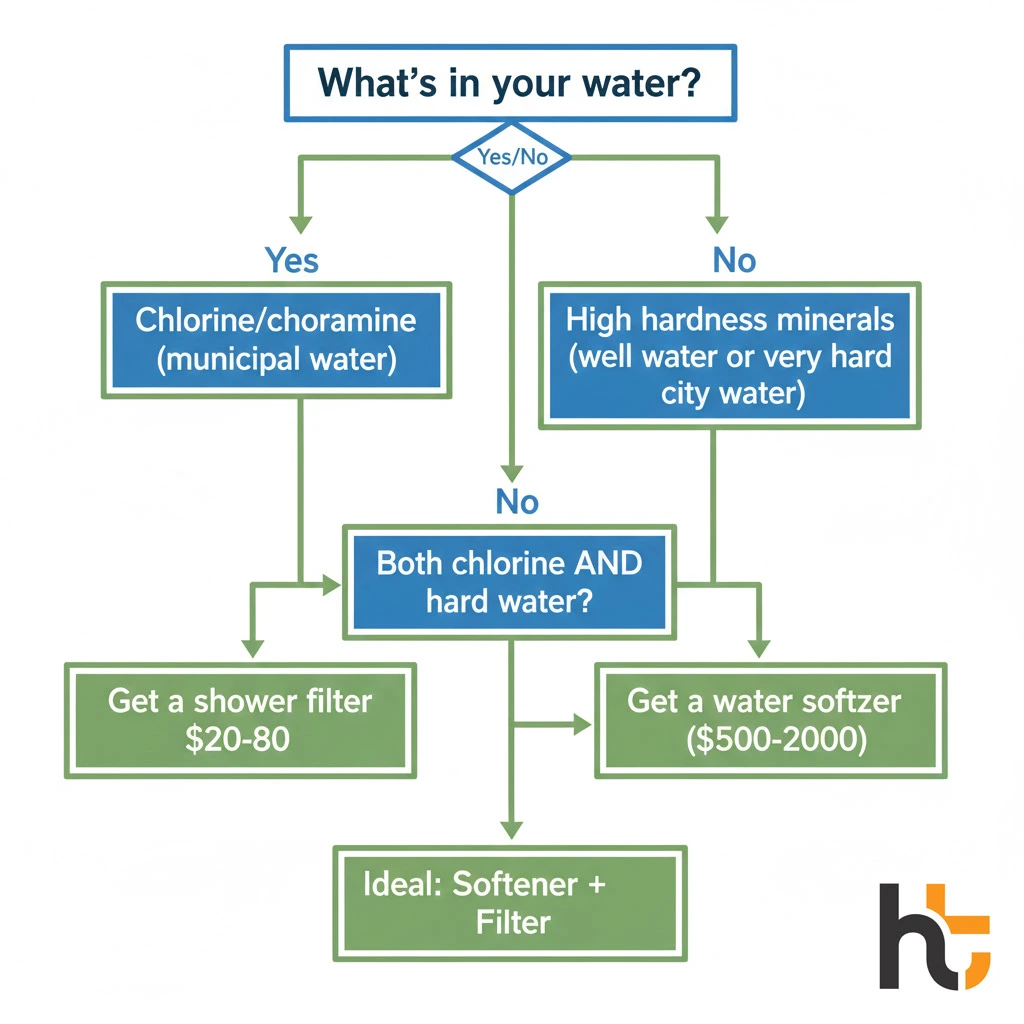
The ideal solution? Both. A whole-house water softener removes minerals. A shower filter removes chlorine. But if you can only afford one, a shower filter gives you 70% of the benefit for 5% of the cost.
Fact #5: Do You Actually Need Shower Filters Hard Water Hair Solutions?
It depends on your water. Here’s how to know:
You Probably Need a Shower Filter If:
- You’re on municipal water (chlorine is almost guaranteed)
- Your hair feels dry and straw-like despite good products
- Hair color fades within 2–3 weeks
- You can smell chlorine in your shower
- Products that worked in one location stopped working when you moved
- You have high porosity or chemically treated hair (most vulnerable to chlorine)
A Shower Filter Won’t Help Much If:
- You’re on well water with no chlorine treatment (but check for iron and sulfur)
- Your main problem is extreme hardness (300+ ppm) — you need a softener
- You’re using the wrong products for your hair type (fix this first using our best hair products guide)
You can check your local water quality report online. Most municipalities publish this data. Look for:
- Total hardness (ppm or gpg)
- Chlorine or chloramine levels
- Iron content (causes orange staining)
Fact #6: What to Look For in Quality Shower Filters
Not all shower filters hard water hair products are created equal. Here’s what actually matters:
1. Filter Media Type
KDF-55 + activated carbon is the gold standard. KDF removes chlorine and heavy metals. Carbon removes chloramine and VOCs. You want both.
Avoid filters that only use vitamin C (ascorbic acid). These work for chlorine but do nothing for chloramine or metals. They’re cheaper but less effective.
2. Filter Lifespan
Most quality filters last 6–12 months or 10,000–15,000 gallons. Cheaper filters claim 6 months but lose effectiveness after 2–3 months.
Calculate your actual usage: Average shower uses 2.5 gallons per minute. A 10-minute shower = 25 gallons. Two people showering daily = 50 gallons/day = 1,500 gallons/month. A 10,000-gallon filter lasts about 6.5 months for two people.
3. Flow Rate
Good filters maintain 2.0–2.5 GPM (gallons per minute). Cheap filters restrict flow and give you a weak, unsatisfying shower. Check reviews for complaints about water pressure.
4. NSF Certification (If Available)
NSF/ANSI Standard 177 tests shower filters for chlorine removal. Not all filters have this certification, but it’s a good sign if they do.
Fact #7: What to Realistically Expect After Installing a Filter
Within 1–2 weeks of using shower filters hard water hair solutions, most people notice:
- Hair feels softer and less straw-like
- Less tangles during washing
- Conditioner seems to “work better” (because chlorine isn’t fighting it)
- Scalp feels less dry and itchy
- Hair color lasts 1–2 weeks longer before fading
What you won’t notice:
- Instant transformation (it’s gradual over 2–4 weeks)
- Complete elimination of mineral buildup (you still need to clarify monthly)
- Reversal of existing damage (a filter prevents future damage, doesn’t fix past damage)
If you have low porosity hair, you’ll see benefits faster because your sealed outer layer is more resistant to chlorine in the first place. High porosity hair takes longer to recover because it’s already damaged.
For a complete hard water routine including the right clarifying schedule and chelating products, see our hard water hair care routine guide.
Alternatives to Shower Filters (And Whether They Work)
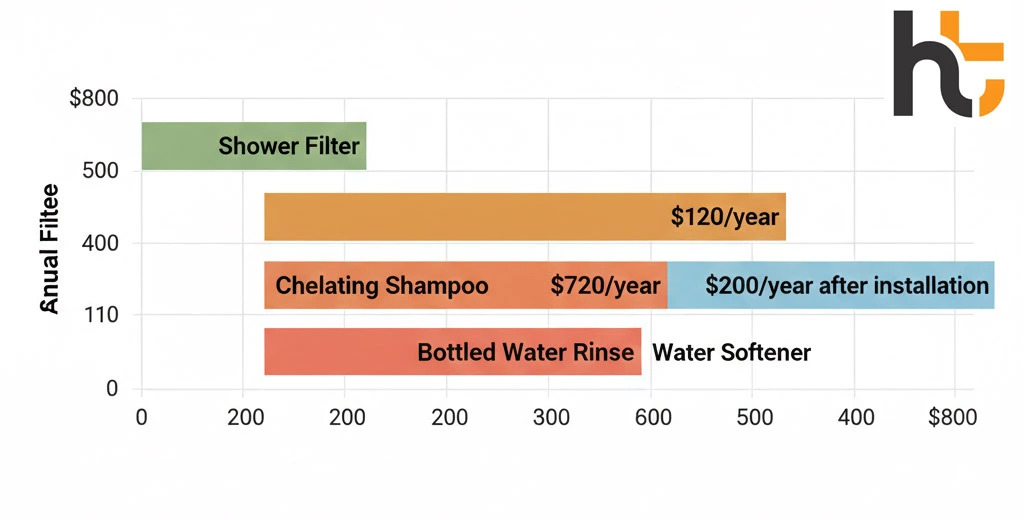
Chelating Shampoo
Does it work? Yes, for removing existing buildup. No, for preventing future buildup.
Chelating shampoos contain EDTA or phytic acid. These ingredients bind to minerals already on your hair and rinse them away. Use every 2–4 weeks if you have hard water. But this doesn’t stop new minerals from depositing. It’s cleanup, not prevention.
Apple Cider Vinegar Rinse
Does it work? Partially. Vinegar’s acidity (pH 2.5–3) helps dissolve some mineral deposits. But it doesn’t remove chlorine. And it can be harsh if used too frequently. Once a week maximum.
Bottled Water for Final Rinse
Does it work? Technically yes. Practically, no. You’d need 1–2 gallons per rinse. At $1–2 per gallon, that’s $60–120 per month. A shower filter costs $30–50 and lasts 6 months.
Just Using Better Products
Does it work? Only to a point. Great products help, but they can’t overcome severe water quality issues. You’ll get better results from average products + filtered water than expensive products + terrible water.
For the best products by hair type regardless of water quality, see our best hair products guide.
Final Thoughts
Shower filters hard water hair solutions don’t soften hard water. That’s a marketing myth. But they do remove chlorine, chloramine, and heavy metals. For most people dealing with municipal water, that’s the difference between damaged hair and healthy hair.
If you’re spending $100+ per month on hair products trying to fix dryness and damage, a $40 shower filter is the most cost-effective change you can make. It won’t solve extreme hardness problems (that requires a softener). But it eliminates the single biggest chemical stressor on your hair.
Pair it with a monthly chelating shampoo and a solid routine from our hair care basics guide, and you’ve addressed both prevention and cleanup.
For complete coverage of hard water solutions, tools, and product recommendations, bookmark our hard water hair care routine and best hair tools guides.