If you’ve ever heard someone say their hair needs “more protein” or is suffering from “moisture overload,” they’re talking about protein moisture balance — one of the most important concepts in hair care and one of the most frequently misunderstood.
The idea behind protein moisture balance is simple: your hair needs both structural support (protein) and hydration (moisture) to function well. When one side outweighs the other, your hair tells you through specific symptoms. The tricky part is learning to read those symptoms correctly and adjust without overcorrecting.
This guide teaches you to diagnose which side your hair is currently leaning toward, fix the imbalance, and maintain ongoing balance with a practical routine.
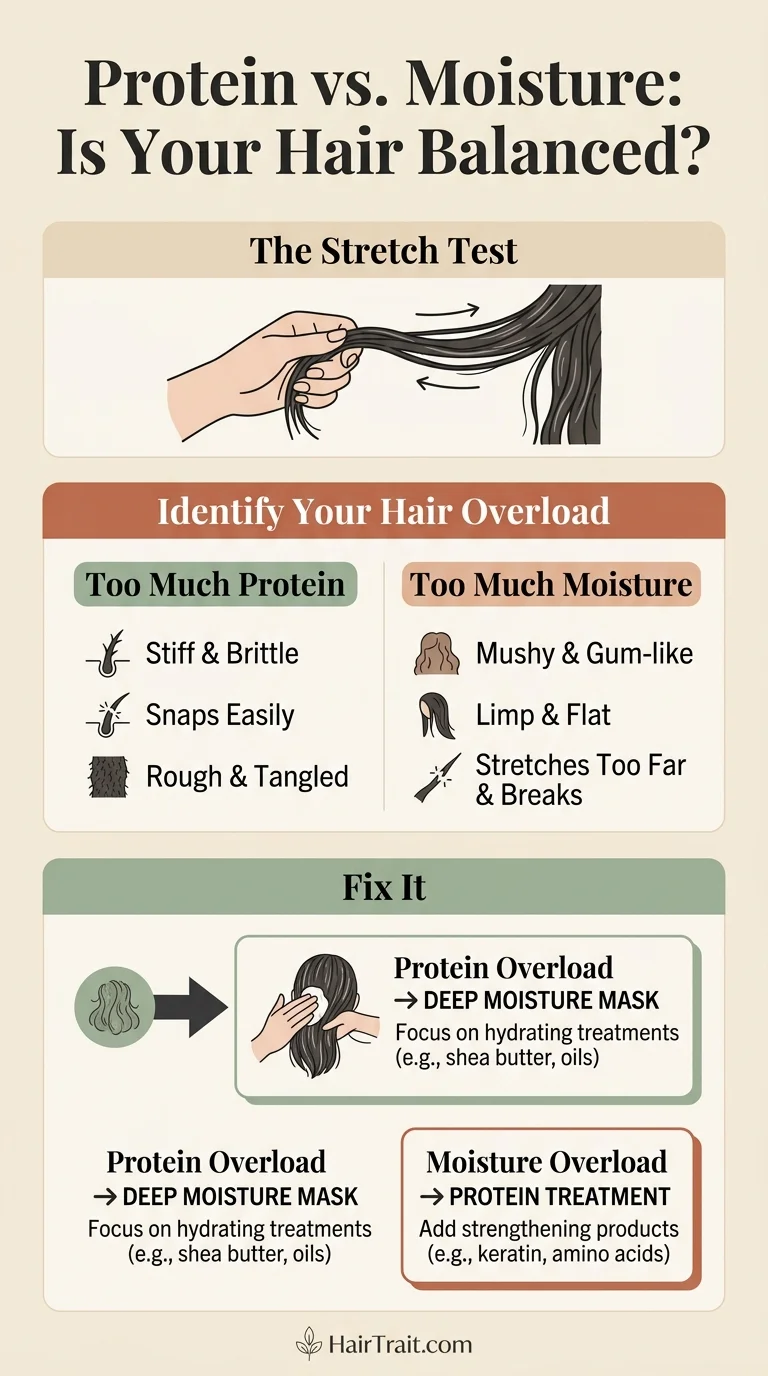
Quick Answer: Protein moisture balance is the relationship between your hair’s structural strength (protein) and its hydration and flexibility (moisture). Too much protein makes hair stiff, brittle, and snap-prone. Too much moisture without enough protein makes hair limp, mushy, and prone to stretching and breaking. Balanced hair stretches slightly when wet and springs back without snapping. Finding your balance requires observing how your hair behaves, then adjusting your routine every 2–4 weeks.
Table of Contents
Why Your Hair Needs Both Protein and Moisture
Your hair shaft is approximately 85–90% keratin — a structural protein that gives hair its strength, shape, and resilience. The remaining structure includes water (10–13%), lipids, and trace minerals. When these proportions stay roughly intact, your hair has both strength and flexibility.
- Protein’s role: Fills gaps in the hair cortex, reinforces the cuticle, adds structure and strength. Without adequate protein, hair has no structural integrity — it becomes weak, stretchy, and fragile.
- Moisture’s role: Water and humectants keep hair flexible, soft, and elastic. Without adequate moisture, hair becomes rigid, rough, and prone to snapping under mechanical stress (brushing, styling, detangling).
Think of it like a rubber band. A new rubber band stretches and snaps back (balanced). A dried-out rubber band snaps immediately (too much protein / not enough moisture). A waterlogged, overstretched rubber band loses its shape and tears (too much moisture / not enough protein). For a primer on how your hair’s structure works, check our hair care basics guide.
How to Tell If You Have Protein Overload
Protein overload happens when you’ve used too many protein-rich products without enough moisturizing treatments to balance them out. It’s especially common in people who regularly use bond builders, keratin treatments, protein masks, and protein-infused shampoos and conditioners all at once.
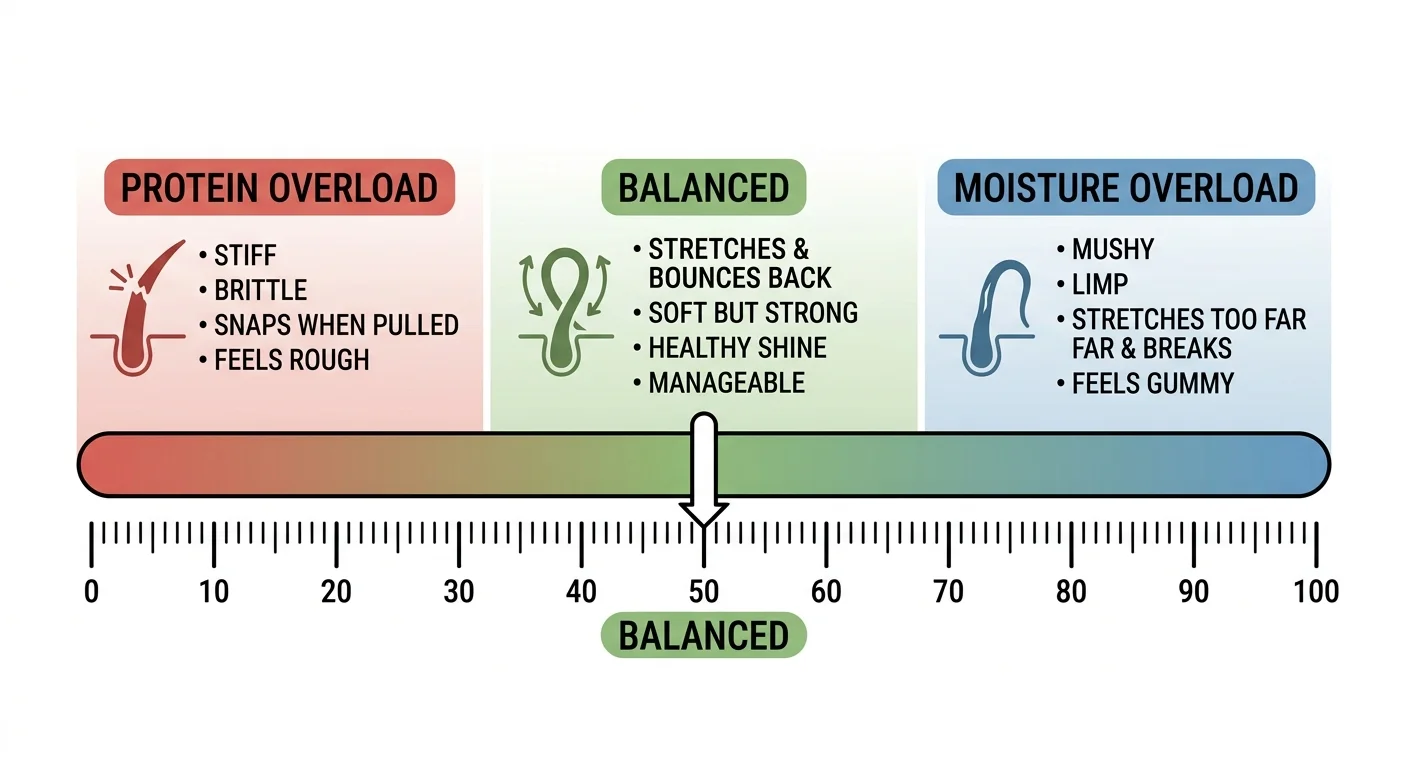
Signs of protein overload:
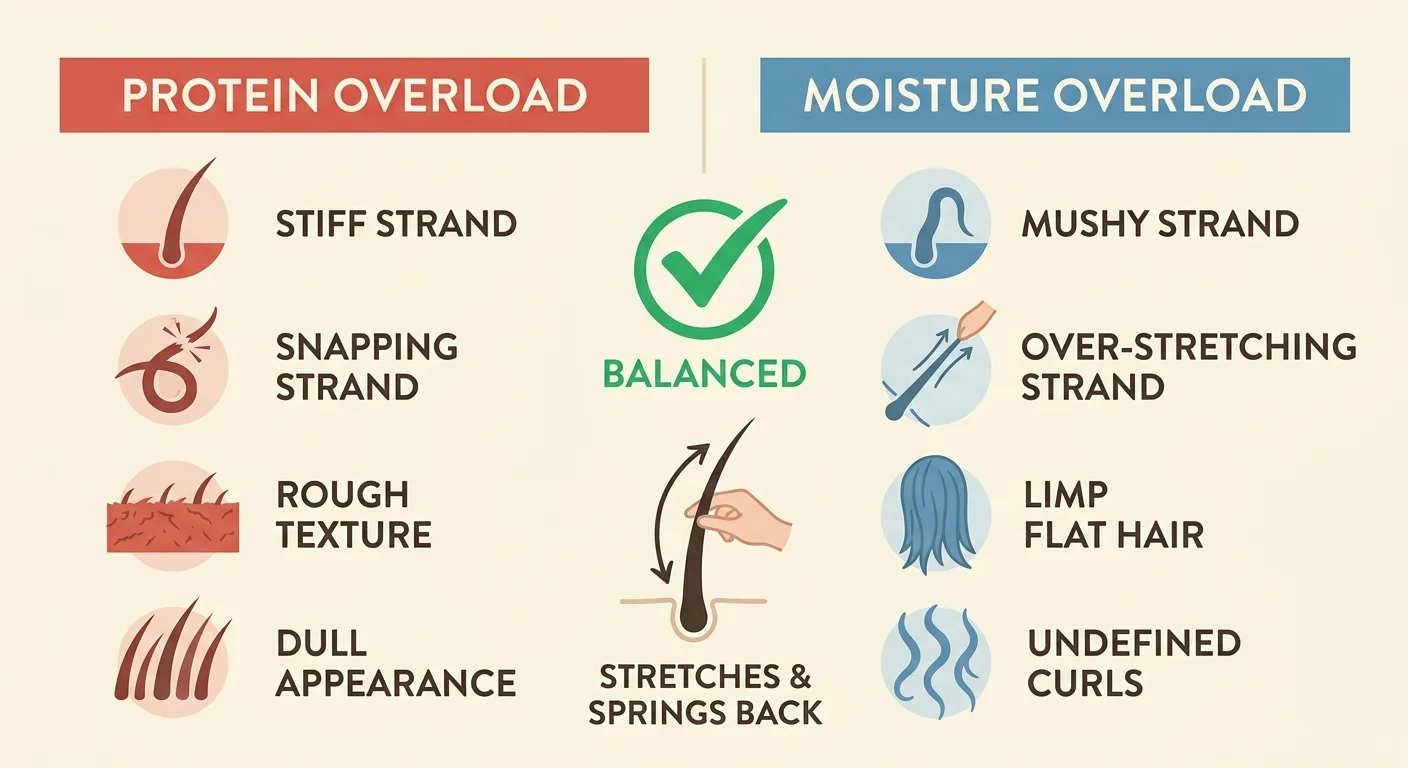
- Hair feels stiff, straw-like, or crunchy — even when wet
- Hair snaps easily instead of stretching when pulled gently while damp
- Increased breakage, especially small pieces breaking off during styling
- Hair looks dull and feels rough to the touch
- Products seem to “sit on top” of hair without absorbing
- Loss of curl pattern — curls look stringy, stiff, or unnaturally defined
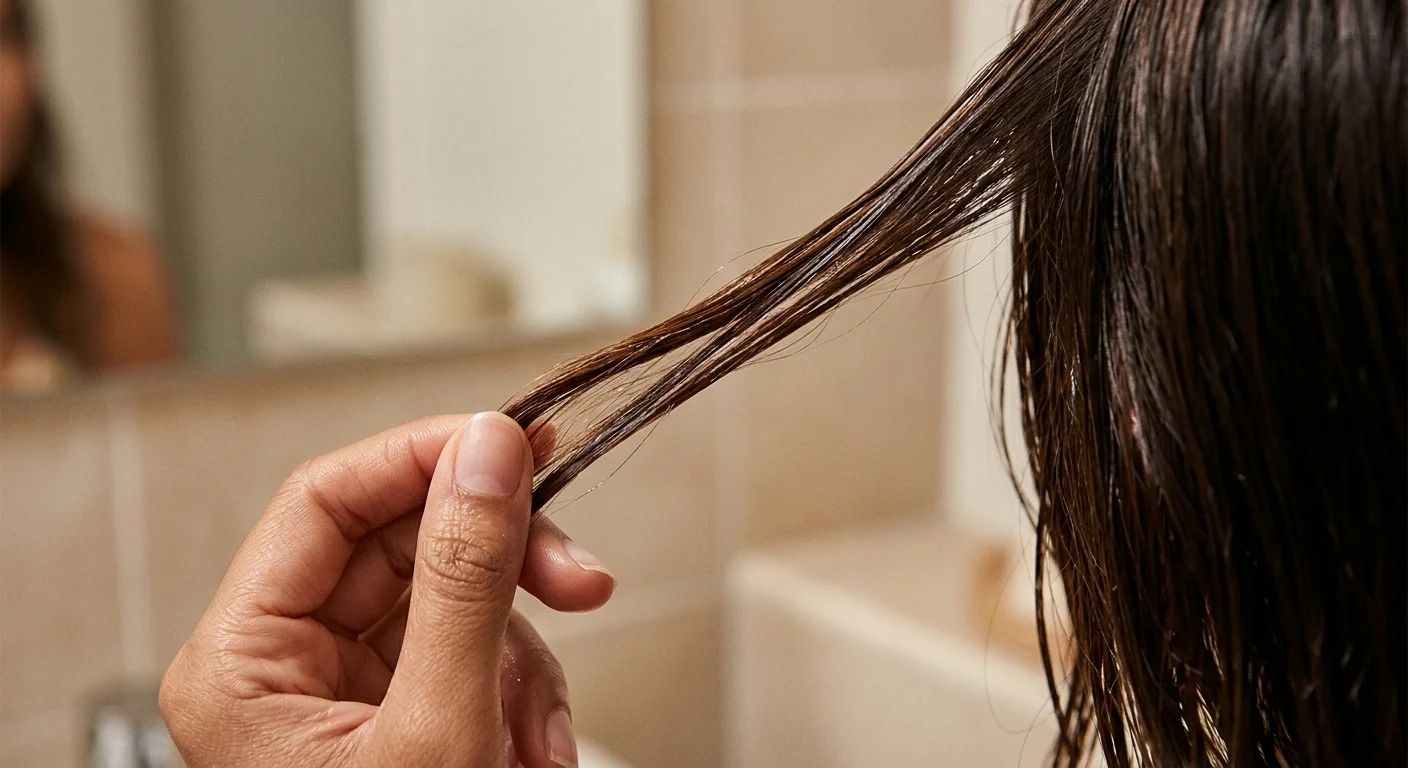
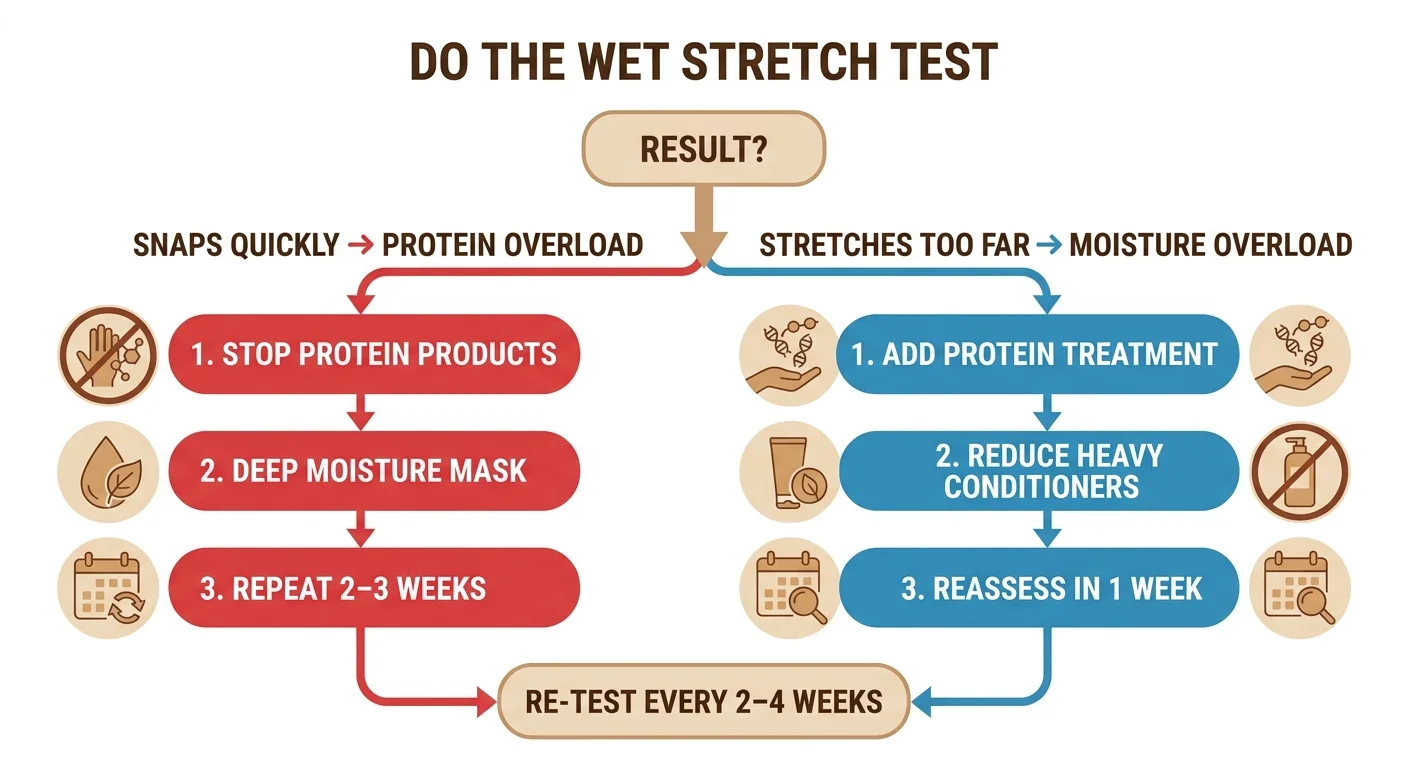
The wet stretch test is the fastest diagnostic: take a damp strand, gently pull from both ends. If it barely stretches and snaps quickly, protein overload is likely. Balanced hair stretches about 30% of its length before returning to shape.
How to Tell If You Have Moisture Overload
Moisture overload occurs when hair is saturated with humectants, oils, and water-based conditioners but lacks structural protein support. This is common in people following strict sulfate-free, protein-free routines or heavy deep conditioning without any protein treatments.
Signs of moisture overload:
- Hair feels mushy, gummy, or “too soft” when wet
- Hair stretches excessively when pulled — and doesn’t bounce back (or breaks at the stretch point)
- Limp, flat hair with no volume or bounce
- Curls look undefined, floppy, or won’t hold their shape
- Hair takes a very long time to dry
- Strands feel almost slimy or overly slippery when conditioned
The Wet Stretch Test: Your Best Diagnostic Tool
This simple test helps you assess your protein moisture balance at home:
- Take a single strand of freshly washed, damp hair (no products applied).
- Hold it between your fingers at both ends.
- Gently and slowly stretch it.
| Result | What It Means | What to Do |
|---|---|---|
| Barely stretches, snaps quickly | Protein overload — hair is too rigid and lacks flexibility | Increase moisture treatments, reduce protein products |
| Stretches about 30% and springs back | Balanced — hair has good strength and elasticity | Maintain current routine |
| Stretches far without returning, or breaks at the stretch point | Moisture overload — hair lacks structural integrity | Add a protein treatment, reduce heavy conditioners |
Perform this test on multiple strands from different areas (crown, nape, ends) since different sections may be at different points on the balance spectrum. Repeat every 2–4 weeks to track changes. Understanding your hair type also helps contextualize these results.
How to Fix Protein Overload
- Stop all protein-containing products immediately. Check ingredient lists for: hydrolyzed keratin, hydrolyzed wheat protein, hydrolyzed silk, collagen, amino acids, and rice protein. Switch to protein-free conditioners and masks.
- Do a deep moisture treatment. Use a protein-free deep conditioner or moisture mask heavy in ingredients like shea butter, glycerin, aloe vera, or coconut oil. Leave it on for 20–30 minutes under a warm towel or heat cap.
- Clarify first if you have buildup. Protein residue can coat the hair and block moisture. A gentle clarifying wash before your moisture treatment helps the conditioner actually penetrate.
- Repeat moisture-focused washes for 2–3 weeks before reintroducing any protein products. Your hair should gradually regain flexibility and softness.
How to Fix Moisture Overload
- Add a protein treatment. Use a light-to-medium protein treatment (products with hydrolyzed keratin or wheat protein listed in the top 5 ingredients). Apply for 10–20 minutes, then rinse and condition lightly. For product options, see our best hair products page.
- Reduce heavy conditioners and oils temporarily. Switch from thick cream conditioners to lighter, rinse-out formulas. Avoid layering multiple leave-ins and oils until elasticity returns.
- Consider a bond-building treatment. Products like Olaplex No. 3 or K18 repair internal bonds that protein alone can’t fix — they strengthen the structural foundation that holds moisture in place.
- Reassess after 1–2 protein treatments. Moisture overload typically corrects faster than protein overload. One or two targeted protein sessions often restore normal elasticity within a week.
Maintaining Your Protein Moisture Balance Long-Term
Once you’ve corrected an imbalance, the goal is maintenance — not perfection. Your hair’s needs shift with the seasons, styling habits, chemical services, and even humidity levels. Here’s a framework that keeps most hair types in balance:
- Regular wash days: Use a moisturizing shampoo and conditioner as your default routine.
- Protein treatment: Add one every 2–4 weeks depending on your damage level. More damaged or high-porosity hair needs protein more frequently (every 2 weeks). Healthy, low-porosity hair may only need it monthly or less.
- Deep conditioning: Alternate between protein-containing and protein-free masks. One week protein, next week pure moisture — or adjust the ratio based on your stretch test results.
- Bond builders: If you use Olaplex or K18, count these as part of your protein/strength side. Don’t stack them with a separate protein mask on the same wash day.
- Seasonal adjustment: Winter air is dry and tends to push hair toward needing more moisture. Summer humidity can make hair feel over-moisturized and limp. Adapt your routine accordingly — see our seasonal hair care guide for specifics.
Common Mistakes With Protein Moisture Balance
- Not reading ingredient lists. Many “moisturizing” products contain protein, and many “strengthening” products contain humectants. The label name doesn’t always match the formula. Check the first 5 ingredients to know what you’re actually applying.
- Overcorrecting. If you diagnose protein overload and flood your hair with moisture for a month straight, you’ll swing into moisture overload. Correct gradually — 2–3 moisture-focused washes, then retest.
- Treating the whole head the same. Your roots (newer growth) likely have different needs than your ends (older, more damaged). Apply protein treatments mainly to mid-lengths and ends where damage concentrates, and moisture treatments more evenly.
- Confusing product buildup with protein overload. Both make hair feel stiff and coated. Before blaming protein, do a clarifying wash first. If stiffness disappears after clarifying, it was buildup — not protein overload. For help identifying what your hair tools and products might be causing, check our guide.
- Ignoring the balance entirely. Many people use whatever products are on sale or recommended by friends without considering whether their routine is protein-heavy or moisture-heavy. Even a basic awareness of protein moisture balance prevents the most common hair problems.
What to Expect When You Find Your Balance
| Timeframe | What Changes |
|---|---|
| After first correction | Immediate improvement in hair feel — protein overload feels softer; moisture overload feels stronger. The change is often noticeable within a single wash. |
| Week 2–3 | Breakage decreases. Curls regain definition. Hair holds styles better and feels more manageable during detangling. |
| Month 1–2 | With consistent protein-moisture alternation, your hair develops a predictable, healthy baseline. You’ll intuitively know which treatment it needs next based on how it feels. |
Final Thoughts: Balance Is a Process, Not a Destination
Protein moisture balance isn’t something you achieve once and forget about. It’s an ongoing process of observation and adjustment — your hair’s needs change with damage, treatments, weather, and time. The wet stretch test takes 10 seconds and tells you everything you need to know about which direction to adjust.
The most important takeaway: if your hair is misbehaving and you can’t figure out why, check your protein moisture balance before buying another product. Stiff and snapping means cut the protein and add moisture. Mushy and limp means add protein and ease up on conditioners. That simple framework solves the majority of unexplained hair problems.
Master your protein moisture balance and everything else in your routine — from styling to color maintenance — works better because your hair finally has the foundation it needs.